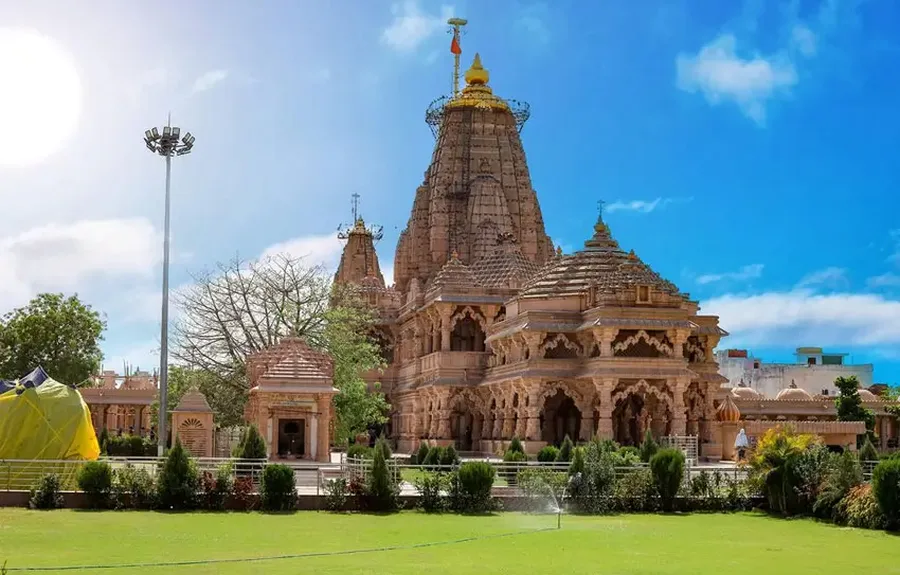
Delhi - Jaipur - Ranthambore - Gagron - Chittorgarh - Kumbhalgarh - Jaisalmer - Jodhpur
Three cultural World Heritage listings, covering eight separate places, sit within Rajasthan, and the Rajasthan UNESCO World Heritage Tour visits every one of them in 13 nights and 14 days. They are the walled city of Jaipur, the stone observatory of Jantar Mantar and the six Hill Forts of Rajasthan, inscribed together in 2013: Amber, Ranthambore, Gagron, Chittorgarh, Kumbhalgarh and Jaisalmer. The tour also begins with Delhi's three Mughal-era World Heritage Sites, the Red Fort, Humayun's Tomb and the Qutub Minar, so you see eleven listed places in all, many of them far from the usual tourist trail. The state's one natural listing, Keoladeo National Park at Bharatpur, is covered on our Rajasthan Bird Watching and Wildlife Tour.
The route reaches less visited corners such as the water fort of Gagron in the Hadoti region, where few foreign travellers go, as well as the big names. A private car with an English-speaking driver connects every stop, and specialist heritage guides explain why each site earned its listing. In Jaipur, a quiet morning with rescued elephants at the Elefantastic elephant sanctuary adds a living, ethical encounter to the heritage. Travellers short on time can compare our Rajasthan Forts and Palaces Tour or the Rajasthan Offbeat Heritage Tour, both among our Rajasthan tour packages.
Package Highlights
• Red Fort, Humayun's Tomb and Qutub Minar in Delhi
• Jaipur's walled city and the Jantar Mantar observatory
• Amber Fort and a morning with rescued elephants at Elefantastic
• Ranthambore Fort and tiger safaris in the national park
• Gagron, the rare water fort at the meeting of two rivers
• Chittorgarh, the largest fort in India, with its Victory Tower
• Kumbhalgarh's 36 km wall and the Ranakpur Jain temple
• Jaisalmer's living fort and Mehrangarh Fort in Jodhpur
Our representative meets you at the arrivals exit of Indira Gandhi International Airport with a name board and walks you to your private car. Your English-speaking driver, who will travel with you across Rajasthan, takes you to your hotel in about 45 minutes to an hour. The car is air-conditioned and comfortable for long drives, and bottled water is always on board. We track your flight closely, so even a late arrival or delay will not affect your pickup. Your driver can stop for currency exchange or a SIM card if needed.
Check in at your hotel from 2:00 pm, or earlier if you have booked the room from the night before. Spend the rest of the day resting. If you would like a short outing, your driver can take you to Sunder Nursery, a 16th-century Mughal garden next to Humayun's Tomb that has been beautifully restored and now forms part of a larger heritage zone. Its pavilions, tombs and water channels give a gentle preview of the Mughal architecture you will see tomorrow, and its café is a pleasant place for afternoon tea.
In the evening, our coordinator meets you at the hotel with your vouchers, the route map and a 24-hour helpline number. This tour covers about 2,200 km over 14 days, including some less travelled roads in the Hadoti and Mewar regions, so hotels in places like Jhalawar are simpler but comfortable. Comfortable walking shoes are essential, as the hill forts involve long walks, ramps and uneven stone floors. A hat, sunscreen and a water bottle will help on sunny days, and warm layers are needed for desert nights. Overnight stay at your hotel in Delhi.
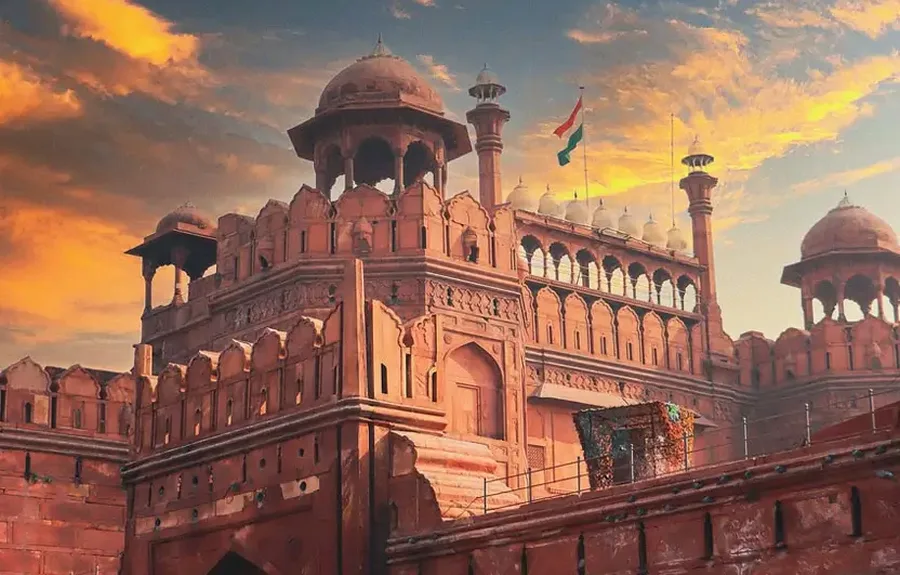
After breakfast, your guide begins with the Red Fort, the palace of the Mughal emperors built by Shah Jahan between 1638 and 1648 and listed by UNESCO in 2007. Inside its red sandstone walls, you walk through the Lahori Gate, the covered Chhatta Chowk bazaar, the Diwan-i-Am and the marble Diwan-i-Khas, once home to the Peacock Throne. Your guide explains how the fort became a symbol of Indian independence, as the Prime Minister raises the national flag here every year on 15 August. The fort is closed on Mondays.
After lunch, visit Humayun's Tomb, built in 1570 and listed by UNESCO in 1993 as the first garden tomb on the Indian subcontinent. Its red sandstone and white marble design, double dome and Charbagh garden inspired many later Mughal buildings, including the Taj Mahal. Your guide explains the long restoration project led by the Aga Khan Trust for Culture, which brought the gardens and water channels back to life. The complex includes several other tombs, such as the octagonal tomb of Isa Khan, built in 1547.
In the late afternoon, visit the Qutub Minar and its Monuments, listed by UNESCO in 1993. The 73-metre tower was begun in 1193 by Qutb-ud-din Aibak and completed by his successors, and its five storeys are decorated with carved bands of Quranic verses. The complex also includes the Quwwat-ul-Islam Mosque, the Alai Darwaza gateway and the famous iron pillar, which has stood without rusting for more than 1,600 years. Return to your hotel for dinner and an early night before the drive to Jaipur. Overnight stay at your hotel in Delhi.
After breakfast, drive about 270 km to Jaipur, which takes five to six hours with a stop for tea and lunch. As you enter Rajasthan, the Aravalli hills rise ahead, topped by the walls of old forts and watchtowers. Check in at your hotel on arrival. Jaipur's walled city was listed by UNESCO in 2019 as an exceptional example of urban design in South Asia. Founded in 1727 by Maharaja Sawai Jai Singh II, it was laid out on a grid based on Hindu architectural texts and ideas from Mughal and Western city design.
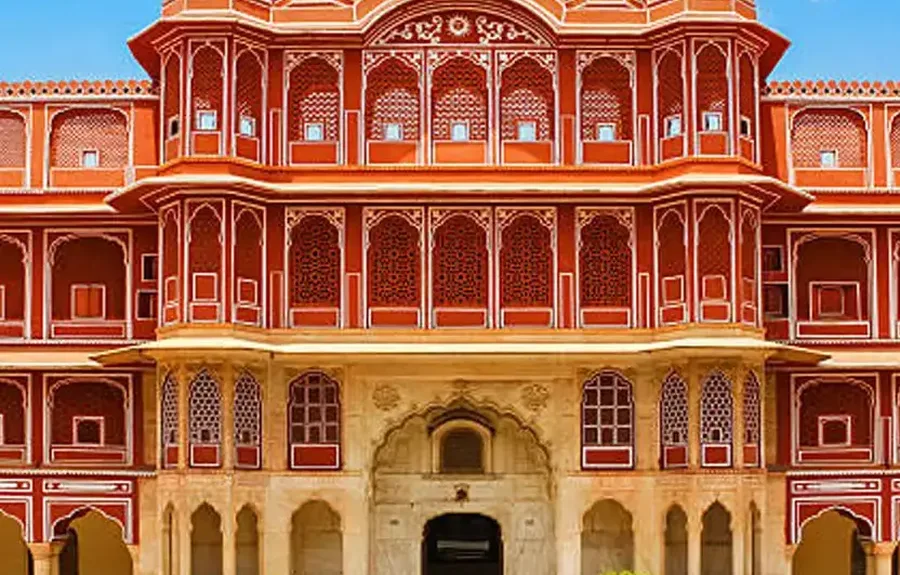
In the afternoon, your heritage guide leads a walk through the walled city, explaining its layout of wide main streets, square blocks called chowkris and markets designed for specific trades. The city was painted pink in 1876 to welcome the Prince of Wales, and the colour is now required by law for buildings in the old city. Visit the City Palace, still partly home to the former royal family, with its museums of royal costumes, weapons and paintings, and the four painted gates of the Pritam Niwas Chowk.
Next, visit Jantar Mantar, listed by UNESCO in 2010, the largest of five observatories built by Sawai Jai Singh II. Its 19 giant stone instruments were designed to measure time, track the sun, moon and planets, and predict eclipses with remarkable accuracy. The Samrat Yantra, a sundial 27 metres tall, can tell the local time to within about two seconds. Your guide explains how each instrument works. End the day with photographs of the Hawa Mahal, the Palace of Winds, from a café across the road. Overnight stay at your hotel in Jaipur.
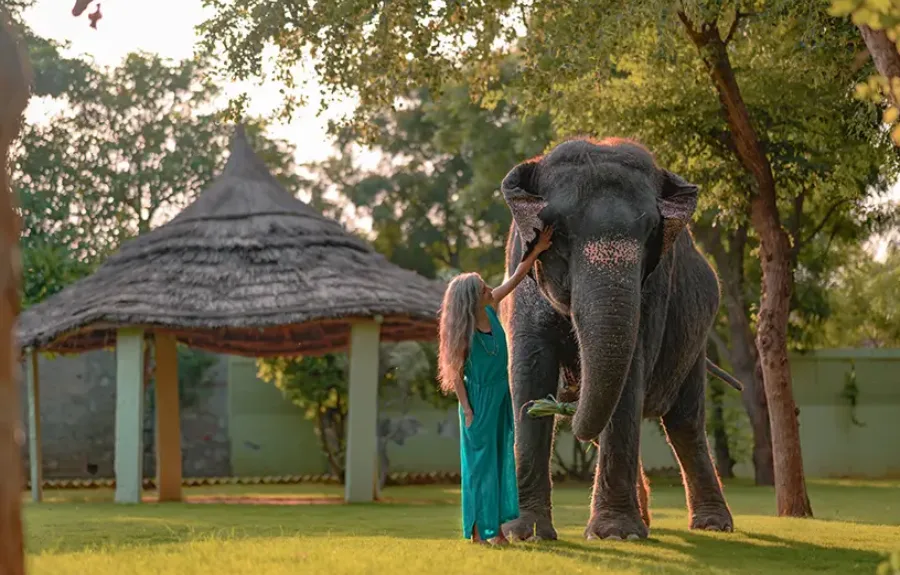
This morning, the Elefantastic team collects you from your hotel for a day visit with elephants at their sanctuary on the outskirts of Jaipur. Each guest is paired with one elephant and introduced to its keeper, who shares the elephant's history, diet and personality. You then feed your elephant by hand with fruit and sugarcane, walk beside it through the grounds and help with bath time, splashing and scrubbing as it enjoys the water. The sanctuary is quiet and green, and the visit is relaxed and personal throughout.
Elefantastic does not offer rides, does not use chains during visits and holds no performances, so the elephants move at their own pace. Wear clothes that can get wet and bring a change. Please book only through official Elefantastic channels, as the sanctuary is not located in Hathi Gaon (Elephant Village). For a longer stay with the herd, the sanctuary also runs a night stay with elephants, the only one of its kind in India. After the session, the team returns you to your hotel in time for lunch.
In the afternoon, visit Amber Fort, one of the six Hill Forts of Rajasthan listed by UNESCO in 2013. The fort was the capital of the Kachwaha Rajputs until 1727, and its palaces blend Hindu Rajput style with Mughal touches. A jeep takes you up the hill, and inside your guide leads you through the Diwan-i-Am, the Ganesh Pol, the Sheesh Mahal and the Sukh Niwas, cooled by water flowing through marble channels. The fort is linked by a tunnel to Jaigarh Fort above, home to the giant Jaivana cannon. Overnight stay at your hotel in Jaipur.
After breakfast, drive about 180 km to Ranthambore, a trip of around three and a half hours through villages and farmland. Check in at your jungle resort and enjoy lunch. Ranthambore is famous both for its tigers and for its hill fort, one of the six UNESCO-listed Hill Forts of Rajasthan. The national park covers about 1,300 square kilometres of dry forest, lakes and cliffs, dotted with ruined pavilions, temples and hunting lodges, which give it a look unlike any other tiger reserve in India.
In the afternoon, set off on a jeep safari in the national park with a trained naturalist. Ranthambore is one of the best places in India to see wild Bengal tigers, and the park is also home to leopards, sloth bears, hyenas, marsh crocodiles and more than 300 species of birds. The park is divided into zones, allotted by the forest department, and each safari lasts about three hours. As the light softens in the late afternoon, animals often come to the lakes to drink, which improves the chances of sightings.
Return to the resort at sunset for dinner and a relaxed evening around the bonfire. Your naturalist may share stories of the park's famous tigers and explain how the forest department protects them. Note that the core zones of the park close from about July to September during the monsoon, so this tour is best taken between October and April. In winter, mornings and evenings in an open vehicle are very cold, so pack warm layers, gloves and a hat for the safaris. Overnight stay at your resort in Ranthambore.
Wake early for a morning safari, when the forest is cool and the animals are active. Your naturalist will choose the best route based on recent tiger movements, and you may see tigers, leopards or sloth bears as well as deer, monkeys and birds. Return to the resort for breakfast. In the late morning, visit Ranthambore Fort, the second UNESCO Hill Fort of this tour, built in the 10th century by the Chauhan rulers on a hilltop inside the park, about 210 metres above the surrounding plain.
The fort was besieged many times, most famously by Alauddin Khalji in 1301, and its massive walls, gates and water tanks show how it was built to withstand long sieges. Climb the stone steps to see the ruined palaces, the Hammir Mahal, Jain temples and the Trinetra Ganesh Temple, one of the oldest Ganesh temples in Rajasthan, where devotees send letters and wedding invitations to the god. Langur monkeys play on the walls, and the views over the forest, lakes and cliffs are wide. Your guide explains why UNESCO listed the fort.
After lunch at the resort, you have the option of a second safari in the afternoon or a relaxed afternoon by the pool. You may also visit the Dastkar Ranthambore craft centre, where local women make embroidered quilts, cushion covers and bags, giving them an income that reduces pressure on the forest. In the evening, enjoy dinner at the resort and pack your bags for tomorrow's drive to Gagron, one of the least visited UNESCO sites in India. Overnight stay at your resort in Ranthambore.
After breakfast, drive south-east about 250 km to Jhalawar, a trip of around five hours through the Hadoti region, a land of rivers, farmland and small towns far from the main tourist routes. Along the way, you may stop at Kota, on the banks of the Chambal River, known for its painted palace and its fine cotton saris called Kota Doria. Lunch is at a local restaurant. Check in at your hotel in Jhalawar, which will be simple but comfortable, as this region sees few foreign visitors and has a relaxed, friendly atmosphere.
In the afternoon, visit Gagron Fort, one of the six UNESCO-listed Hill Forts of Rajasthan and one of the rare jal durg, or water forts, in India. It stands at the meeting point of the Ahu and Kali Sindh rivers, which surround it on three sides, while a moat once protected the fourth. The fort dates back to the 12th century, and its walls and bastions rise straight from the riverbanks. Inside, you see palaces, gates, the tomb of the Sufi saint Mitthe Shah and temples. The views over the rivers are beautiful in the late light.
Your guide explains the fort's history, including the famous sieges in which the Rajput defenders chose death over surrender, and the jauhar, the mass self-immolation of the women, that took place here. Gagron is quiet and rarely visited, so you may have the fort almost to yourself. In the evening, visit the Jhalawar Fort in the town centre, which houses a small museum of sculptures and paintings, or enjoy a quiet dinner at your hotel. The Hadoti region is known for its spicy food and its sweets. Overnight stay at your hotel in Jhalawar.
After breakfast, drive about 220 km west to Chittorgarh, a trip of around four and a half hours. On the way, you may stop at the Chandrabhaga temples near Jhalawar, a group of 7th to 14th-century temples on the banks of the Chandrabhaga River, with fine carvings and a peaceful setting. Arrive in Chittorgarh in the early afternoon and check in at your hotel. Chittorgarh Fort, another of the six UNESCO Hill Forts, is the largest fort in India, covering about 280 hectares on a 180-metre-high plateau above the plain.
In the afternoon, your guide takes you up the winding road through seven massive gates to the top of the plateau. Chittorgarh was the capital of the Mewar kingdom from the 7th to the 16th century and was besieged three times, in 1303, 1535 and 1568, each ending in a jauhar by the women and a final charge by the men. Visit the Vijay Stambha, the Tower of Victory, a nine-storey tower built in the 15th century by Rana Kumbha to celebrate a victory over the Sultan of Malwa, covered with carvings of Hindu gods.
Continue to the Kirti Stambha, the Tower of Fame, a 12th-century Jain tower decorated with figures of the Tirthankaras, and to Rani Padmini's Palace, a white building beside a lotus pool linked to the famous legend of Queen Padmini and Alauddin Khalji. You also see the Meera Temple, associated with the poet-saint Meerabai, and the Kumbha Palace, the oldest building in the fort. As the sun sets, the stones of the fort glow golden. Return to your hotel for dinner. The second half of the tour continues to Kumbhalgarh tomorrow. Overnight stay at your hotel in Chittorgarh.
After breakfast, leave Chittorgarh and drive west into the heart of Mewar, a trip of around four hours with stops. On the way, visit Haldighati, the narrow mountain pass where Maharana Pratap of Mewar fought the Mughal army of Akbar, led by Raja Man Singh of Amber, in June 1576. The pass takes its name from its turmeric-yellow soil. A small museum tells the story of the battle and of Chetak, Pratap's loyal horse, who carried his wounded master to safety before dying, and whose memorial stands nearby in a quiet garden.
Continue through the Aravalli hills to Kumbhalgarh, the fourth of the UNESCO-listed Hill Forts on this tour, and check in at your resort in the forest below the walls. After lunch and a short rest, your guide takes you into the fort, built by Rana Kumbha in the 15th century at more than 1,000 metres above sea level. Its outer wall stretches about 36 km along the ridges, enclosing more than 360 temples, and it was the birthplace of Maharana Pratap. Climb to the Badal Mahal at the summit for views over the hills towards the desert.
Your guide explains why UNESCO listed Kumbhalgarh with the other Hill Forts in 2013: each shows a different way that Rajput builders used the natural landscape for defence, from rivers at Gagron and forest at Ranthambore to the high ridge here. In the evening, return to the fort for the sound and light show, which tells its story against the floodlit walls. The forest around the fort is part of the Kumbhalgarh Wildlife Sanctuary, and at night you may hear jackals calling from the valley. Overnight stay at your resort in Kumbhalgarh.
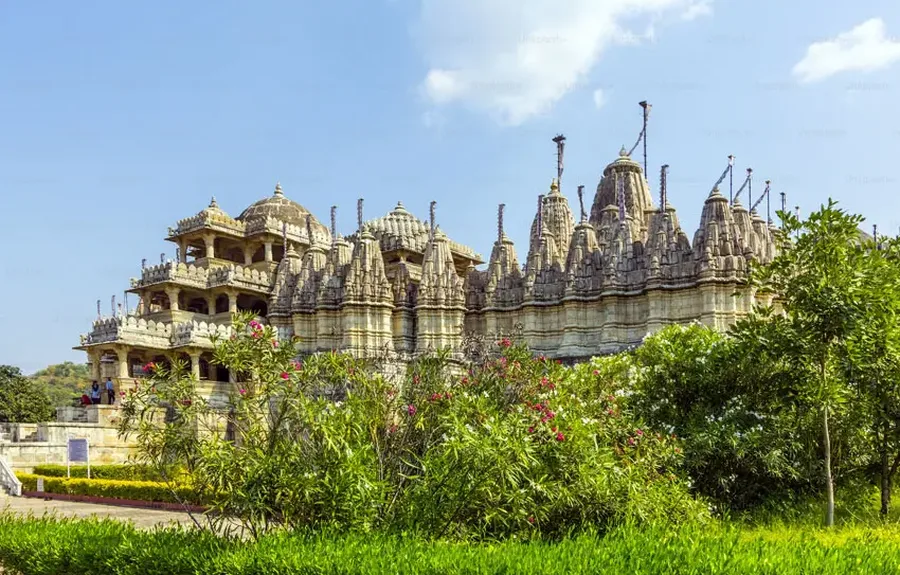
Take an early walk along a short section of the great wall of Kumbhalgarh while the light is soft and the air is cool, then return to the resort for breakfast. Drive about 50 km to Ranakpur, around an hour and a half on winding hill roads through the forest. Although it is not on the UNESCO list, the Chaumukha Jain Temple is one of the masterpieces of Indian architecture, built in white marble in 1439 with 1,444 carved pillars, each different, holding up domes covered with patterns of flowers, dancers and mythical figures.
Non-Jain visitors are admitted from around 12:00 pm to 5:00 pm, and leather items, food and shorts are not allowed. Your guide explains the Jain idea of the four-faced temple, which allows the main image of Adinath to be seen from every direction, and the legend of the merchant Dharna Shah, who saw the design in a dream. After the visit, enjoy a simple vegetarian lunch near the temple. The forested valley around Ranakpur is home to langurs, peacocks and many birds, and the setting is peaceful and green.
In the afternoon, drive about 170 km north to Jodhpur, a trip of around three and a half hours, as the green hills slowly give way to the dry plains of Marwar. You may see Bishnoi villagers in white turbans and herds of blackbuck antelope in the fields near the road. Arrive in Jodhpur in the early evening and check in at your hotel, ideally a haveli in the old city with views of Mehrangarh Fort. Enjoy dinner on a rooftop facing the floodlit fort. Tomorrow you continue west into the Thar Desert. Overnight stay at your hotel in Jodhpur.
After breakfast, set off west across the Thar Desert for Jaisalmer, about 285 km and five hours away. The landscape opens up into wide plains of sand and scrub, dotted with khejri trees, grazing camels and villages of round mud huts. Stop for tea and lunch at Pokhran, where the 14th-century Balagarh Fort has a small museum. Your driver will pause wherever you would like to photograph the desert, a herder with his flock or a village well. The road is straight and quiet, and the open sky makes the desert feel endless.
Arrive in Jaisalmer in the early afternoon and check in at your hotel. In the late afternoon, your guide takes you into Jaisalmer Fort, the last of the six Hill Forts on this tour and the only one still fully lived in, with about 3,000 people inside its walls. Founded in 1156 by Rawal Jaisal of the Bhati Rajputs on Trikuta Hill, it rises from the desert in yellow sandstone with 99 bastions. Walk through its gates to the Dussehra Chowk, the main square, and the seven-storey Raj Mahal, with views over the city and the dunes.
Your guide explains the conservation challenges the fort faces, from water seeping into its foundations to the pressure of tourism, and why UNESCO describes it as a desert fort that grew into a living town. As the sun sets, drive to Vyas Chhatri, a group of sandstone cenotaphs on a hill outside the walls, the best place to watch the whole fort glow gold and then orange in the last light. Return to your hotel for dinner on a rooftop terrace facing the illuminated walls. Overnight stay at your hotel in Jaisalmer.
Return to the fort in the morning to visit its seven Jain temples, built between the 12th and 15th centuries in golden sandstone, with carved pillars, ceilings and thousands of small figures. The Gyan Bhandar, a library founded in the 15th century, holds rare palm-leaf manuscripts, some among the oldest in India, and is open to visitors at set hours. Then walk down to the old town to see the merchant havelis: the five linked mansions of Patwon Ki Haveli, the peacock-roofed Salim Singh Ki Haveli and the twin-carved facade of Nathmal Ki Haveli.
After lunch and a rest, drive about 6 km north to Bada Bagh, where the royal cenotaphs of Jaisalmer's rulers stand on a ridge beside an old garden and dam, then continue to Kuldhara, an abandoned Paliwal Brahmin village whose roofless stone houses have stood empty since the early 19th century. Your guide shares the legend of its sudden abandonment and the real reasons historians suggest, from heavy taxes to drought. The quiet lanes and empty houses give a strong sense of how fragile life in the desert has always been.
In the late afternoon, continue to the Sam Sand Dunes, about 40 km west of Jaisalmer, for a short camel ride to the top of a dune to watch the sun set over the rolling sand. Stay for an evening of Rajasthani folk music by Manganiyar musicians at one of the desert camps, with dinner served under the stars, before driving back to your hotel in Jaisalmer. The night sky over the desert is clear and full of stars. Tomorrow you return to Jodhpur for the final stop of the tour. Overnight stay at your hotel in Jaisalmer.
After breakfast, drive back east to Jodhpur, about five hours across the desert, with a stop for lunch on the way. If time allows, stop at Osian, about 65 km before Jodhpur, to see its group of Hindu and Jain temples from the 8th to 11th centuries, among the oldest in Rajasthan, with finely carved walls and doorways. The Sachiya Mata Temple on its hill and the Mahavira Jain Temple are the highlights, and the site is rarely crowded. Arrive in Jodhpur in the early afternoon and check in at your hotel.
In the afternoon, visit Mehrangarh Fort, which, although not on the UNESCO list, is one of the largest and most impressive forts in India. Founded by Rao Jodha in 1459 on a cliff 125 metres above the city, it has seven gates, walls up to 36 metres high and richly decorated palaces such as the Phool Mahal, Moti Mahal and Takhat Vilas. The museum holds superb collections of palanquins, howdahs, weapons and miniature paintings. Your guide compares it with the UNESCO Hill Forts you have seen and explains the history of the Rathore rulers.
As the sun sets, visit Jaswant Thada, the white marble memorial near the fort, whose thin marble walls glow in the evening light, then walk through the blue lanes of Brahmpuri and the busy Clock Tower market, where traders sell spices, textiles and silver. Enjoy a farewell dinner on a rooftop facing the illuminated fort, and look back on a fortnight that has taken you to every cultural World Heritage Site in Rajasthan, as well as the three in Delhi. Pack for tomorrow's flight. Overnight stay at your hotel in Jodhpur.
After breakfast, transfer to Jodhpur airport for your flight to Delhi and onward international connection, keeping at least four hours between flights. For the natural UNESCO site of Rajasthan, Keoladeo, see our Rajasthan Bird Watching and Wildlife Tour.
Our assorted tours, for your first, second or nth time to India!
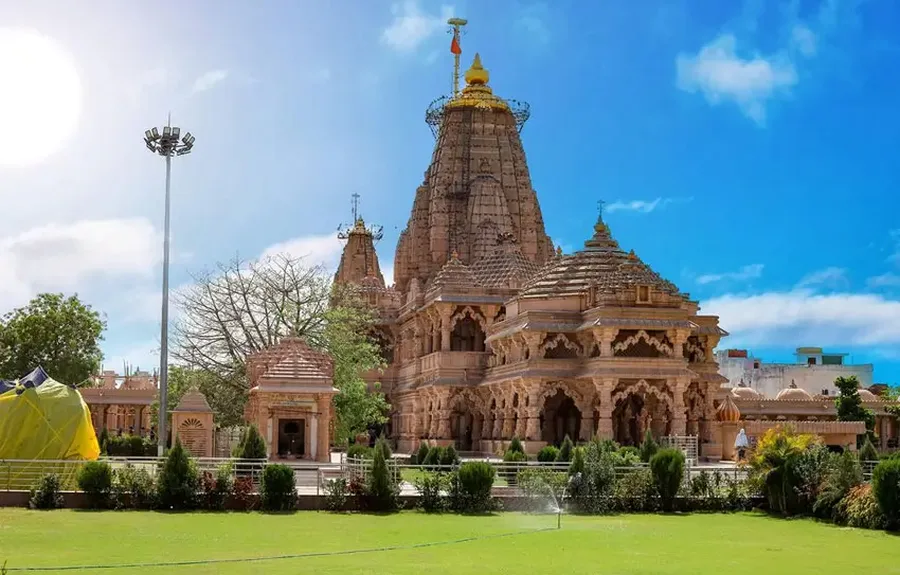
Beyond the famous desert cities lies a greener Rajasthan of lakes, wooded hills and small royal capitals that most visitors never reach. The...
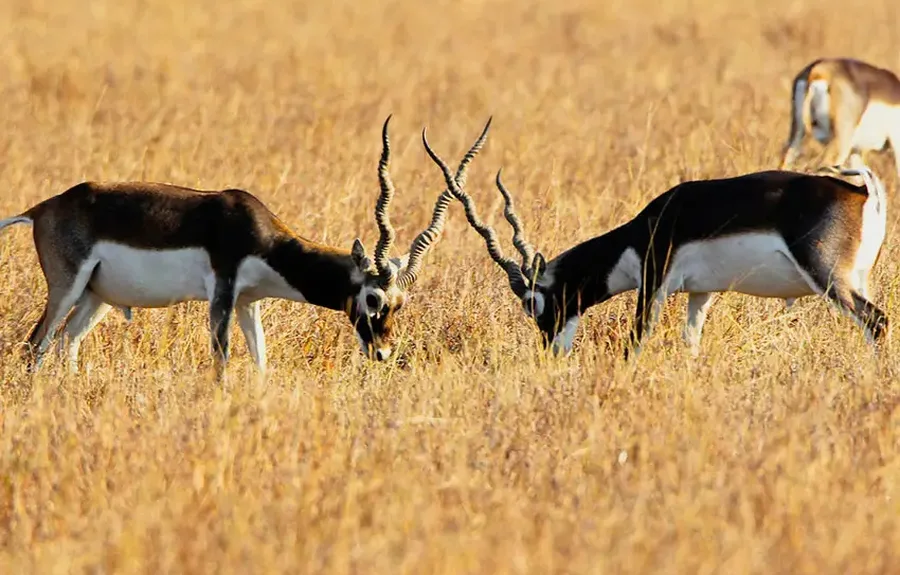
More than 500 bird species have been recorded in Rajasthan, from wintering cranes and pelicans on the wetlands of the east to sandgrouse,...
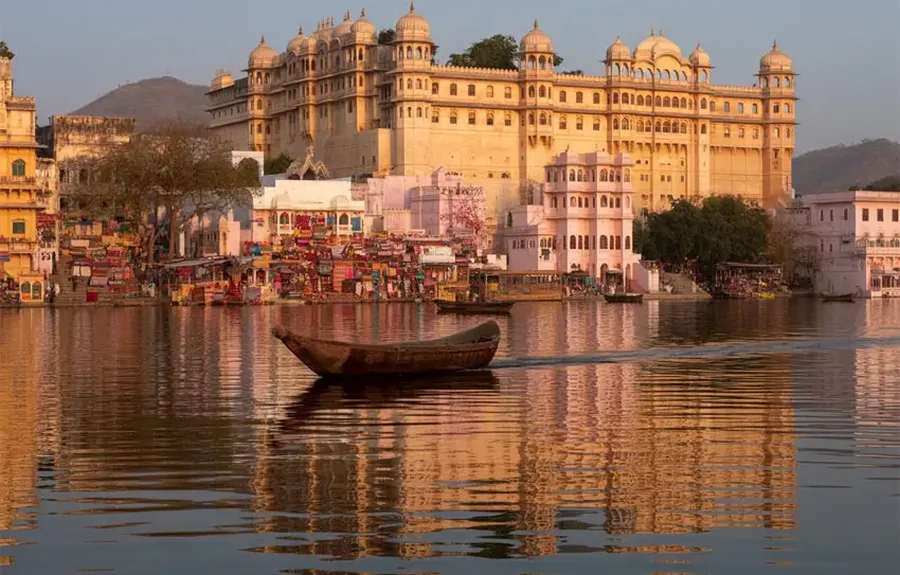
Rajasthan rewards patience, and the Rajasthan Tour for Senior Travelers is designed to let you enjoy it without strain. Over 11 nights and...

Almost every village in Rajasthan is known for a craft, and many of them are still practised by hand in family workshops, exactly...
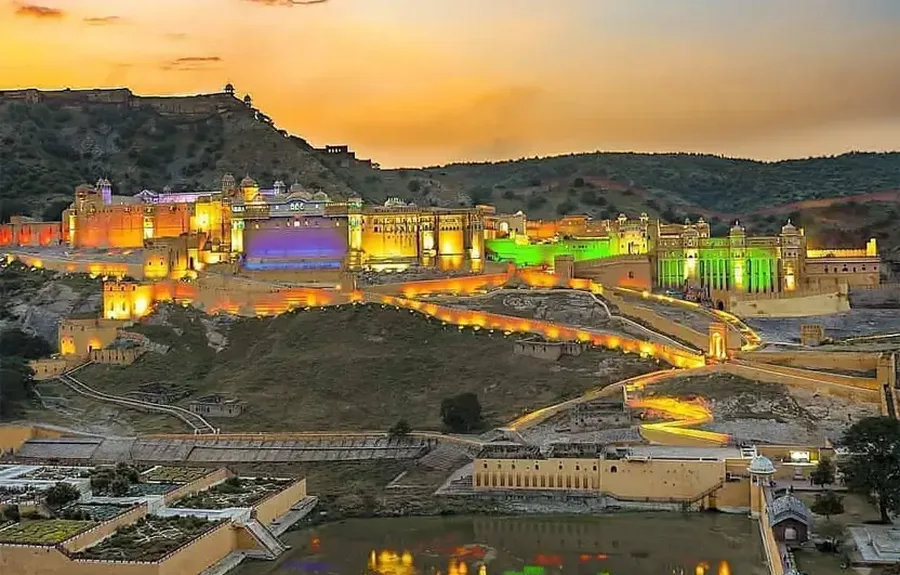
Most visitors see Rajasthan through a car window between one fort and the next. The Rajasthan Slow Travel Tour takes the opposite approach...
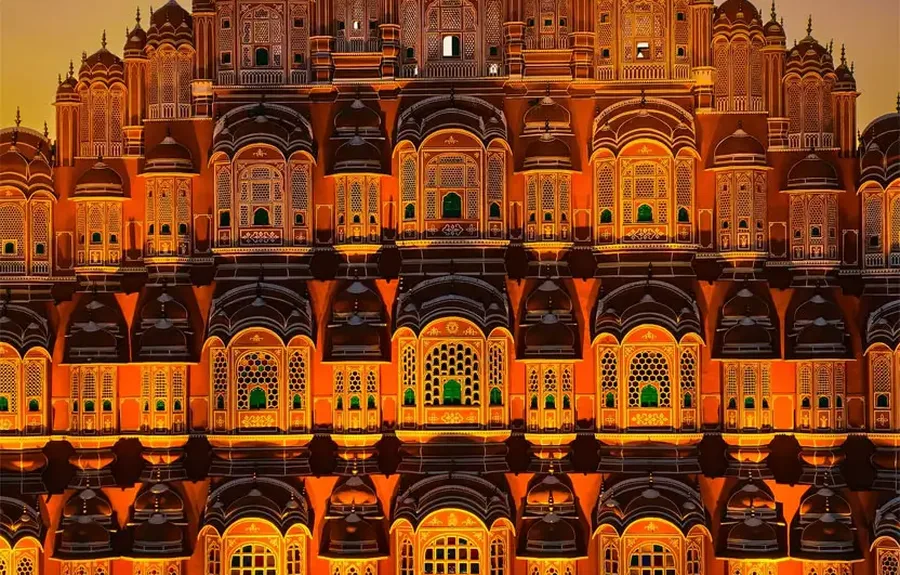
Lamps on every ghat, palaces outlined in light and fireworks reflected in still water make Diwali in Udaipur one of the loveliest festival...
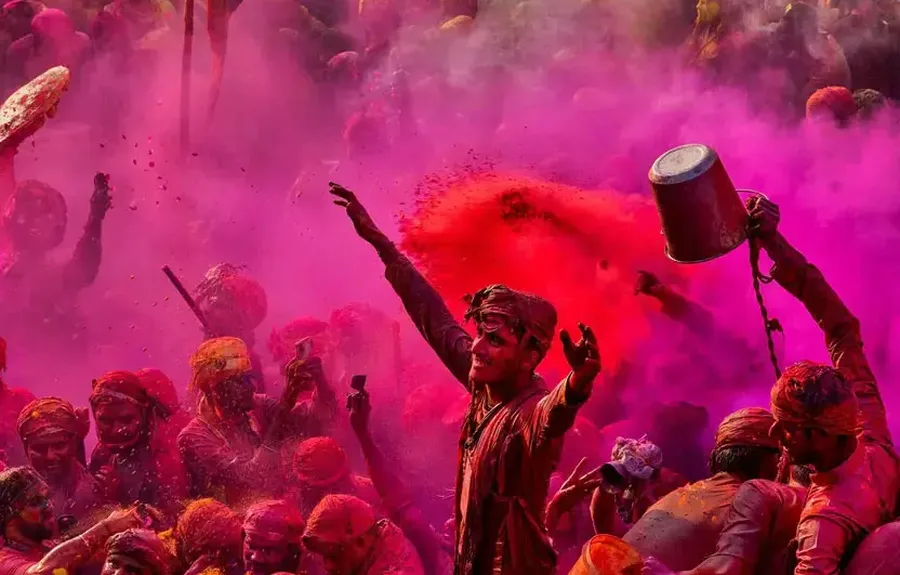
Holi arrives with the full moon of Phalgun, usually in March, when winter ends, the wheat turns gold and the whole of North...
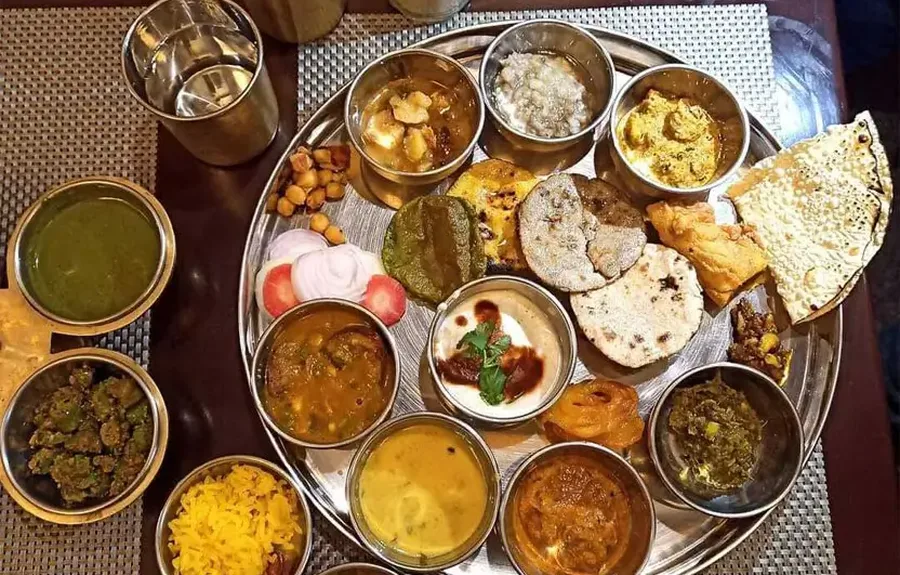
Desert cooking is a cuisine of clever survival. With little water and few fresh vegetables, Rajasthani cooks built a whole kitchen around dried...
Turbans in saffron and magenta, indigo walls, golden sandstone and white marble reflected in still lakes: Rajasthan may be the most colourful state...
For a few days each autumn, around 50,000 camels, horses and cattle gather on the sands outside a small holy town, along with...