Udaipur - Narlai - Ranakpur - Jodhpur - Jaisalmer - Bikaner - Jaipur
Most visitors see Rajasthan through a car window between one fort and the next. The Rajasthan Slow Travel Tour takes the opposite approach over 14 nights and 15 days, with most stops lasting two or three nights, drives kept short, and plenty of unplanned hours for walking, reading on a terrace or sharing tea with a village family. The route starts in Udaipur and moves north through the granite hill village of Narlai, the marble temple of Ranakpur, the blue city of Jodhpur, the desert fort of Jaisalmer and the merchant city of Bikaner, before ending in Jaipur. Mornings usually hold a single guided visit, and afternoons are left open.
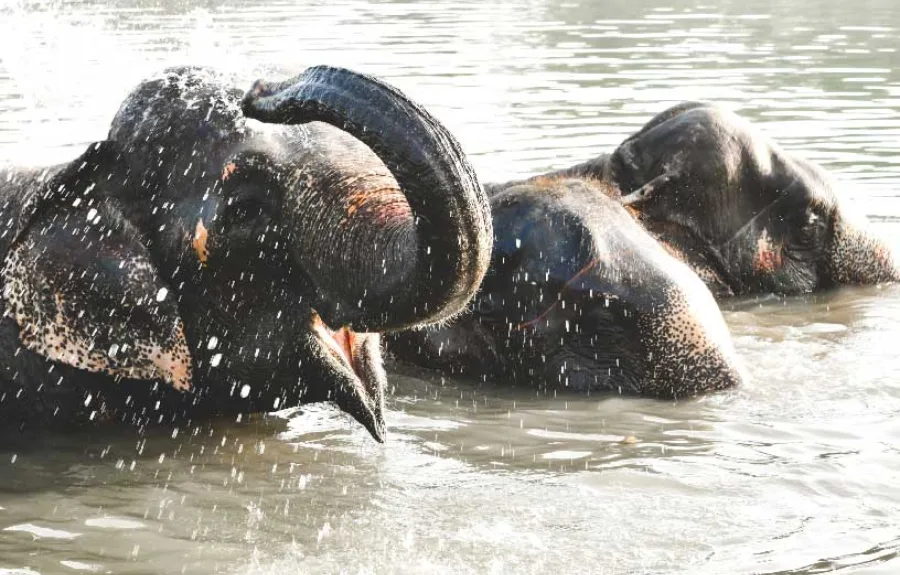
A private car with an English-speaking driver is always on hand, but many days involve no driving at all. Hotels are chosen for character and comfort, from lakeside havelis to a 17th-century hunting lodge and a quiet desert camp. In Jaipur, the tour ends with a gentle morning among rescued elephants at the Elefantastic elephant sanctuary, where the herd is fed, walked and bathed rather than ridden. Travellers who want more village life can compare our Rajasthan Village Life and Cultural Tour or the Luxury Rural Rajasthan Tour Package, both among our Rajasthan tour packages.
Package Highlights
• Three unhurried nights in lakeside Udaipur
• Morning walks through the old city and a cooking session in a local home
• Two nights at Narlai among granite hills, temples and stepwells
• Rabari herder visit and a jeep drive in leopard country
• Ranakpur's marble Jain temple and a night in the Aravalli forest
• Slow days in Jodhpur's blue city below Mehrangarh Fort
• Jaisalmer's fort lanes and a quiet desert camp
• Bikaner's havelis and a final morning with rescued elephants in Jaipur
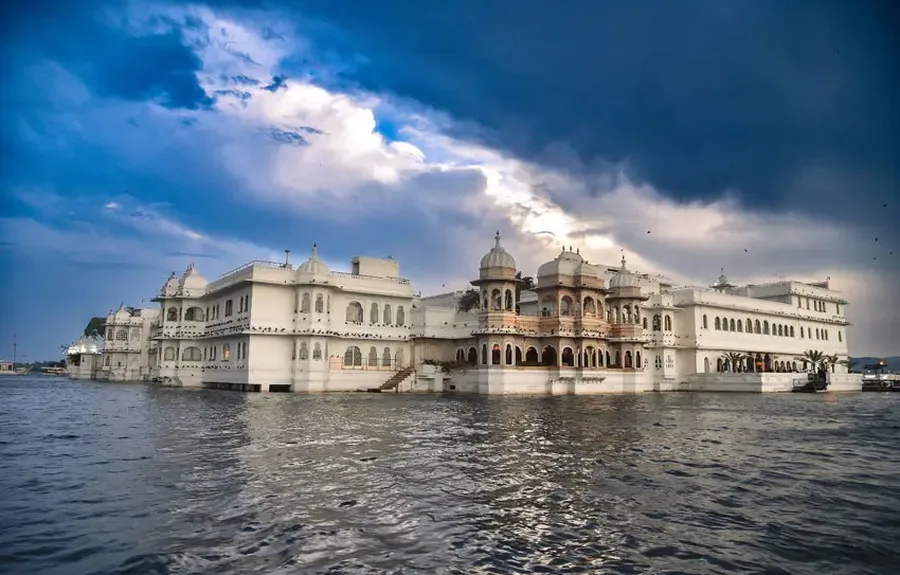
Your slow trip through Rajasthan begins in Udaipur, the City of Lakes, which has direct flights from Delhi, Mumbai and Bengaluru. Our representative meets you at Maharana Pratap Airport and your driver takes you about 30 minutes to your hotel near Lake Pichola, ideally a small haveli with a terrace over the water. There is no sightseeing planned today. Check in, unpack fully, since you will be here for three nights, and take time to settle in. The pace of this tour is meant to be calm from the very first hour.
Udaipur was founded in 1559 by Maharana Udai Singh II, and it remained the capital of the Mewar kingdom until Indian independence. The city is built around several man-made lakes and surrounded by the green Aravalli hills, which keep it cooler and greener than most of Rajasthan. Spend the afternoon resting, reading on your terrace or taking a gentle walk along the lakeside lanes near your hotel. Many small cafés and bookshops in the old city are perfect for a quiet cup of tea while you watch the boats on the water.
In the evening, our coordinator meets you at your hotel with your vouchers and a 24-hour helpline number, and talks through the route and the options for each day. On this tour, nothing is rushed, and you can swap, skip or extend activities as you wish. Then enjoy dinner on a rooftop overlooking the lake as the lights of the City Palace and the Lake Palace come on and reflect on the still water. It is one of the most peaceful views in India, and a lovely way to begin. Overnight stay at your hotel in Udaipur.
After a leisurely breakfast, meet your guide for a slow morning walk through the old city, starting at the Gangaur Ghat, where locals bathe, wash clothes and pray at the water's edge. Wander through narrow lanes lined with old havelis, small temples, tailors, silversmiths and miniature painters. Stop at the Jagdish Temple, a 17th-century temple dedicated to Lord Vishnu, to watch the morning prayers. There is no fixed route, and your guide will follow your interests, whether that is crafts, architecture, food or simply chatting with shopkeepers.
Return to your hotel for lunch and a long afternoon rest, a key part of slow travel in the heat of the day. In the late afternoon, join a home cooking session with a local family in their kitchen. You learn to make simple Mewari dishes, such as dal, kadhi, aloo pyaaz and fresh chapati, and to temper spices in hot ghee. The family will share stories of daily life in Udaipur, from festivals and weddings to the changes the city has seen. Then sit down together to enjoy the meal you have cooked.
After dinner with the family, walk back through the quiet evening lanes to your hotel, perhaps stopping at the Ambrai Ghat, which offers one of the best night views of the City Palace across the lake. Udaipur is safe and peaceful in the evening, and the soft lights on the water make it a lovely place for an evening stroll. Spend the rest of the night at leisure. Tomorrow offers a palace visit and a boat ride, with plenty of time in between. Overnight stay at your hotel in Udaipur.
In the cool of the morning, join a gentle cycle ride with a local guide into the countryside around Udaipur, along quiet lanes past farms, villages and small lakes. The ride is flat and easy, about 15 to 20 km at a relaxed pace, with stops to visit a village school, a potter's workshop or a farmer's field. You can also choose a walk instead if you prefer. Return to your hotel for a late breakfast and a rest. The countryside around Udaipur is green and peaceful, a different side of Rajasthan from the busy cities.
In the late morning, visit the City Palace, the largest palace complex in Rajasthan, built over nearly 400 years by the Maharanas of Mewar. Take your time in the courtyards, balconies and galleries, including the Mor Chowk with its peacock mosaics and the Crystal Gallery. The views over Lake Pichola from the upper terraces are superb. Your guide will not rush you, and you can sit and enjoy the views as long as you like. Afterwards, enjoy a long lunch at a lakeside café and a quiet afternoon at leisure.
In the late afternoon, take a boat ride on Lake Pichola, gliding past the ghats, the palace and the Lake Palace, and stopping at Jag Mandir, an island palace with gardens, to watch the sun set over the hills. In the evening, you may attend the Dharohar folk dance show at Bagore Ki Haveli, or simply enjoy a quiet dinner on your terrace. Pack your bags tonight, as tomorrow you move to the small village of Narlai, about three hours north. Overnight stay at your hotel in Udaipur.
After a relaxed breakfast, drive about 130 km north to Narlai, a trip of around three hours through the Aravalli hills, with stops for tea and photographs along the way. Narlai is a small village in the Pali district, surrounded by huge granite boulders and hills, with dozens of small temples, stepwells and old havelis. It sees few visitors compared with the big cities, and life here moves at the pace of the seasons. Check in at your hotel, which may be a 17th-century royal hunting lodge, now a beautiful heritage hotel with courtyards and terraces.
After lunch and a rest, take a village walk with a local guide through the lanes of Narlai. Visit the small Jain and Hindu temples, some dating back over 1,000 years, and the stepwell at the edge of the village, where women once gathered to draw water and chat. Villagers are friendly and curious, and you may be invited into a home for a cup of chai. The walk is gentle, and your guide will explain the traditions and daily life of the village, from farming and cattle herding to festivals and marriages.
In the late afternoon, climb the steps to the Shiva temple on top of the giant granite hill that rises behind the village, with a large white elephant statue on the summit, or simply watch the sunset from the hotel terrace. As darkness falls, the village grows quiet, and the stars shine brightly above the hills. Enjoy dinner at your hotel, which may be served by candlelight at the old stepwell or in a courtyard, accompanied by local musicians. Overnight stay at your hotel in Narlai.
Wake early for a jeep drive through the granite hills around Narlai, which are part of the same leopard landscape as nearby Jawai. With a local naturalist, look for leopards on the rocks at dawn, as well as hyenas, jackals, blue bulls and many birds of prey. Sightings are not guaranteed, but the landscape at sunrise, with mist in the valleys and light on the boulders, is beautiful in itself. Return to the hotel for a late breakfast and some quiet time by the pool or in the gardens.
In the late morning, visit a Rabari settlement near Narlai, where herders live with their flocks of sheep, goats and camels. The Rabari men wear white clothes and red turbans, and the women dress in black and red with heavy silver jewellery. Your guide helps you interact respectfully and explains the Rabari way of life, which has changed little over centuries, and their peaceful coexistence with the leopards of the area. You may watch them milk the animals, make ghee or prepare a simple meal over a fire.
Spend the afternoon at leisure at your hotel, reading, swimming or simply enjoying the peace of the countryside. In the late afternoon, take a short walk to a nearby lake or field to watch the farmers bring their cattle home as the sun sets. Narlai is a place to slow down completely, and many guests find these quiet hours the part of the trip they remember best. In the evening, enjoy a farewell dinner at the hotel, perhaps under the stars at the old stepwell, lit with lamps. Overnight stay at your hotel in Narlai.
After a relaxed breakfast, drive about 30 km to Ranakpur, a short trip of around 45 minutes through the green Aravalli hills. Check in at your resort, set in the forest and surrounded by hills, with gardens and a pool. Ranakpur is home to one of the most beautiful temples in India, and staying the night here, rather than passing through, means you can visit at a slow pace and enjoy the peaceful forest setting. Enjoy lunch at the resort and a rest before the afternoon visit, as non-Jains can enter only from midday.
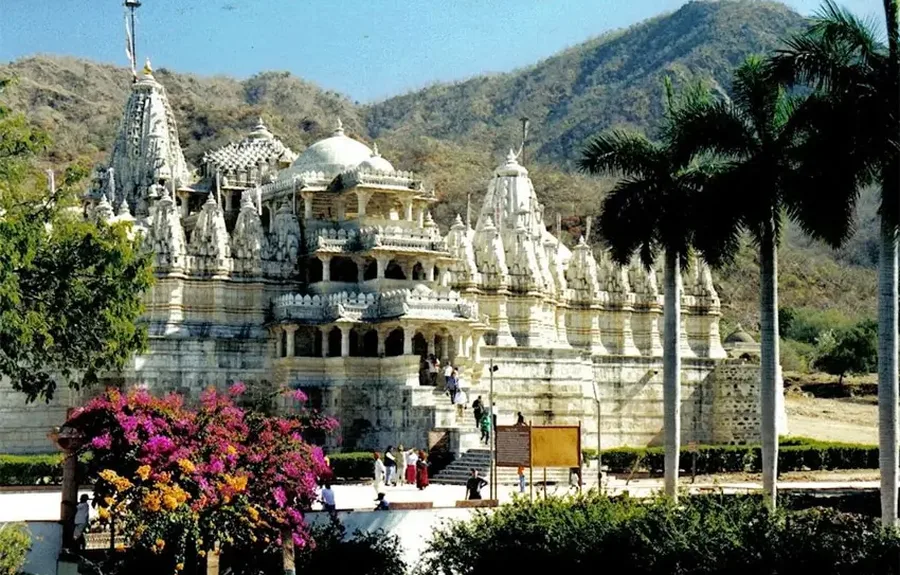
In the afternoon, visit the Chaumukha Jain Temple, built in the 15th century from white marble and dedicated to Adinath, the first Tirthankara. Non-Jain visitors may enter from around 12:00 pm to 5:00 pm, and leather items, food and shorts are not allowed. Inside, the temple is a forest of 1,444 marble pillars, each carved differently, supporting domes and ceilings covered with intricate patterns. Light falls through open courtyards and changes through the afternoon. Your guide will leave you time to sit quietly and simply look.
After the temple, walk to the smaller Surya Narayan Temple, a sun temple with carvings of horses and chariots, and the quiet riverbank nearby. Return to your resort for the evening. The forest around Ranakpur is home to langur monkeys, peacocks and many birds, and the sounds of the jungle fill the night. Enjoy dinner at the resort under the stars, then rest well before tomorrow's drive to Jodhpur. This is a calm, restful stop in the middle of the tour. Overnight stay at your resort in Ranakpur.
After a slow breakfast and a short nature walk around the resort with a local guide, who can point out birds, trees and medicinal plants of the Aravalli forest, drive about 170 km to Jodhpur, around three and a half hours. The road descends from the green hills into the semi-desert plains of Marwar, where you may see Bishnoi villagers in white turbans and blackbuck antelope in the fields. Your driver will stop whenever you wish, and lunch is at a roadside restaurant or a heritage hotel on the way.
Arrive in Jodhpur in the afternoon and check in at your hotel, ideally a haveli in the old city with a rooftop view of Mehrangarh Fort, where you will stay for two nights. Jodhpur, the Blue City, was founded in 1459 by Rao Jodha, and its old quarter is painted in shades of blue. Rest after the drive, and enjoy the view of the massive fort rising on its rocky ridge above the city. There is no sightseeing planned this afternoon, so take your time to settle in and enjoy the haveli.
In the evening, take a gentle walk with your guide to the Clock Tower and the Sardar Market, where traders sell spices, textiles, vegetables and silver in a lively scene. Try a mirchi bada, a large fried chilli fritter, and a makhaniya lassi, a rich saffron yoghurt drink, two Jodhpur specialities. Then return to your haveli for dinner on the rooftop, with views of the fort lit up against the night sky. The old city is lively in the evening but calm by night. Overnight stay at your hotel in Jodhpur.
After breakfast, walk up with your guide to Mehrangarh Fort, either on foot through the old city lanes, which takes about 30 minutes, or by car. Built from 1459 on a sheer rock 125 metres above the city, it is one of the largest forts in India. Take your time in the palaces, including the Moti Mahal, the Phool Mahal and the Sheesh Mahal, and the museum's collections of palanquins, howdahs, paintings and turbans. The audio guide is excellent, and the views over the blue city from the ramparts are wide and beautiful.
After lunch at the fort's café, walk down through the blue lanes of Brahmpuri, the old quarter below the fort, at your own pace. Stop to chat with residents, visit small temples and watch daily life, from women washing clothes at the doorstep to children playing cricket in the narrow alleys. Your guide explains the history of the blue houses and the many stories about why they were painted. Return to your haveli for an afternoon rest. There is nothing else planned until the evening, so enjoy the quiet.
In the late afternoon, visit Toorji Ka Jhalra, a restored 18th-century stepwell surrounded by cafés, where you can sit with a coffee and watch the local boys dive into the water. Then walk to Jaswant Thada, the white marble memorial near the fort, for sunset, when its thin marble walls glow in the warm light. Return to your haveli for dinner on the rooftop. The second half of the tour continues tomorrow with more time in Jodhpur before the drive into the desert. Overnight stay at your hotel in Jodhpur.
Begin your third day in Jodhpur with an early walk in the Rao Jodha Desert Rock Park, a 70-hectare ecological park right below Mehrangarh Fort, restored since 2006 with native desert plants on the volcanic rock of the ridge. Trails wind between boulders, small canyons and old city walls, with wide views of the fort and the blue city. A local naturalist can walk with you and point out desert plants, lizards and birds such as the Indian robin and the rock pigeon. The walk takes about an hour and a half at an easy pace.
After breakfast back at your haveli, spend the late morning however you like. Some guests sit on the rooftop with a book, others wander the old city alone, now that the lanes feel familiar. If you would like company, your guide can take you to a family-run workshop where artisans make bandhej tie-dye, tying thousands of tiny knots into the cloth before dyeing it in bright colours. Lunch can be at a small local restaurant, where dal, bajra roti and seasonal vegetables are served in simple steel thalis.
In the late afternoon, drive about 9 km north to the Mandore Gardens, the site of the old capital of Marwar before Jodhpur was founded. The red sandstone cenotaphs of the Rathore rulers, built like Hindu temples, stand among trees full of langur monkeys and peacocks, and the gardens are quiet at this hour. Return to the city and enjoy a slow last evening in Jodhpur, perhaps a makhaniya lassi at the Clock Tower and dinner on your haveli rooftop, watching the fort lights come on. Overnight stay at your hotel in Jodhpur.
After a leisurely breakfast, set off west towards Jaisalmer, about 285 km across the Thar Desert, a drive of around five hours that your driver will break into easy stages. The plains grow wider and emptier, with sand, scrub, grazing camels and the occasional village of round mud huts. Stop for tea at a roadside stall and for lunch at Pokhran, a small town with a 14th-century red sandstone fort whose heritage hotel serves a good thali. There is no hurry today, and you can stop wherever the desert scenery makes you want to look longer.
Arrive in Jaisalmer in the afternoon and check in at your hotel, ideally a heritage property with a terrace facing the golden fort, where you will stay for two nights. Founded in 1156 by Rawal Jaisal, the city grew rich from the camel caravans that crossed the desert carrying silk, spices and salt, and the merchants spent their wealth on carved sandstone havelis. Rest after the drive and watch the light change on the walls of the fort from your terrace as the afternoon goes on.
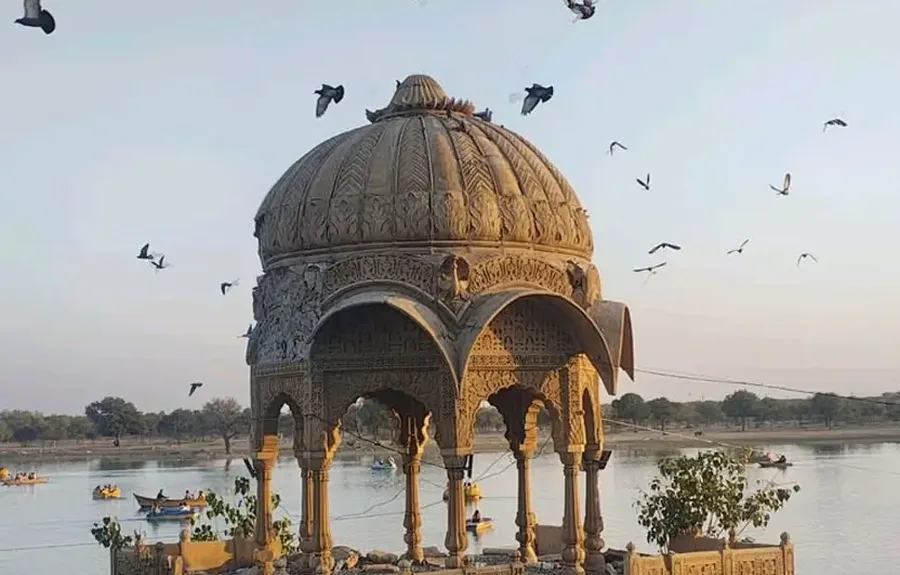
In the late afternoon, take a slow walk to Gadisar Lake, a 14th-century reservoir lined with small temples, ghats and the carved stone gateway of Tilon Ki Pol. Sit on the steps and watch local families feeding the catfish and pigeons as the sun goes down, a calm scene that changes little from year to year. Then walk back through the bazaar, where shops sell mirror-work textiles, camel leather and silver jewellery, and enjoy dinner on a rooftop with the fort lit up against the night sky. Overnight stay at your hotel in Jaisalmer.
After breakfast, walk up into Jaisalmer Fort with your guide, one of the few living forts in the world, where about 3,000 people still live inside its golden walls. Instead of rushing between sights, spend the morning wandering its narrow lanes, stopping to chat with shopkeepers, watching women sweep their doorsteps and children head to school. Visit the seven Jain temples, with their intricately carved sandstone pillars and ceilings, and climb to a rooftop café inside the walls for a cup of tea with views across the desert to the horizon.
Return to your hotel for lunch and a long afternoon rest, as the desert sun is strong in the middle of the day. In the late afternoon, walk through the old town below the fort to see the merchant havelis, including the five linked mansions of Patwon Ki Haveli, part of which is a museum showing how the merchant families lived, with furniture, kitchen utensils and costumes. Linger at the Salim Singh Ki Haveli, with its peacock-shaped brackets and blue cupolas, and the Nathmal Ki Haveli, carved by two brothers.
As the sun sets, walk or drive to Vyas Chhatri, a group of sandstone cenotaphs on a low hill, and sit quietly as the fort turns gold, then orange, then pink in the fading light. This is one of the most peaceful sunset spots in Rajasthan, and there is no need to rush back. In the evening, enjoy dinner at a rooftop restaurant inside the fort, where local Manganiyar musicians often play the kamaicha, a bowed string instrument, and sing folk songs of the desert. Overnight stay at your hotel in Jaisalmer.
After a slow breakfast, check out and drive about 45 km south-west to the dunes near Khuri, a small village quieter and less commercial than the more famous Sam dunes. On the way, stop at Kuldhara, the abandoned Paliwal village, whose roofless stone houses and silent lanes invite you to wander slowly. Then check in at a small desert camp with comfortable tents, proper beds and attached bathrooms. The rest of the day follows the rhythm of the desert, with long rests in the shade during the heat and activity only in the cooler hours.
In the late afternoon, take a walk through Khuri village with a local host, where round mud huts are decorated with white geometric patterns painted by the women, and families keep goats, camels and cattle in thorn-fenced yards. You may be invited to sit for a cup of chai and watch bajra rotis being cooked over a small fire. Then set off on a camel ride into the dunes at an unhurried pace, reaching the top of a high dune in time to watch the sun sink into the endless sand.
Back at camp, enjoy a quiet evening of folk music around a small bonfire, played by local musicians, followed by a simple Rajasthani dinner under the open sky. Afterwards, lie back on a blanket and look up at the stars, which shine with remarkable brightness far from any city lights. Nights in the desert can be very cold in winter, so the camp provides thick quilts. This evening, with no schedule and no traffic, often captures the spirit of slow travel better than any monument. Overnight stay at your desert camp in Khuri.
Wake early to watch the sunrise over the dunes, then enjoy breakfast at the camp before setting off north-east to Bikaner, about 360 km and six hours away, the longest drive of the tour, broken by long tea and lunch stops. The road crosses the empty heart of the Thar, with dunes, scrub and small villages, and you may spot chinkara gazelles, desert foxes and flocks of sheep. Your driver will keep the pace easy and stop wherever you like to stretch your legs or take photographs.
Arrive in Bikaner in the mid-afternoon and check in at your hotel, which may be part of the red sandstone Lalgarh Palace, built in the early 20th century and now partly a heritage hotel. Rest for an hour, then visit the National Research Centre on Camel, about 8 km away, in the late afternoon, when hundreds of camels return from grazing in the desert. Watch the calves in the pens and try camel milk ice cream or coffee at the small café. The scene of camels walking home at dusk is simple and lovely.
In the evening, take a gentle walk with your guide through the old walled city to see the carved red sandstone Rampuria Havelis in the soft light, and stop at a family sweet shop for rasgulla and fresh bhujia, the spicy gram flour snack that Bikaner is famous for. The lanes are friendly and lively in the evening. Return to your hotel for dinner. Tomorrow morning brings Junagarh Fort before the train or drive to Jaipur. Overnight stay at your hotel in Bikaner.
After breakfast, visit Junagarh Fort, built between 1589 and 1594 by Raja Rai Singh and one of the few major forts in Rajasthan built on flat ground. Take your time in its richly decorated palaces, including the Anup Mahal, covered in red and gold lacquer, the Phool Mahal with its mirror work and the Badal Mahal, painted with blue rain clouds. The museum holds weapons, palanquins and a First World War biplane. Your guide will leave plenty of time to sit in the courtyards and enjoy the details without hurrying.
After lunch, travel about 330 km to Jaipur, either by road in your private car, around six hours with breaks, or by a comfortable express train, around six to seven hours, with your driver meeting you at Jaipur station. Many slow travellers enjoy the train, watching village life, fields and small stations pass by the window while chai sellers walk the aisles. Arrive in Jaipur in the evening and check in at your hotel, ideally a heritage haveli with a quiet courtyard, for your last night in Rajasthan.
Enjoy a relaxed dinner at your hotel or a nearby rooftop restaurant with views of Nahargarh Fort on the hills above the city. After a fortnight that began on the shores of Lake Pichola and passed through granite hills, forests, the blue city and the open desert, Jaipur makes a lively contrast. Your driver will confirm the pickup time for tomorrow's morning with the rescued elephants, a gentle and fitting end to a tour built around time, patience and small, quiet moments. Overnight stay at your hotel in Jaipur.
Spend an unhurried morning feeding, walking with and bathing a rescued elephant on a day visit with elephants at Elefantastic, with no rides or chains, then transfer to Jaipur airport or drive to Delhi for your onward flight.
Our assorted tours, for your first, second or nth time to India!
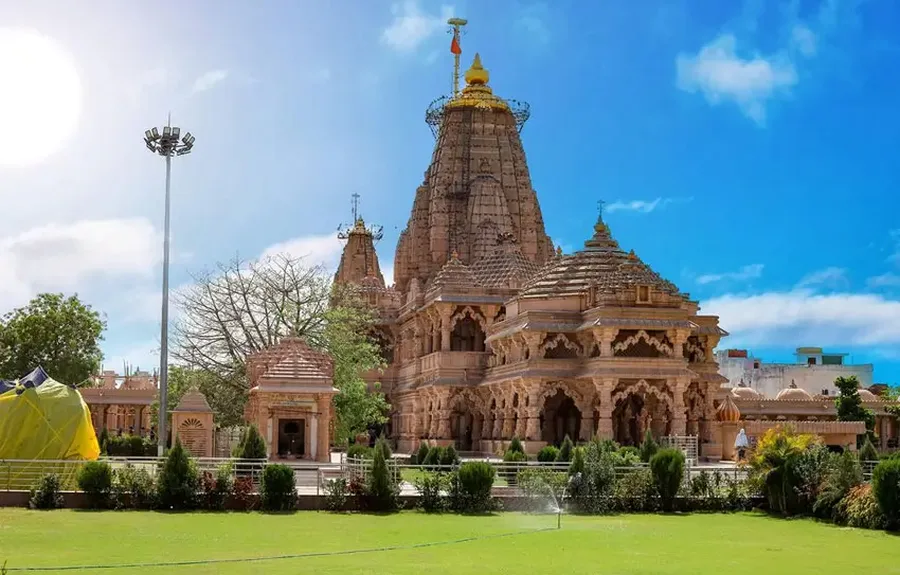
Beyond the famous desert cities lies a greener Rajasthan of lakes, wooded hills and small royal capitals that most visitors never reach. The...
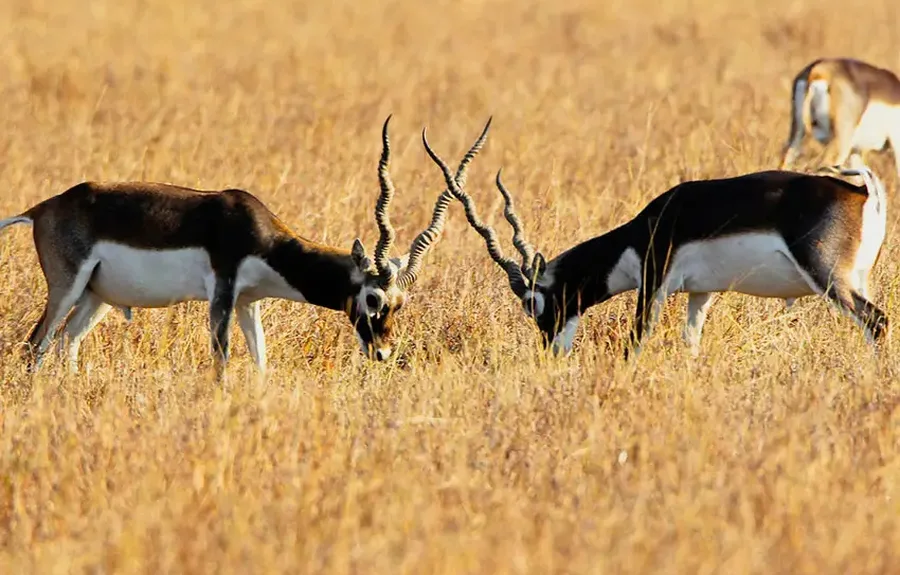
More than 500 bird species have been recorded in Rajasthan, from wintering cranes and pelicans on the wetlands of the east to sandgrouse,...
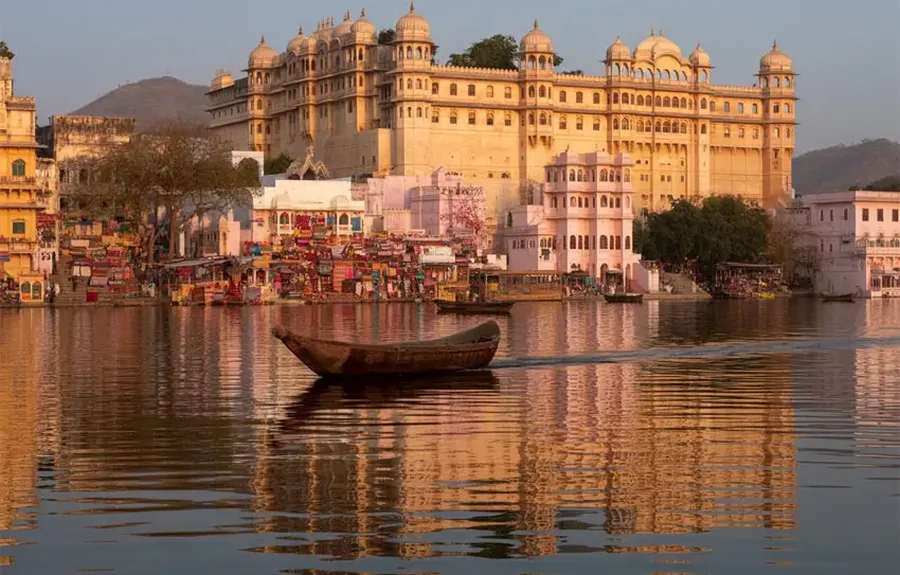
Rajasthan rewards patience, and the Rajasthan Tour for Senior Travelers is designed to let you enjoy it without strain. Over 11 nights and...

Almost every village in Rajasthan is known for a craft, and many of them are still practised by hand in family workshops, exactly...
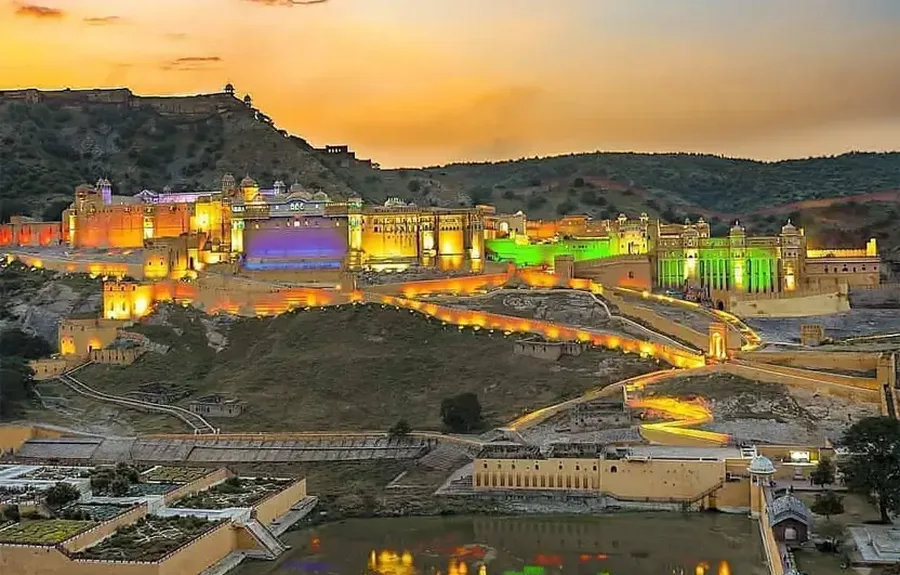
Most visitors see Rajasthan through a car window between one fort and the next. The Rajasthan Slow Travel Tour takes the opposite approach...
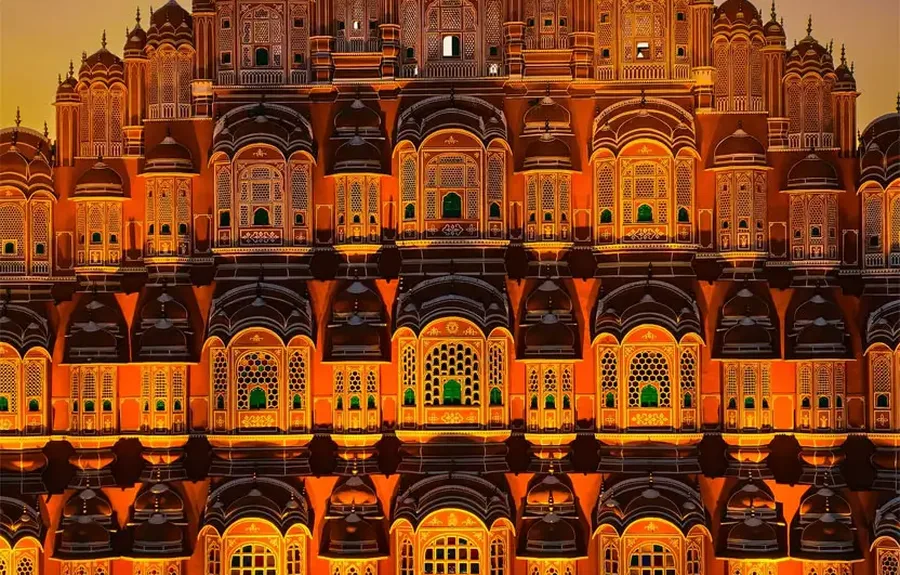
Lamps on every ghat, palaces outlined in light and fireworks reflected in still water make Diwali in Udaipur one of the loveliest festival...
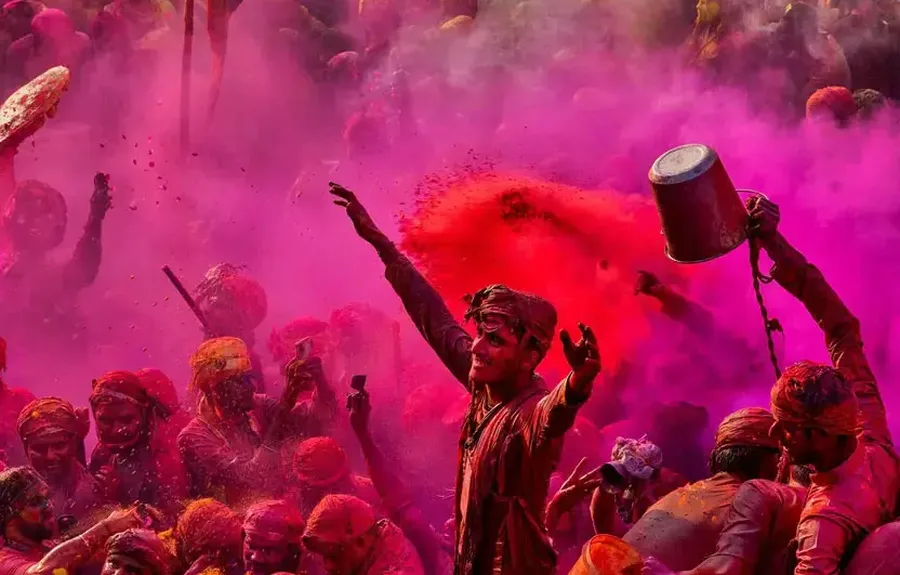
Holi arrives with the full moon of Phalgun, usually in March, when winter ends, the wheat turns gold and the whole of North...
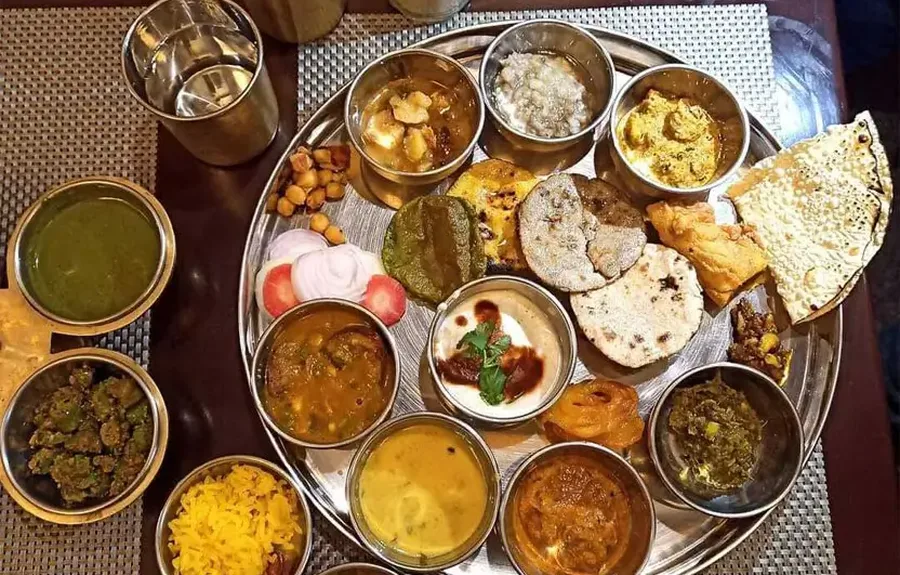
Desert cooking is a cuisine of clever survival. With little water and few fresh vegetables, Rajasthani cooks built a whole kitchen around dried...
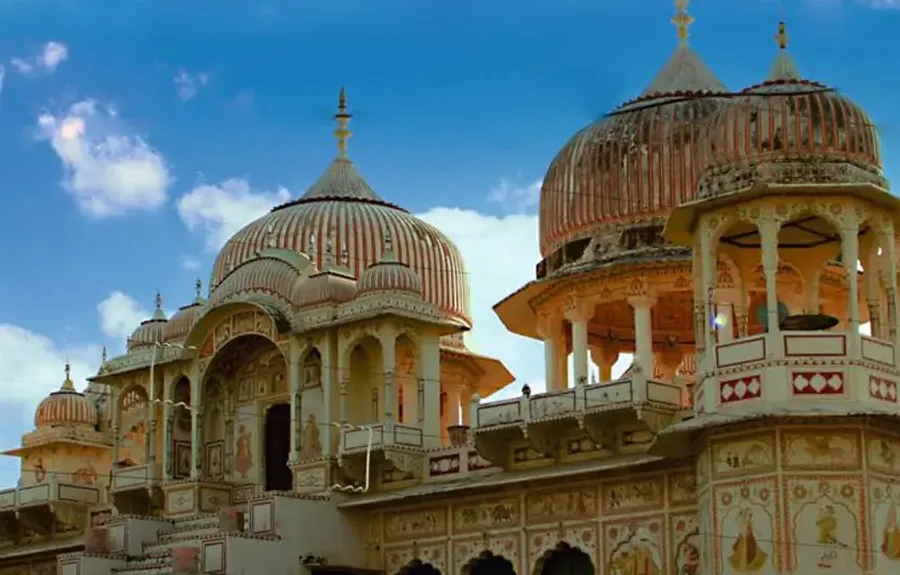
Turbans in saffron and magenta, indigo walls, golden sandstone and white marble reflected in still lakes: Rajasthan may be the most colourful state...
For a few days each autumn, around 50,000 camels, horses and cattle gather on the sands outside a small holy town, along with...