Delhi - Jaipur - Pushkar - Jodhpur - Ranakpur - Udaipur
Holi arrives with the full moon of Phalgun, usually in March, when winter ends, the wheat turns gold and the whole of North India throws colour in the air. The Rajasthan Holi Festival Tour is timed so that the two days of the festival fall in Pushkar, one of the most joyful places in India to celebrate it, with the Holika Dahan bonfire on the first night and a morning of coloured powder, drums and dancing in the town square on the second. Around the festival, the 9-night, 10-day route covers Jaipur, the blue city of Jodhpur, the marble temple of Ranakpur and the lake city of Udaipur.
A private car with an English-speaking driver travels with you throughout, and on Holi day a local guide stays by your side in the crowds, which keeps the celebrations fun and safe. In Jaipur, you spend a morning with rescued elephants on a day visit with elephants at Elefantastic, where there are no rides or chains. For a shorter festival trip that includes the Taj Mahal, see our Holi Celebration in India tour, and for autumn lights, the Rajasthan Diwali Festival Tour. All routes are listed with our Rajasthan tour packages.
Package Highlights
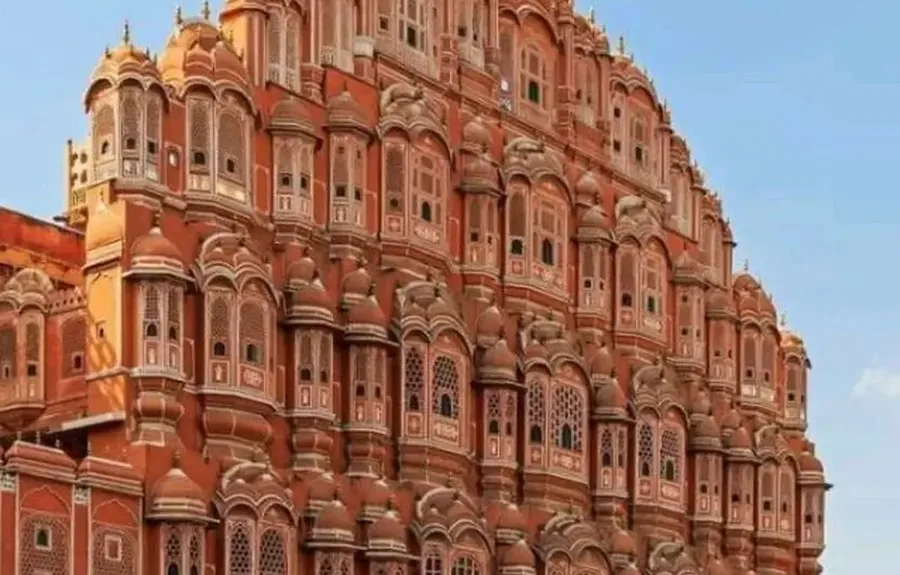
• City Palace, Jantar Mantar, Hawa Mahal and Amber Fort in Jaipur
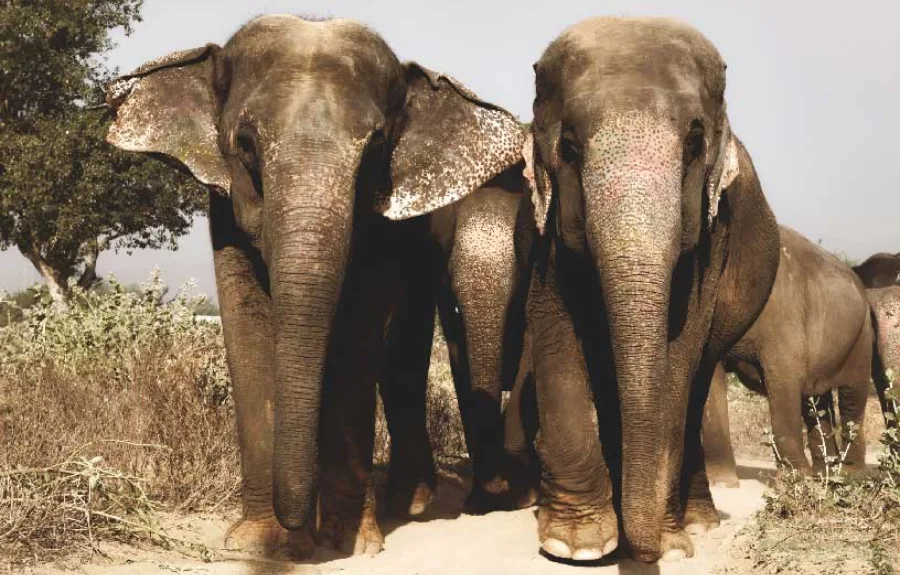
• Morning with rescued elephants at Elefantastic
• Holika Dahan bonfire night in Pushkar
• Holi day of colours, music and dancing in Pushkar's main square
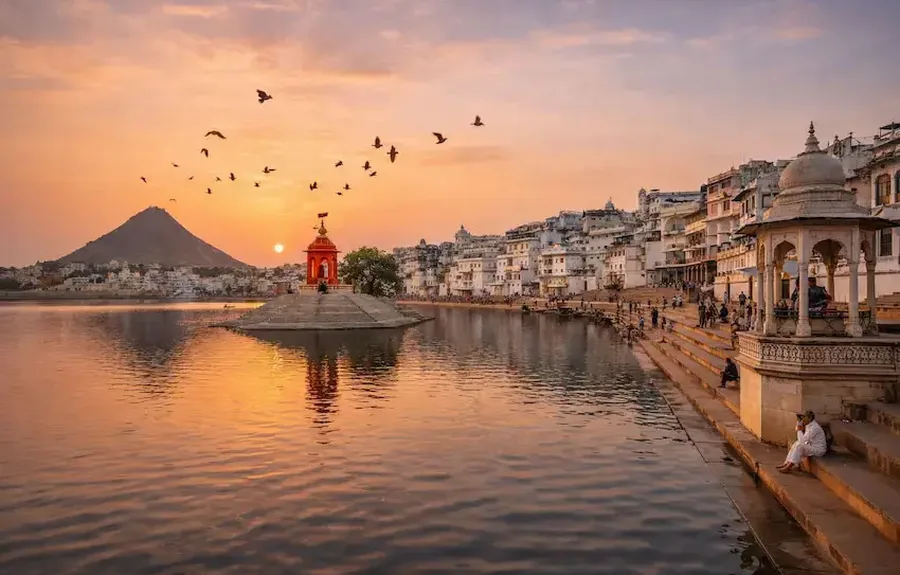
• Pushkar Lake ghats and the Brahma Temple
• Mehrangarh Fort and the blue lanes of Jodhpur
• Ranakpur's marble Jain temple with 1,444 carved pillars
• City Palace and a boat ride on Lake Pichola in Udaipur
Your Holi trip begins at Indira Gandhi International Airport, where our representative meets you at the arrivals exit with a name board and introduces you to your driver for the tour. The drive to your hotel in central Delhi takes about 45 minutes to an hour. March is one of the most pleasant months to visit North India, with warm, sunny days, cool evenings and clear skies after the winter haze. Bottled water is ready in the car, and your driver can stop for currency exchange or a local SIM card on the way to the hotel.
Check in at your hotel, usually from 2:00 pm, and rest after your flight. In the days before Holi, the markets of Delhi fill with stalls selling coloured powders called gulal, water pistols called pichkaris and sweets such as gujiya, a fried pastry filled with sweetened milk solids and nuts. If you feel up to a short outing in the evening, your driver can take you to a local market to see the festival preparations and buy a white kurta to wear on Holi day, as white clothes show off the colours beautifully in photographs.
Our coordinator meets you at the hotel with your vouchers and a 24-hour helpline number, and explains how to enjoy Holi safely. Wear old clothes that you do not mind throwing away, rub coconut oil into your skin and hair before playing so the colours wash off more easily, and protect your eyes with sunglasses. Keep your phone and camera in a waterproof pouch. Only accept food and drinks from your guide or hotel, not from strangers, and women may prefer to stay close to the guide in crowded areas. Overnight stay at your hotel in Delhi.
After breakfast, drive about 270 km to Jaipur, which takes five to six hours with a stop for lunch. In March, the fields along the highway are golden with ripening wheat and bright with mustard flowers, and the countryside looks its best. As you enter Rajasthan, you will see villages decorated for the coming festival and roadside stalls selling colours. Check in at your hotel in Jaipur, the capital of Rajasthan, founded in 1727 by Maharaja Sawai Jai Singh II and painted pink in 1876 to welcome the Prince of Wales.
In the afternoon, your guide takes you into the old walled city to visit the City Palace, still home to the former royal family, where museums display royal costumes, weapons and paintings. The palace has its own Holi traditions, and the royal family celebrates the festival every year in the palace courtyards. Across the road, Jantar Mantar, a UNESCO World Heritage Site, holds giant stone instruments built in the 18th century to measure time and track the stars. Your guide explains how the astronomer king designed them.
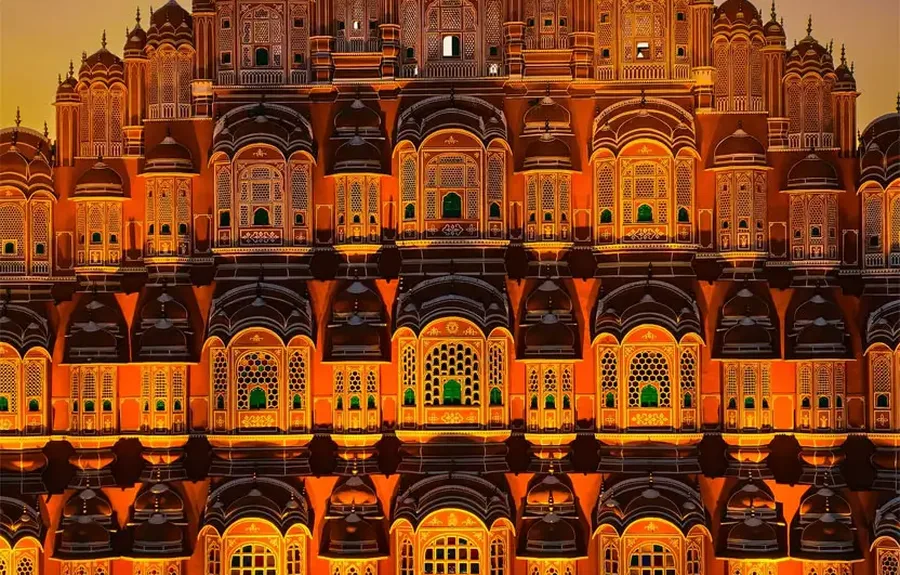
Late in the afternoon, photograph the Hawa Mahal, the Palace of Winds, from a rooftop café across the road, and then wander through Johari Bazaar and Bapu Bazaar, which are filled with stalls selling Holi colours, pichkaris and festive sweets. Try a gujiya fresh from a sweet shop and watch families shopping for the festival. In the evening, enjoy dinner at a Rajasthani restaurant, where you can try dishes such as dal baati churma and laal maas, often accompanied by live folk music. Overnight stay at your hotel in Jaipur.
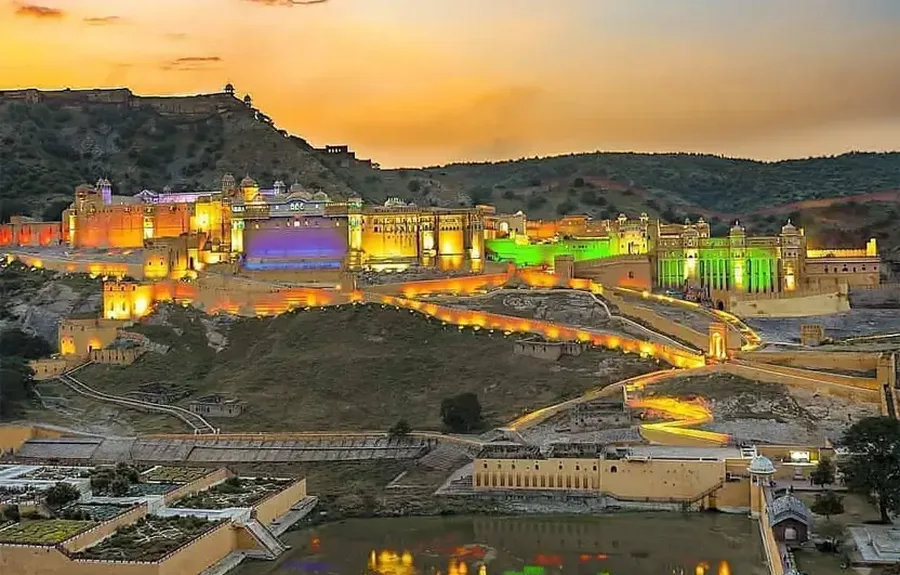
Begin the day early at Amber Fort, the hilltop palace of the Kachwaha Rajputs, about 11 km north of the city. A jeep takes you up to the main courtyard, and inside your guide leads you through the Diwan-i-Am, the painted Ganesh Pol and the Sheesh Mahal, whose walls and ceilings are covered with thousands of tiny mirrors. From the ramparts, there are wide views over Maota Lake and the walls of Jaigarh Fort on the ridge. On the way back to the city, stop for photographs of Jal Mahal, the water palace in Man Sagar Lake.
After lunch, visit the Albert Hall Museum, the oldest museum in Rajasthan, in a grand Indo-Saracenic building completed in 1887, with galleries of carpets, pottery, armour and an Egyptian mummy. Or join a block-printing workshop in Sanganer, where artisans print fabric by hand using carved wooden blocks and natural dyes, and print your own scarf to wear on Holi day. Jaipur is famous for its block prints, and many shops sell beautiful cotton clothes in bright colours, perfect for the festival season.
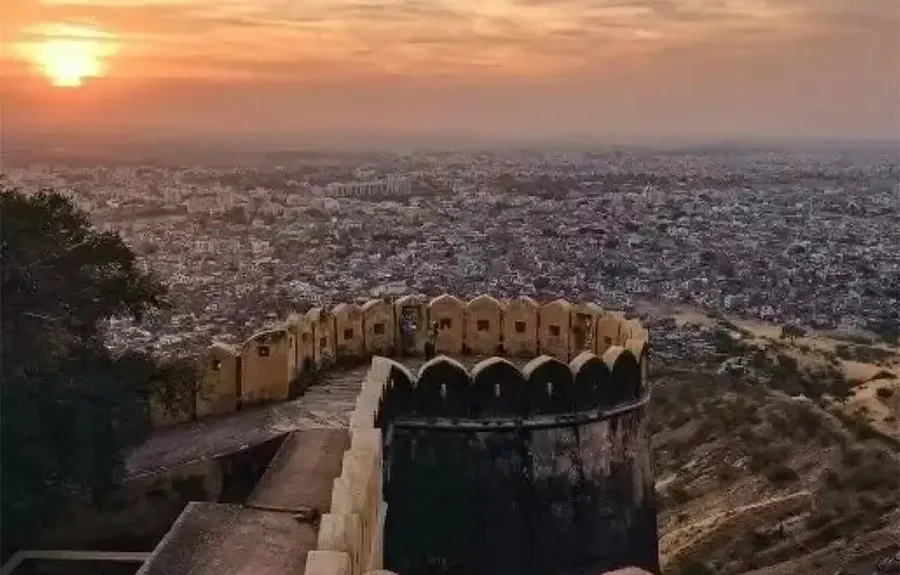
In the late afternoon, drive up to Nahargarh Fort, built in 1734 on the ridge above the city as a royal retreat. Its terraces offer the finest sunset view in Jaipur, with the whole city spread out below and the lights coming on as darkness falls. The Madhavendra Bhawan inside the fort has nine identical suites built for the king's queens. Enjoy a drink at the fort's café while the sky changes colour, then return to your hotel for dinner. Your driver will confirm tomorrow's time for the elephant visit. Overnight stay at your hotel in Jaipur.
This morning, the Elefantastic team picks you up from your hotel for a hands-on session at their sanctuary on the outskirts of Jaipur. Each guest is paired with one elephant and introduced to its keeper, who shares the elephant's history, diet and personality. You then help prepare fruit and sugarcane and feed your elephant by hand in a quiet, green setting far from the city's noise. Elephants have long been part of festival processions in Rajasthan, and this visit shows a kinder way to meet them, built around their wellbeing.
After feeding, walk with your elephant and help with bath time, splashing water and scrubbing its skin as it relaxes. There are no rides, no chains and no shows at Elefantastic. Wear clothes that can get wet and keep a change in the car. Please book only through official Elefantastic channels, as the sanctuary is not located in Hathi Gaon (Elephant Village). Guests who want more time with the herd can ask about the night stay with elephants. The team returns you to your hotel to collect your bags.
In the afternoon, drive about 145 km to Pushkar, around three hours via Ajmer, and check in at your hotel, ideally one with a rooftop view of the lake. Pushkar is a small holy town built around a sacred lake, with 52 ghats and hundreds of temples. In the days before Holi, the town fills with travellers, pilgrims and musicians, and the atmosphere becomes lively and festive. In the evening, walk down to the ghats to watch the aarti, then enjoy dinner at a rooftop café. Pushkar is vegetarian and alcohol-free. Overnight stay at your hotel in Pushkar.
After breakfast, your guide takes you to the Brahma Temple, one of very few temples in the world dedicated to the creator god, with its red spire and a marble floor inlaid with silver coins. Then walk along the ghats of Pushkar Lake, where pilgrims bathe and pray, and visit some of the smaller temples in the town. Photography of bathers is not allowed on the ghats. Take the ropeway, or walk up the path, to the Savitri Temple on a hilltop above the town for wide views over the lake, the town and the desert.
In the afternoon, rest at your hotel or browse the bazaar, which sells colourful clothes, silver jewellery and leather goods. Many shops sell white kurtas and scarves for Holi, and your guide can help you choose one. You may also join a music session at a local café, where musicians play traditional instruments and sing Holi folk songs called phag, which tell stories of Krishna and Radha playing with colours. The songs and drums set the mood for the night ahead, and everyone is welcome to join in.
As night falls, join the locals for Holika Dahan, the lighting of the Holi bonfire, which celebrates the victory of good over evil. According to legend, the demon king Hiranyakashipu's sister, Holika, tried to burn his son Prahlad, a devotee of Lord Vishnu, but the fire consumed her instead. Families gather around the bonfire, walk around it, offer coconuts and grains and pray for good fortune. Your guide explains the rituals and helps you take part respectfully. The night is festive, with music and singing. Overnight stay at your hotel in Pushkar.
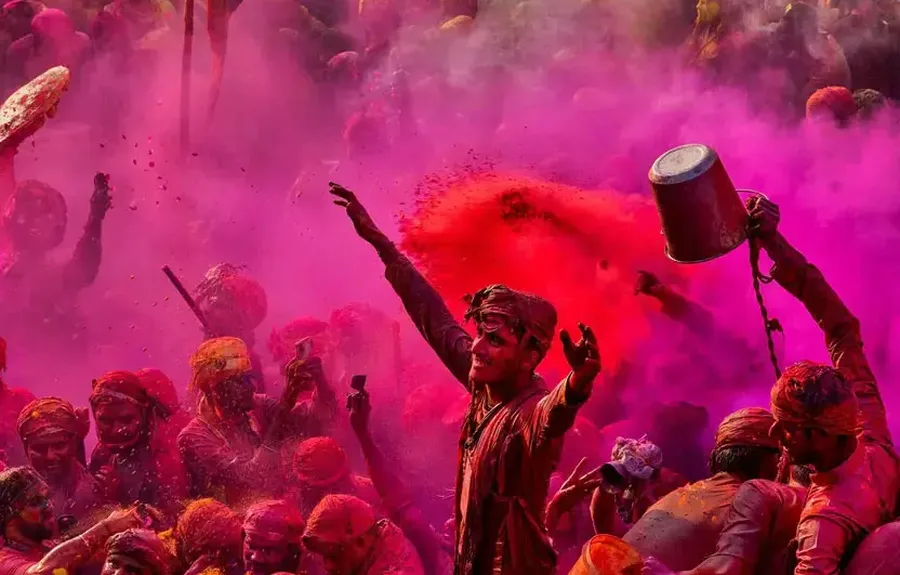
Today is Holi, the festival of colours. After an early breakfast, put on your white clothes, rub coconut oil into your skin and hair, and head out with your guide to the main square near the Varaha Ghat, where the celebrations take place. From mid-morning, the square fills with locals and travellers throwing coloured powders, spraying coloured water and dancing to drums and music. Everyone greets each other with Happy Holi and smears colour on each other's faces. It is wild, joyful and full of laughter.
Your guide stays with you throughout, helping you join the fun while keeping you safe in the crowds. The celebrations usually continue until early afternoon, when the colours are washed off and everyone goes home to rest and eat. Keep your sunglasses on to protect your eyes, carry your phone in a waterproof pouch and accept drinks or sweets only from your guide, as some drinks served on Holi contain bhang, an intoxicant made from cannabis leaves. Women may prefer to stay in a group or on a rooftop, where the view is great.
Return to your hotel in the early afternoon to wash off the colours, which may take a while. Enjoy a late lunch of festive dishes such as gujiya, puran poli and thandai without bhang, a cool milk drink with nuts and spices. The afternoon and evening are quiet, as most people rest after the morning's celebrations. In the evening, walk down to the ghats to see the calm lake after the festival, then enjoy dinner at a rooftop café. Your guide will share stories about Holi celebrations across India. Overnight stay at your hotel in Pushkar.
After breakfast, drive about 190 km to Jodhpur, a trip of around four hours through the semi-desert landscape of central Rajasthan. On the way, stop at a Bishnoi village, home to a community famous for protecting trees and wildlife. Blackbuck antelope and peacocks are often seen near their villages. You can visit a family home to see their simple, clean courtyards and watch a potter or weaver at work. The Bishnois follow 29 rules of conservation, and many villages still celebrate Holi with their own songs and traditions.
Arrive in Jodhpur in the afternoon and check in at your hotel, ideally a haveli in the old city with views of Mehrangarh Fort. Jodhpur, the Blue City, was founded in 1459 by Rao Jodha, and its old quarter is painted in shades of blue. In the late afternoon, take a walk with your guide through the blue lanes of Brahmpuri, below the fort, where colourful doors, steps and small temples create a lovely scene. You may still see traces of Holi colours on the walls and streets from the day before.
In the evening, walk to the Clock Tower and the busy Sardar Market, where traders sell spices, textiles and silver. Try a mirchi bada, a fried chilli fritter, and a makhaniya lassi, a rich saffron yoghurt drink, both Jodhpur favourites. Then enjoy dinner at a rooftop restaurant with views of the illuminated Mehrangarh Fort, which rises dramatically on its rocky ridge above the blue houses. After the noise and colour of Holi, Jodhpur's evening calm is very welcome. Overnight stay at your hotel in Jodhpur.
After breakfast, your guide takes you up to Mehrangarh Fort, one of the largest forts in India, rising 125 metres above the city on a sheer rock. Its walls are up to 36 metres high, and inside, the palaces are decorated with carved stone screens, mirrored halls and painted ceilings. Highlights include the Moti Mahal, the Phool Mahal and the Sheesh Mahal, and the museum displays palanquins, howdahs, weapons and turbans. The fort hosts several festivals during the year, and its views over the blue city are superb.
Next, visit Jaswant Thada, a white marble memorial built in 1899 for Maharaja Jaswant Singh II, whose thin marble panels glow in the sunlight. The surrounding gardens and small lake are peaceful. After lunch, visit the Umaid Bhawan Palace Museum, part of the vast palace built between 1929 and 1943 for Maharaja Umaid Singh. Today, the palace is partly a luxury hotel, partly the home of the royal family and partly a museum, with collections of clocks, photographs and classic cars. The palace was built partly to give work to local people during a long famine, and its golden dome is lovely in the afternoon light.
In the late afternoon, visit Toorji Ka Jhalra, an 18th-century stepwell restored in recent years and now surrounded by cafés and shops, where you can enjoy a coffee and watch local life. Then visit the Mandore Gardens, about 9 km north of the city, with the red sandstone cenotaphs of Jodhpur's former rulers and the Hall of Heroes, a row of painted figures carved from rock. Return to your hotel for dinner and pack for tomorrow's drive to Udaipur via Ranakpur. Overnight stay at your hotel in Jodhpur.
After breakfast, drive about 170 km to Ranakpur, a trip of around three and a half hours through the green Aravalli hills. Visit the Chaumukha Jain Temple, built in the 15th century from white marble and dedicated to Adinath, the first Tirthankara. Non-Jain visitors may enter from around 12:00 pm to 5:00 pm, and leather items and shorts are not allowed. Inside, the temple is a forest of 1,444 marble pillars, each carved differently, supporting domes covered with intricate patterns. Your guide explains the legends and the Jain beliefs.
After a simple vegetarian lunch at a nearby resort, continue to Udaipur, about two hours away along winding hill roads with views of valleys and small lakes. Check in at your hotel near the lakes in the late afternoon. Udaipur, the City of Lakes, was founded in 1559 by Maharana Udai Singh II and is often called the most romantic city in India. In March, the weather is warm and pleasant, and the lakes are full after the winter. The royal family of Mewar celebrates Holi with a grand ceremony at the City Palace each year.
In the evening, enjoy a boat ride on Lake Pichola at sunset, gliding past the ghats, the City Palace and the white Lake Palace, now a luxury hotel. The boat stops at Jag Mandir, an island palace with gardens, where you can watch the sun set over the hills. Then attend the Dharohar folk dance show at Bagore Ki Haveli, featuring traditional Rajasthani dances and puppetry. End the day with a farewell dinner at a rooftop restaurant overlooking the illuminated palaces. Overnight stay at your hotel in Udaipur.
Visit the City Palace, the largest palace complex in Rajasthan, and the nearby Jagdish Temple in the morning, before your transfer to Udaipur airport for your flight to Delhi and onward connection. For more colour and food, see our Rajasthan Food and Culinary Tour.
Our assorted tours, for your first, second or nth time to India!
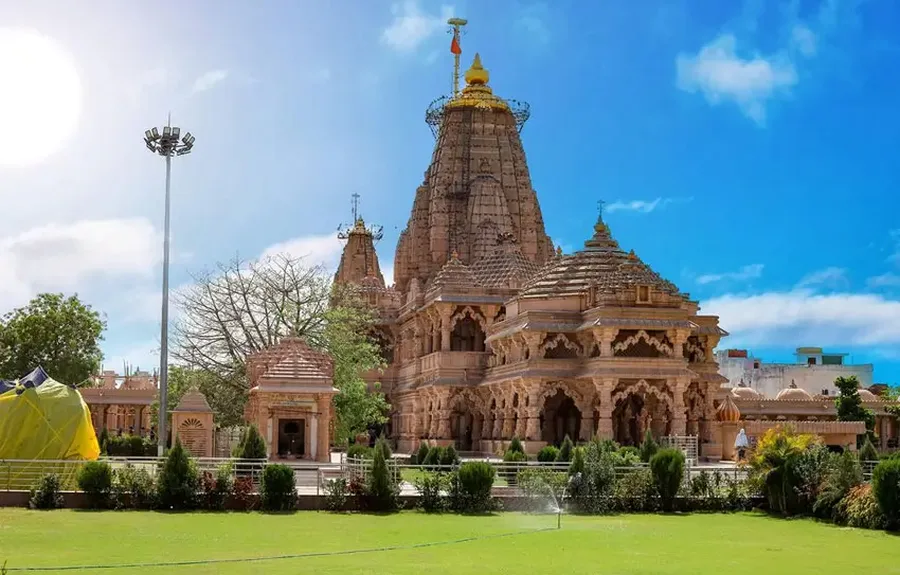
Beyond the famous desert cities lies a greener Rajasthan of lakes, wooded hills and small royal capitals that most visitors never reach. The...
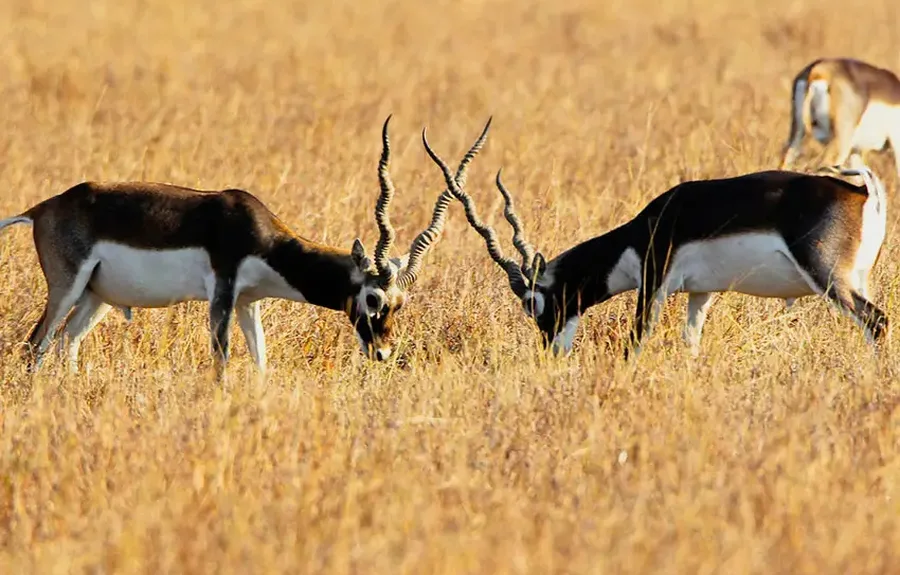
More than 500 bird species have been recorded in Rajasthan, from wintering cranes and pelicans on the wetlands of the east to sandgrouse,...
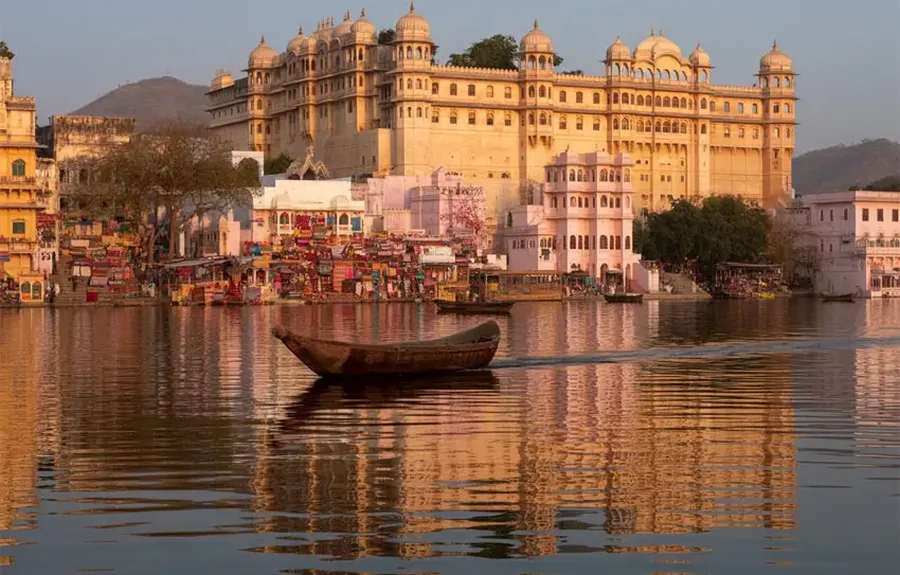
Rajasthan rewards patience, and the Rajasthan Tour for Senior Travelers is designed to let you enjoy it without strain. Over 11 nights and...
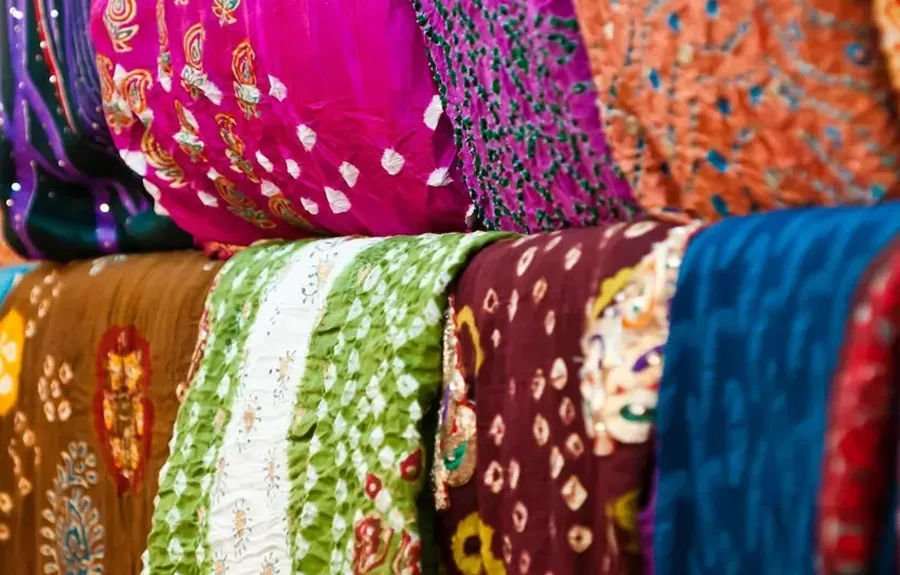
Almost every village in Rajasthan is known for a craft, and many of them are still practised by hand in family workshops, exactly...
Most visitors see Rajasthan through a car window between one fort and the next. The Rajasthan Slow Travel Tour takes the opposite approach...
Lamps on every ghat, palaces outlined in light and fireworks reflected in still water make Diwali in Udaipur one of the loveliest festival...
Holi arrives with the full moon of Phalgun, usually in March, when winter ends, the wheat turns gold and the whole of North...
Desert cooking is a cuisine of clever survival. With little water and few fresh vegetables, Rajasthani cooks built a whole kitchen around dried...
Turbans in saffron and magenta, indigo walls, golden sandstone and white marble reflected in still lakes: Rajasthan may be the most colourful state...
For a few days each autumn, around 50,000 camels, horses and cattle gather on the sands outside a small holy town, along with...