Delhi - Jaipur - Bikaner - Jaisalmer - Jodhpur - Kumbhalgarh - Udaipur - Chittorgarh
Rajput rulers spent centuries building on hilltops, ridges and desert outcrops, and nowhere in India has so many fortresses still standing. The Rajasthan Forts and Palaces Tour gathers the finest of them into 13 nights and 14 days. You climb the ramparts of Amber, Jaigarh and Nahargarh above Jaipur, walk through the painted halls of Junagarh in Bikaner, sleep in the shadow of the living fort of Jaisalmer, stand on the 36-metre walls of Mehrangarh in Jodhpur, follow the 36 km wall of Kumbhalgarh and finish at Chittorgarh, the largest fort in India. Six of them are UNESCO-listed as the Hill Forts of Rajasthan or part of a World Heritage city.
Between the forts, you stay in palaces and havelis that once belonged to the same royal families, and a private car with an English-speaking driver carries you the whole way. Specialist guides bring the history of each dynasty to life. In Jaipur, the tour includes a gentle morning with rescued elephants at the Elefantastic elephant sanctuary. For palace stays at a slower pace, compare our Palace Stays of Rajasthan Tour or the Luxury Rajasthan Heritage and Palace Tour, both listed with our Rajasthan tour packages.
Package Highlights
• Amber Fort, Jaigarh Fort with the Jaivana cannon, and Nahargarh at sunset
• City Palace and Hawa Mahal in Jaipur
• Morning with rescued elephants at Elefantastic
• Junagarh Fort and Lalgarh Palace in Bikaner
• Jaisalmer's living fort and sandstone havelis
• Mehrangarh Fort and Umaid Bhawan Palace in Jodhpur
• Kumbhalgarh Fort and its 36 km wall
• Udaipur City Palace and the vast hill fort of Chittorgarh
Your fort and palace trail begins at Indira Gandhi International Airport. After you clear customs, our representative meets you with a name board and takes you to your private air-conditioned car, where your driver for the next two weeks is waiting. The ride to your hotel takes about 45 minutes to an hour, depending on traffic. Your flight is tracked from departure, so the pickup adjusts if you are early or delayed. Bottled water is in the car, and your driver can stop at an ATM or a SIM card shop on the way if needed.
Most hotels allow check-in from 2:00 pm, and we suggest reserving the room from the night before if you land early. Use the rest of the day to rest. If you have energy in the late afternoon, a visit to Purana Qila, the Old Fort of Delhi, makes a fitting start to a fort-themed tour. Its massive gateways and the elegant Qila-i-Kuhna Mosque date from the 16th century, and archaeologists believe the site may be the location of Indraprastha, the legendary city of the Mahabharata. The fort is a short drive from most central hotels.
Our coordinator meets you at the hotel with your itinerary, vouchers and a 24-hour helpline number. Forts in Rajasthan involve plenty of walking, uneven stone floors and steep ramps, so comfortable shoes with a good grip are essential. A hat, sunscreen and a water bottle will help on sunny days, and a warm layer is useful in Jaisalmer and Kumbhalgarh, where winter nights are cold. Many forts have audio guides, and your guides will add stories that bring each place to life. Overnight stay at your hotel in Delhi.
After breakfast, drive about 270 km to Jaipur, which takes five to six hours with a stop for lunch. Along the way, you pass the small fort town of Neemrana, whose 15th-century hill fort has been turned into a heritage hotel, and your driver can stop for a look at its terraced walls from the road. As you enter Rajasthan, the landscape becomes more rugged, with the Aravalli hills rising ahead, many of them topped by watchtowers and old walls. On arrival in Jaipur, check in at your hotel and rest for an hour or two.
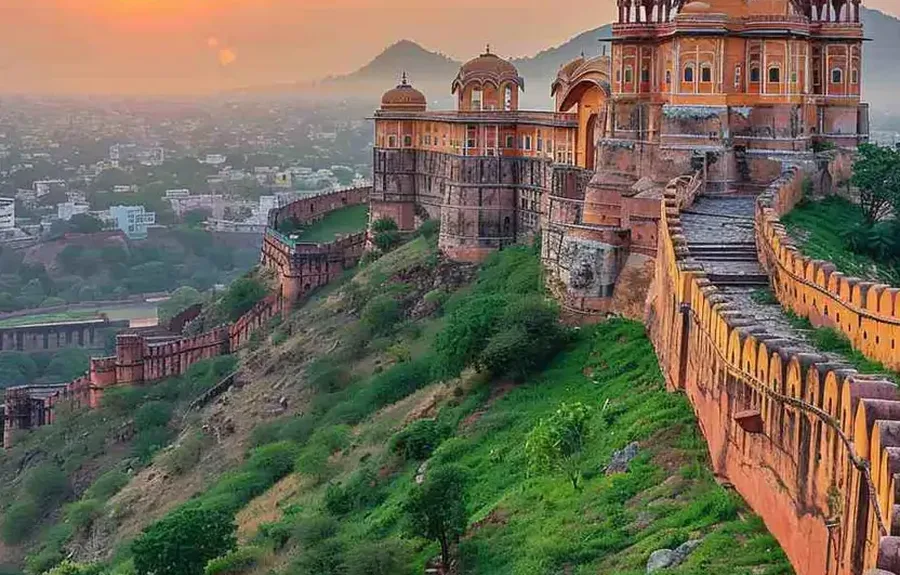
In the late afternoon, drive up the winding road to Nahargarh Fort, built in 1734 by Maharaja Sawai Jai Singh II on a ridge above the city to defend Jaipur from the north. Inside, the Madhavendra Bhawan has nine identical apartments built for the king's queens, all linked by corridors so the king could visit any of them without being seen. Its painted walls and simple design are a contrast to the grand palaces below. The fort also has a small wax museum and a stepwell that featured in several Bollywood films.
As sunset approaches, find a spot on the fort's western terrace, where the whole of Jaipur spreads out below, with the old walled city, Jal Mahal in its lake and the lights coming on across the plain. This is one of the finest viewpoints in Rajasthan, and the fort's café is a good place for a drink while the sky changes colour. Drive back down to the city after dark for dinner at your hotel or a nearby restaurant serving Rajasthani specialities such as laal maas and dal baati churma. Overnight stay at your hotel in Jaipur.
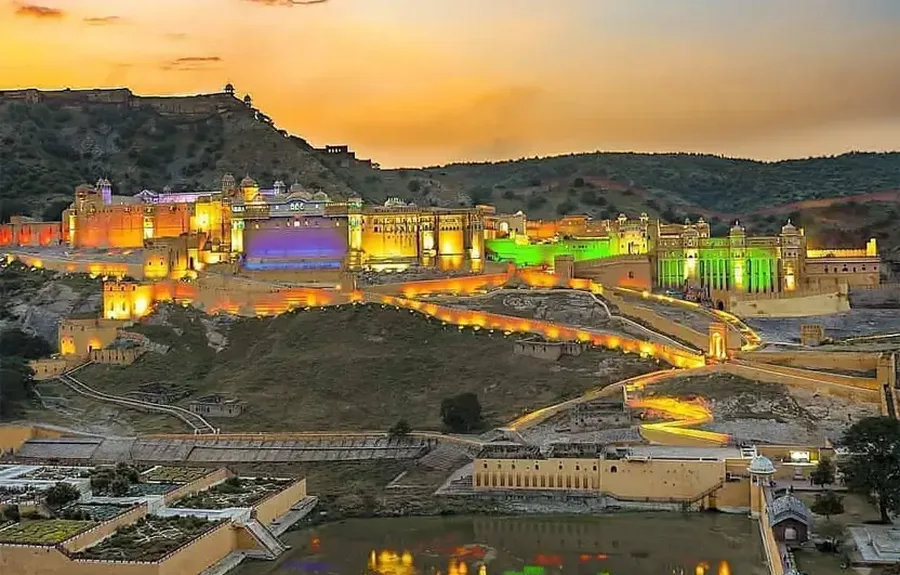
Start early at Amber Fort, about 11 km from the city, which was the capital of the Kachwaha Rajputs from the 11th century until 1727. A jeep takes you up to the main courtyard, and your guide leads you through the four levels of the palace. The Diwan-i-Am has double rows of carved columns, the Ganesh Pol is painted with fine floral designs, and the Sheesh Mahal is covered with thousands of small mirrors. The Sukh Niwas was cooled by water flowing through marble channels, an early form of air conditioning.
From Amber, a road and a tunnel lead up to Jaigarh Fort, built in 1726 on the Cheel ka Teela, the Hill of Eagles, to protect Amber and its treasury. The fort was never conquered, and it holds the Jaivana cannon, cast in 1720 and once considered the largest cannon on wheels in the world. Legend says it was fired only once, and the cannonball landed about 35 km away. The fort's water tanks, armoury and watchtowers give a clear picture of Rajput military thinking. From its walls, there are wide views over Amber and the hills.
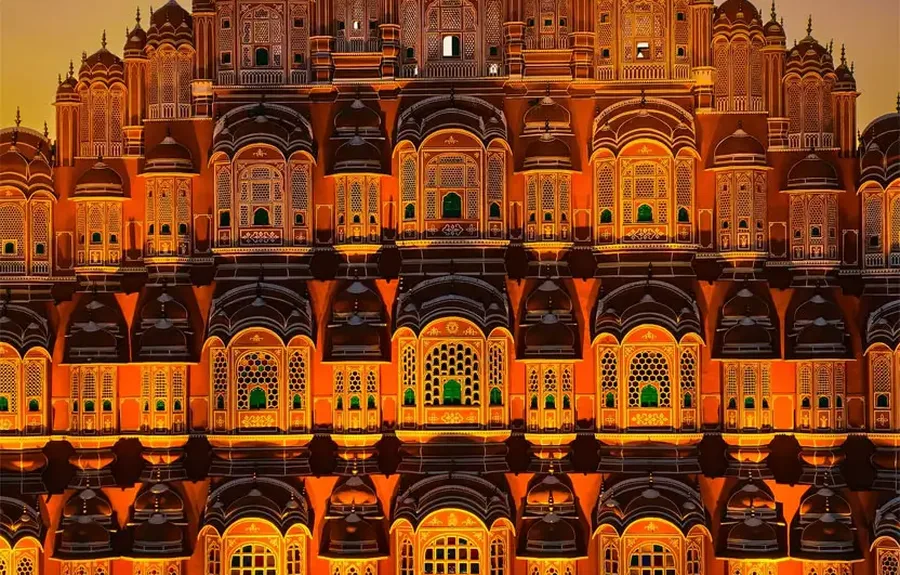
After lunch, return to the city to visit the City Palace, the royal residence at the heart of the old walled city, still partly home to the descendants of the Jaipur royal family. Its museums display royal costumes, weapons and miniature paintings, and the Pritam Niwas Chowk has four beautiful painted gateways. Across the road, Jantar Mantar holds giant stone astronomical instruments, and a short walk away stands the Hawa Mahal, the Palace of Winds, with its 953 small windows. Overnight stay at your hotel in Jaipur.
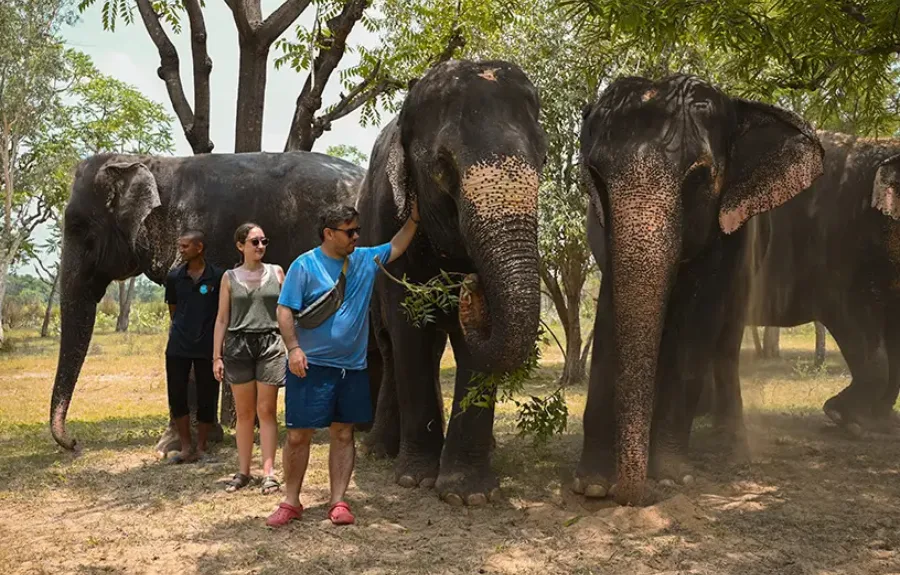
This morning, the Elefantastic team collects you from your hotel for a day visit with elephants at their sanctuary on the edge of Jaipur. Elephants once played a central role in Rajput armies and royal processions, and many of the forts you see on this tour had special gates and ramps built for them. Today, the sanctuary offers a kinder bond. Each guest is paired with one elephant, meets its keeper and learns its story before feeding it by hand with fruit and sugarcane. The setting is calm and rural, away from the city traffic.
After feeding, walk with your elephant and help with bath time, splashing and scrubbing as the elephants enjoy the water. Elefantastic does not offer rides, does not use chains during visits and holds no performances, so the elephants move at their own pace and stay relaxed. Wear clothes that can get wet and keep a dry change in the car. Please book only through official Elefantastic channels, since the sanctuary is not located in Hathi Gaon (Elephant Village). The team drops you back at your hotel in time for lunch.
In the afternoon, visit the Albert Hall Museum, set in a grand Indo-Saracenic building completed in 1887. Its galleries hold armour, swords and shields from Rajput armies, as well as carpets, pottery and an Egyptian mummy. Later, you may visit the Royal Gaitor, the cenotaphs of Jaipur's rulers at the foot of the Nahargarh hill, with their carved marble domes and pillars. The site is quiet and rarely crowded. Enjoy dinner at your hotel and pack for tomorrow's long drive to Bikaner. Overnight stay at your hotel in Jaipur.
After an early breakfast, drive about 330 km north-west to Bikaner, which takes around six hours with breaks. The landscape changes from the green fields around Jaipur to the sand and scrub of the Thar Desert. Your driver will stop for tea and lunch at roadside restaurants, and you may see camel carts, desert villages and herds of goats along the way. Bikaner was founded in 1488 by Rao Bika, a son of Jodhpur's founder, and it became one of the richest desert kingdoms thanks to the caravan trade.
In the afternoon, visit Junagarh Fort, built between 1589 and 1594 by Raja Rai Singh, a general in the army of the Mughal emperor Akbar. Unlike most Rajasthan forts, it stands on flat ground and was protected by a moat and massive walls, and it was never captured by an enemy. Inside, the palaces are some of the most lavishly decorated in India. The Anup Mahal is covered in red and gold lacquer, the Chandra Mahal has mirror work and paintings, and the Badal Mahal shows blue clouds and rain on its walls.
The fort's museum displays weapons, palanquins, royal costumes and a de Havilland DH-9 biplane, gifted to Maharaja Ganga Singh after the First World War, in which he served with distinction. Your guide explains how Bikaner's rulers balanced loyalty to the Mughals and later the British with their own independence. In the evening, visit the old city for the famous sweets and snacks of Bikaner, including bhujia and rasgulla. Check in at your hotel, which may be part of a former royal palace. Overnight stay at your hotel in Bikaner.
After breakfast, visit Lalgarh Palace, built between 1902 and 1926 for Maharaja Ganga Singh in an Indo-Saracenic style, with red sandstone domes, arches and fine latticework. Part of the palace is a heritage hotel, and part houses the Shri Sadul Museum, which displays photographs, hunting trophies and personal items of the royal family. The palace was designed by the British architect Sir Samuel Swinton Jacob, who also worked on the Albert Hall Museum in Jaipur. Its gardens are home to peacocks and are pleasant in the morning light.
Leave Bikaner and drive about 330 km west to Jaisalmer, which takes five to six hours across the heart of the Thar Desert. The road is long and straight, with dunes, scrub and small villages of round mud huts on either side. Your driver will stop for lunch at a roadside dhaba and for photographs whenever you like. You may see desert foxes, chinkara gazelles and flocks of sheep led by herders in bright turbans. In winter, the desert is pleasant during the day, but temperatures fall quickly after sunset.
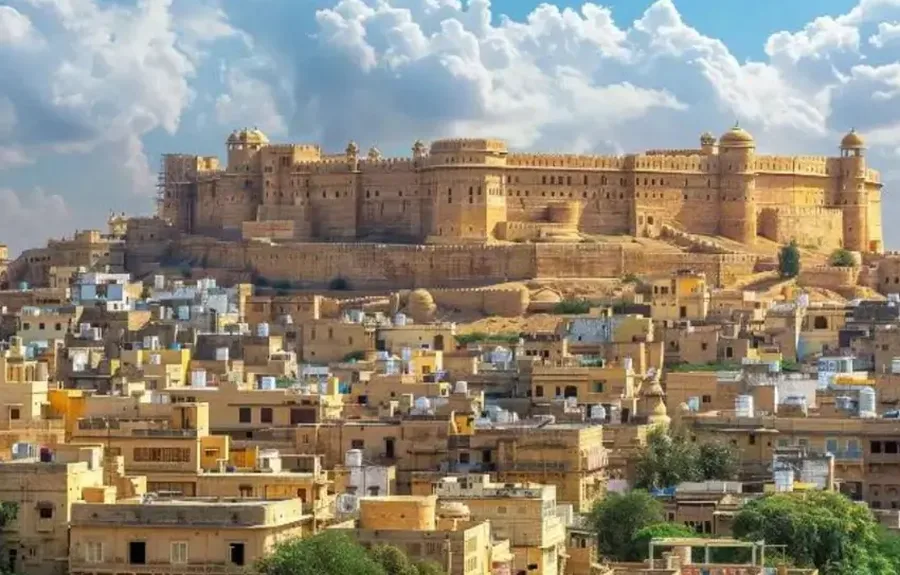
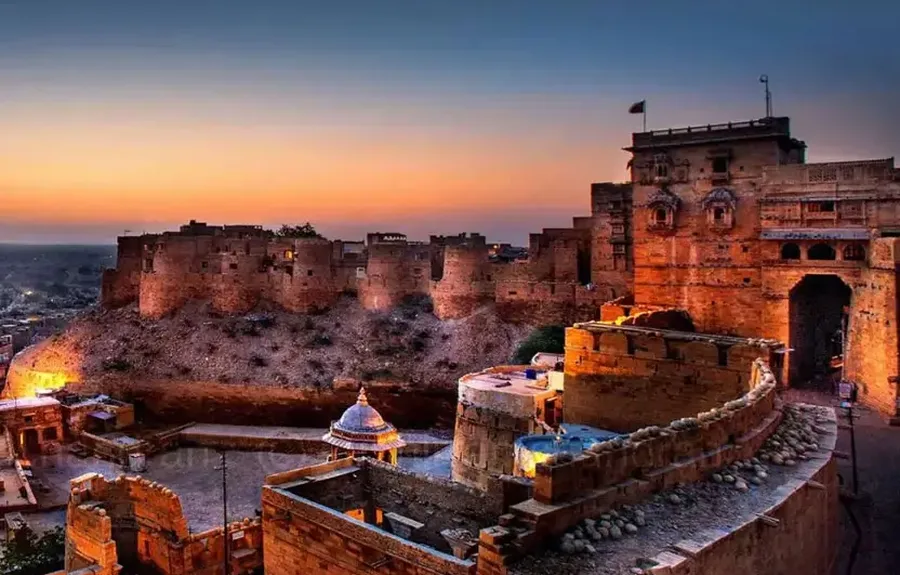
As you approach Jaisalmer in the late afternoon, the golden fort rises from the desert on Trikuta Hill, its 99 bastions glowing in the evening sun. Founded in 1156 by Rawal Jaisal of the Bhati Rajput clan, it is one of the oldest forts in Rajasthan and part of the UNESCO-listed Hill Forts of Rajasthan. Check in at your hotel, ideally one with a rooftop view of the fort. In the evening, enjoy dinner on a terrace as the fort is lit up against the night sky. Overnight stay at your hotel in Jaisalmer.
After breakfast, your guide takes you into Jaisalmer Fort, one of the few living forts in the world, where around 3,000 people still live within its walls. Enter through a series of massive gates, including the Akhai Pol and the Ganesh Pol, to reach the main square and the Raj Mahal, the seven-storey royal palace. Its rooms and terraces offer views over the golden city and the desert. Next, visit the seven Jain temples inside the fort, built between the 12th and 15th centuries, with carved sandstone pillars and ceilings of remarkable detail.
In the afternoon, walk through the lanes below the fort to see the havelis of Jaisalmer's merchant families. The Patwon Ki Haveli, a group of five mansions built between 1800 and 1860, has finely carved balconies and windows, and part of it is now a museum showing how the merchants lived. The Salim Singh Ki Haveli, with its peacock brackets and arched roof, belonged to a powerful prime minister of the state, and the Nathmal Ki Haveli was carved by two brothers who each worked on one half of the facade.
In the late afternoon, drive about 40 km west to the Sam Sand Dunes, where the Thar Desert takes the form of classic rolling dunes. Take a short camel ride to the top of a dune and watch the sun set over the desert, a perfect contrast to the forts and palaces of the day. Return to Jaisalmer after dark for dinner at your hotel, or stay for a folk music performance at one of the desert camps before driving back. Tomorrow, the route continues to Jodhpur and its great fort. Overnight stay at your hotel in Jaisalmer.
After breakfast, check out and drive east towards Jodhpur, about 285 km and five hours away. Your first stop is Pokhran, about 110 km from Jaisalmer, where the red sandstone Balagarh Fort dates from the 14th century. The fort was the seat of the Champawat Rathores, a branch of the Jodhpur royal family, and part of it is now a heritage hotel with a small museum of weapons, costumes and royal photographs. Pokhran is also known for its terracotta pottery, and your driver can take you to see local potters at work.
Continue across the semi-desert landscape, where you may see Bishnoi villagers in white turbans and herds of blackbuck antelope grazing near their villages. The Bishnoi community is famous for its strict protection of trees and animals. If time allows, stop at the Osian temples, about 65 km before Jodhpur, a group of 8th to 11th-century Hindu and Jain temples with fine carvings. The Sachiya Mata Temple sits on a hill and is reached by a long staircase lined with carved arches. Lunch is taken at a roadside restaurant on the way.
Arrive in Jodhpur in the late afternoon and check in at your hotel, ideally a haveli in the old city with views of Mehrangarh Fort, which rises dramatically on a sheer rock above the blue houses. Jodhpur was founded in 1459 by Rao Jodha, and its fort is one of the largest in India. In the evening, walk to the Clock Tower and the busy Sardar Market, then enjoy dinner at a rooftop restaurant facing the illuminated fort. Tomorrow you visit Mehrangarh and the Umaid Bhawan Palace in the second half of the tour. Overnight stay at your hotel in Jodhpur.
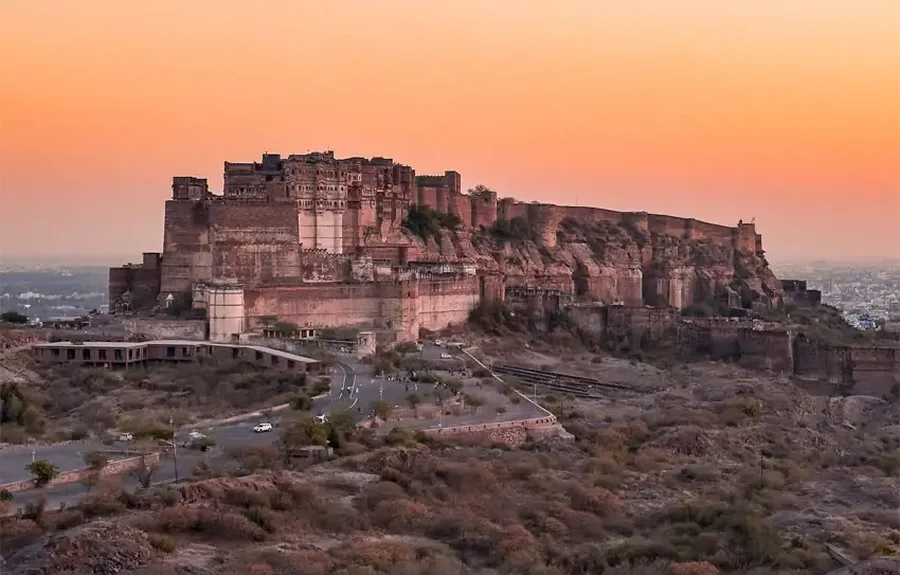
After breakfast, your guide takes you up the winding road to Mehrangarh Fort, founded by Rao Jodha in 1459 on a sheer outcrop called Bhakurcheeria, the Mountain of Birds, about 125 metres above the plain. You pass through seven gates, including the Jayapol, built to mark a victory over Jaipur and Bikaner, and the Loha Pol, beside which the small handprints of royal widows are carved in the stone. Cannonball scars from 19th-century battles are still visible on the walls, which rise up to 36 metres high and reach 21 metres thick in places.
Inside, the palaces show the softer side of Rathore power. The Phool Mahal glitters with gold filigree, the Moti Mahal has ceilings set with mirrors and a hall where the rulers held court, and the Takhat Vilas is painted with dancers, gods and even Christmas baubles hung from the ceiling. The museum holds one of the finest collections in India, with elephant howdahs in silver, royal palanquins, a tent of red silk and a gallery of turbans. From the ramparts, the blue houses of the old city spread out to the desert.
In the afternoon, visit Jaswant Thada, the white marble memorial of 1899 whose thin marble walls glow in the sun, and then the Umaid Bhawan Palace, the last great palace built in India, completed in 1943 in an Art Deco style with a 105-foot dome. Part of it is still the home of the royal family, part a hotel, and part a museum of clocks, photographs and classic cars. As evening falls, walk through Sardar Market at the Clock Tower and enjoy dinner on a rooftop facing the floodlit fort. Overnight stay at your hotel in Jodhpur.
After breakfast, drive south for about three and a half hours into the Aravalli hills, where the dry plains of Marwar give way to forested ridges and small valleys. Stop at Ranakpur to visit the Chaumukha Jain Temple, built in white marble in 1439 and open to non-Jain visitors from around midday to 5:00 pm. Its 1,444 carved pillars, domed halls and fine ceilings make it one of the most beautiful buildings in India, and your guide explains how it was funded by a wealthy merchant with the blessing of Rana Kumbha, the same king who built tomorrow's fort.
After a vegetarian lunch near the temple, continue for about an hour up the hill road to Kumbhalgarh, set deep in the forest at around 1,100 metres. Check in at your hotel, a quiet resort or heritage lodge close to the fort, with views over the hills. The surrounding Kumbhalgarh Wildlife Sanctuary is home to leopards, sloth bears, wolves, four-horned antelope and many birds, and a short nature walk around the resort in the late afternoon may reveal langurs, peacocks and grey junglefowl moving through the trees.
In the evening, drive the short distance to the fort to watch the sound and light show, which tells the story of Kumbhalgarh and its rulers against the floodlit walls, a striking sight after dark. The show usually begins at around 6:45 pm and lasts about 45 minutes. Return to your hotel for dinner and an early night, as tomorrow morning is spent inside the fort before the heat of the day. The air in Kumbhalgarh is noticeably cooler than on the plains, so a light jacket is useful in winter. Overnight stay at your hotel in Kumbhalgarh.
Start early at Kumbhalgarh Fort, built by Rana Kumbha in the 15th century on a ridge of the Aravallis and part of the UNESCO-listed Hill Forts of Rajasthan. Its outer wall runs for about 36 km across the hills, wide enough in places for several horses to ride side by side, and it is often called the second-longest continuous wall in the world. The fort was taken only once, briefly, in its long history. It was also the birthplace of Maharana Pratap, the Mewar ruler who resisted the Mughal emperor Akbar for most of his life.
Climb with your guide to the Badal Mahal, the Palace of Clouds, at the highest point, where pale blue and green rooms are painted with elephants and horses, and the views stretch across the forested hills as far as the Thar Desert on clear days. Inside the walls are more than 360 temples, most of them Jain, including the large Neelkanth Mahadev Temple with its tall pillars. Walk a short section of the great wall for photographs. The fort is best seen in the morning, when the light is soft and the air is cool.
After lunch, drive about 85 km south to Udaipur, a trip of around two and a half hours through hill villages and farmland, with views over valleys and small lakes. Arrive in the afternoon and check in at your hotel near Lake Pichola, your base for the last three nights. In the evening, take a slow walk along the ghats of the old city and across the Chandpole footbridge, then enjoy dinner on a rooftop terrace as the lights of the City Palace and the Lake Palace reflect in the water. Overnight stay at your hotel in Udaipur.
After breakfast, your guide leads you through the City Palace, a fortified palace complex begun in 1559 by Maharana Udai Singh II and added to by his successors for almost 400 years. Unlike the desert forts, it rises above the water with white towers, domes and balconies, but its narrow, crooked passages were built to slow down attackers. Inside, see the glass peacocks of the Mor Chowk, the hilltop garden of the Badi Mahal, the miniature paintings of the Krishna Vilas and the armour of Maharana Pratap, whose story you heard at Kumbhalgarh.
After lunch, visit the Jagdish Temple, built in 1651, and the Bagore Ki Haveli museum, an 18th-century mansion on the lake with rooms displaying royal costumes and puppets. In the late afternoon, drive about 9 km west to Sajjangarh, the Monsoon Palace, built in 1884 on a hilltop at around 940 metres, originally planned as an astronomical centre and a place to watch the monsoon clouds roll in. From its terraces, the views over the lakes, the city and the Aravalli hills at sunset are some of the finest in Rajasthan.
Return to the city for an evening boat ride on Lake Pichola if you would like to see the palaces lit up from the water, or attend the Dharohar folk dance show at Bagore Ki Haveli, which features Rajasthani dances including the pot-balancing bhavai and a lively puppet show. Dinner can be at a lakeside restaurant facing the illuminated City Palace. Tomorrow is a full-day excursion to Chittorgarh, the greatest of all Rajput forts, so your guide will confirm an early start. Overnight stay at your hotel in Udaipur.
After an early breakfast, drive about 115 km north-east to Chittorgarh, around two and a half hours on a good highway. Chittorgarh Fort is the largest fort in India, spread across some 280 hectares on a plateau 180 metres above the plain, and it was the capital of Mewar from the 8th century until 1568. For the Rajputs it is a symbol of honour, having been besieged three times, in 1303, 1535 and 1568, each ending in jauhar by the women and a final charge by the men. Seven great gates guard the winding approach road.
Your guide takes you to the Vijay Stambha, the nine-storey Tower of Victory built by Rana Kumbha in the mid-15th century, its every surface carved with Hindu gods, and the older Jain Kirti Stambha, the Tower of Fame, from the 12th century. Visit Rana Kumbha's Palace, where Udai Singh II was hidden as a baby by his loyal nurse Panna Dhai, the lotus pool of Rani Padmini's Palace, the Meera Temple and the Gaumukh Kund, a spring-fed tank at the edge of the cliff. Lunch is in Chittorgarh town.
In the afternoon, drive back to Udaipur, arriving in the early evening. Enjoy a farewell dinner at a rooftop restaurant overlooking Lake Pichola, where you can look back on two weeks of forts and palaces, from Amber and Jaigarh in the north to Jaisalmer in the desert, Mehrangarh in Marwar and the great hill forts of Mewar. Your guide can give you a list of books on Rajput history if you would like to read more at home. Pack your bags tonight for tomorrow's flight. Overnight stay at your hotel in Udaipur.
After breakfast, transfer to Udaipur airport for your flight to Delhi and onward international connection, keeping at least four hours between flights. For a route covering all of Rajasthan's UNESCO sites, see our Rajasthan UNESCO World Heritage Tour.
Our assorted tours, for your first, second or nth time to India!
Beyond the famous desert cities lies a greener Rajasthan of lakes, wooded hills and small royal capitals that most visitors never reach. The...
More than 500 bird species have been recorded in Rajasthan, from wintering cranes and pelicans on the wetlands of the east to sandgrouse,...
Rajasthan rewards patience, and the Rajasthan Tour for Senior Travelers is designed to let you enjoy it without strain. Over 11 nights and...

Almost every village in Rajasthan is known for a craft, and many of them are still practised by hand in family workshops, exactly...
Most visitors see Rajasthan through a car window between one fort and the next. The Rajasthan Slow Travel Tour takes the opposite approach...
Lamps on every ghat, palaces outlined in light and fireworks reflected in still water make Diwali in Udaipur one of the loveliest festival...
Holi arrives with the full moon of Phalgun, usually in March, when winter ends, the wheat turns gold and the whole of North...
Desert cooking is a cuisine of clever survival. With little water and few fresh vegetables, Rajasthani cooks built a whole kitchen around dried...
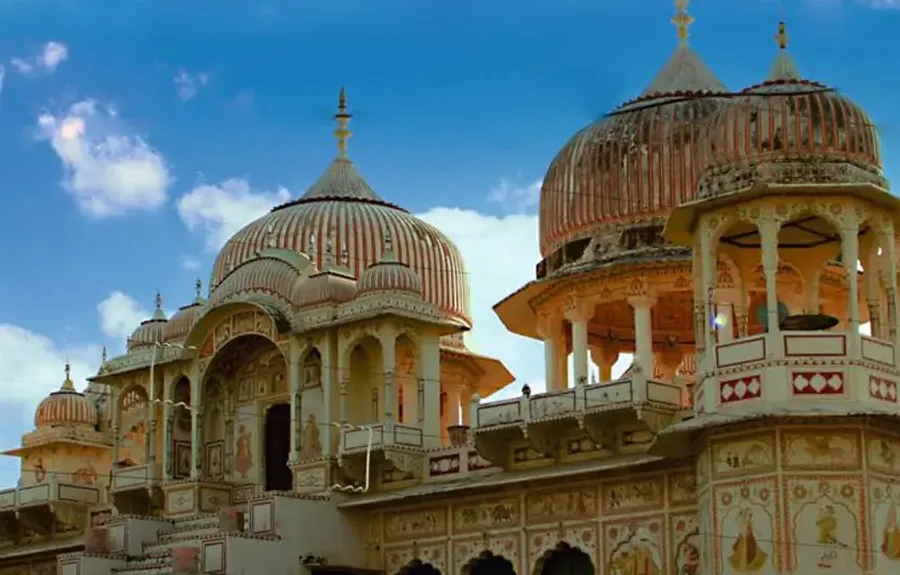
Turbans in saffron and magenta, indigo walls, golden sandstone and white marble reflected in still lakes: Rajasthan may be the most colourful state...
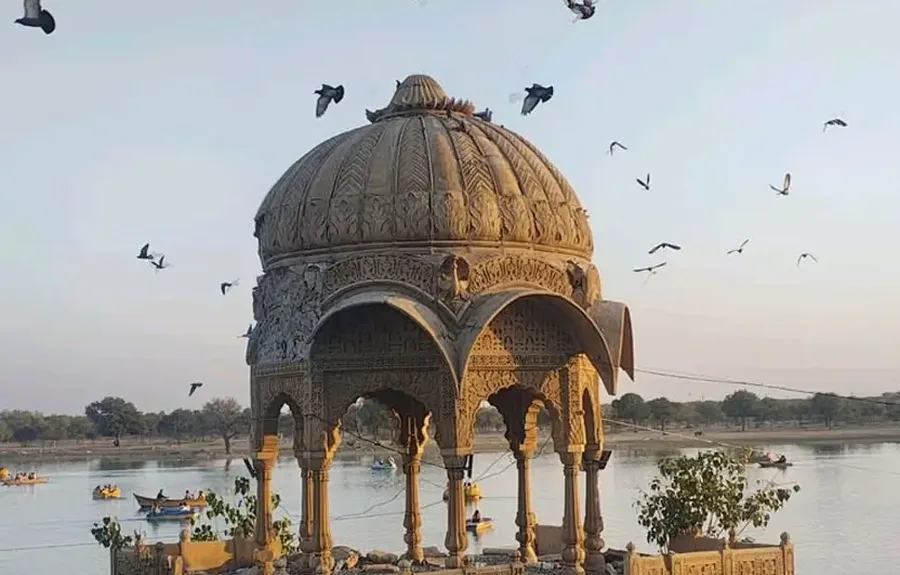
For a few days each autumn, around 50,000 camels, horses and cattle gather on the sands outside a small holy town, along with...