Delhi - Mandawa - Bikaner - Jaisalmer - Jodhpur - Udaipur - Bundi - Jaipur
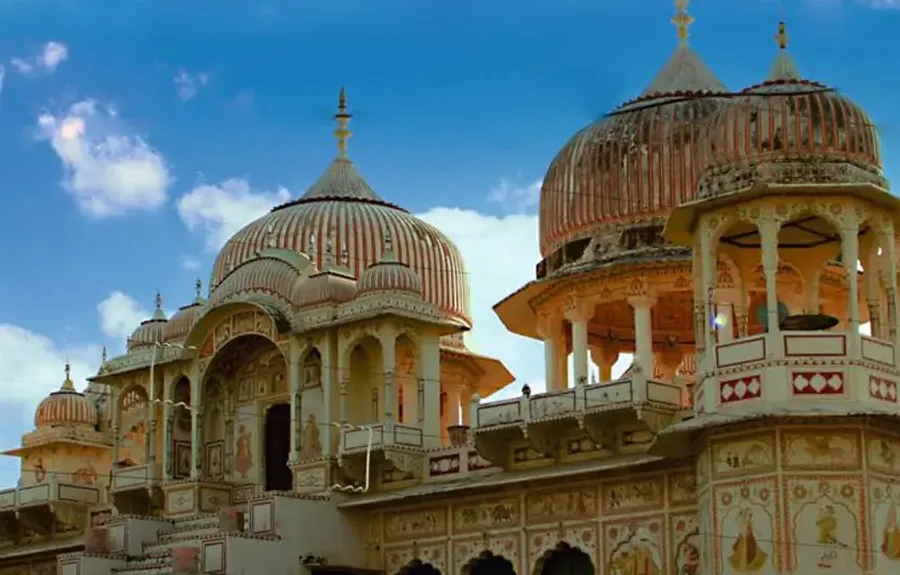
Turbans in saffron and magenta, indigo walls, golden sandstone and white marble reflected in still lakes: Rajasthan may be the most colourful state in India, and the Rajasthan Photography Tour is designed to capture it at its best. Over 13 nights and 14 days, the route follows the light from the painted havelis of Mandawa and the camel herders of Bikaner to the dunes and living fort of Jaisalmer, the blue lanes of Jodhpur, the lake palaces of Udaipur, the little-visited stepwells of Bundi and the forts of Jaipur. Mornings start before sunrise, middays are free for rest and editing, and evenings end at the best sunset viewpoints.
A private air-conditioned car with an English-speaking driver gives you the freedom to stop for any scene along the road, and photographer-guides lead dawn and dusk walks in the most photogenic towns, helping with access, permissions and portrait etiquette. The tour ends in Jaipur with close, natural frames of rescued elephants on a day visit with elephants at Elefantastic. If you have less time, our Golden Triangle Photography Tour India combines Rajasthan with the Taj Mahal and Varanasi, and all routes are listed among our Rajasthan tour packages.
Package Highlights
• Painted havelis and dawn village life in Shekhawati
• Junagarh Fort interiors and portrait walks in old Bikaner
• Camels returning to the research farm at sunset
• Jaisalmer's fort lanes at first light and Gadisar Lake at sunrise
• Dawn and dusk on the Sam Sand Dunes, with a night in a desert camp
• Blue lanes of Brahmpuri and Mehrangarh Fort in Jodhpur
• Udaipur's ghats and palaces from the water, and Bundi's stepwells and murals
• Elephant portraits at Elefantastic and Jaipur's geometric stepwell
Our representative meets you outside the arrivals hall at Indira Gandhi International Airport and helps load your camera bags carefully into your private car. Your driver for the next two weeks takes you to your hotel in about 45 minutes to an hour. Indian customs generally allow personal camera gear without special forms, but a written list of serial numbers for expensive lenses and bodies is a good idea. Drones need official permits and are banned near monuments, airports and military areas, including much of western Rajasthan near the border.
Check in at your hotel and rest for the day. Use the afternoon to charge batteries, clean sensors and organise memory cards for the trip, as there will be little spare time later. If you would like a short outing in the late afternoon, Humayun's Tomb is a lovely place to test your gear in the golden light, with long water channels, red sandstone arches and a white marble dome that photographs beautifully as the sun goes down. Your driver can take you there and wait while you shoot.
In the evening, our coordinator meets you to go over the shooting schedule, sunrise and sunset times for each stop and the best angles at each location, and hands you your vouchers and a 24-hour helpline number. Many monuments in Rajasthan charge a separate camera or video fee, and tripods may need permission in some forts. A dust cover or plastic bag for your camera is essential in the desert. A small torch, spare batteries and a lens cloth will save time on early mornings. Overnight stay at your hotel in Delhi.
After an early breakfast, drive about 260 km west to Mandawa in the Shekhawati region, a trip of five to six hours. As you leave the city behind, the landscape opens up into flat farmland and small villages, and your driver will stop whenever you see a scene worth capturing, whether it is a camel cart loaded with fodder, a village well or a roadside tea stall. Lunch is at a dhaba on the way. Shekhawati's painted towns were built by wealthy merchants in the 19th and early 20th centuries, and their walls are covered with colourful frescoes.
Check in at your hotel in Mandawa, ideally a restored castle or haveli, which will itself be full of painted walls, arches and courtyards to photograph. In the afternoon, your photographer-guide leads a walk through the town's narrow lanes to the painted havelis. The frescoes show gods, kings, horses and elephants alongside trains, cars, aeroplanes and British officers. The soft afternoon light brings out their faded blues, ochres and reds, and close-up details of doorways, windows and brass knockers make for strong images.
As the sun sets, climb to a rooftop to photograph the town's skyline of domes, chhatris and haveli roofs glowing in the golden light. Mandawa is quiet in the evening, with only the sounds of temple bells, cowbells and children playing. Local women in bright odhnis may be seen carrying water pots home, and your guide can help you ask for portraits respectfully. After sunset, enjoy dinner on your hotel's terrace under the stars and review the day's images. Tomorrow starts with a dawn walk. Overnight stay at your hotel in Mandawa.
Wake before sunrise for a dawn walk through Mandawa and the surrounding village, when the light is soft and daily life begins. Women draw water from wells, milkmen ride by on bicycles, children walk to school and shopkeepers open their shutters. The quiet streets and painted walls in the low light make this a rewarding time to shoot. Return to the hotel for breakfast, then check out and drive about 190 km west to Bikaner, a trip of about three and a half hours, with stops for any scenes along the way.
The landscape becomes sandier as you head west, with khejri trees, camel herds and villages of mud and stone. Arrive in Bikaner around lunchtime and check in at your hotel, which may be part of a former royal palace. In the afternoon, visit Junagarh Fort, built in the late 16th century and never captured by an enemy. Its interiors are some of the richest in Rajasthan, with red and gold lacquer in the Anup Mahal, mirror work in the Chandra Mahal and the blue painted clouds of the Badal Mahal. A wide lens is useful in the smaller rooms.
In the late afternoon, your photographer-guide takes you into the old walled city of Bikaner, a maze of narrow lanes lined with carved red sandstone havelis, small temples and shops. The Rampuria Havelis have elaborate facades that glow warmly in the evening light. Bikaner's residents are friendly and often curious about visitors, which makes portrait photography easier, though you should always ask first. Visit a sweet shop or a bhujia maker for close-up images of food being prepared by hand. Overnight stay at your hotel in Bikaner.
After an early breakfast, drive about 30 km south to the village of Deshnoke to visit the Karni Mata Temple, famous for the thousands of rats that live inside and are revered as the descendants of the goddess. The temple's silver doors and marble carvings are striking, and the rats drinking from large bowls of milk make unusual subjects. A camera fee is charged, and shoes must be removed, so wear socks. Light inside is limited, so a fast lens is helpful. Spotting a rare white rat is believed to bring good luck.
Return to Bikaner for lunch and a midday rest, a good time to back up and review your images. In the late afternoon, visit the National Research Centre on Camel, about 8 km from the city, timed for the hour before sunset when the camel herds return from grazing in the desert. Hundreds of camels walk in long lines across the sand, raising golden dust in the low light, a scene that photographers travel far to capture. You can also photograph camel calves in the pens and herders at work.
After sunset, return to Bikaner and spend the evening walking through the lit-up bazaars of the old city, where shops, food stalls and temples create colourful night scenes. The area around the Kote Gate is especially lively. For dinner, try Bikaner's famous kachoris and sweets at one of the old family shops. Your guide can share tips on night street photography and help you find good vantage points. Pack your bags tonight for tomorrow's drive across the desert to Jaisalmer. Overnight stay at your hotel in Bikaner.
After breakfast, drive about 330 km west to Jaisalmer, which takes five to six hours across the heart of the Thar Desert. The long, straight road offers wide desert landscapes, with dunes, scrub and villages of round mud huts with thatched roofs. Your driver will stop whenever you see a good scene, such as a herder with his flock, a village well or a camel caravan. Lunch is at a roadside dhaba. In the middle of the day, the light is harsh, so this is a good time to travel and rest your eyes.
Arrive in Jaisalmer in the mid-afternoon and check in at your hotel, ideally a heritage property with views of the fort. Jaisalmer's golden sandstone glows in the late light, making it one of the most photogenic cities in India. Take a short rest, then head out for the first shoot of the evening. Your photographer-guide will explain the best viewpoints in and around the city, and the times when the light falls best on the fort walls, the havelis and the lake.
In the late afternoon, drive to Vyas Chhatri, a group of yellow sandstone cenotaphs on a hill outside the town, which is the best place to photograph the fort at sunset. The domed chhatris make perfect foreground frames, and the fort glows in shades of gold, orange and pink as the sun sets behind you. Stay for blue hour, when the fort is lit up against the deep blue sky. A tripod is useful for long exposures. Return to your hotel for dinner on a rooftop terrace facing the illuminated fort. Overnight stay at your hotel in Jaisalmer.
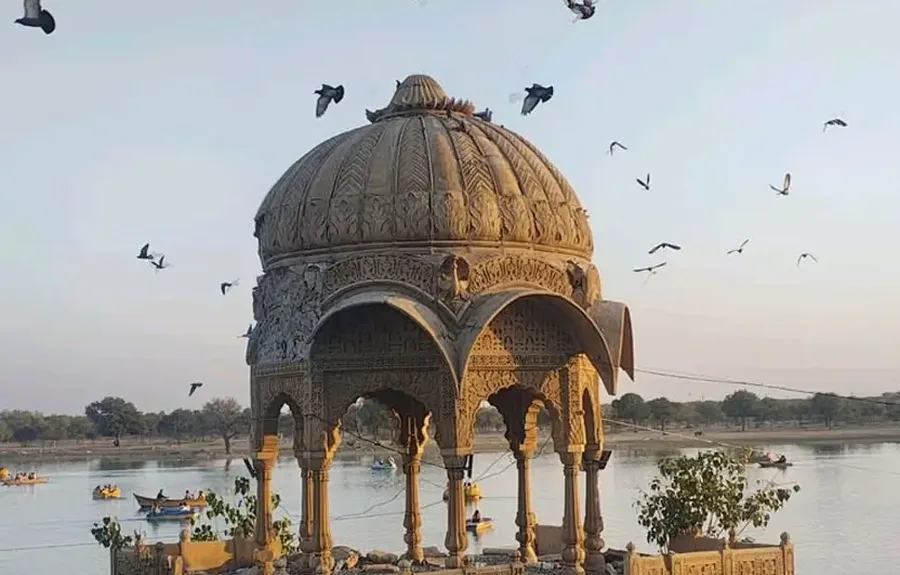
Wake before dawn and walk to Gadisar Lake, a 14th-century reservoir lined with small temples, ghats and a carved stone gateway, the Tilon Ki Pol. At sunrise, the lake is calm and the light is soft, and the reflections of the chhatris and temples in the still water create classic compositions. Birds skim the surface and early worshippers come to pray at the ghats. This is one of the most beautiful sunrise spots in Rajasthan. Return to your hotel for breakfast after the light becomes too strong.
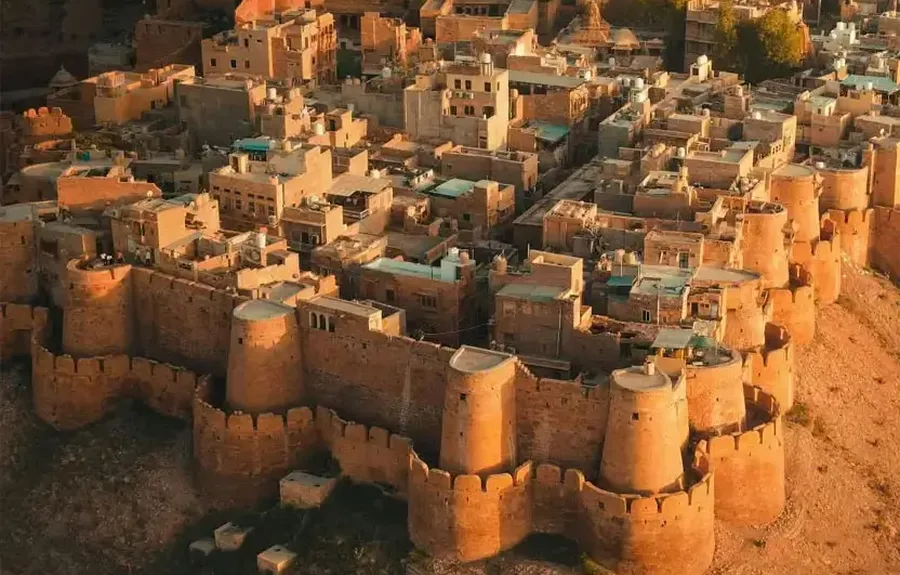
Next, walk with your photographer-guide into Jaisalmer Fort, one of the few living forts in the world. Its narrow lanes are full of life, with women sweeping doorsteps, children playing and shopkeepers setting out colourful textiles. The carved yellow sandstone of the houses and the shadows in the lanes create strong graphic images. Visit the Jain temples, whose intricate carvings are a delight for detail shots, and the Raj Mahal, the royal palace, with views over the city. A camera fee applies inside the palace museum.
After a midday rest, spend the late afternoon photographing the merchant havelis below the fort, including the Patwon Ki Haveli, whose carved balconies glow in the evening light, and the Salim Singh Ki Haveli, with its peacock brackets and curved roof. The lanes around them are full of colour and daily life. In the evening, return to the fort walls to photograph the city lights at blue hour, or enjoy dinner at a rooftop restaurant inside the fort. Overnight stay at your hotel in Jaisalmer.
After a relaxed breakfast, check out and drive about 20 km to Kuldhara, an abandoned village of the Paliwal Brahmins, said to have been deserted overnight around 1825. The rows of roofless stone houses, empty doorways and quiet lanes create moody, atmospheric images, especially with a wide lens and a low angle. Then continue to Bada Bagh, where royal cenotaphs stand on a ridge with modern wind turbines beyond, a striking contrast between old and new that makes for unusual compositions. Midday light is harsh here, so look for strong shadows.
Continue about 40 km west to the Sam Sand Dunes and check in at your desert camp, with comfortable tents, proper beds and attached bathrooms. After lunch and a rest, head out into the dunes in the late afternoon with a local camel man and your photographer-guide. Walk or ride to an area of untouched dunes away from the main tourist zone, where the wind has shaped the sand into ripples and sharp ridges. As the sun sets, the long shadows and warm light create perfect conditions for landscape images.
Camels silhouetted against the setting sun are a classic Rajasthan image, and your camel man is happy to lead his animals along the ridge for you. Back at the camp, photograph the folk musicians and dancers performing around the bonfire, whose bright clothes and fast movements make for lively images with a fast lens. After dinner, if the sky is clear, try some astrophotography, as the desert sky is dark and full of stars, far from city lights. A tripod and a wide lens are essential. Overnight stay at your desert camp in Sam.
Wake before dawn and walk into the dunes for sunrise, when the sand turns from grey to pink to gold and the ripples are lit from the side, revealing every texture. Footprints are few at this hour, and the light is soft and clean. Return to the camp for breakfast, then set off for Jodhpur, about 300 km and five hours away. Along the way, your driver will stop at villages, wells and roadside scenes. You may see Bishnoi villagers in white turbans and blackbuck antelope in the fields near Jodhpur.
Arrive in Jodhpur in the afternoon and check in at your hotel, ideally a haveli in the old city with views of Mehrangarh Fort, which rises on a sheer rock 125 metres above the city. Jodhpur is called the Blue City because many houses in its old quarter are painted in shades of indigo and sky blue, creating a unique palette for photographers. Take a short rest before the evening shoot, and use the time to back up your desert images and charge your batteries for the next two days.
In the late afternoon, your photographer-guide leads a walk through the blue lanes of Brahmpuri, the old Brahmin quarter below the fort. The narrow alleys, colourful doors, steps and small shrines create beautiful patterns of light and shadow, and local residents are often happy to be photographed if asked politely. As the sun sets, climb to a rooftop to capture the fort glowing golden above the sea of blue houses. Enjoy dinner at a rooftop restaurant facing the illuminated fort. The second half of the tour continues tomorrow. Overnight stay at your hotel in Jodhpur.
Be at the gates of Mehrangarh Fort as they open, when the low sun lights up its towering sandstone walls and the blue city below is still in soft shadow. The approach ramp, with its sharp turns and gates scarred by cannonballs, makes a strong leading line for wide-angle shots, and the latticed balconies of the Phool Mahal and Zenana Deodhi are full of patterns and filtered light. Ask at the ticket office about tripod permission. From the ramparts, a telephoto lens picks out rooftops, washing lines, kites and temple domes in the indigo maze far below.
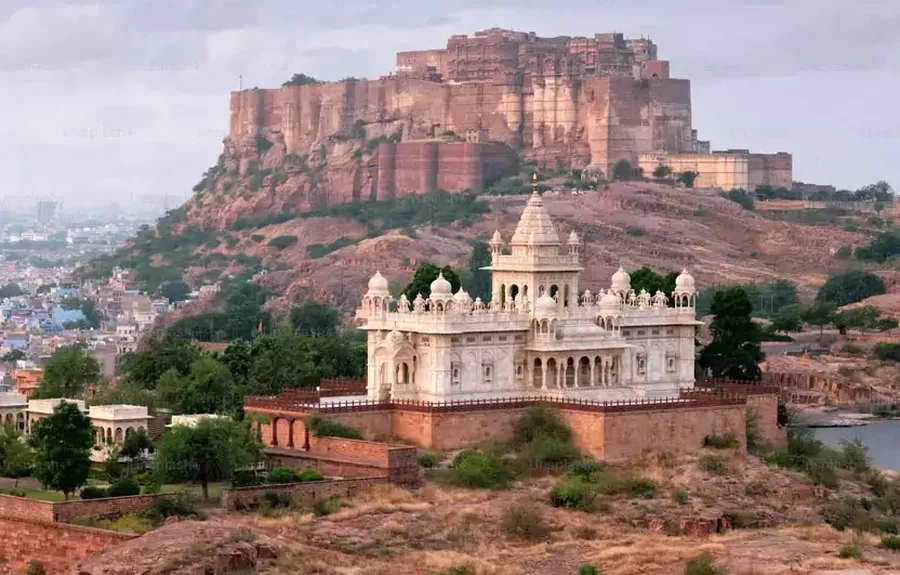
Mid-morning, visit Jaswant Thada, the white marble memorial of 1899, while the sun is still low enough to make its thin marble walls glow from within. The small lake and terraced gardens give reflections and clean compositions with the fort as a backdrop. Return to your haveli for lunch and the midday break, the best time to download, back up and edit, as the light outside is flat and harsh. Your photographer-guide can review your images from the trip so far and suggest which scenes to revisit in better conditions.
In the late afternoon, head to Toorji Ka Jhalra, an 18th-century stepwell in the old city whose deep, symmetrical flights of steps glow orange as the sun drops. Local boys often dive from the upper levels into the water, giving lively action shots with a fast shutter speed. Then walk to the Clock Tower and Sardar Market for street scenes at dusk, with spice sellers, bicycles and lit stalls. End the day on a rooftop for blue-hour shots of the floodlit fort above the city lights. Overnight stay at your hotel in Jodhpur.
After an early breakfast, drive south into the Aravalli hills, where the landscape becomes green and hilly, with farmers working their fields, women in bright odhnis carrying water and herders moving flocks along the road. Your driver will stop for any scene you spot. Around midday, reach Ranakpur and the white marble Chaumukha Jain Temple, open to non-Jain visitors from about 12:00 pm to 5:00 pm. Photography is allowed inside with a camera ticket, though not of the main images in the sanctums. Leather items must be left outside.
The temple is a gift for architectural photographers. Its 1,444 carved pillars create endless repeating lines and layers, and light falling through the open courtyards produces soft gradients across the marble. A wide lens captures the sense of space, while a short telephoto isolates the carved figures of dancers and musicians on the domed ceilings. Work slowly and quietly, as this is an active place of worship. After a vegetarian lunch nearby, continue for about two hours to Udaipur through winding hill roads with views over small lakes and valleys.
Check in at your hotel on Lake Pichola, ideally one with a terrace facing the City Palace, where you will stay for two nights. In the evening, your photographer-guide takes you to Ambrai Ghat on the western shore, the classic spot for blue-hour images of the floodlit City Palace reflected in the still water of the lake. A tripod is useful here for long exposures, and the ghat is calm and easy to work from. Enjoy dinner at a lakeside restaurant afterwards. Overnight stay at your hotel in Udaipur.
Wake before sunrise and walk to Gangaur Ghat and the lanes around Lal Ghat, where the city wakes up by the water. Women wash clothes on the stone steps, men bathe and pray, and boats sit still on the lake in the soft morning light, with the white palaces glowing pink behind them. Your guide knows the families who live here and can help you ask for portraits respectfully. The arches of Bagore Ki Haveli and the old havelis along the shore frame many fine compositions in this golden hour.
After breakfast, visit the City Palace while the morning light still comes in at an angle through its windows and courtyards. The glass peacocks of the Mor Chowk, the coloured window panes of the Manak Mahal and the long views over the lake from the upper balconies are highlights. A camera ticket is required. Return to the hotel for lunch and the midday break. In the afternoon, visit a miniature painting studio in the old city for close-up images of artists' hands, brushes and pigments, a good subject for detail and portrait work.
In the late afternoon, board a private boat on Lake Pichola for sunset photography from the water, circling the white Taj Lake Palace and stopping at Jag Mandir, the island palace with stone elephants along its edge. As the sun sets behind the Aravalli hills, the lake turns gold and the palaces glow, and after sunset the lights of the City Palace reflect in the water. A fast lens or image stabilisation helps on the moving boat. Return to the hotel for dinner and an edit of the day's images. Overnight stay at your hotel in Udaipur.
After breakfast, drive about 270 km north-east to Bundi, a trip of around five hours with stops for any roadside scenes, such as farmers ploughing with bullocks, potters drying their wares or colourful trucks at a highway dhaba. Bundi is one of the most photogenic and least visited towns in Rajasthan, tucked into a narrow valley below the walls of Taragarh Fort, with blue-washed houses, lakes and more than 50 stepwells. Check in at a haveli in the old town with a rooftop view of the hillside palace.
In the late afternoon, your photographer-guide leads a walk through Bundi's old town, where the lanes are narrow and full of life, with doorways painted in blue and pink, small shrines and children playing. Visit Raniji Ki Baori, a stepwell built in 1699 with carved arches and pillars, whose deep steps create strong shadows in the low sun, and the twin stepwells of Nagar Sagar Kund in the market square. Local people in Bundi are friendly and less used to cameras, so always ask before taking portraits.
As the sun sets, climb to your haveli's rooftop or the steps of a nearby temple to photograph the Garh Palace glowing gold above the blue houses, with Taragarh Fort on the ridge behind it. At blue hour, the palace is lit up against the deep blue sky, and a tripod helps for sharp long exposures. Enjoy dinner on the rooftop under the stars, with the sounds of temple bells and evening prayers drifting up from the town below. Tomorrow begins with the painted rooms of the palace. Overnight stay at your hotel in Bundi.
Enter the Garh Palace through the Hathi Pol, the Elephant Gate, as soon as it opens, and head to the Chitrashala, a small courtyard whose walls and ceilings are covered with 18th-century murals in shades of turquoise, green and gold. Scenes of Krishna with the gopis, royal processions, hunting and festivals are full of tiny details perfect for close-up work. The soft morning light avoids harsh reflections on the painted surfaces. Then walk up towards Taragarh Fort for wide views over the town and lake, keeping a stick handy for the monkeys.
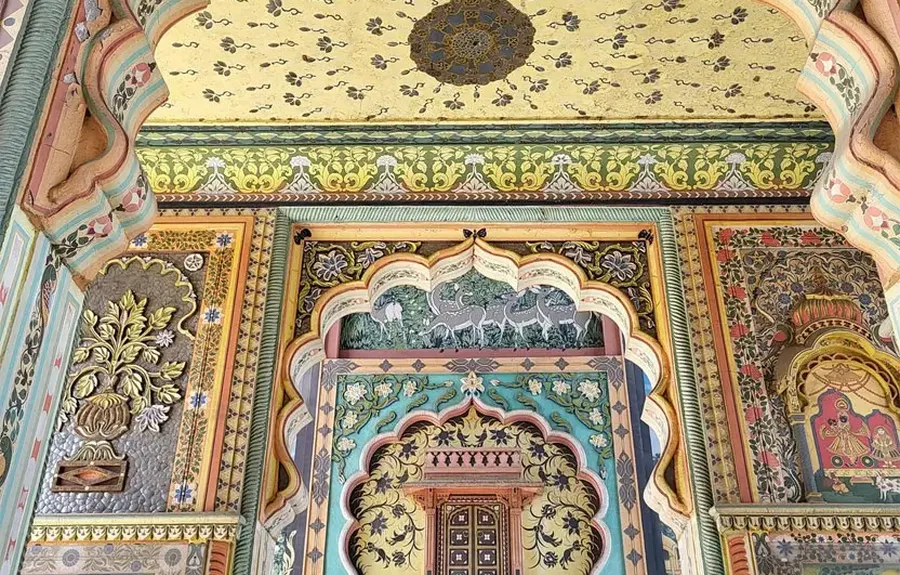
After a light lunch, drive about 210 km to Jaipur, around four hours through the farmland of eastern Rajasthan. Check in at your hotel in the afternoon. In the late afternoon, visit Patrika Gate at Jawahar Circle, a modern gateway whose arches, pillars and ceilings are painted in bright, detailed patterns depicting the history and culture of Rajasthan. It makes a vivid, symmetrical subject, and visiting late in the day avoids the midday crowds. A wide lens and a central composition work best here.
As the sun sets, head to the old city and climb to a café rooftop opposite the Hawa Mahal, whose pink sandstone facade with 953 small windows fills the frame and glows warmly at sunset. Then walk through Johari Bazaar at dusk for street photography as the shops light up and the crowds of shoppers fill the arcades. Enjoy a farewell dinner at a rooftop restaurant facing Nahargarh Fort on the ridge, and review your best images of the tour with your guide. Overnight stay at your hotel in Jaipur.
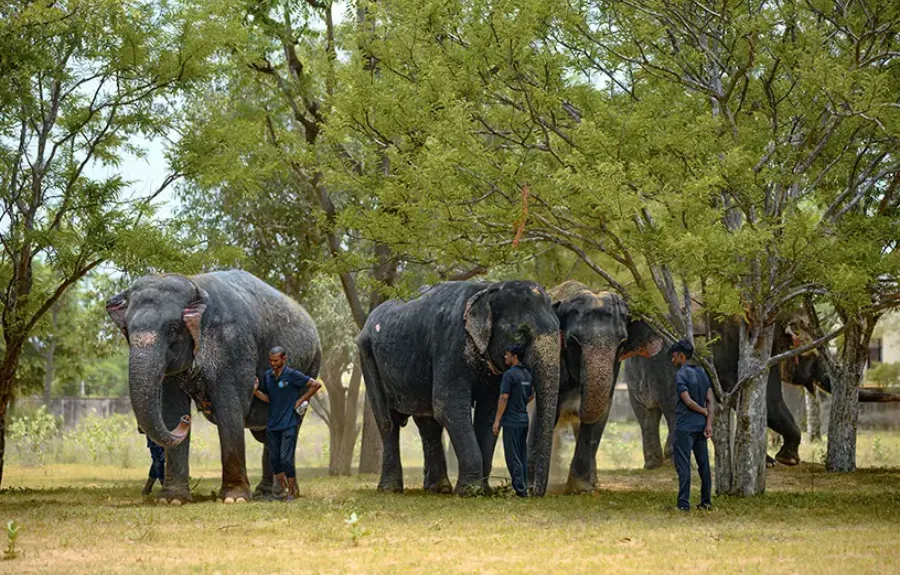
Photograph the geometric stairs of Panna Meena Ka Kund at sunrise, then spend a morning with rescued elephants at the Elefantastic elephant sanctuary, feeding and bathing them for close, natural portraits, before your transfer to Jaipur airport or Delhi for your onward flight.
Our assorted tours, for your first, second or nth time to India!
Beyond the famous desert cities lies a greener Rajasthan of lakes, wooded hills and small royal capitals that most visitors never reach. The...
More than 500 bird species have been recorded in Rajasthan, from wintering cranes and pelicans on the wetlands of the east to sandgrouse,...
Rajasthan rewards patience, and the Rajasthan Tour for Senior Travelers is designed to let you enjoy it without strain. Over 11 nights and...
Almost every village in Rajasthan is known for a craft, and many of them are still practised by hand in family workshops, exactly...
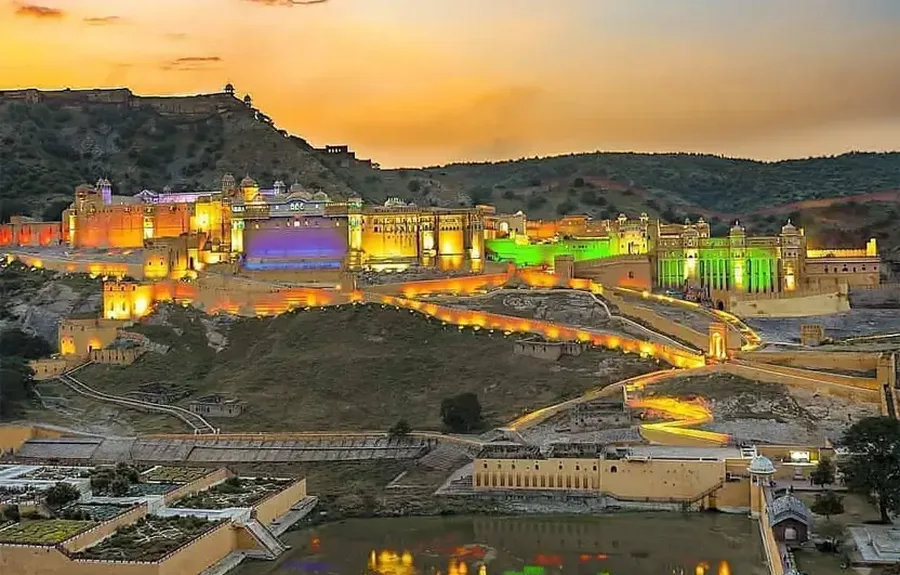
Most visitors see Rajasthan through a car window between one fort and the next. The Rajasthan Slow Travel Tour takes the opposite approach...
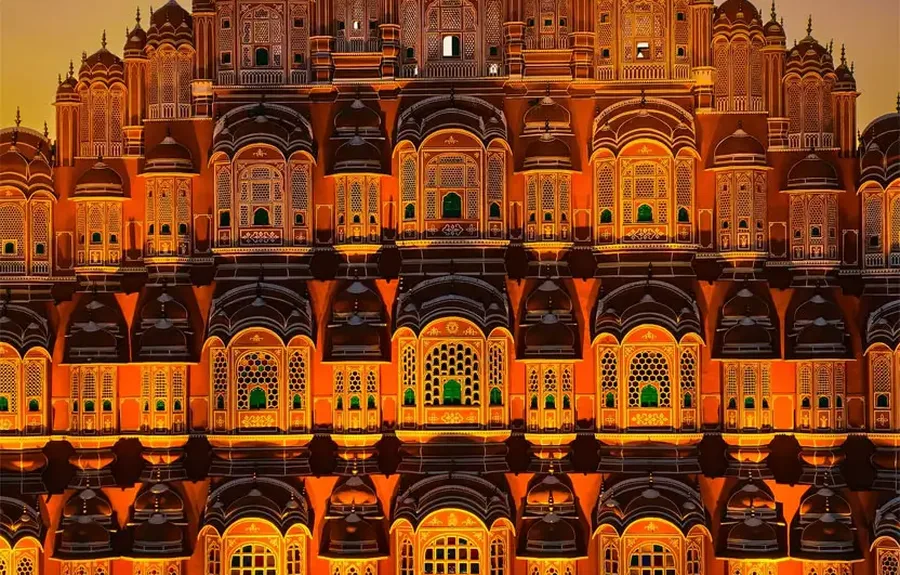
Lamps on every ghat, palaces outlined in light and fireworks reflected in still water make Diwali in Udaipur one of the loveliest festival...
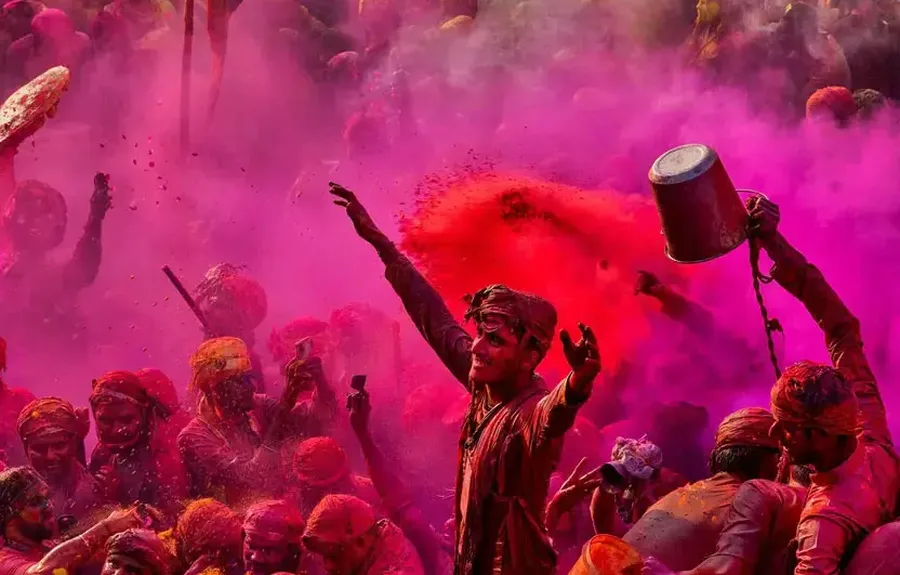
Holi arrives with the full moon of Phalgun, usually in March, when winter ends, the wheat turns gold and the whole of North...
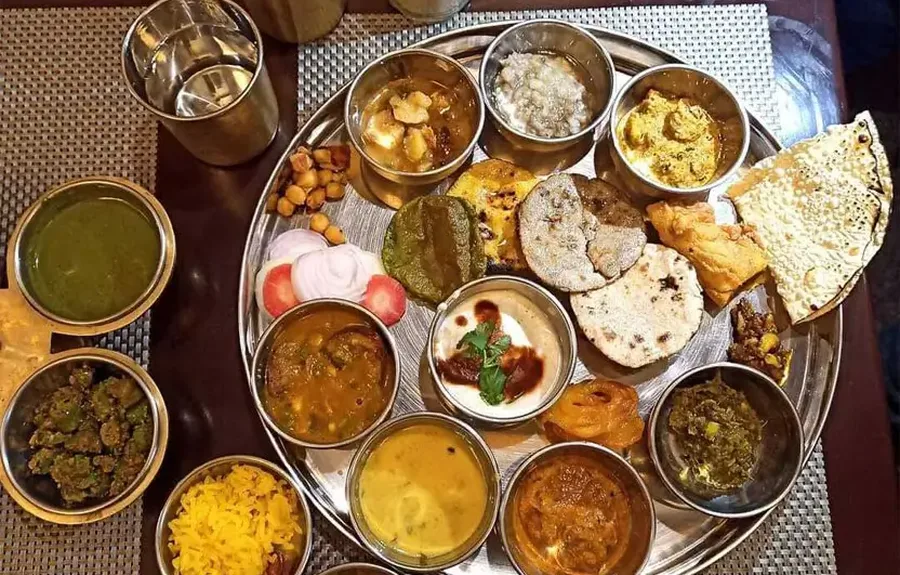
Desert cooking is a cuisine of clever survival. With little water and few fresh vegetables, Rajasthani cooks built a whole kitchen around dried...
Turbans in saffron and magenta, indigo walls, golden sandstone and white marble reflected in still lakes: Rajasthan may be the most colourful state...
For a few days each autumn, around 50,000 camels, horses and cattle gather on the sands outside a small holy town, along with...