Jaipur - Sanganer - Bagru - Jodhpur - Barmer - Salawas - Udaipur
Almost every village in Rajasthan is known for a craft, and many of them are still practised by hand in family workshops, exactly as they were centuries ago. The Rajasthan Textile and Handicraft Tour spends 9 nights and 10 days with the people who keep those skills alive. You print cotton with carved wooden blocks in Sanganer and Bagru, watch blue pottery being glazed in Jaipur, tie and dye bandhej fabric in Jodhpur, meet the embroiderers and ajrakh printers of Barmer in the western desert, see flat rugs woven on pit looms in Salawas and learn the fine brushwork of miniature painting in Udaipur.
Each workshop visit is arranged with the artisans in advance, so you can watch, ask questions and try the craft yourself, and fair prices go straight to the makers when you buy. A private car with an English-speaking driver connects every stop, with guides who know the craft communities well. In Jaipur, you also spend a morning with rescued elephants on a day visit with elephants at Elefantastic. Food lovers may prefer the Rajasthan Food and Culinary Tour, and village life is the focus of our Rajasthan Village Life and Cultural Tour.
Package Highlights
• Anokhi Museum of Hand Printing near Amber Fort
• Blue pottery workshop and gem cutting in Jaipur
• Block printing and handmade paper in Sanganer
• Dabu mud-resist printing with natural dyes in Bagru
• Morning with rescued elephants at Elefantastic
• Bandhej tie-dye workshop in Jodhpur
• Embroidery, appliqué and ajrakh printing in the villages of Barmer
• Durrie weaving in Salawas and miniature painting in Udaipur
Your craft tour begins in Jaipur, the capital of Rajasthan and one of the great craft cities of India. Our representative meets you at Jaipur airport, the railway station or your Delhi hotel, depending on your arrival plan, and your driver takes you to your hotel, ideally a heritage haveli with painted walls and courtyards. Jaipur was founded in 1727 by Maharaja Sawai Jai Singh II, who invited craftsmen from across India to settle in the new city, giving each trade its own street or market. Many of these craft quarters still survive today.
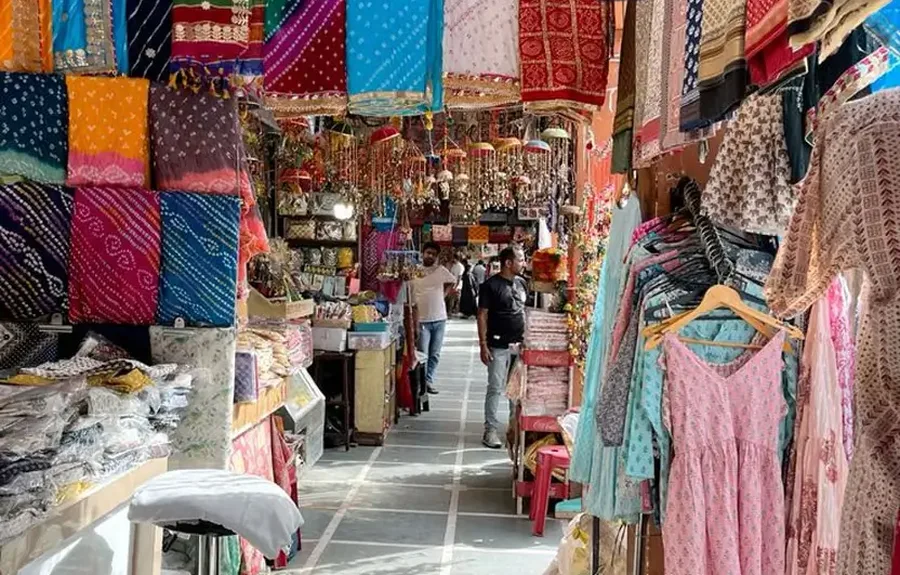
Check in and rest for a few hours. In the late afternoon, your guide takes you on a gentle bazaar walk through the old walled city, where streets are still named after their crafts. Johari Bazaar is the jewellers' market, Tripolia Bazaar sells brass and lac work, and Maniharon Ka Rasta is the lane of the lac bangle makers, where you can watch artisans heat coloured lac over small coal fires and shape it into bangles decorated with glass beads and mirrors. Each lane has its own sounds and smells.
In the evening, our coordinator meets you at the hotel with your vouchers and a 24-hour helpline number, and explains the workshops ahead. Most artisans work from their homes or small family workshops, and visits are arranged in advance so that you can watch the full process. Bring a small notebook if you like to record techniques and names, and allow some extra luggage space for fabrics, pottery and paintings. Many workshops can ship larger purchases home for you. Enjoy dinner at a Rajasthani restaurant. Overnight stay at your hotel in Jaipur.
After breakfast, visit Amber Fort, the hilltop palace of the Kachwaha Rajputs, about 11 km north of the city. A jeep takes you to the main courtyard, and your guide shows you the Diwan-i-Am, the painted Ganesh Pol and the Sheesh Mahal, pointing out the fine craftsmanship of the inlay, fresco and mirror work, made by the ancestors of the artisans you will meet on this tour. From the ramparts, the views over Maota Lake and the hills are wide. The palace is a good introduction to Rajasthan's royal patronage of the arts.
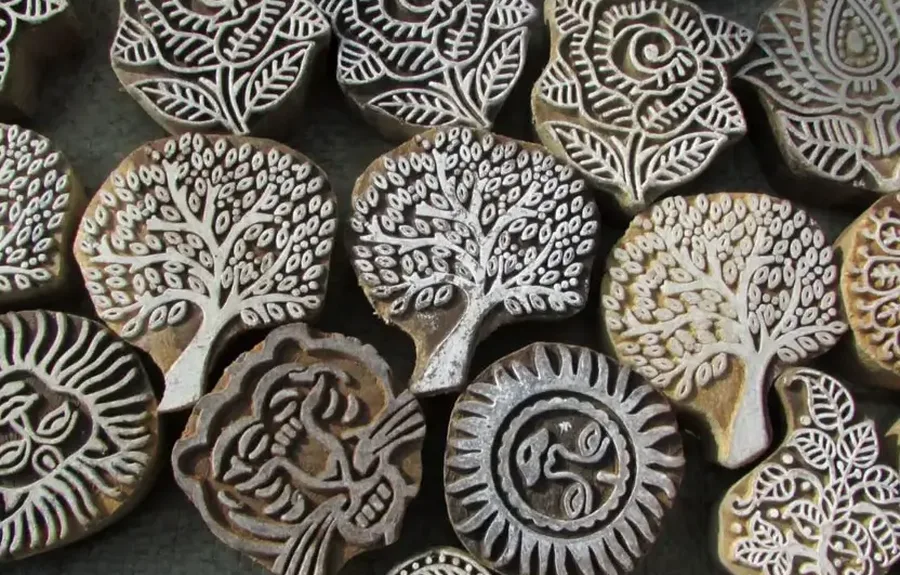
Just below the fort, visit the Anokhi Museum of Hand Printing, set in a restored 16th-century haveli. The museum tells the story of block printing in Rajasthan, with displays of historic textiles, wooden blocks and natural dyes, and a printer and block carver work on site, so you can watch them carve and print. You can also try printing a small piece of cloth yourself. The museum is closed on Mondays. Nearby, the lanes of Amber village have small workshops where artisans carve wooden blocks used by printers across the state.
In the afternoon, visit a blue pottery workshop in Jaipur. Unlike most pottery, Jaipur's blue pottery is made without clay, using a mix of quartz powder, glass, Multani mitti and gum, and it is painted with cobalt blue and other colours before a low firing. The craft came to Jaipur from Persia through the Mughal courts and was revived in the 20th century. You can watch the shaping, painting and glazing, and try painting a tile or bowl. In the evening, visit a gem cutting workshop, as Jaipur is a world centre for cutting coloured stones. Overnight stay at your hotel in Jaipur.
This morning, the Elefantastic team collects you from your hotel for a hands-on visit to their sanctuary on the outskirts of Jaipur. Each guest is paired with one elephant and introduced to its keeper, who shares the elephant's story, diet and personality. You help prepare fruit and sugarcane and feed your elephant by hand, then walk beside it and help with bath time, splashing and scrubbing as it relaxes. There are no rides, no chains and no shows. Elephants have long appeared in Rajasthan's textiles and paintings, and here you meet them in real life.
Wear clothes that can get wet and keep a change in the car. Please book only through official Elefantastic channels, as the sanctuary is not located in Hathi Gaon (Elephant Village). After the session, drive about 16 km south of Jaipur to Sanganer, one of the most famous block printing centres in India. Sanganeri prints are known for their fine floral patterns on white or light backgrounds, and the town has hundreds of printing workshops along the river, where long lengths of cloth are dried in the sun after washing.
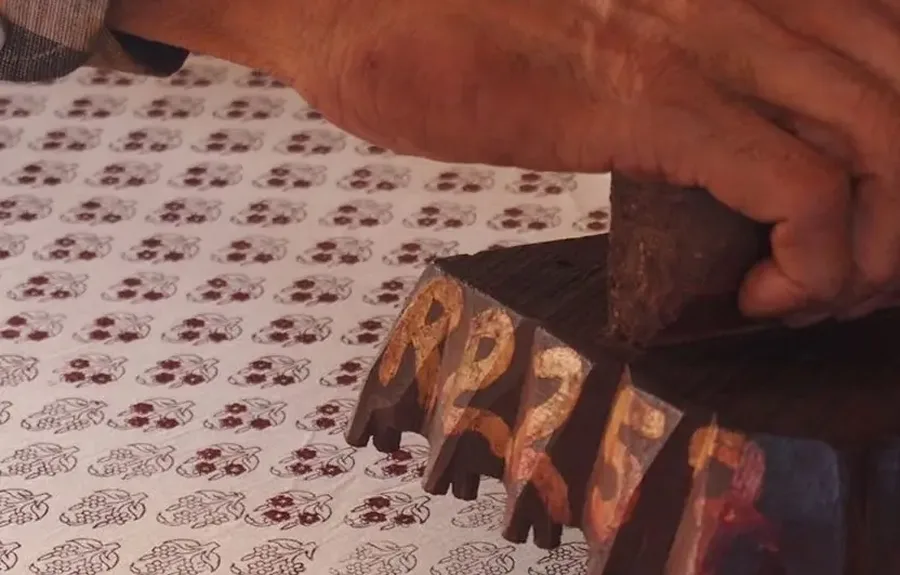
In the afternoon, your guide takes you into a family block printing workshop, where printers press carved wooden blocks dipped in colour onto long tables of cotton, building up complex patterns one colour at a time with remarkable precision. You can try printing a scarf or tablecloth yourself. Then visit a handmade paper factory in Sanganer, where paper is made from cotton rags, flowers and leaves, pressed and dried by hand, and used for notebooks, gift bags and artwork. Return to Jaipur for dinner. Overnight stay at your hotel in Jaipur.
After breakfast, drive about 35 km west to Bagru, a village of the Chhipa community of printers, who have practised their craft here for around 400 years. Bagru is known for dabu printing, a resist technique in which a paste of mud, lime, gum and wheat husk is printed onto the cloth to protect parts of the design from the dye. The cloth is then dyed in indigo or other natural colours, and the mud is washed away to reveal the pattern. The process is slow and skilled, and the results have a soft, earthy look that is very different from Sanganeri prints.
Your guide introduces you to a family of printers who use only natural dyes, made from plants and minerals such as indigo, pomegranate rind, turmeric, madder root, iron rust and alum. You see the dye vats, the drying fields and the printing tables, and you can try the dabu technique on a small piece of cloth. The printers explain how the colours change with the seasons, the water and the mordants used to fix them. Bagru's fabrics are now sold around the world, but the work is still done by hand in family homes.
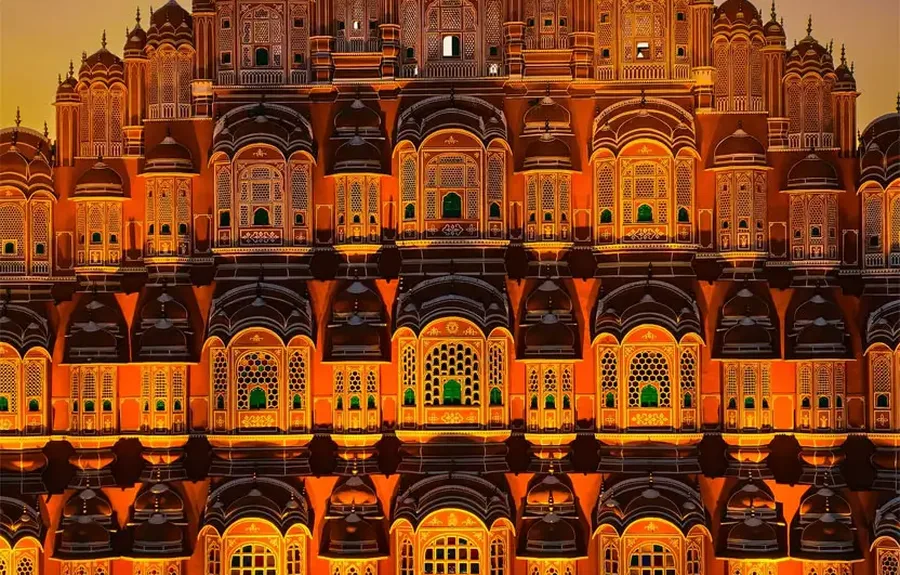
After lunch with the printing family or at a village restaurant, walk through the lanes of Bagru, where cloth dries on rooftops and in open fields, creating beautiful patterns of colour against the desert sand. Return to Jaipur in the late afternoon. In the evening, visit the Hawa Mahal for photographs from a rooftop café, then browse the textile shops of Bapu Bazaar, which sell block-printed clothes, quilts and bedspreads at good prices. Pack your bags tonight for the long drive to Jodhpur. Overnight stay at your hotel in Jaipur.
After an early breakfast, drive about 335 km west to Jodhpur, around six hours through central Rajasthan, with stops for tea and lunch. As you near Jodhpur, the landscape becomes drier, and you may see Bishnoi villagers in white turbans and herds of blackbuck antelope. Arrive in the early afternoon and check in at your hotel, ideally a haveli in the old city with views of Mehrangarh Fort. Jodhpur is famous for its bandhej, or tie-dye, textiles, as well as its leather goods, antique furniture and lacquerware.
In the afternoon, visit a bandhej workshop in the old city, where women tie tiny knots in the fabric with thread, sometimes thousands on a single piece, to create patterns of dots and circles before the cloth is dyed. The finest bandhej saris and odhnis can take weeks to tie. Your guide explains the different patterns, such as leheriya, with its diagonal waves, and mothra, with its checks, and the colours worn for festivals and weddings. You can try tying a few knots yourself and watch the cloth being dyed in bright colours.
In the late afternoon, visit Mehrangarh Fort, one of the largest forts in India, whose museum has one of the best textile galleries in Rajasthan, with royal tents, embroidered costumes, turbans and fine block-printed and painted cloths. Your guide explains how textiles were used in royal life, from tents and carpets to clothing and ceremonies. As the sun sets, enjoy the views over the blue city from the ramparts. In the evening, enjoy dinner at a rooftop restaurant facing the illuminated fort. Overnight stay at your hotel in Jodhpur.
After breakfast, drive about 200 km south-west to Barmer, a trip of around three and a half hours deep into the Thar Desert, close to the border with Pakistan. Barmer is one of the least visited districts of Rajasthan, but it is a treasure for anyone interested in textiles. The women of the desert communities, including the Meghwal, Rabari and Jat groups, are famous for their embroidery, mirror work and appliqué, and many families who came from Sindh in Pakistan during Partition brought their own styles and techniques with them.
Check in at your hotel in Barmer, which will be simple but comfortable, as this region sees few tourists. In the afternoon, your guide takes you to a nearby embroidery village, where women sit together in courtyards stitching colourful patterns with mirrors, beads and fine threads onto cushion covers, quilts, bags and clothes. Each community has its own designs and colours, and the patterns often tell stories or carry blessings. You can sit with the women, watch them work and buy pieces directly from them, with the money going straight to the makers.
In the late afternoon, visit a cooperative that supports desert craftswomen by providing materials, training and fair markets for their work. The cooperative's staff explain how embroidery has become an important source of income for women in this dry region, where farming is difficult. As the sun sets over the desert, return to your hotel for dinner. The sky in Barmer is clear and full of stars. Tomorrow you visit the ajrakh printers and the weavers of Salawas on the way back to Jodhpur. Overnight stay at your hotel in Barmer.
After breakfast, visit an ajrakh printing workshop in Barmer. Ajrakh is a complex block printing technique that came from Sindh, using natural dyes such as indigo and madder and a resist process that can take up to 16 steps, with the cloth washed, printed, dyed and dried many times. The patterns are geometric and symmetrical, in deep blue and red, and the cloth is traditionally worn as shawls and turbans by men of the region. The printers explain each stage, and you can see the cloth at different points in the process.
In the late morning, visit the ruined Kiradu temples, about 35 km from Barmer, a group of 11th-century Hindu temples with fine carvings, set in a remote desert landscape. Then drive back towards Jodhpur, about three and a half hours away. About 20 km before the city, stop at Salawas, a village known for its durrie weavers, who make flat-woven rugs from cotton, wool and camel hair on traditional pit looms dug into the ground. Watch the weavers at work and learn how the patterns are built up row by row.
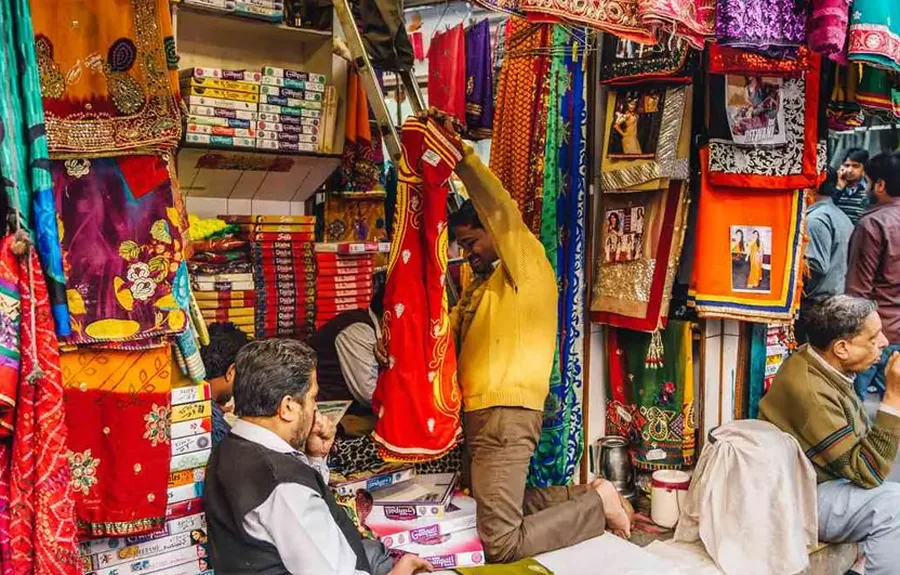
The weavers of Salawas sell durries directly from their homes, and you can choose from many sizes, colours and designs, with shipping available for larger pieces. Some families also make pattu shawls, woven from wool with geometric patterns. Arrive in Jodhpur in the late afternoon and check in at your hotel. In the evening, walk to the Clock Tower and Sardar Market, where traders sell spices, textiles and silver. Enjoy dinner at a rooftop restaurant facing Mehrangarh Fort. Overnight stay at your hotel in Jodhpur.
After breakfast, drive about 170 km to Ranakpur, around three and a half hours through the green Aravalli hills. Visit the Chaumukha Jain Temple, built in the 15th century from white marble, with 1,444 carved pillars, each different. Non-Jain visitors may enter from around 12:00 pm to 5:00 pm, and leather items and shorts are not allowed. The temple is a masterpiece of the stone carver's art, and your guide explains how the craftsmen created such fine detail by hand. After a simple vegetarian lunch near the temple, continue on towards Udaipur, with the driver stopping at any roadside workshop or village market that catches your eye.
The drive to Udaipur takes about two hours along winding hill roads with views of valleys, lakes and villages. On the way, you may stop at a village known for terracotta work, where potters make large votive horses and figures for local shrines, a tradition of the Molela region of Rajsamand district. Arrive in Udaipur in the late afternoon and check in at your hotel near the lakes. Udaipur, the City of Lakes, has a long tradition of miniature painting, silver work and wooden toys.
In the evening, take a boat ride on Lake Pichola at sunset, gliding past the ghats, the City Palace and the white Lake Palace, now a luxury hotel. Then visit Bagore Ki Haveli, an 18th-century mansion on the lakeshore, whose museum displays costumes, turbans and puppets, followed by the Dharohar folk dance show, with traditional Rajasthani dances and puppetry, where you can look closely at the mirror-work skirts and turbans worn by the dancers. End the day with dinner at a rooftop restaurant overlooking the illuminated palaces. Overnight stay at your hotel in Udaipur.
After breakfast, join a miniature painting class with a master artist in the old city. Udaipur is one of the main centres of the Mewar school of miniature painting, known for its bright colours, detailed borders and scenes of royal life, hunting and Krishna legends. You learn how the artists make their own brushes from squirrel hair, grind natural pigments from stones and minerals, and paint fine details on paper or silk. With guidance, you paint a small design, perhaps an elephant or a flower, to take home.
In the late morning, visit the City Palace, the largest palace complex in Rajasthan, where your guide points out the craftsmanship of the mosaics, inlay, glass work and paintings. The Mor Chowk, with its peacocks made of coloured glass, and the Zenana Mahal, with its painted walls, are highlights. Then visit the Jagdish Temple, whose carved walls show the skill of the stone carvers of Mewar. After lunch, browse the shops of the old city for silver jewellery, miniature paintings and wooden toys.
In the late afternoon, visit Shilpgram, a crafts village about 3 km west of the city, set up to preserve the traditional arts and architecture of western India. It has traditional houses from Rajasthan, Gujarat, Goa and Maharashtra, with artisans demonstrating weaving, pottery, embroidery and other crafts. Folk musicians and dancers often perform here in the evenings. Return to Udaipur for a farewell dinner at a lakeside restaurant, perhaps wearing some of the textiles you have bought on the tour. Overnight stay at your hotel in Udaipur.
After breakfast, transfer to Udaipur airport for your flight to Delhi and onward international connection. Please keep at least four hours between flights. For more Rajasthan routes, browse our Rajasthan tour packages.
Our assorted tours, for your first, second or nth time to India!
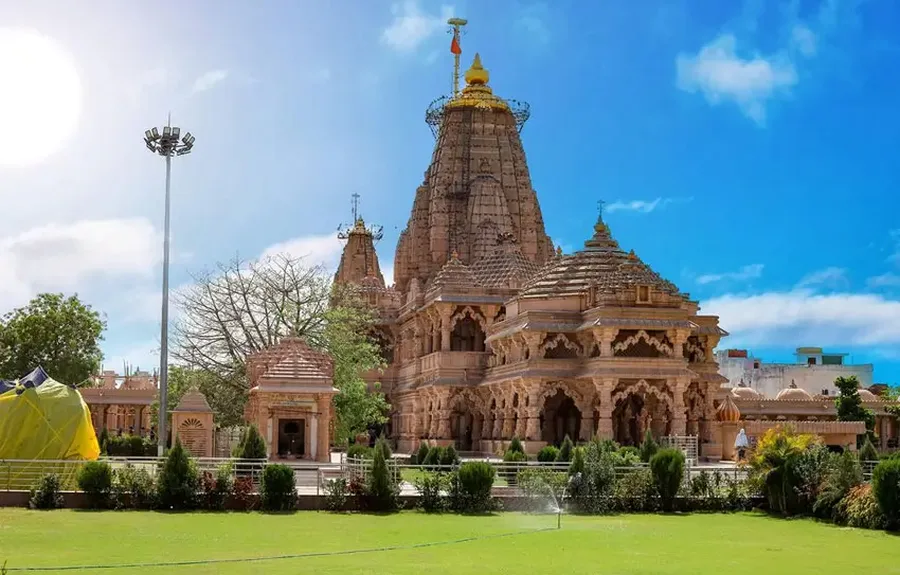
Beyond the famous desert cities lies a greener Rajasthan of lakes, wooded hills and small royal capitals that most visitors never reach. The...

More than 500 bird species have been recorded in Rajasthan, from wintering cranes and pelicans on the wetlands of the east to sandgrouse,...
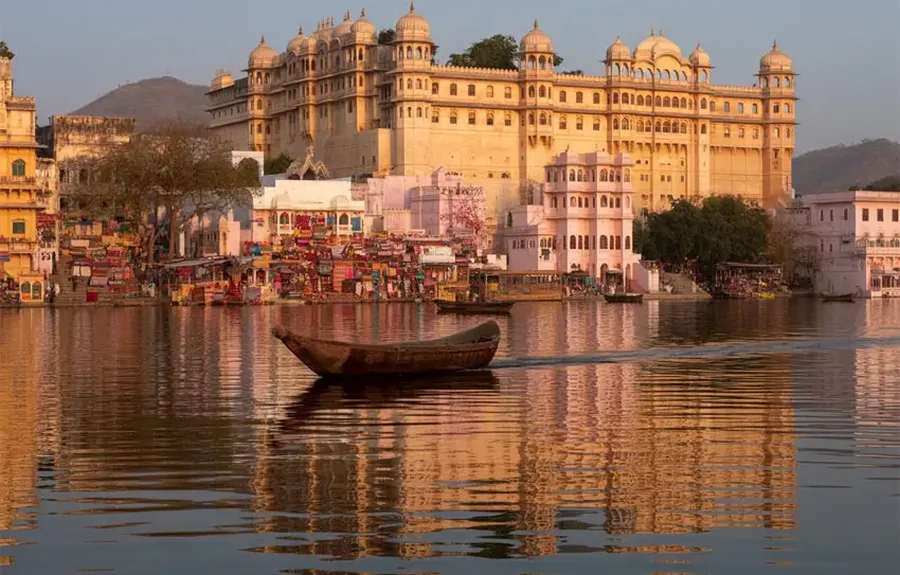
Rajasthan rewards patience, and the Rajasthan Tour for Senior Travelers is designed to let you enjoy it without strain. Over 11 nights and...
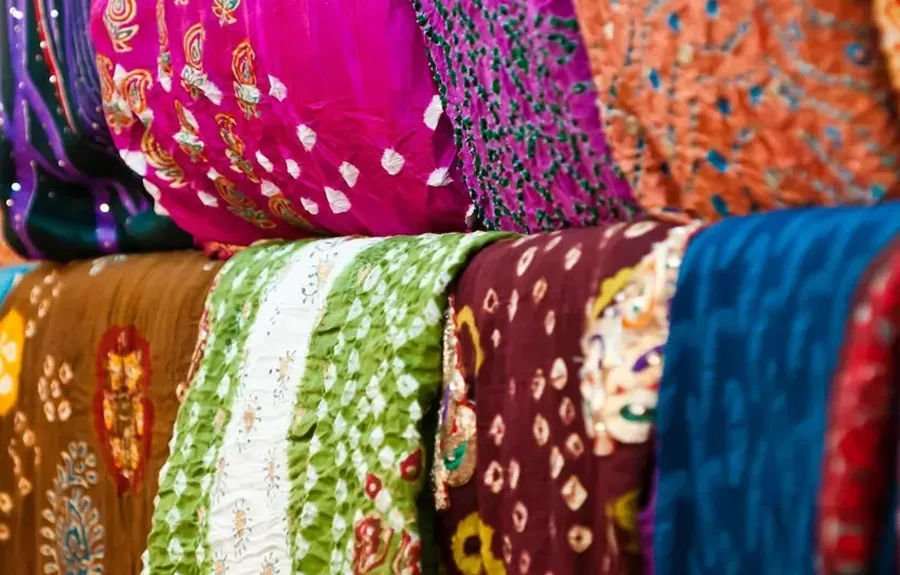
Almost every village in Rajasthan is known for a craft, and many of them are still practised by hand in family workshops, exactly...
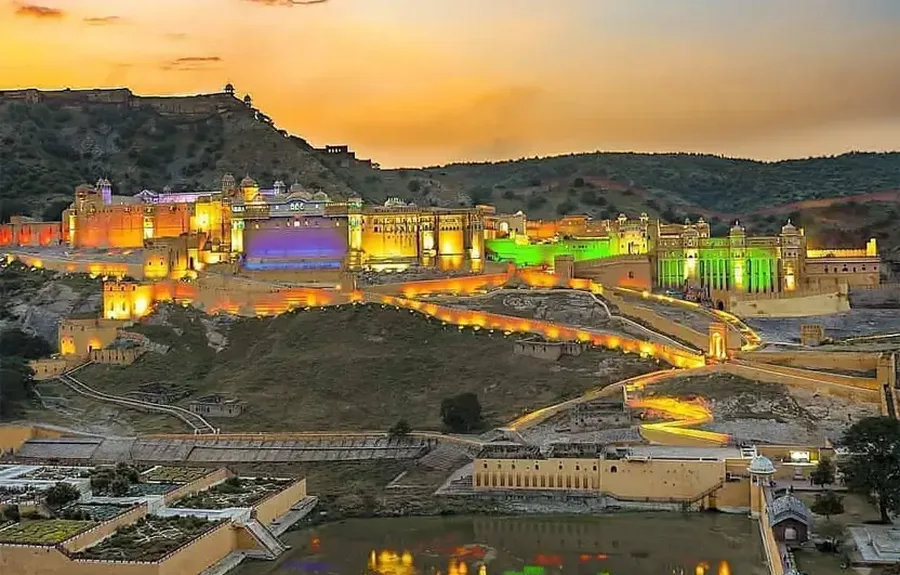
Most visitors see Rajasthan through a car window between one fort and the next. The Rajasthan Slow Travel Tour takes the opposite approach...
Lamps on every ghat, palaces outlined in light and fireworks reflected in still water make Diwali in Udaipur one of the loveliest festival...
Holi arrives with the full moon of Phalgun, usually in March, when winter ends, the wheat turns gold and the whole of North...
Desert cooking is a cuisine of clever survival. With little water and few fresh vegetables, Rajasthani cooks built a whole kitchen around dried...
Turbans in saffron and magenta, indigo walls, golden sandstone and white marble reflected in still lakes: Rajasthan may be the most colourful state...
For a few days each autumn, around 50,000 camels, horses and cattle gather on the sands outside a small holy town, along with...