Jodhpur - Jaisalmer - Sam - Osian - Ranakpur - Udaipur
Blue, gold and white are the three colours of this route. The Jodhpur Jaisalmer and Udaipur Tour Package begins in the indigo lanes of Jodhpur below the cliff-top Mehrangarh Fort, crosses the Thar to the golden sandstone city of Jaisalmer, spends two nights among the dunes at Sam and the ancient temple town of Osian, then climbs into the green Aravalli hills to the white marble halls of Ranakpur before ending on the shores of Lake Pichola in Udaipur. Over 8 nights and 9 days, it covers the western half of Rajasthan in depth, with fewer long drives than routes that also include Delhi and Jaipur.
A private air-conditioned car with an English-speaking driver meets you at Jodhpur airport and stays with you until Udaipur, and local guides join you at every fort, palace and temple. The tour suits travellers who have already seen the Golden Triangle or who want to focus on the desert and the lakes. Guests who would also like to meet rescued elephants can add a night in Jaipur at the start for a day visit with elephants at Elefantastic. For a longer route that includes the capital, see the 10 Days Rajasthan Tour Package from Delhi or our wider Rajasthan tour packages.
Package Highlights
• Mehrangarh Fort, Jaswant Thada and Umaid Bhawan Palace Museum in Jodhpur
• Blue lanes of Brahmpuri and the Clock Tower market
• Jaisalmer's living fort, Jain temples and carved havelis
• Camel ride and a desert camp night at Sam Sand Dunes
• Osian's 8th to 11th-century temples and a dune camp
• Chaumukha Jain Temple at Ranakpur with 1,444 marble pillars
• City Palace, Jagdish Temple and a sunset boat ride on Lake Pichola
• Private car and driver from Jodhpur to Udaipur
Arrive at Jodhpur airport, which has direct flights from Delhi, Mumbai and Bengaluru, and meet our representative outside the terminal. Your private car and driver take you about 20 minutes into the city to your hotel. Jodhpur, the second-largest city in Rajasthan, was founded in 1459 by Rao Jodha of the Rathore clan and grew rich as a trading post on the desert caravan routes. The massive Mehrangarh Fort dominates the skyline from its rocky ridge, and you will see it from almost every corner of the city.
Check in at your hotel, ideally a heritage haveli in the old city with views of the fort, and rest after your travel. In the late afternoon, take a gentle walk with your driver or guide to the Clock Tower, built in the late 19th century by Maharaja Sardar Singh, and the busy Sardar Market around it. Here, traders sell spices, textiles, vegetables, bangles and silver, and the air is full of the smells of chillies and fried snacks. Try a mirchi bada, a large chilli stuffed with spiced potato and fried in batter, a Jodhpur speciality.
In the evening, our coordinator meets you to go through the route, hand over your vouchers and a 24-hour helpline number, and answer any questions. Desert nights can be cold from November to February, so pack a warm jacket and woollen layers for Jaisalmer, Sam and Osian. Light cotton clothes, a hat, sunglasses and a scarf against the sand will cover the days. Enjoy dinner at a rooftop restaurant facing Mehrangarh Fort, which is lit up beautifully after dark, and sample local dishes such as laal maas or ker sangri. Overnight stay at your hotel in Jodhpur.
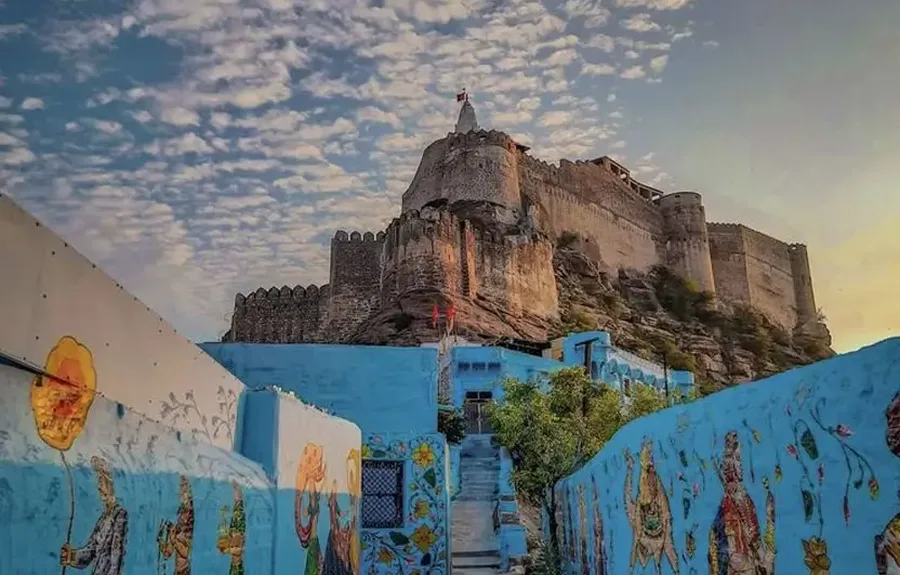
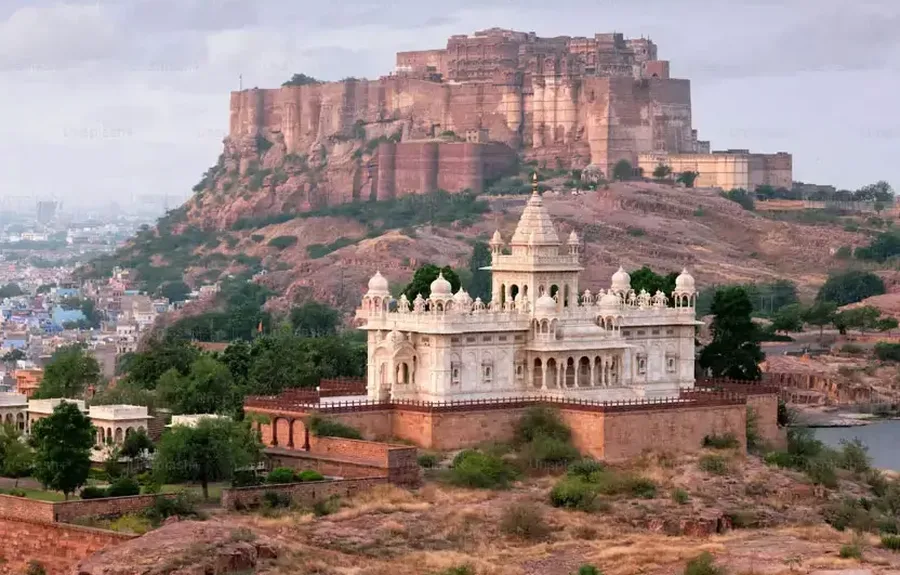
After breakfast, your guide takes you up to Mehrangarh Fort, one of the largest forts in India, rising 125 metres above the city on a sheer rock. Its walls are up to 36 metres high, and its seven gates still bear the marks of cannonballs from old battles. Inside, the palaces are decorated with fine stone latticework, mirrored halls and painted ceilings. Highlights include the Moti Mahal, the Phool Mahal, the Sheesh Mahal and the Takhat Vilas. The museum's collection of palanquins, howdahs, weapons and turbans is one of the best in India.
From the fort, a short drive brings you to Jaswant Thada, a white marble memorial built in 1899 in memory of Maharaja Jaswant Singh II. Its marble panels are so thin that they glow when the sun shines through them, and the memorial is surrounded by peaceful gardens and a small lake. After lunch, walk with your guide through the blue lanes of Brahmpuri, the old quarter below the fort, where houses are painted in shades of indigo. The narrow alleys, small temples and friendly residents give a real sense of everyday life.
In the late afternoon, visit the Umaid Bhawan Palace Museum, part of the vast palace built between 1929 and 1943 for Maharaja Umaid Singh in Indo-Deco style, partly to give work to people during a long famine. Today, it is partly a luxury hotel, partly the home of the royal family and partly a museum, displaying vintage clocks, royal photographs and classic cars. Then visit Toorji Ka Jhalra, a restored 18th-century stepwell surrounded by cafés. End the day with dinner at a rooftop restaurant. Overnight stay at your hotel in Jodhpur.
After breakfast, drive west about 285 km to Jaisalmer, which takes around five hours across the semi-desert landscape of western Rajasthan. Along the way, you may see Bishnoi villagers in white turbans, herds of blackbuck antelope and camel carts on the road. About halfway, stop at Pokhran, a small town with the 14th-century red sandstone Balagarh Fort, which has a small museum of weapons, costumes and photographs of the local royal family. Pokhran is also known for its terracotta pottery, and your driver can take you to see local potters at work.
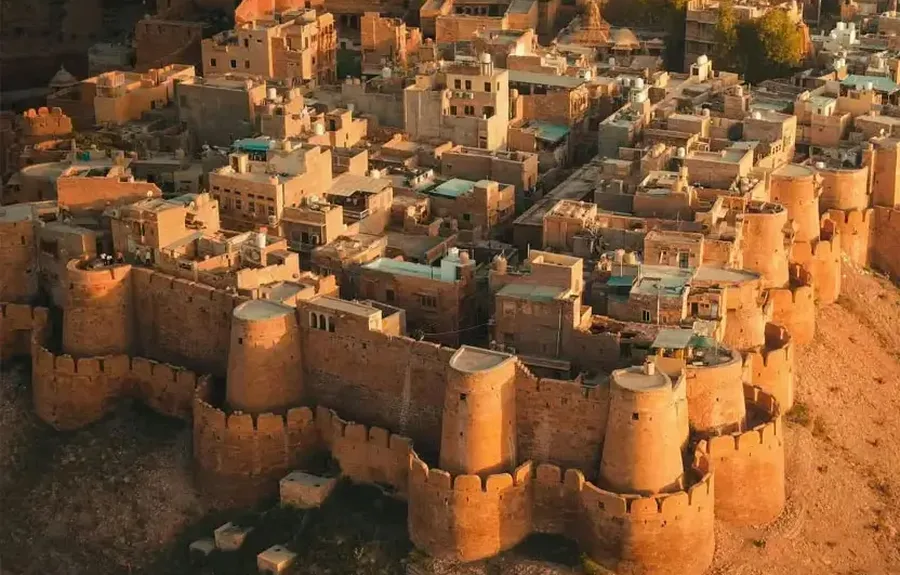
Continue across the Thar Desert, where the landscape becomes wider and emptier, with sand dunes, scrub and villages of round mud huts. Lunch is at a roadside restaurant or the heritage hotel in Pokhran. As you approach Jaisalmer in the late afternoon, the golden fort rises from the desert on Trikuta Hill, glowing in the setting sun. Founded in 1156 by Rawal Jaisal of the Bhati Rajputs, Jaisalmer grew rich from the trade routes that carried silk, spices and opium between India, Persia and Central Asia.
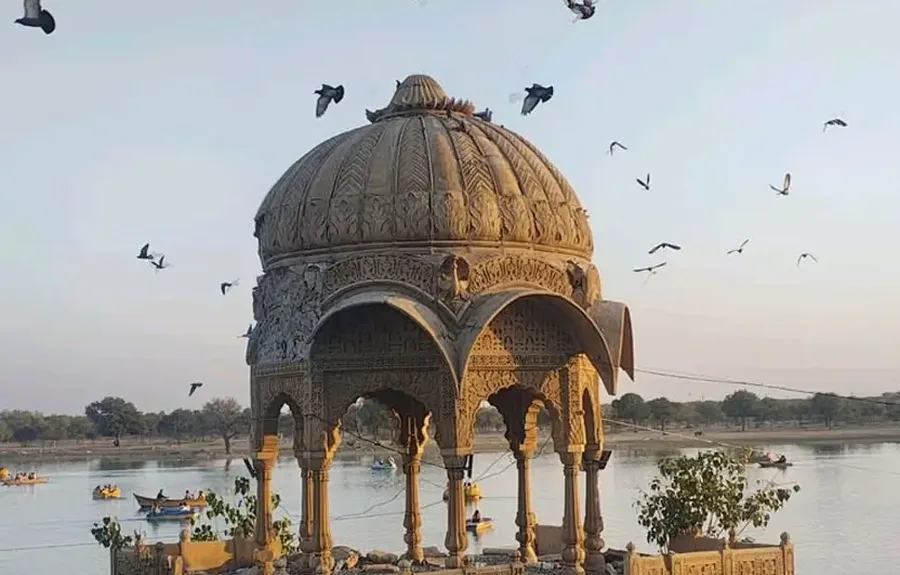
Check in at your hotel, ideally a heritage property with views of the fort. In the evening, visit Gadisar Lake, a 14th-century reservoir lined with small temples, ghats and a carved stone gateway called Tilon Ki Pol, where local families feed the catfish and pigeons at sunset. The lake is a peaceful place to watch the light change over the water. Then enjoy dinner on a rooftop terrace with views of the illuminated fort. The desert air cools quickly after dark, so keep a warm layer handy. Overnight stay at your hotel in Jaisalmer.
After breakfast, your guide takes you into Jaisalmer Fort, one of the very few living forts in the world, where around 3,000 people still live inside the walls. Enter through the massive Akhai Pol and climb up through a series of gates to the main square. Visit the Raj Mahal, the seven-storey royal palace, whose rooms and terraces offer sweeping views over the golden city and the desert. Then see the group of seven Jain temples, built between the 12th and 15th centuries, whose carved sandstone pillars and ceilings are remarkably detailed.
In the afternoon, walk through the old town below the fort to see the famous havelis of Jaisalmer. The Patwon Ki Haveli is a group of five mansions built by a family of brocade traders between 1800 and 1860, with stone balconies carved as finely as lace. The Salim Singh Ki Haveli has peacock-shaped brackets and a curved blue roof, and the Nathmal Ki Haveli was carved by two brothers, each working on one side of the facade, so the halves are similar but not identical. Your guide explains the lives of the merchant families.
In the late afternoon, visit Vyas Chhatri, a group of yellow sandstone cenotaphs on a hill outside the walls, which is the best place in Jaisalmer to watch the sun set behind the fort. Then walk back through the bazaar, where shops sell mirror-work textiles, embroidered cushions, camel leather goods, wooden puppets and silver jewellery. In the evening, enjoy dinner at a rooftop restaurant inside the fort. Many restaurants here host Rajasthani folk musicians playing traditional instruments such as the kamaicha and the khartal. Overnight stay at your hotel in Jaisalmer.
After a relaxed breakfast, check out and drive about 6 km north to Bada Bagh, a garden complex with royal cenotaphs built in memory of Jaisalmer's rulers, set on a ridge with views over the desert and the wind turbines beyond. Then continue to Kuldhara, an abandoned village of the Paliwal Brahmins, who are said to have left their homes overnight around 1825. Its roofless stone houses and empty lanes have an eerie atmosphere, and your guide shares the legends and the real history of the Paliwals, who were skilled farmers in the desert.
Continue about 40 km west to the Sam Sand Dunes and check in at your desert camp, with comfortable tents, proper beds and attached bathrooms with hot water. After lunch and a rest, take a walk around the camp and enjoy the silence and space of the desert. Sam lies close to the Desert National Park, which protects the Thar's unique wildlife, including the endangered great Indian bustard, desert foxes and chinkara gazelles. Your guide can arrange a short jeep drive into the dunes if you would like to see more.
In the late afternoon, set off on a camel ride into the dunes, led by a local camel man, and reach the top of a high dune in time to watch the sun set over the desert. The sand changes from gold to orange to red as the sun disappears. Back at the camp, enjoy an evening of Rajasthani folk music and dance by Manganiyar and Kalbeliya performers around a bonfire, followed by a traditional dinner under the stars. The desert sky is clear and full of stars, far from any city lights. Overnight stay at your desert camp in Sam.
Wake early to watch the sunrise over the dunes, then enjoy breakfast at the camp before setting off east to Osian, about 230 km and four and a half hours away. The road runs through the semi-desert landscape, past villages, grazing camels and small farms. Lunch is at a roadside restaurant on the way. Osian lies about 65 km north of Jodhpur and was once an important stop on the caravan routes. Today, it is a quiet town known for its ancient temples and the sand dunes that surround it.
On arrival, your guide takes you to the Osian temples, a group of Hindu and Jain temples built between the 8th and 11th centuries, among the oldest in Rajasthan. The Sachiya Mata Temple, dedicated to a local goddess, sits on a hill reached by a long staircase lined with carved arches. The Mahavira Jain Temple has finely carved pillars, gateways and ceilings. The smaller Harihara and Surya temples show early temple architecture in western India. The temples are peaceful and rarely crowded, which makes them easy to enjoy.
Check in at your dune camp on the outskirts of Osian, which is quieter than the camps near Jaisalmer. In the late afternoon, take a camel safari into the dunes to watch the sunset, then return to the camp for a bonfire, folk music and a traditional Rajasthani dinner. Osian's dunes are smaller but very beautiful, and the evening has a calm, personal feel. You may also visit a nearby village to see how desert families live, cook and care for their animals. Overnight stay at your desert camp in Osian.
After breakfast, drive south about 230 km to Ranakpur, a trip of around four and a half hours. The road bypasses Jodhpur and then climbs into the Aravalli hills, where the landscape changes dramatically from desert to green forest, with valleys, streams and small villages. You may see langur monkeys and peacocks along the road. Lunch is at a roadside restaurant or a resort near Ranakpur. Check in at your hotel, which will be a quiet resort in the hills, surrounded by forest and gardens, with views of the valley.
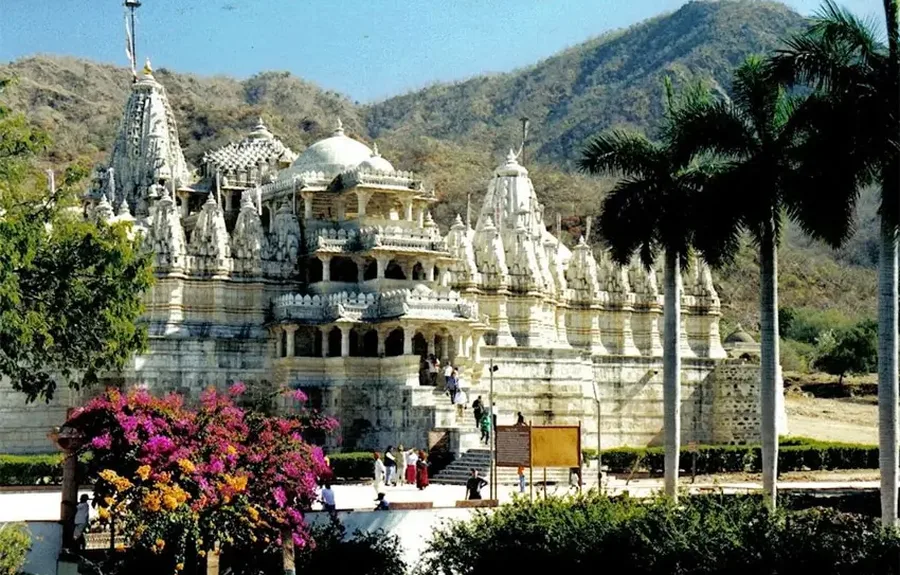
In the afternoon, visit the Chaumukha Jain Temple at Ranakpur, built in the 15th century from white marble and dedicated to Adinath, the first Tirthankara. Non-Jain visitors may enter from around 12:00 pm to 5:00 pm, and leather items, food and shorts are not permitted. Inside, the temple is a forest of 1,444 marble pillars, each carved differently, supporting domes and ceilings covered with intricate patterns. Light falls through open courtyards, changing the mood of the hall through the day. Your guide explains the legends and the Jain beliefs.
Near the main temple stand two smaller temples, one dedicated to Neminath and one to Parshvanath, as well as the Surya Narayan Temple, a sun temple with carvings of horses and chariots. After the visit, return to your resort and relax in the gardens or by the pool. In the evening, enjoy dinner at the resort, often with Rajasthani dishes, and the quiet sounds of the forest. Ranakpur is a peaceful place to spend the night, far from the noise of the cities. Overnight stay at your resort in Ranakpur.
After breakfast, take a short nature walk around your resort with a local guide, who can point out birds, trees and medicinal plants of the Aravalli forest. Then drive about 95 km to Udaipur, a trip of around two hours along winding hill roads, with views of valleys, lakes and villages. Arrive in Udaipur in the late morning and check in at your hotel near the lakes. Udaipur, the City of Lakes, was founded in 1559 by Maharana Udai Singh II and is often called the most romantic city in India.
In the afternoon, visit the City Palace, the largest palace complex in Rajasthan, built over nearly 400 years by the rulers of Mewar. Its courtyards, balconies and towers rise above the eastern shore of Lake Pichola. Inside, highlights include the Mor Chowk with its peacock mosaics in coloured glass, the Zenana Mahal and the Crystal Gallery, which holds crystal furniture ordered from England in 1877. Then walk to the nearby Jagdish Temple, a 17th-century temple dedicated to Lord Vishnu, with carved walls and a brass Garuda.
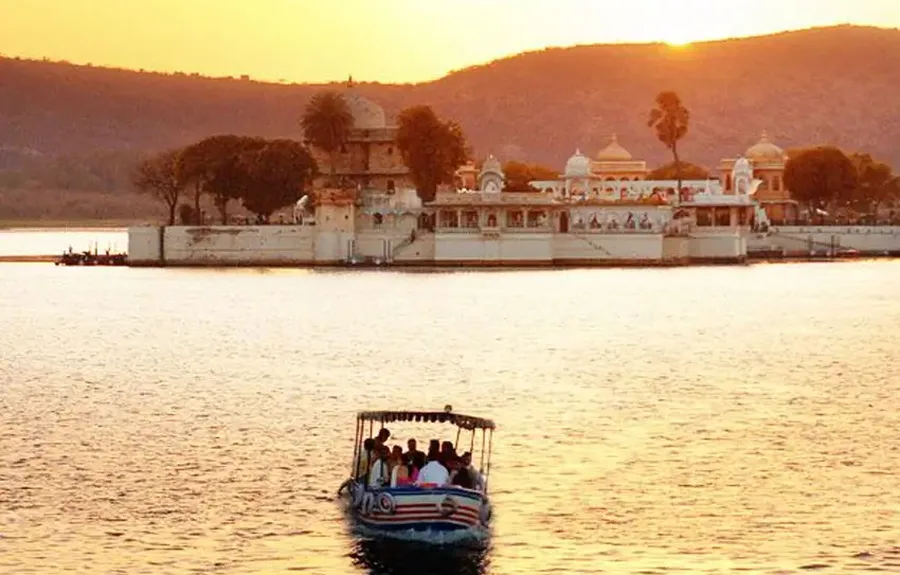
In the late afternoon, enjoy a boat ride on Lake Pichola, gliding past the ghats, the City Palace and the white Lake Palace, now a luxury hotel. The boat stops at Jag Mandir, an island palace with gardens, where you can watch the sun set over the Aravalli hills. In the evening, attend the Dharohar folk dance show at Bagore Ki Haveli, featuring traditional Rajasthani dances and puppetry. End the day with dinner at a rooftop restaurant overlooking the illuminated palaces and the lake. Overnight stay at your hotel in Udaipur.
Spend the morning at Saheliyon Ki Bari, the garden of fountains built for the royal ladies, and Fateh Sagar Lake, before your transfer to Udaipur airport for your onward flight. Should you wish to add Jaipur and its elephants on another trip, see our Rajasthan Cultural Tour with Elephants and Forts.
Our assorted tours, for your first, second or nth time to India!
Beyond the famous desert cities lies a greener Rajasthan of lakes, wooded hills and small royal capitals that most visitors never reach. The...
More than 500 bird species have been recorded in Rajasthan, from wintering cranes and pelicans on the wetlands of the east to sandgrouse,...
Rajasthan rewards patience, and the Rajasthan Tour for Senior Travelers is designed to let you enjoy it without strain. Over 11 nights and...

Almost every village in Rajasthan is known for a craft, and many of them are still practised by hand in family workshops, exactly...
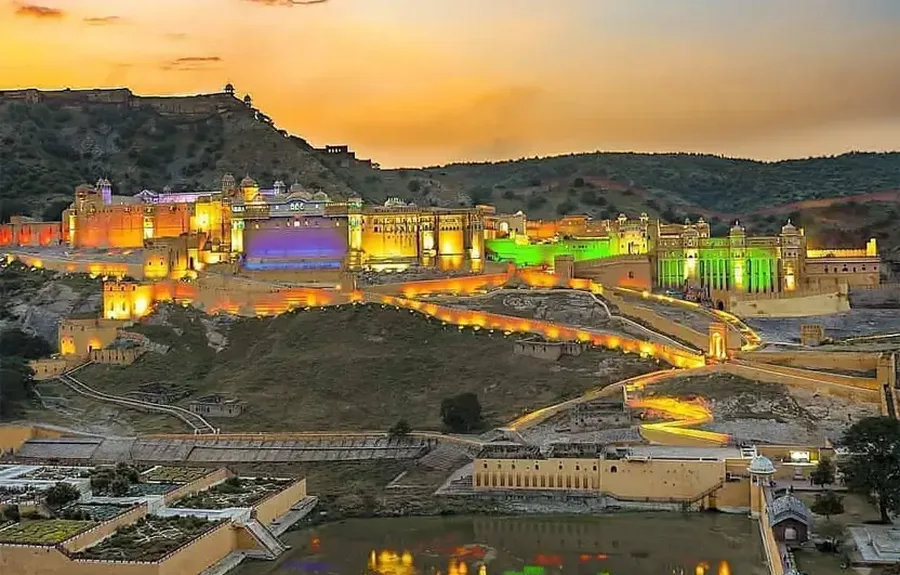
Most visitors see Rajasthan through a car window between one fort and the next. The Rajasthan Slow Travel Tour takes the opposite approach...
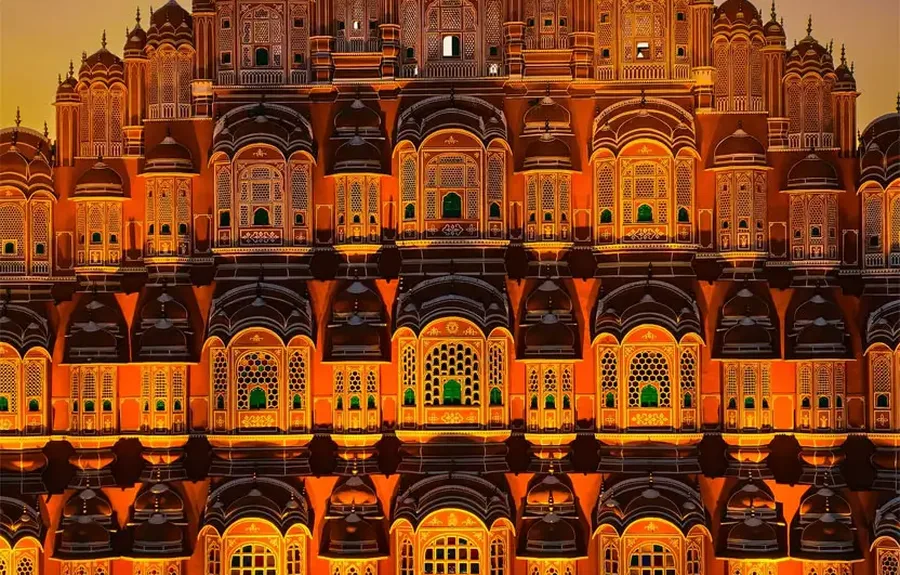
Lamps on every ghat, palaces outlined in light and fireworks reflected in still water make Diwali in Udaipur one of the loveliest festival...
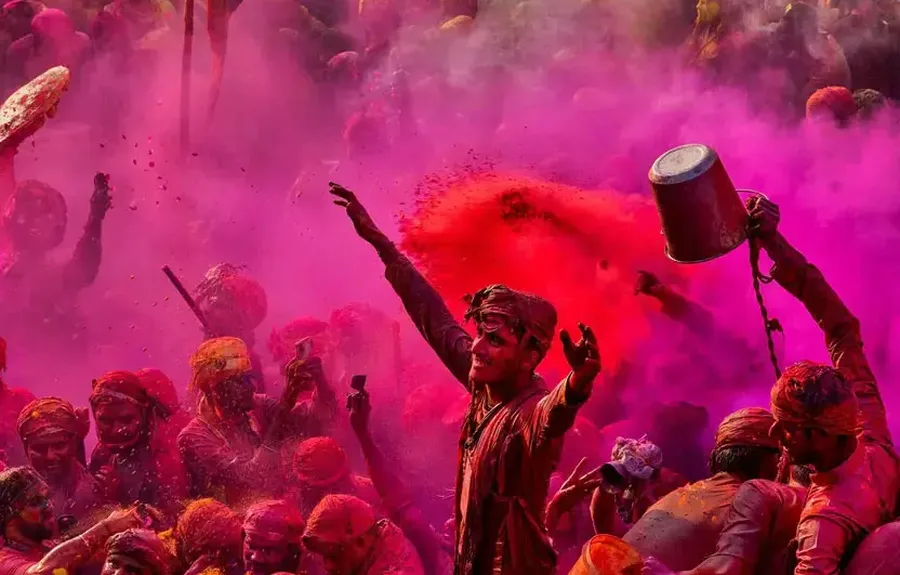
Holi arrives with the full moon of Phalgun, usually in March, when winter ends, the wheat turns gold and the whole of North...
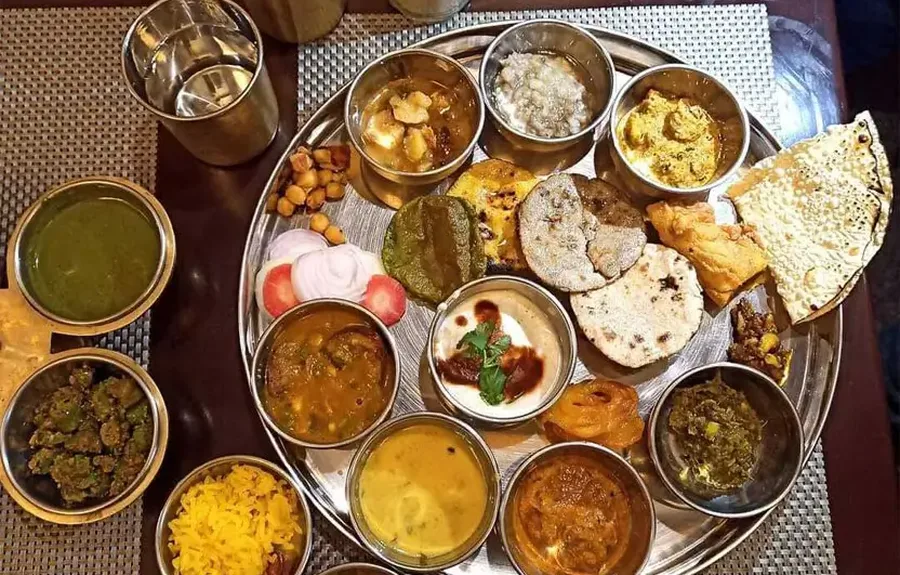
Desert cooking is a cuisine of clever survival. With little water and few fresh vegetables, Rajasthani cooks built a whole kitchen around dried...
Turbans in saffron and magenta, indigo walls, golden sandstone and white marble reflected in still lakes: Rajasthan may be the most colourful state...
For a few days each autumn, around 50,000 camels, horses and cattle gather on the sands outside a small holy town, along with...