Delhi - Mandawa - Bikaner - Jaisalmer - Jodhpur - Udaipur - Pushkar - Jaipur
A good driver in Rajasthan is far more than someone behind the wheel. He knows which dhaba makes the best dal, which village has a potter at work today and which road avoids the market-day traffic. The Rajasthan Private Tour with Car and Driver is built around that freedom over 12 nights and 13 days, with your own car and driver from the moment you land in Delhi until the last morning in Jaipur. The route loops through the frescoed towns of Shekhawati, the desert city of Bikaner, the golden fort of Jaisalmer, a quiet dune camp at Khuri, Jodhpur, Udaipur and the holy town of Pushkar.
Hotels, guides and entry arrangements are all organised in advance, but each day leaves room to stop when you choose, linger longer at a fort or skip a sight in favour of a cup of chai with a village family. Our drivers are licensed, English-speaking and have spent years on Rajasthan's roads. The final morning in Jaipur is spent with rescued elephants on a day visit with elephants at Elefantastic. If you only need transport, see our Rajasthan tour driver services or the wider car rentals page, and for India-wide routes, India by car and driver.
Package Highlights
• Your own private car and English-speaking driver for all 13 days
• Poddar Haveli Museum in Nawalgarh and the frescoes of Fatehpur and Mandawa
• Junagarh Fort and the carved Rampuria havelis of Bikaner
• Gajner Palace lakeside stop on the desert road
• Jaisalmer Fort, its Jain temples and merchant havelis
• Camel ride and a quiet desert camp at Khuri Sand Dunes
• Mehrangarh Fort, Umaid Bhawan Palace Museum and Mandore Gardens in Jodhpur
• Udaipur, Pushkar and an elephant morning at Elefantastic in Jaipur
At Indira Gandhi International Airport, our representative is waiting at the arrivals exit with a board showing your name and introduces you to the driver who will travel with you for all 13 days. Your car, usually a Toyota Innova Crysta or a sedan for two, is clean, air-conditioned and has plenty of space for luggage. The ride to your hotel in central Delhi takes 45 minutes to an hour. Your driver will share his mobile number with you so you can reach him directly at any time during the tour.
Check in at your hotel, normally from 2:00 pm, or straight away if you have reserved the room from the night before. The day is free to rest after the flight. If you feel like a short drive in the evening, your driver can take you past India Gate, the parliament buildings and the embassies of Chanakyapuri, or to Khan Market for a coffee and a browse through its bookshops. Getting to know your driver on this first easy outing is a good idea, as he will be your main companion on the road through Rajasthan.
Our coordinator meets you at the hotel to go over the route, the hotels and the daily distances, and hands you a folder with vouchers and a 24-hour helpline number. Drivers in India normally take their meals and rest separately, and their food and lodging costs are already covered in the price. Tipping at the end of the tour is customary if you are happy with the service. The longest drives on this tour are about five to six hours, and your driver will stop every couple of hours for tea and washrooms. Overnight stay at your hotel in Delhi.
Leave Delhi after breakfast and drive west into the Shekhawati region, a land of small towns where 19th-century merchant families covered their mansions with painted murals. The drive to Nawalgarh takes around five hours through the farmland of Haryana and northern Rajasthan. Here, visit the Poddar Haveli Museum, a restored mansion with more than 700 frescoes on its walls, showing gods, kings, trains and daily life. Its rooms also display costumes, musical instruments and models of Rajasthan's forts, giving a good overview of the region.
After lunch, your driver continues to Fatehpur, about 45 minutes away, where the Le Prince Haveli, also known as the Nadine Le Prince Cultural Centre, was restored by a French artist and now houses an art gallery and studio. Its frescoes are among the best preserved in Shekhawati. From here, drive another half hour to Mandawa, a small town full of painted havelis and narrow lanes. Your driver knows the caretakers of several havelis and can arrange for you to see inside, usually for a small tip, which is the custom here.
Check in at your hotel in Mandawa, which may be a restored castle with courtyards, terraces and a pool. In the late afternoon, walk through the town with a local guide to see the painted walls of the Goenka, Chokhani and Murmuria havelis, where you will spot images of Queen Victoria, early aeroplanes and even a gramophone. As the sun sets, the town grows quiet, with only the sound of cowbells and temple music. Enjoy dinner on a rooftop terrace under the stars, far from city lights. Overnight stay at your hotel in Mandawa.
After breakfast, your driver heads west for about three and a half hours to Bikaner, crossing an increasingly sandy landscape where camels graze among thorny khejri trees and villages are built of mud and stone. Bikaner was founded in 1488 by Rao Bika and grew rich on the caravan trade across the desert. Today, it is famous for its camels, its sweets and its bhujia, a spicy fried snack sold across India. Your driver may stop at a roadside stall for a glass of sweet chai or a plate of fresh kachoris.
In the afternoon, visit Junagarh Fort, built between 1589 and 1594 by Raja Rai Singh. Unlike most Rajasthan forts, it stands on flat ground, protected by a moat and thick walls. Inside, the palaces are richly decorated with gold leaf, mirrors and paintings. The Anup Mahal glows with red and gold lacquer, while the Badal Mahal has walls painted with blue clouds and falling rain, a dream of water in a desert kingdom. The museum displays weapons, royal costumes and a World War I biplane gifted to the maharaja.
Later, your guide takes you into the old walled city to see the Rampuria Havelis, a group of red sandstone mansions built by a wealthy merchant family in the late 19th and early 20th centuries. Their facades are carved with flowers, balconies and figures, and some have European-style details such as Victorian lamps and portraits of British royalty. The narrow lanes around them are full of small shops, temples and sweet makers. Try Bikaner's famous rasgulla and bhujia before returning to your hotel for dinner. Overnight stay at your hotel in Bikaner.
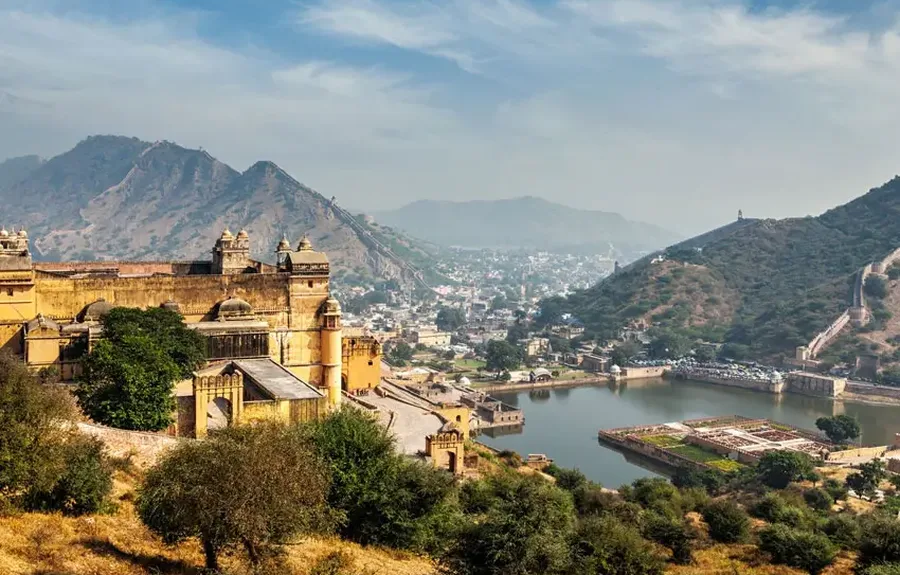
After breakfast, drive about 30 km to Gajner Palace, a former royal hunting lodge on the banks of a lake, built by Maharaja Ganga Singh in the early 20th century. Its red sandstone pavilions and terraces overlook the water, where migratory birds gather in winter, and the surrounding scrubland was once a hunting reserve for blackbuck, chinkara and wild boar. The palace is now a heritage hotel, and you can stop for tea on its lakeside terrace. It is a peaceful place to start the long desert drive to Jaisalmer.
From Gajner, the road heads west for about five hours across the heart of the Thar Desert. The landscape is wide and empty, with dunes, scrub and the occasional village of round mud huts with thatched roofs. Your driver may stop at a village well, where women in bright odhnis draw water and fill brass pots, or at a roadside stall selling cold drinks and snacks. Lunch is taken at a highway dhaba, where hot rotis, dal and seasonal vegetables are served quickly. The drive is long, but the scenery is unlike anywhere else in India.
Arrive in Jaisalmer in the late afternoon, when the golden fort appears on its hill, glowing in the low sun. Check in at your hotel, ideally a heritage property with views of the fort. Jaisalmer was founded in 1156 by Rawal Jaisal, and its merchants grew rich from the trade routes between India, Persia and Central Asia. In the evening, your driver can take you to Vyas Chhatri, a group of sandstone cenotaphs on a hill, which is one of the best places in town to watch the sun set behind the fort. Overnight stay at your hotel in Jaisalmer.
Start early at Gadisar Lake, a 14th-century reservoir lined with small temples and ghats, which is calm and beautiful at sunrise, with the fort reflected in the water and birds skimming the surface. Then walk up to Jaisalmer Fort, one of the last living forts in the world, where around 3,000 people still live inside the walls. Its narrow lanes are lined with houses, temples, shops and small guesthouses. Your guide takes you to the Raj Mahal, the royal palace, whose terraces look out over the golden city and the desert beyond.
Inside the fort, visit the group of seven Jain temples, built between the 12th and 15th centuries from yellow sandstone, with intricately carved pillars, ceilings and statues of the Tirthankaras. The Gyan Bhandar, a library founded in 1500, holds some of the oldest palm-leaf manuscripts in India. The temples are open to visitors in the morning, and leather items must be left outside. Your guide explains how the fort's water supply, drains and walls were built to survive long sieges in the harsh desert climate.
In the afternoon, visit the famous havelis of Jaisalmer below the fort. The Patwon Ki Haveli is a group of five mansions with carved stone balconies and windows as fine as lace, built over 50 years by a family of brocade traders. The Salim Singh Ki Haveli has a distinctive curved roof and peacock brackets, while the Nathmal Ki Haveli was carved by two brothers, each working on one half. Spend the evening in the bazaar, shopping for mirror-work textiles, camel leather and silver. Overnight stay at your hotel in Jaisalmer.
After a relaxed breakfast, check out and drive about 20 km to Kuldhara, an abandoned village of the Paliwal Brahmins, who are said to have left overnight around 1825 to escape a tyrannical minister, placing a curse on the village as they went. Its rows of roofless stone houses, a small temple and empty lanes create an eerie, haunting atmosphere. The village has been partly restored and is a protected site. Your guide shares the legends and the history of the Paliwal community, who were skilled farmers in this dry land.
Continue to Khuri, a small village about 45 km south-west of Jaisalmer, surrounded by golden sand dunes. Khuri is quieter and less commercial than the more famous Sam dunes, which makes it ideal for travellers seeking peace and a more authentic desert stay. Check in at your desert camp, with comfortable tents, proper beds and attached bathrooms. After lunch and a rest, walk through Khuri village to see its round mud huts with thatched roofs, decorated with white geometric patterns painted by the women of the village.
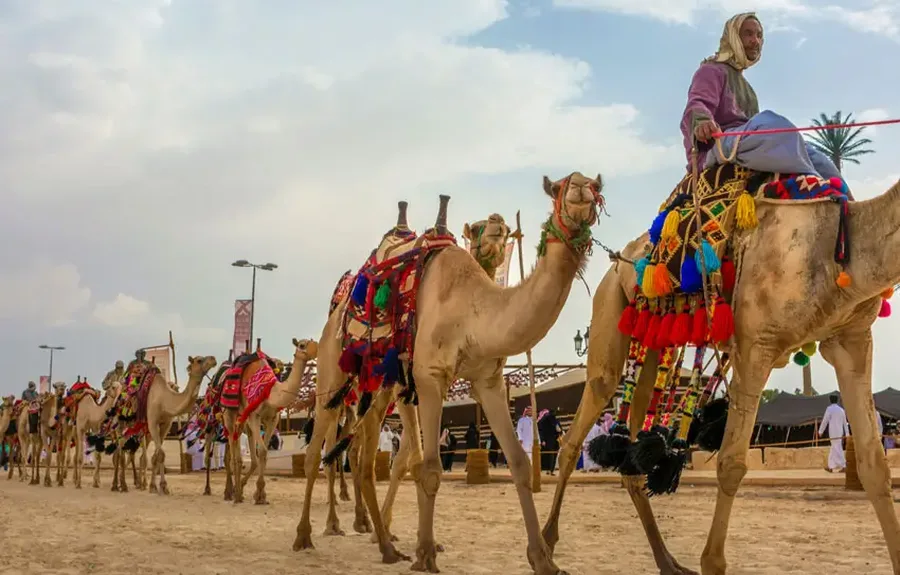
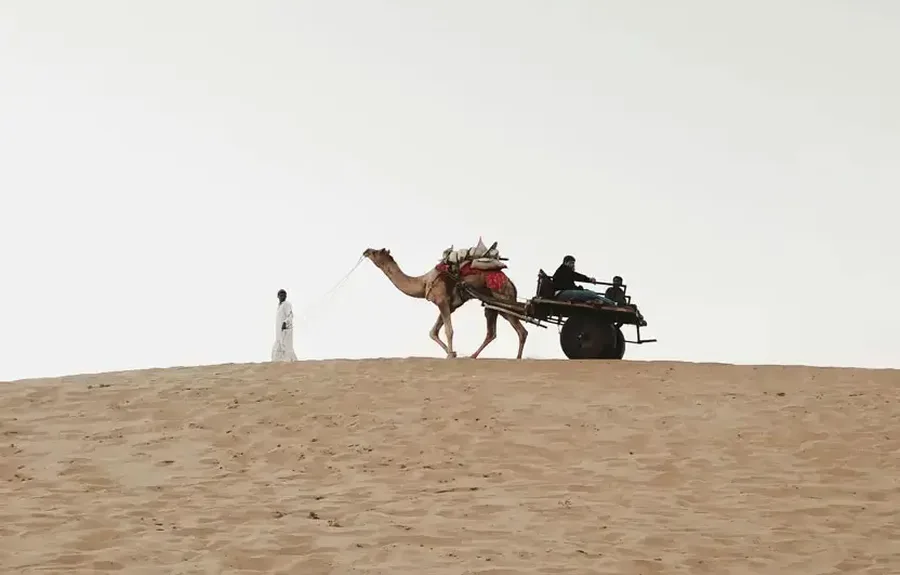
In the late afternoon, set off on a camel ride into the dunes, led by a local camel driver, and reach the top of a dune in time to watch the sun set over the desert. The silence, the soft light and the endless waves of sand make this one of the highlights of any trip to Rajasthan. Back at the camp, enjoy an evening of folk music and dance around a bonfire, followed by a traditional Rajasthani dinner under the stars. The night sky in the desert is clear and full of stars. Overnight stay at your desert camp in Khuri.
Wake early to watch the sunrise over the dunes, then enjoy breakfast at the camp before setting off for Jodhpur, about 300 km and five and a half hours away. The road crosses the eastern Thar, with wide views of desert scrub, villages and grazing camels. About halfway, stop at Pokhran, a small town with a 14th-century red sandstone fort known as Balagarh, which has a small museum of weapons, costumes and royal objects. Pokhran is also known for its terracotta pottery, and your driver can take you to a local potter's workshop.
Lunch is at a roadside restaurant or a heritage hotel in Pokhran, depending on your preference. Then continue towards Jodhpur through the semi-desert landscape, where you may see Bishnoi villagers in white turbans and herds of blackbuck antelope grazing in the fields. The Bishnoi community is famous for protecting wildlife and trees, and blackbuck are often seen close to their villages. Your driver will stop if you wish to take photographs or visit a village, as there is no fixed schedule for the drive.
Arrive in Jodhpur in the late afternoon and check in at your hotel, ideally a haveli in the old city with views of Mehrangarh Fort. Jodhpur, the Blue City, was founded in 1459 by Rao Jodha and is famous for its massive fort, its blue-painted houses and its lively markets. In the evening, walk to the Clock Tower and Sardar Market, where traders sell spices, textiles and silver. Try a mirchi bada and a makhaniya lassi, then enjoy dinner at a rooftop restaurant with views of the illuminated fort. Overnight stay at your hotel in Jodhpur.
After breakfast, your guide takes you up to Mehrangarh Fort, one of the largest forts in India, rising 125 metres above the city on a rocky hill. Built from 1459, its walls are up to 36 metres high and 21 metres thick in places. Inside, the palaces are decorated with intricate stone lattice work, mirrored halls and painted ceilings. The Moti Mahal, the Phool Mahal and the Takhat Vilas are highlights, and the museum holds palanquins, howdahs, weapons, paintings and turbans. The views from the ramparts over the blue city are superb.
After lunch, visit the Umaid Bhawan Palace Museum, part of one of the largest private residences in the world, built between 1929 and 1943 in Indo-Deco style for Maharaja Umaid Singh. The palace is partly a luxury hotel, partly the home of the royal family and partly a museum, which displays vintage clocks, royal photographs and a collection of classic cars. The building was constructed partly to give work to people during a long famine. Its golden sandstone dome and gardens are lovely in the afternoon light.
In the late afternoon, drive about 9 km north to the Mandore Gardens, the site of the old capital of Marwar before Jodhpur was founded. The gardens contain the red sandstone cenotaphs of Jodhpur's former rulers, built in the style of Hindu temples, as well as the Hall of Heroes, a row of brightly painted figures carved from rock. Langur monkeys and peacocks roam the gardens. Return to Jodhpur for dinner at your hotel. Tomorrow, the second half of the tour begins with the drive south to Udaipur. Overnight stay at your hotel in Jodhpur.
This is one of the most scenic drives of the tour, and having your own car means you can take it slowly. Leaving Jodhpur after breakfast, your driver follows the road south through Pali district, where cotton fields, mustard and wheat cover the plain and roadside stalls sell sugarcane juice pressed on the spot. As the land rises into the Aravalli hills, the road twists through the Desuri pass, with views over wooded valleys and small temples on the hilltops. Stop wherever you like for photographs, a cup of chai or a chat with shepherds moving their flocks.
Around midday, reach Ranakpur, where the white marble Chaumukha Jain Temple stands in a quiet forest valley. Built in 1439 and dedicated to Adinath, the first Tirthankara, it opens to non-Jain visitors from about noon to 5:00 pm, with leather items and shorts not allowed. The four-faced design means the main image can be seen from all directions, and the 1,444 carved pillars catch the shifting daylight through open courtyards. Your local guide explains Jain beliefs and the long years of work by master carvers. Lunch is at a resort nearby.
In the afternoon, continue about two hours to Udaipur, the City of Lakes, along a road lined with small villages and seasonal ponds. Check in at your lakeside hotel for two nights and let your driver rest, as he has covered close to 2,000 km with you by now. In the evening, walk along Lal Ghat and the narrow lanes near the Jagdish Temple, where shops sell miniature paintings, leather notebooks and silver. Dinner at a rooftop restaurant looking at the lit-up City Palace rounds off the day. Overnight stay at your hotel in Udaipur.
After breakfast, your guide meets you for a morning at the City Palace, the largest royal complex in Rajasthan, which rises in tiers of white towers and balconies above the eastern shore of Lake Pichola. The palace was begun in 1559 and added to by each Maharana of Mewar. Inside, see the Manak Mahal with its mirror work, the Krishna Vilas with its miniature paintings, the Mor Chowk with its glass peacocks and the Crystal Gallery, holding a collection of Osler crystal furniture ordered from Birmingham in 1877 and never unpacked during the ruler's lifetime.
The afternoon is yours to use as you please, which is the real advantage of a private car and driver. You might drive up to the Monsoon Palace at Sajjangarh, perched on a hill 9 km west of the city with sweeping views over the lakes, visit the Vintage Car Museum with the royal family's Rolls-Royces, or join a short cooking class in a local home. Your driver knows the city well and can suggest places that suit your interests, whether that is shopping, gardens, temples or simply a long lunch by the water.
Towards sunset, take a boat ride on Lake Pichola from the City Palace jetty, passing the white Taj Lake Palace and stopping at Jag Mandir, the island palace with stone elephants guarding its landing. The colours on the water and the hills are lovely at this hour. In the evening, you may watch the Dharohar folk dance show at Bagore Ki Haveli, or simply enjoy dinner on your hotel terrace. Tomorrow the road turns north to Pushkar, a drive of around five hours. Overnight stay at your hotel in Udaipur.
After a relaxed breakfast, set off north towards Pushkar, about 280 km and five hours away. The route passes through the marble-mining country around Rajsamand, where you can stop at the 17th-century Rajsamand Lake and its carved marble embankment called Nauchowki, whose pavilions are covered with fine relief carvings. Further on, the highway crosses rolling farmland with small towns and roadside temples. Your driver will choose a clean, reliable place for lunch, and as always you can stop whenever you see something you would like to look at more closely.
Arrive in Pushkar in the mid-afternoon and check in at your hotel, ideally one with a rooftop view of the lake. Pushkar is one of the oldest towns in India and one of the holiest for Hindus, wrapped around a small lake with 52 ghats and hundreds of temples. The town is vegetarian and alcohol-free, and its car-free lanes are easy to wander on foot. Your driver will park outside the centre, so this is a good afternoon to walk, browse the bazaar for textiles and silver, and enjoy a fresh lassi at a café overlooking the water.
In the late afternoon, your guide takes you to the Brahma Temple, one of very few in the world dedicated to the creator god, with its red spire and silver coins set into the marble floor. Then walk to a quiet ghat for the evening aarti, when priests swing flaming lamps over the lake while bells ring and pilgrims float leaf boats with candles on the water. Photography of bathers is not allowed. Dinner can be at a rooftop café serving thalis, falafel and malpua, a local sweet. Overnight stay at your hotel in Pushkar.
Early risers can climb to the Savitri Temple on the hill above Pushkar, by ropeway or a steep path, to watch the sun come up over the lake and desert. After breakfast, drive about 145 km to Jaipur, passing through Ajmer, where your driver can stop at the Dargah Sharif of the Sufi saint Khwaja Moinuddin Chishti if you would like to see this much-loved shrine. The highway is good, and the drive to Jaipur takes around three hours, so you arrive in time for lunch and an afternoon of sightseeing.
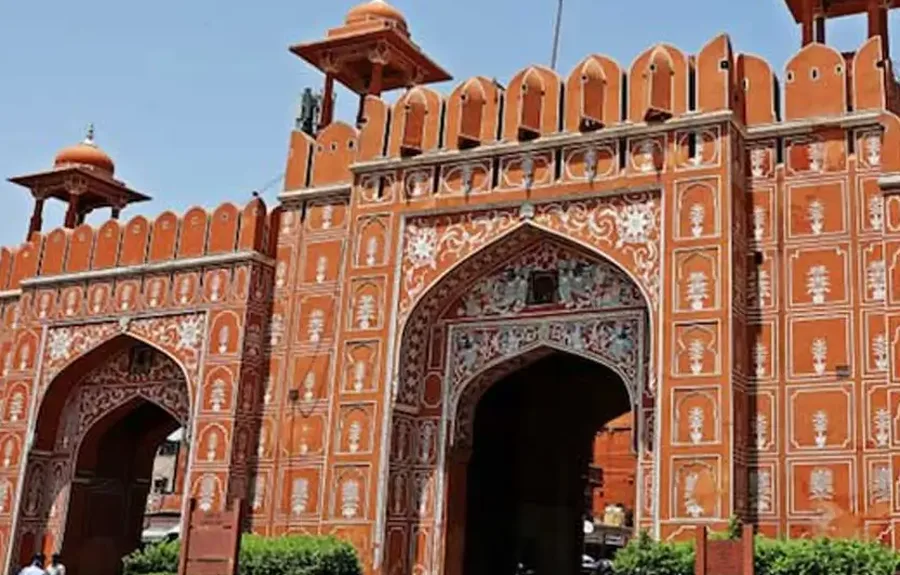
In the afternoon, your Jaipur guide takes you into the old walled city, laid out in 1727 by Maharaja Sawai Jai Singh II on a grid of broad streets and painted pink in 1876. Visit the City Palace, still partly the residence of the royal family, with its museums of costumes, arms and paintings, and the four painted seasonal gates of the Pritam Niwas Chowk. Next door, the UNESCO-listed Jantar Mantar holds 19 giant stone instruments that track the sun, moon and stars. Finish with the honeycomb facade of the Hawa Mahal.
Late in the day, drive up to Nahargarh Fort on the ridge above the city for sunset, with the whole of Jaipur spread out below as the lights come on. This is also a good evening to thank your driver, who has been with you through every part of Rajasthan; a tip at the end of the tour is customary and much appreciated. Return to your hotel for a farewell dinner at a Rajasthani restaurant. Tomorrow morning is spent with rescued elephants before your departure. Overnight stay at your hotel in Jaipur.
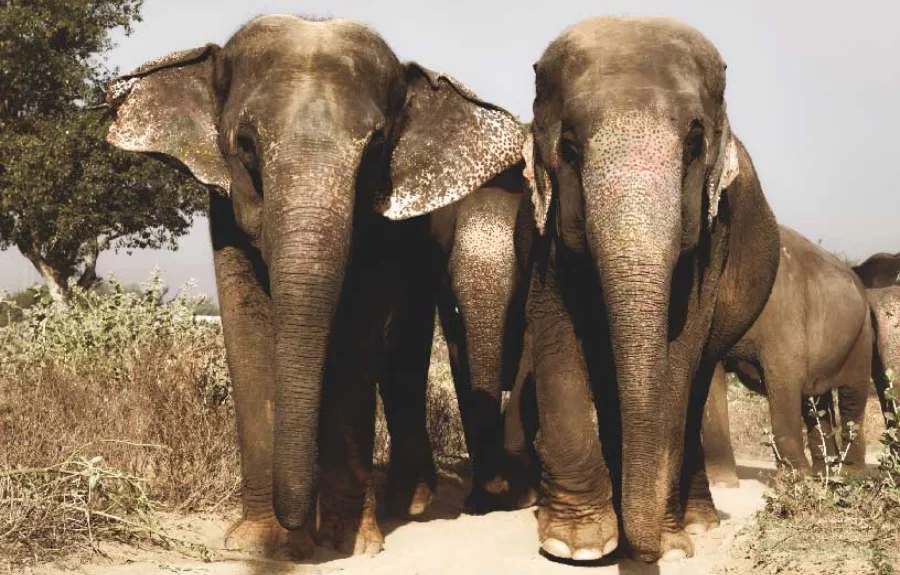
The Elefantastic team collects you from your hotel for a hands-on morning at their sanctuary, where you feed, walk with and bathe a rescued elephant, with no rides or chains. Afterwards, your driver takes you to Jaipur airport or back to Delhi, about five to six hours, for your onward flight. To travel at your own pace again, see our Rajasthan tour driver services.
Our assorted tours, for your first, second or nth time to India!
Beyond the famous desert cities lies a greener Rajasthan of lakes, wooded hills and small royal capitals that most visitors never reach. The...
More than 500 bird species have been recorded in Rajasthan, from wintering cranes and pelicans on the wetlands of the east to sandgrouse,...
Rajasthan rewards patience, and the Rajasthan Tour for Senior Travelers is designed to let you enjoy it without strain. Over 11 nights and...
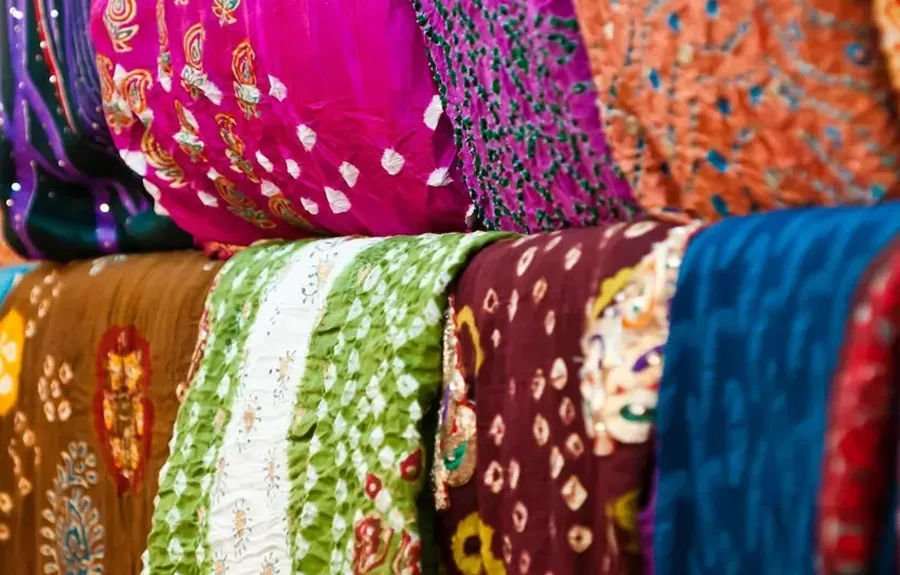
Almost every village in Rajasthan is known for a craft, and many of them are still practised by hand in family workshops, exactly...
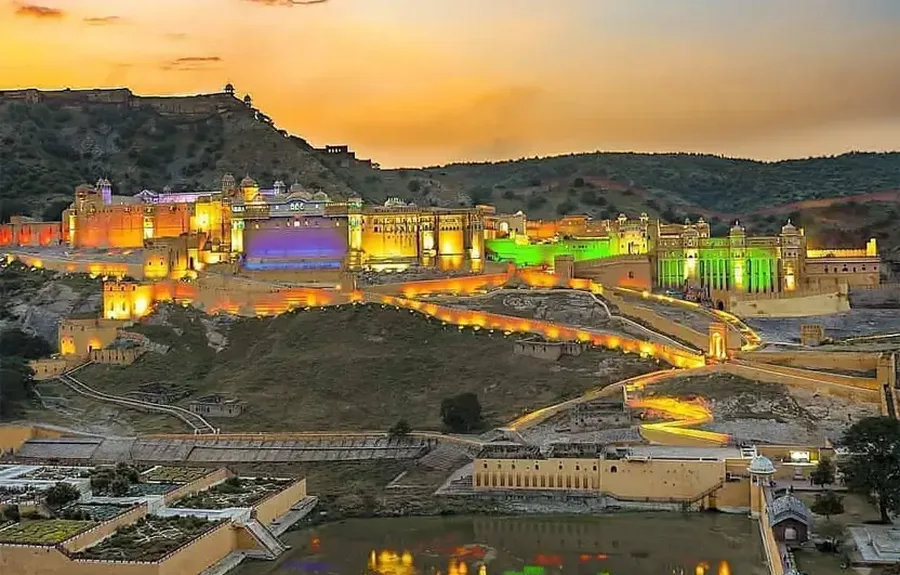
Most visitors see Rajasthan through a car window between one fort and the next. The Rajasthan Slow Travel Tour takes the opposite approach...
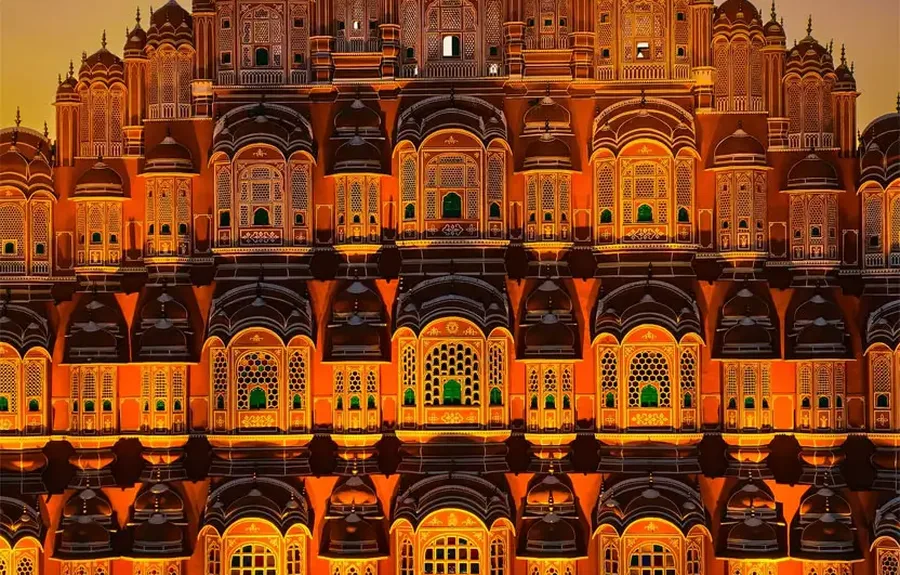
Lamps on every ghat, palaces outlined in light and fireworks reflected in still water make Diwali in Udaipur one of the loveliest festival...
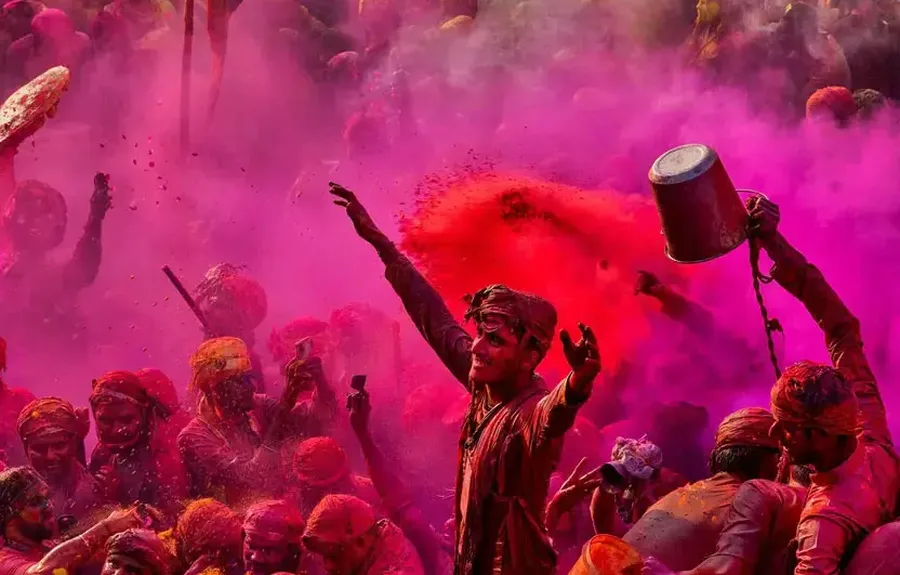
Holi arrives with the full moon of Phalgun, usually in March, when winter ends, the wheat turns gold and the whole of North...
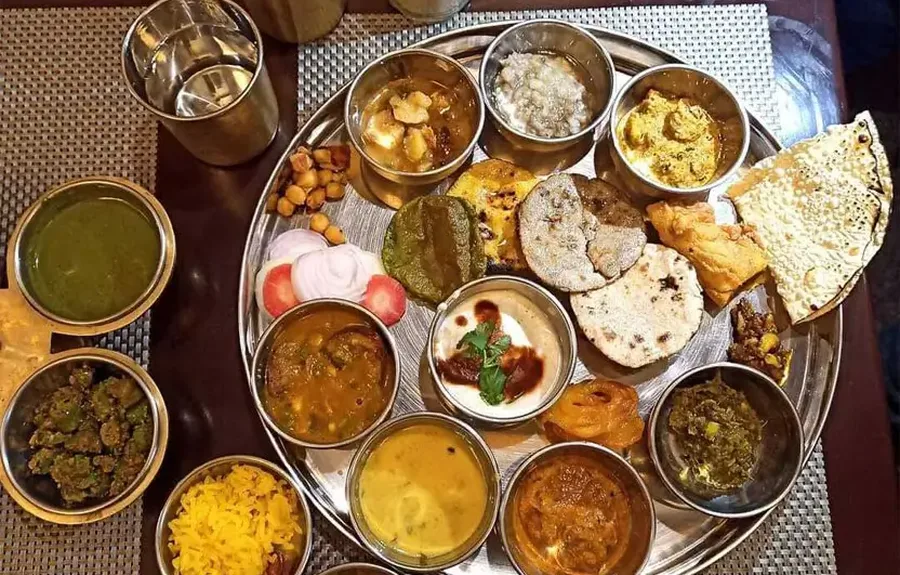
Desert cooking is a cuisine of clever survival. With little water and few fresh vegetables, Rajasthani cooks built a whole kitchen around dried...
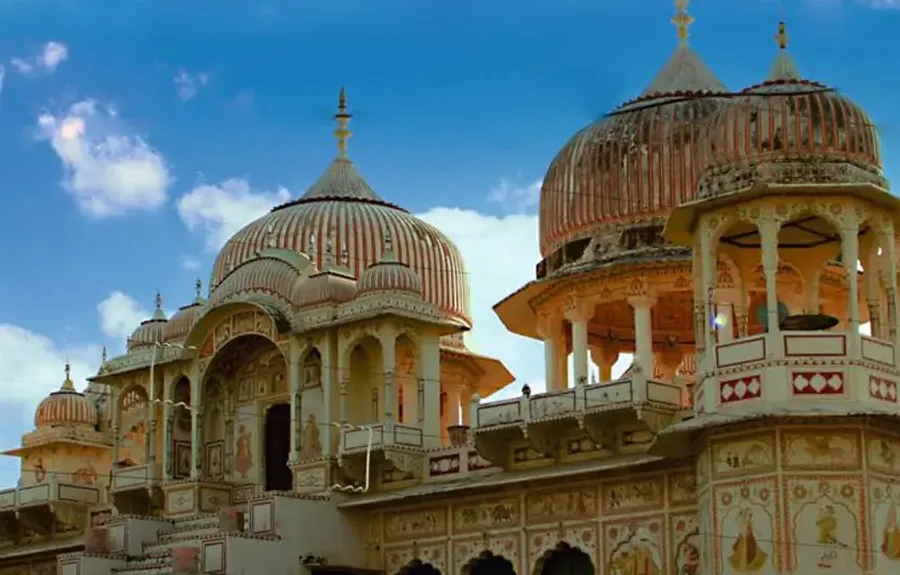
Turbans in saffron and magenta, indigo walls, golden sandstone and white marble reflected in still lakes: Rajasthan may be the most colourful state...
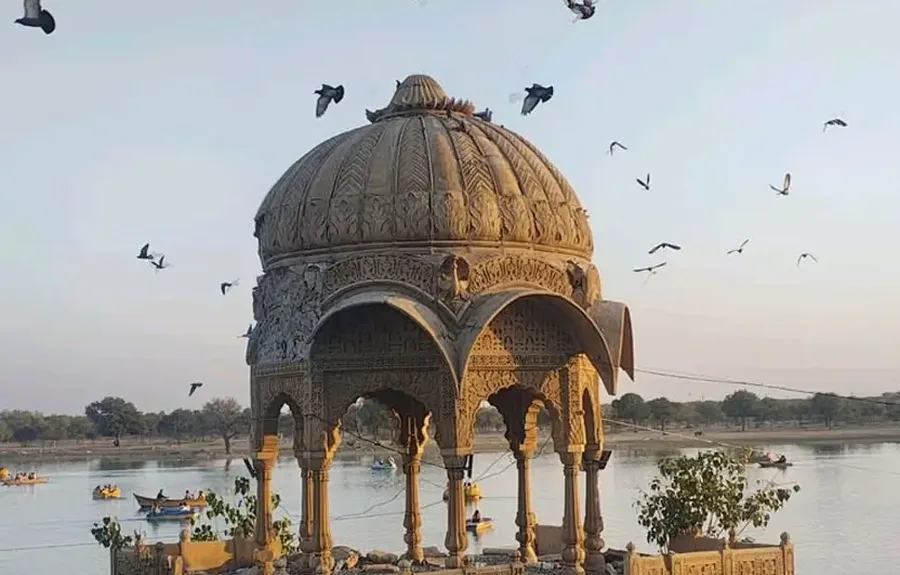
For a few days each autumn, around 50,000 camels, horses and cattle gather on the sands outside a small holy town, along with...