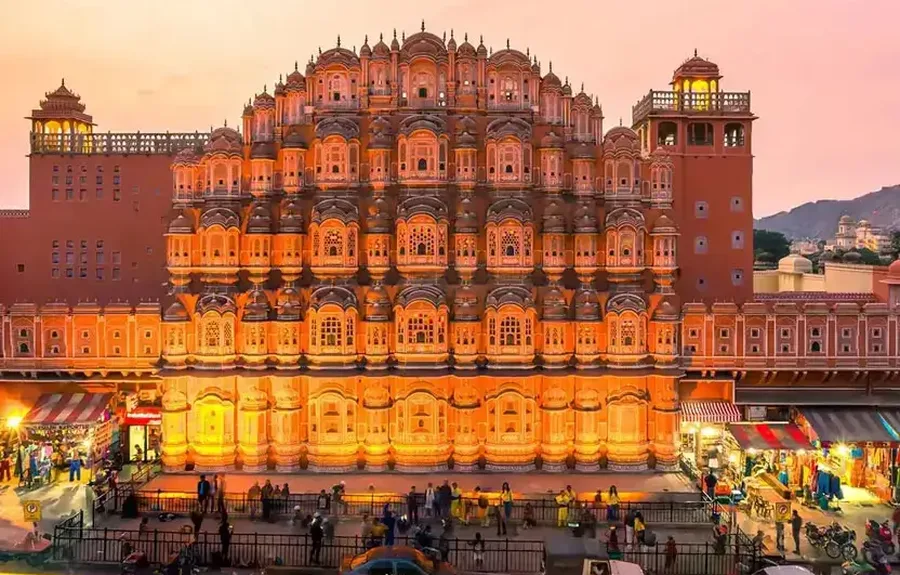
Delhi - Agra - Jaipur - Kathmandu - Pokhara - Kathmandu
Two countries, three UNESCO-listed valleys of temples and a sunrise over the Annapurna range make the Golden Triangle Tour with Nepal one of the most varied routes we offer. Over 11 nights and 12 days, you move from the Mughal monuments of Delhi and Agra and the desert-edge forts of Jaipur to the pagoda-roofed squares of Kathmandu and the lakeside calm of Pokhara, where snow peaks above 8,000 metres rise straight up from the green foothills. It is a natural choice for travellers who have come a long way and want to see both the plains of India and the Himalaya in one trip.
The Indian half follows the classic route of our Golden Triangle tour packages, with a private car and English-speaking driver, local guides and a morning with rescued elephants at the Elefantastic elephant sanctuary in Jaipur. From there, a flight takes you to Kathmandu, where Nepali guides lead you through Durbar Squares, Buddhist stupas and Hindu cremation ghats, before a short mountain flight to Pokhara for boating on Phewa Lake and a dawn drive up to Sarangkot. Most nationalities can get a Nepal visa on arrival at Kathmandu airport, which keeps the paperwork simple.
Package Highlights
• Jama Masjid, Chandni Chowk, Humayun's Tomb and India Gate in Delhi
• Taj Mahal, Agra Fort and Fatehpur Sikri
• Amber Fort, City Palace, Hawa Mahal and Jantar Mantar in Jaipur
• Morning with rescued elephants at Elefantastic: feeding, walking and bathing
• Kathmandu Durbar Square, Swayambhunath and Boudhanath stupas
• Evening aarti at Pashupatinath Temple and the medieval city of Patan
• Boating on Phewa Lake and sunrise over the Annapurnas from Sarangkot
• Bhaktapur's brick squares and five-storey Nyatapola Temple
Your India and Nepal holiday starts at Indira Gandhi International Airport, where a member of our team meets you after customs with a printed name board. Once your luggage is loaded, your driver takes you into the city in a clean, air-conditioned car, a drive of roughly an hour that passes the wide avenues of the diplomatic area on the way to most central hotels. Many flights from the USA, the UK and Australia land in the middle of the night, and we track your flight so the pickup is never missed, even if your arrival is delayed by several hours.
Hotel rooms are usually ready from 2:00 pm, and an early check-in can be confirmed in advance if you arrive in the morning. The remainder of the day is free, and after a long flight most guests prefer to rest, eat a simple lunch and go to bed early. If you are keen to stretch your legs, the green lawns of Lodhi Garden are a short drive from most hotels and full of 15th-century tombs, joggers and birdsong. A local SIM card from the airport is useful for staying in touch, though remember that Indian SIM cards will not work for data in Nepal.
Our Delhi coordinator meets you during the day to hand over your vouchers, flight tickets for the India and Nepal sections and a contact list with a 24-hour helpline. Bring two passport photographs and some US dollars in cash for the Nepal visa on arrival, which currently costs around USD 30 for 15 days for most passport holders. If you intend to leave India and return again later, ask us about a double-entry e-visa before travelling. The briefing also covers temple dress codes and what to expect at the border airport in Kathmandu. Overnight stay at your hotel in Delhi.
A full day in the capital begins at Jama Masjid, the great congregational mosque Shah Jahan finished in 1656, with its three marble domes and two 40-metre minarets. Climbing the southern minaret, when it is open, gives a panoramic view across the rooftops of Old Delhi. Your guide then leads you on foot and by cycle rickshaw through the crowded lanes of Chandni Chowk, where wholesale markets sell everything from wedding saris to dried fruit and spices. The rickshaw is the easiest way to move through the narrow alleys, and your guide will point out old havelis hidden behind modern shopfronts.
After lunch, the drive south reaches Humayun's Tomb, built in 1570 by the emperor's widow and often seen as a first draft of the Taj Mahal. Its double dome, red sandstone walls and quartered gardens are a UNESCO World Heritage Site, and the neighbouring Nizamuddin area is home to the shrine of the 14th-century Sufi saint Nizamuddin Auliya. On Thursday evenings, the shrine hosts qawwali singing that draws large crowds, and your guide can arrange a visit if your dates allow. Modest dress and a head covering are required, and shoes are left at the entrance.
Later in the afternoon, you drive along Kartavya Path between India Gate, the 42-metre war memorial arch built in 1931, and Rashtrapati Bhavan, the official residence of the President of India, designed by Edwin Lutyens. Photography is allowed from the road, though the palace grounds open only on certain days. The evening is free to rest or to head to Connaught Place for dinner, where Georgian-style colonnades house restaurants of every kind. An early night is a good idea, as tomorrow begins with the drive to Agra. Overnight stay at your hotel in Delhi.
After breakfast, travel south on the Yamuna Expressway to Agra, a smooth drive of about 230 km that takes three and a half to four hours. On arrival, check in at your hotel and enjoy a leisurely lunch. Agra was the capital of the Mughal empire for much of the 16th and 17th centuries, and its monuments are spread along the banks of the Yamuna river. Your local guide joins you in the afternoon for the first visit, and the evening is kept open so you can be fresh for the early start at the Taj Mahal the next morning.
Your guide takes you to Agra Fort, a crescent-shaped citadel of red sandstone with walls 2.5 km long and a double moat that once held crocodiles. Inside, you pass from the Delhi Gate area to the Diwan-i-Am, the hall of public audience with its rows of cusped arches, and then to the private marble palaces of Shah Jahan. The Musamman Burj, with its inlaid walls and fountain, was where the emperor spent his last days watching the tomb of his wife. The fort remains partly in use by the Indian Army, so some areas are closed to the public.
If time allows before dusk, you can visit the small but beautiful tomb of Itmad-ud-Daulah, built in the 1620s and the first Mughal monument to use white marble with pietra dura inlay. Its walls are covered in patterns of flowers, vases and geometric shapes that later inspired the Taj Mahal. In the evening, enjoy dinner at your hotel or try a local favourite such as Mughlai biryani with petha for dessert. Your guide will confirm the meeting time for the sunrise visit, usually around 30 minutes before first light. Overnight stay at your hotel in Agra.
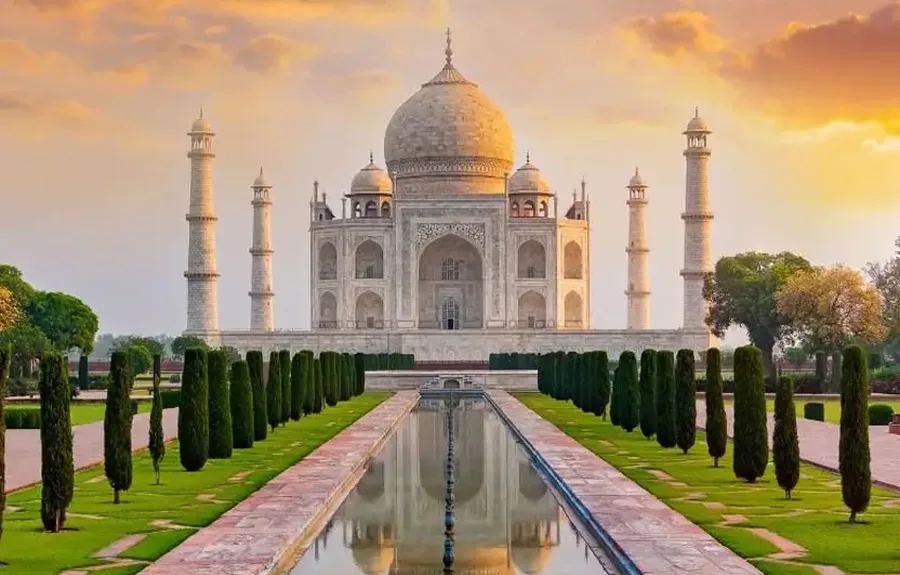
The Taj Mahal opens at sunrise, and arriving with the first visitors gives you the best chance of quiet photographs and soft, rosy light on the marble. Your guide walks you through the Darwaza-i-Rauza gateway into the gardens and explains the symmetry of the design, the calligraphy that appears to stay the same size from top to bottom and the inlaid flowers made from carnelian, jade and lapis lazuli. Inside the mausoleum, the cenotaphs of Shah Jahan and Mumtaz Mahal lie behind an exquisite marble screen. Remember that the monument is closed every Friday.
Return to your hotel for breakfast, check out and drive about 40 km to Fatehpur Sikri, Akbar's red sandstone capital founded in 1571. Your guide shows you the Diwan-i-Am, the Panch Mahal, the house of Birbal and the Jodha Bai palace, which blends Hindu and Islamic design. In the adjoining mosque courtyard, the white marble tomb of Sheikh Salim Chishti draws pilgrims who tie threads on its screens to pray for children, just as Akbar once did. The 54-metre Buland Darwaza gateway, built to mark Akbar's victory in Gujarat, is one of the tallest in the world.
The afternoon drive to Jaipur takes about four hours through the farms and villages of eastern Rajasthan. Along the way, you may see camel carts, women in bright odhnis carrying water and roadside stalls selling seasonal guavas or roasted peanuts. On reaching the Pink City in the early evening, you check in at your hotel and have the rest of the night free. Many Jaipur hotels are converted palaces or havelis with courtyards, frescoes and rooftop terraces, so even a quiet evening at the hotel can feel special. Overnight stay at your hotel in Jaipur.
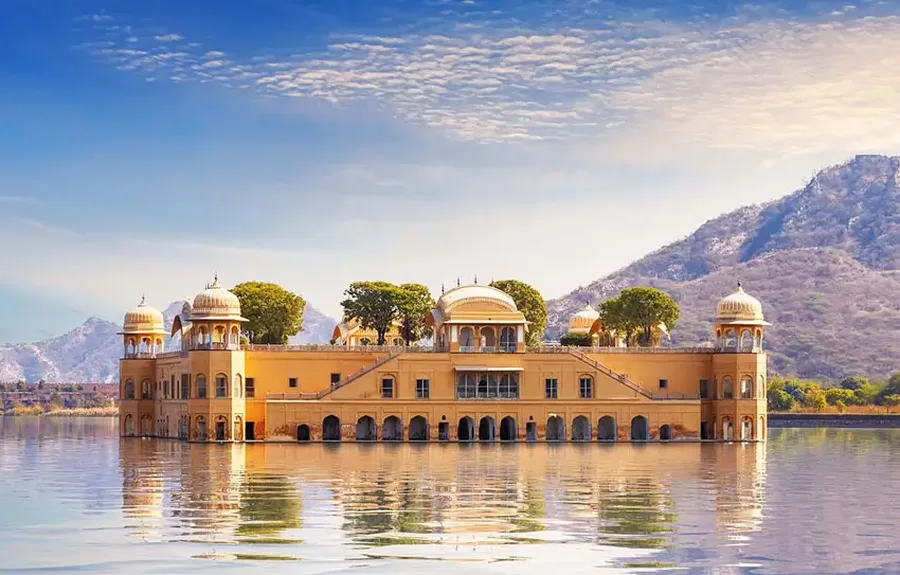
After an early breakfast, drive to Amber Fort, the honey-coloured palace fortress that guarded the old Kachwaha capital before Jaipur was built. A jeep takes you up the hill to the main courtyard, and your guide leads you through the Diwan-i-Am, the Sheesh Mahal with its walls of convex mirrors and the cool rooms of the Sukh Niwas. From the upper terraces, you can follow the line of the Jaigarh walls along the ridge. On the way back to the city, pause by Man Sagar Lake for photographs of Jal Mahal, especially pretty in the morning light.
In the old city, the City Palace complex still houses the former royal family in the seven-storey Chandra Mahal, while the public sections display royal robes, weapons, carpets and miniature paintings. Its Pritam Niwas Chowk has four painted gateways, each representing a season and a Hindu god. A short walk away is Jantar Mantar, where Sawai Jai Singh II built massive masonry instruments between 1728 and 1734 to track the sun, moon and planets with surprising accuracy. Your guide explains how each one works, including the giant Samrat Yantra sundial.
Late in the afternoon, stop for photographs of the Hawa Mahal, the pink sandstone Palace of Winds built in 1799, whose lattice windows let cool air circulate and allowed royal ladies to watch festivals in the street below. You then have time for shopping in the old bazaars, where Jaipur is known for blue pottery, block-printed textiles, silver jewellery and precious stones. If you buy gems, ask for a certificate from a recognised laboratory. In the evening, a rooftop dinner with views of Nahargarh Fort makes a pleasant end to the day. Overnight stay at your hotel in Jaipur.
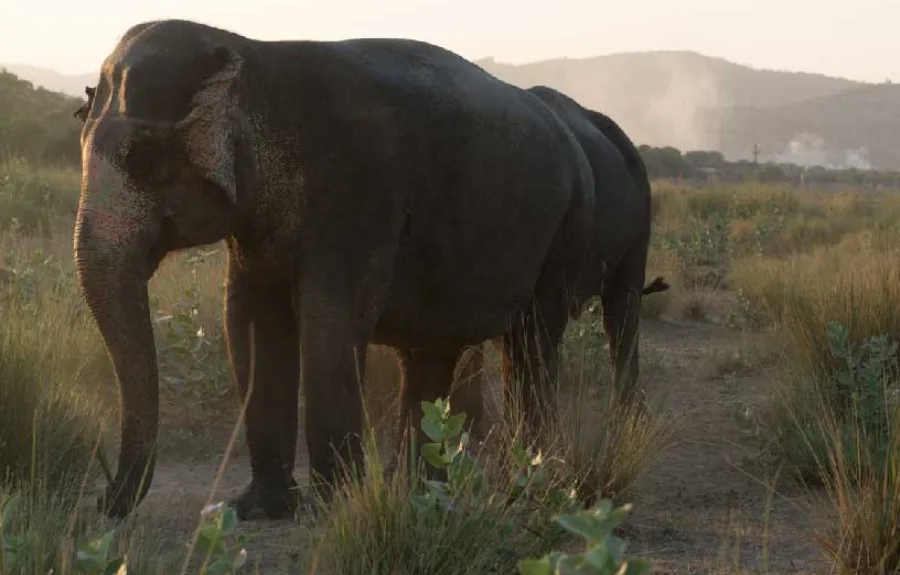
Your final morning in India is spent at the Elefantastic sanctuary on the outskirts of Jaipur. The team collects you from your hotel for the appointment-only day visit with elephants, where each guest spends time with one elephant from start to finish. After a short introduction to the herd and their keepers, you help feed your elephant with sugarcane, bananas and seasonal fruit and learn how each animal has its own habits and favourite foods. The atmosphere is quiet and unhurried, and guests of all ages enjoy the close contact with these gentle animals.
Next comes a slow walk with the elephants and their bath, when you scrub their thick skin and splash them with water as they cool off. There are no rides, chains or performances at Elefantastic, and the herd's welfare comes before photographs. Wear light clothes that can get wet and keep a dry set ready. As the visit ends around midday, the team drops you back at the hotel to change and collect your luggage. Please make sure to book only through the official Elefantastic website or phone number, since the sanctuary is not in Hathi Gaon (Elephant Village).
In the afternoon, your driver transfers you to Jaipur International Airport for your connecting flight to Kathmandu via Delhi. On landing at Tribhuvan International Airport, fill in the visa form, pay the fee in cash and collect your visa on arrival before baggage claim. Our Nepali representative greets you outside with a traditional khada scarf and drives you about 30 minutes to your hotel in the Thamel area or a quieter district. Nepal is 15 minutes ahead of Indian time, so adjust your watch. The evening is free to rest. Overnight stay at your hotel in Kathmandu.
Your Nepali guide meets you after breakfast for a day in the heart of the old city. Kathmandu Durbar Square was the royal centre of the Malla kings, and its temples, courtyards and palaces date mainly from the 17th and 18th centuries. Although the 2015 earthquake damaged some buildings, many have been carefully rebuilt. You will see the Kumari Ghar, home of the living goddess, a young girl worshipped as an incarnation of the goddess Taleju, who sometimes appears at her window. The Hanuman Dhoka palace and the tiered Taleju Temple are also part of the walk.
From the square, the car climbs a small hill west of the city to Swayambhunath, the Buddhist stupa known to visitors as the Monkey Temple. Its whitewashed dome is crowned by a golden spire painted with the all-seeing eyes of the Buddha, which gaze over the valley in all four directions. Prayer wheels line the base, and pilgrims walk clockwise around the stupa spinning them as they pass. There are 365 steps on the eastern stairway, though a road on the other side lets you avoid most of the climb. Watch your belongings, as the monkeys are quick and curious.
In the late afternoon, return to Thamel, the busy traveller quarter of narrow streets filled with trekking shops, bookstores, cafes and stalls selling pashmina shawls, singing bowls and thangka paintings. Prices are often open to negotiation, and your guide can recommend reputable shops for higher-value items. For dinner, try Nepali dal bhat, the national meal of rice, lentil soup and vegetable curries, or momos, the steamed dumplings found on every corner. Restaurants with live folk music are popular in the evenings. Overnight stay at your hotel in Kathmandu.
Begin the morning at Boudhanath, one of the largest stupas in the world and the centre of Tibetan Buddhist life in Nepal. Monks in maroon robes, older pilgrims with prayer beads and local families circle the giant white dome, and the surrounding square is lined with monasteries, incense shops and rooftop cafes. Climbing to a cafe terrace gives a fine view of the prayer flags fluttering from the spire. If you wish, your guide can take you into one of the nearby monasteries to watch the morning prayers, with chanting, horns and drums filling the hall.
Next, cross to the banks of the Bagmati river to visit Pashupatinath, the most sacred Hindu temple in Nepal and a UNESCO World Heritage Site. Only Hindus may enter the main shrine, but visitors can watch from the opposite bank as open-air cremations take place on the riverside ghats, a sight that is handled with great respect and calm. Holy men known as sadhus, with painted faces and matted hair, sit in the courtyards, and some will pose for photographs in exchange for a small tip. Please avoid photographing the families at the cremations.
In the afternoon, drive south across the river to Patan, also called Lalitpur, the city of fine arts. Its Durbar Square is packed with Newar temples, stone carvings and the Krishna Mandir, built entirely of stone in 1637. The Patan Museum, set inside a former royal palace, holds one of the best collections of bronze and stone sculpture in South Asia and is worth at least an hour. Return to Pashupatinath in the evening for the riverside aarti, a ceremony of lamps, bells and chanting held every evening on the ghats. Overnight stay at your hotel in Kathmandu.
After an early breakfast, you transfer to the domestic terminal for the 25-minute flight to Pokhara. If the weather is clear, sit on the right side of the plane for views of the Ganesh Himal, Manaslu and Annapurna ranges stretching along the northern horizon. Domestic flights in Nepal can be delayed by weather, so the schedule is kept flexible, and the drive by road is a backup option of around six to seven hours. On arrival, our Pokhara representative meets you and drives you a short distance to your lakeside hotel, where you can relax before lunch.
Pokhara is Nepal's second most visited city and the starting point for many Himalayan treks, yet it has a much calmer feel than Kathmandu. In the afternoon, you take a wooden boat out on Phewa Lake, rowed by a local boatman, to the small island temple of Tal Barahi, dedicated to the goddess Durga. On calm days, the snow-covered peak of Machhapuchhre, the Fishtail Mountain, is reflected in the water. The lake is ringed by forest on one side and the busy Lakeside strip of cafes, bookshops and restaurants on the other.
Before sunset, a short drive and a gentle walk bring you to the World Peace Pagoda, a white Buddhist stupa built by Japanese monks on a ridge above the lake. From the top, the view takes in the whole of Phewa Lake, the city of Pokhara and, on clear evenings, the full sweep of the Annapurna range turning pink in the last light. Return to Lakeside for dinner, where restaurants serve everything from fresh lake fish to wood-fired pizza and Nepali thalis. Pokhara nights can be cool in winter, so pack a warm layer. Overnight stay at your hotel in Pokhara.
Wake before dawn for the drive up to Sarangkot, a hilltop village about 30 minutes from Pokhara at around 1,600 metres. From the viewing platform, you watch the first rays of sun strike Dhaulagiri, the Annapurnas and Machhapuchhre, which glow gold and then white as daylight spreads across the valley. On a clear morning, the views stretch for more than 100 km along the main Himalayan chain. Mornings from October to April offer the best chance of clear skies, while the monsoon months often bring cloud. Hot tea is sold at the viewpoint.
Return to your hotel for breakfast and a rest, then set out in the late morning to see the city's other sights. Davis Falls is a waterfall that disappears into an underground tunnel, and across the road the Gupteshwor Mahadev Cave leads down a long staircase to a shrine of Lord Shiva and a view of the falls from below. Nearby, the Tibetan Refugee Settlement at Tashiling has a carpet-weaving centre where you can watch artisans at their looms and buy handmade rugs, and the International Mountain Museum gives a good overview of the peaks and the climbers who made them famous.
Spend the late afternoon at your own pace. Lakeside is pleasant for a stroll, and many guests rent a bicycle or simply sit by the water with a coffee. For something more active, Pokhara is one of the best places in the world for tandem paragliding, with flights launching from Sarangkot and lasting 20 to 30 minutes, booked locally at extra cost. Others prefer a massage at one of the many spas. In the evening, enjoy a farewell dinner by the lake as the lights of the boats flicker on the water. Overnight stay at your hotel in Pokhara.
Take the morning flight back to Kathmandu, enjoying the mountain views once more if the skies are clear. Our representative meets you at the domestic terminal and drives you directly to Bhaktapur, about 13 km east of Kathmandu and the best preserved of the three royal cities in the valley. Its streets are paved with red brick, and its squares are filled with pagoda temples, carved wooden windows and potters drying clay pots in the sun. Cars are mostly kept out of the old city, which gives it a peaceful, almost medieval atmosphere that sets it apart from the capital.
Your guide walks you through Bhaktapur Durbar Square, where the 55-Window Palace and the Golden Gate show some of the finest Newar craftsmanship in Nepal. Next is Taumadhi Square and the five-storey Nyatapola Temple, the tallest pagoda in the country, built in 1702 and guarded on its stairway by pairs of stone wrestlers, elephants, lions and griffins. Potter's Square is a working area where you can try your hand at the wheel. Do try juju dhau, the rich, creamy king of yoghurt served in clay bowls, which is a local speciality.
In the afternoon, return to your hotel in Kathmandu for some time at leisure. You may want to pick up last-minute gifts such as tea from the eastern hills, hand-made paper notebooks or prayer flags. If you would like to see Everest itself, an optional one-hour mountain flight can be booked for the following morning, weather permitting, at extra cost. Enjoy a farewell dinner at a traditional Newari restaurant, where dishes such as choila and bara are served alongside cultural dance performances. Overnight stay at your hotel in Kathmandu.
After breakfast, our team transfers you to Tribhuvan International Airport for your flight home, arriving at least three hours before departure. If you would like a shorter India-only version of this route, our Golden Triangle Tour with Varanasi covers India's spiritual capital in 8 days.
Our assorted tours, for your first, second or nth time to India!
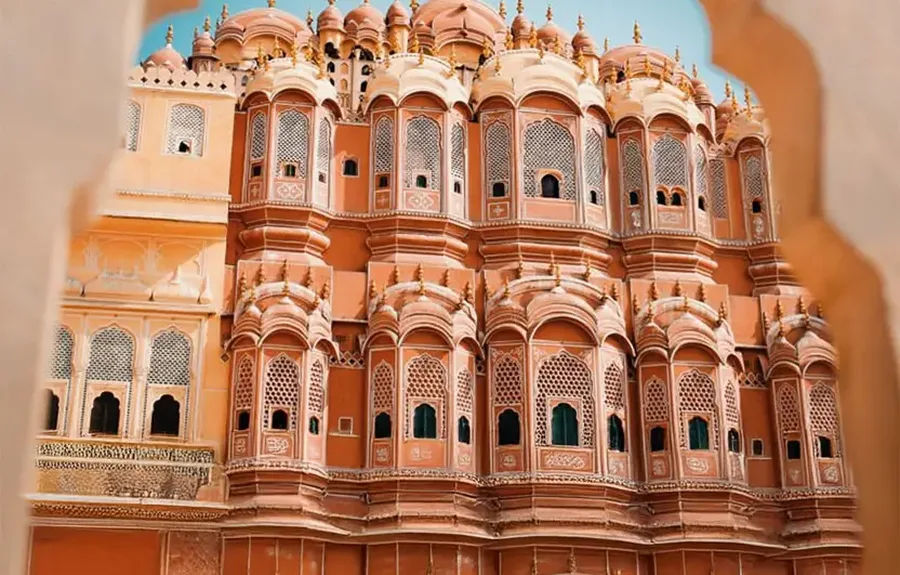
Light decides everything on the Golden Triangle Photography Tour India, so the days are built around sunrise and sunset rather than opening hours....
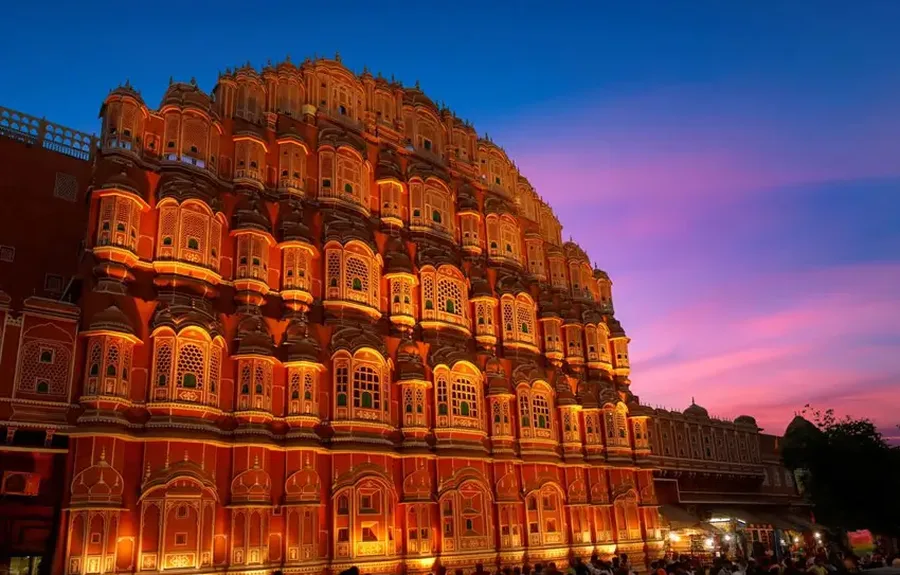
Seeing India in later life should mean comfort, time and good company rather than early starts every day and long climbs in the...
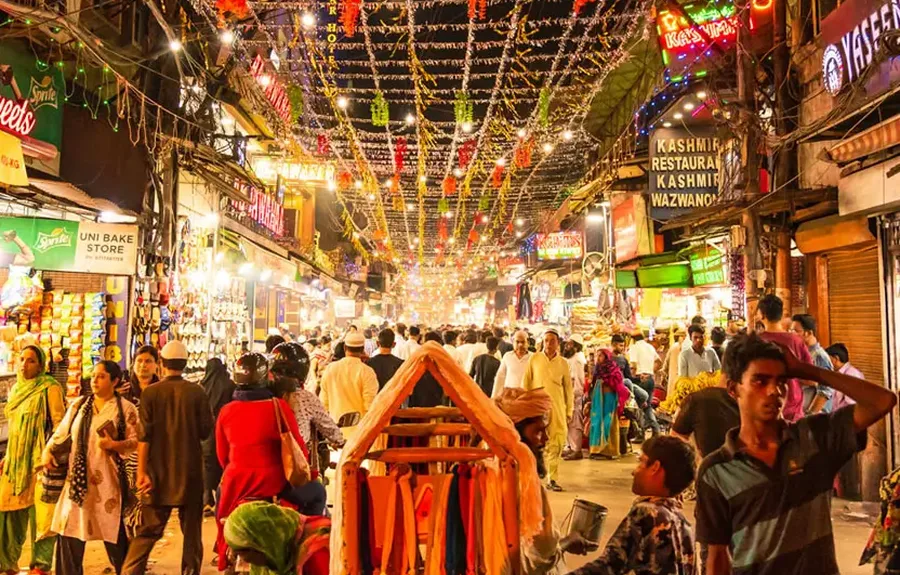
Once a year, every rooftop, doorway and market arch across North India is lined with clay lamps and strings of light, and the...
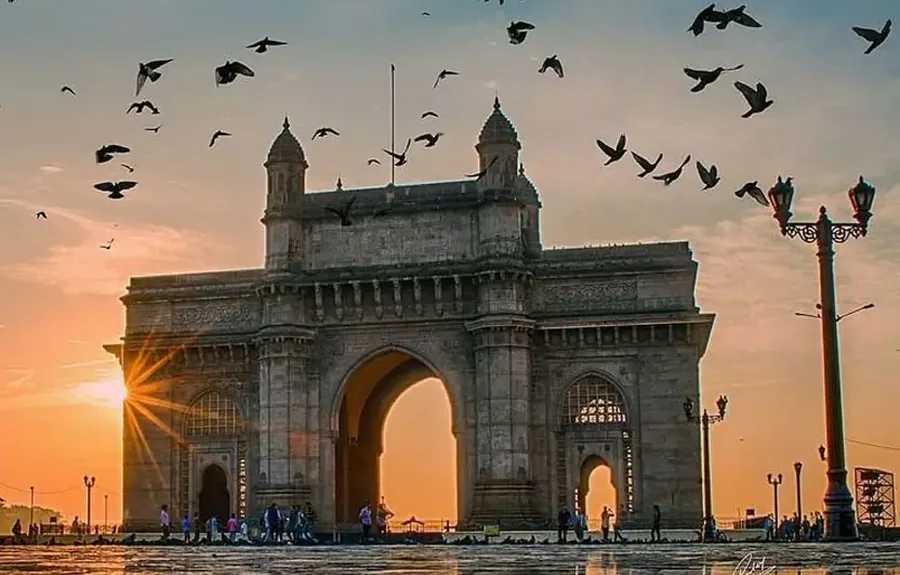
Five UNESCO World Heritage Sites cut, carved or built into stone mark the length of the Golden Triangle Tour with Mumbai and Ajanta...
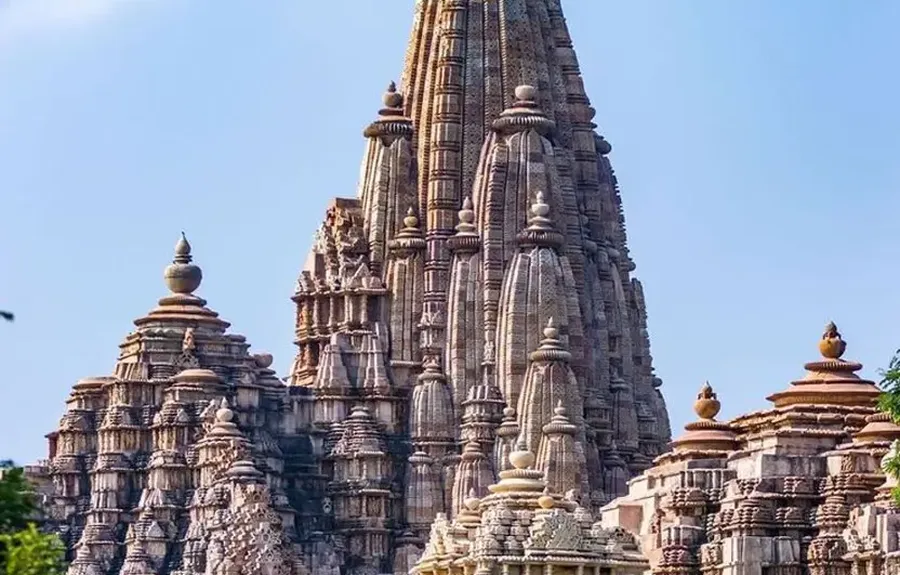
South of Agra, the plains give way to the forests and rocky rivers of Bundelkhand, and very few travellers go that extra distance....
Children remember tigers, trains and elephants long after they forget the dates of an emperor's reign, so the Golden Triangle Family Tour India...
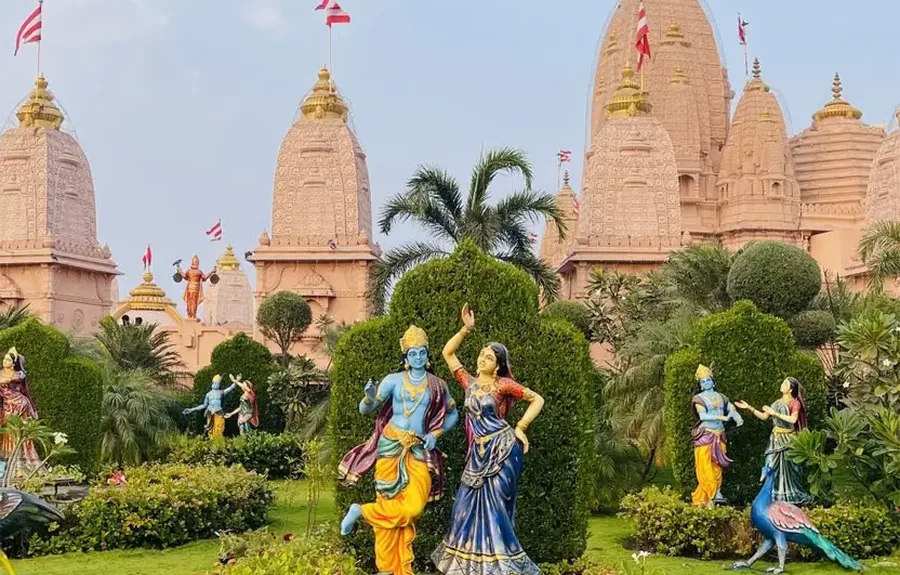
Lord Krishna was born in Mathura and spent his childhood among the cowherds and forests of Vrindavan, and the two towns sit right...
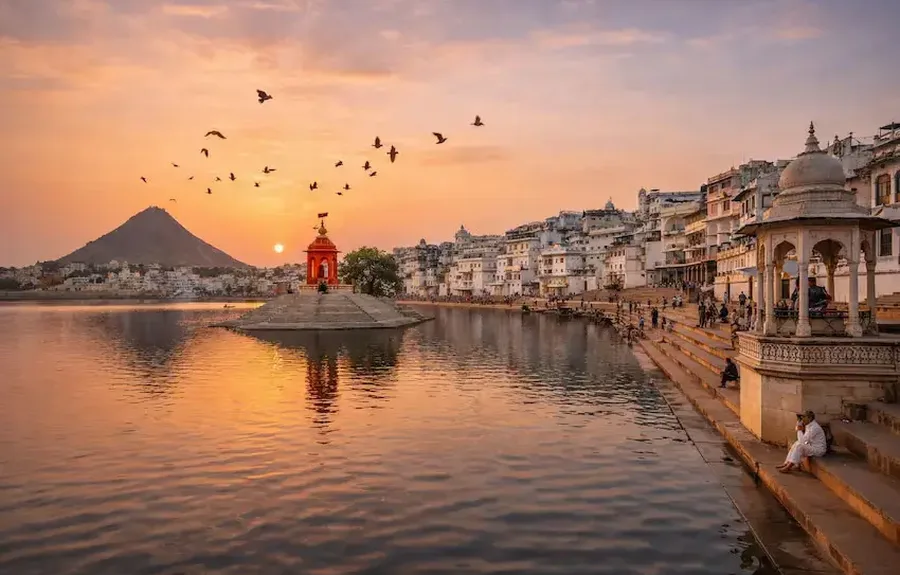
Sufi songs at a 13th-century shrine and temple bells over a sacred desert lake give the Golden Triangle Tour with Pushkar and Ajmer...
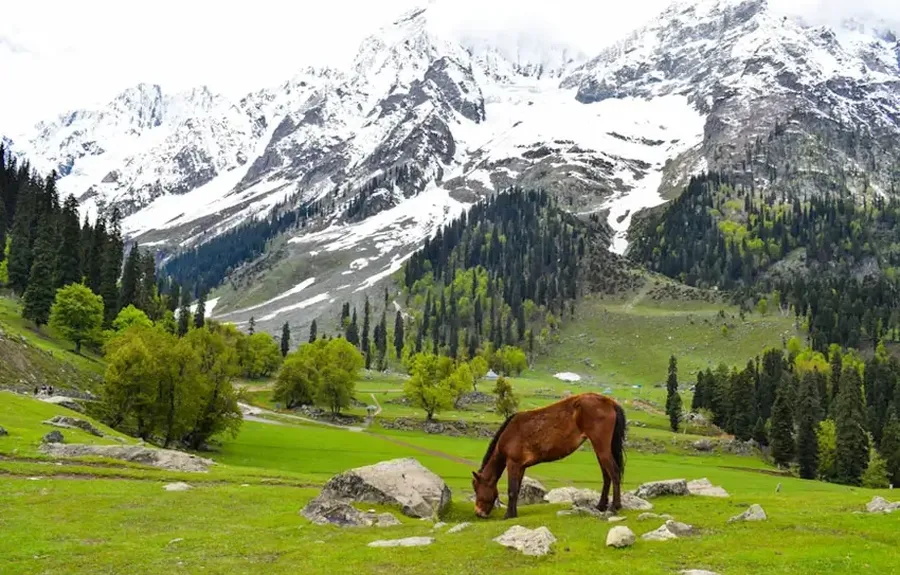
Mughal emperors built their tombs in Agra and Delhi, but they planted their pleasure gardens in Kashmir, and the Golden Triangle Tour with...
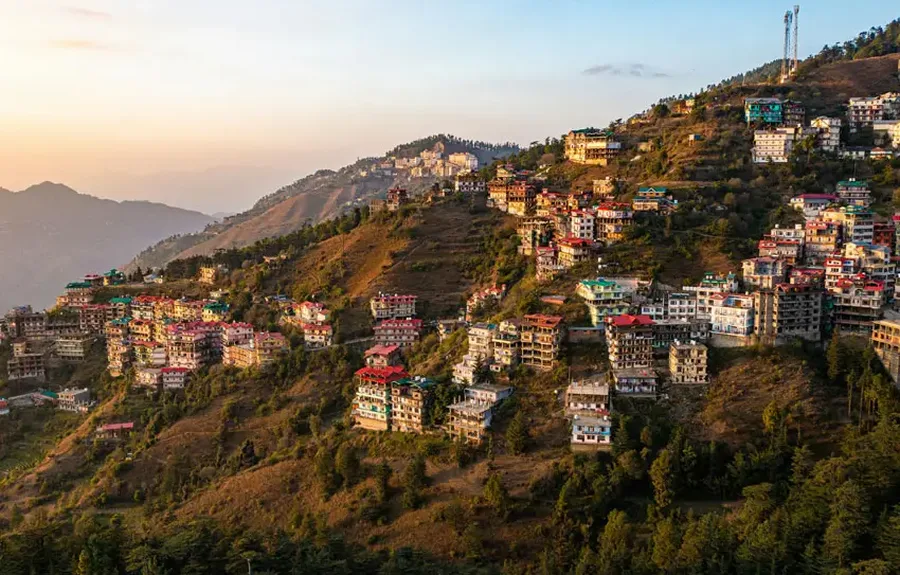
Cool pine air and a narrow-gauge railway that climbs through 102 tunnels are the reward at the end of the Golden Triangle Tour...