Delhi - Agra - Jaipur - Mumbai - Aurangabad - Ajanta - Ellora
Five UNESCO World Heritage Sites cut, carved or built into stone mark the length of the Golden Triangle Tour with Mumbai and Ajanta Ellora Caves. Across 11 nights and 12 days, you travel from the Mughal monuments of Delhi and Agra and the hill forts of Jaipur to the Arabian Sea at Mumbai, then inland to the Deccan plateau, where Buddhist monks painted the caves of Ajanta two thousand years ago and later dynasties cut a whole temple, the Kailasa, out of a single rock face at Ellora. Few routes in India cover so much art history in under two weeks, yet the pace leaves room to rest.
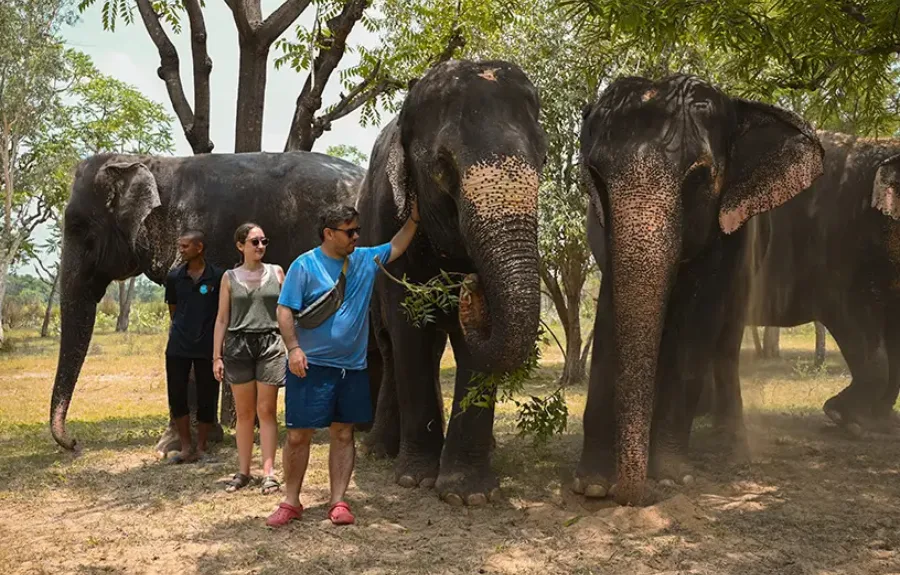
The northern half runs by private car with an English-speaking driver, with expert guides in every city and a gentle morning at the Elefantastic elephant sanctuary in Jaipur, where rescued elephants are fed, walked and bathed rather than ridden. Short domestic flights link Jaipur, Mumbai and Aurangabad, now officially called Chhatrapati Sambhajinagar. Guests who want only the coastal city can pick the shorter Golden Triangle Tour with Mumbai, while travellers drawn to temple sculpture may also like the Golden Triangle Tour with Orchha and Khajuraho.
Package Highlights
• Old Delhi, Humayun's Tomb, Qutub Minar and India Gate
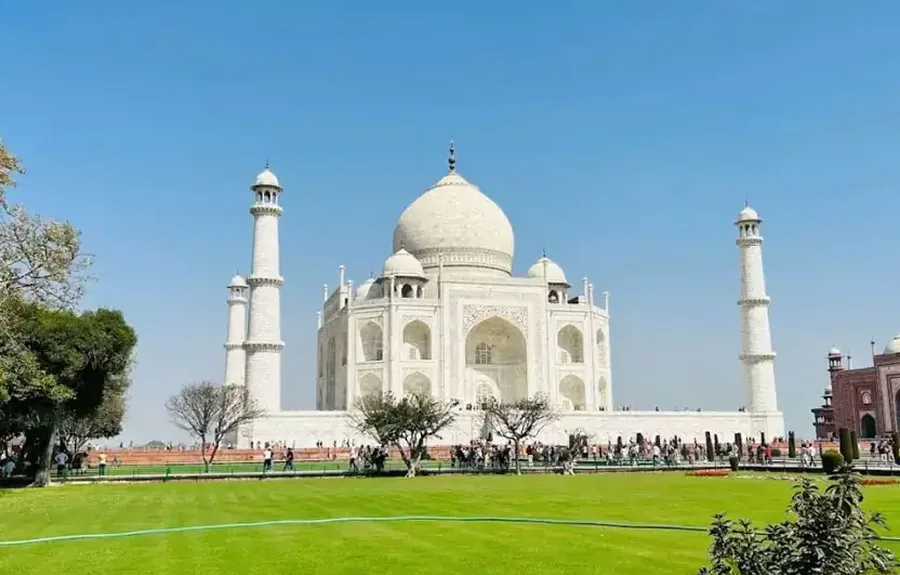
• Taj Mahal at sunrise, Agra Fort and Fatehpur Sikri
• Amber Fort, City Palace, Jantar Mantar and Hawa Mahal in Jaipur
• Morning with rescued elephants at Elefantastic, Jaipur
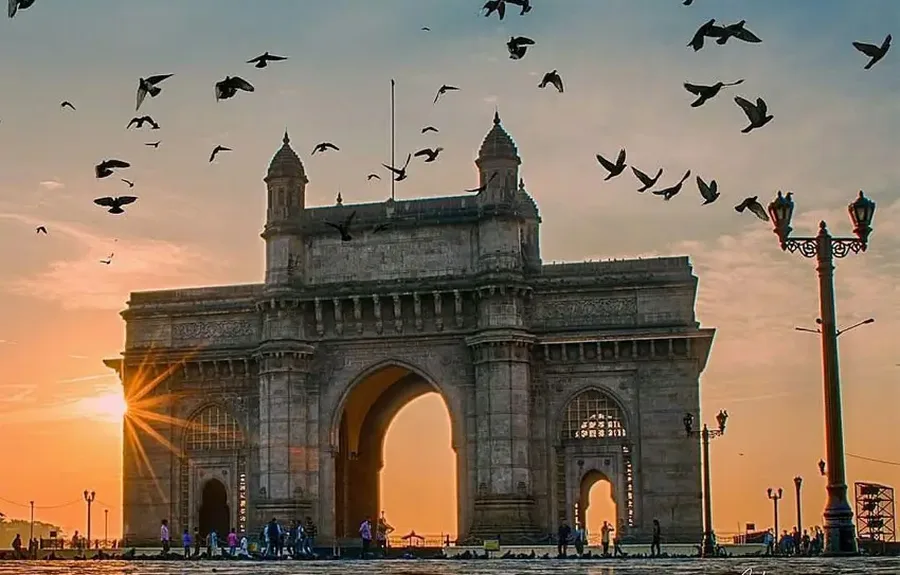
• Gateway of India, Kala Ghoda, Banganga Tank and Haji Ali in Mumbai
• Ferry to the Shiva caves of Elephanta Island
• 2,000-year-old Buddhist murals in the Ajanta Caves
• Kailasa Temple at Ellora, Daulatabad Fort and Bibi Ka Maqbara
Welcome to India. As you walk out of the arrivals hall at Indira Gandhi International Airport, our representative will greet you with a name board and guide you to your private car. Your English-speaking driver, who will be with you until Jaipur, takes you to your hotel in about 45 minutes to an hour. We follow your flight closely, so a late landing or delay is never a problem. Chilled water is waiting in the car, and the driver can stop at an ATM or money exchange on the way if you did not get rupees at the airport.
Most hotels in Delhi offer check-in from 2:00 pm, and an early room can be arranged in advance for morning arrivals. Spend the rest of the day at leisure, resting after the long flight. If you feel like going out in the late afternoon, Lodhi Garden is a quiet, green park with 15th-century tombs where locals walk, jog and do yoga. It is an easy first outing that lets you adjust to the warm weather and the rhythm of the city without the crowds of the main sights. Dinner at the hotel is a simple way to end the first day.
Our coordinator visits you at the hotel to go over the tour and hand you the vouchers, flight tickets and a 24-hour helpline number. This is a long tour with five domestic legs and transfers, so it helps to keep a copy of your passport and visa on your phone and on paper. The Ajanta Caves are closed on Mondays and the Ellora Caves on Tuesdays, and the Taj Mahal is closed on Fridays, so your dates have already been checked to avoid these days. Light clothing, sunscreen and comfortable walking shoes are essential. Overnight stay at your hotel in Delhi.
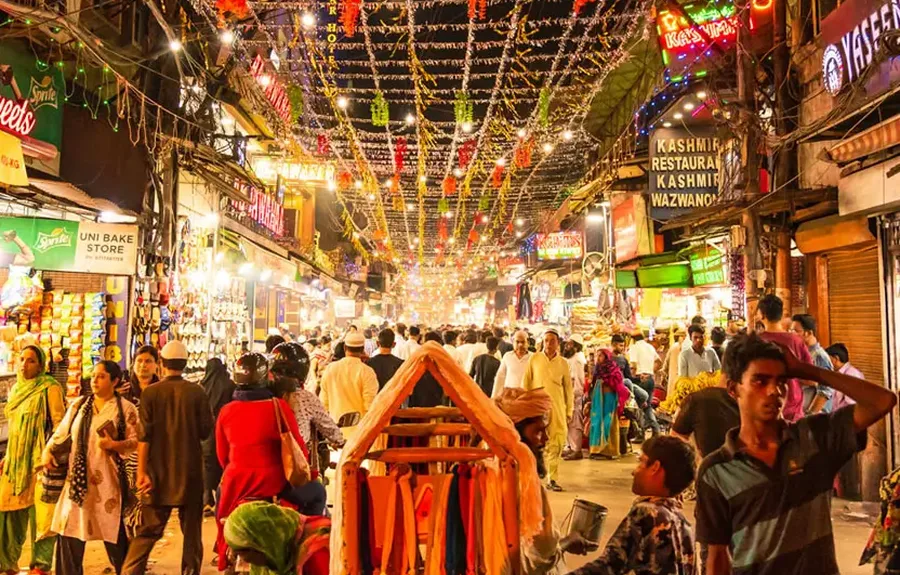
With your guide, begin in Old Delhi at the Red Fort, the palace of the Mughal emperors from 1648, whose walls stretch for more than two kilometres along the old riverbank. Inside, walk through the covered Chhatta Chowk bazaar to the Diwan-i-Am and the marble Diwan-i-Khas, where an inscription reads, in Persian, that if there is paradise on Earth, it is here. The fort is closed on Mondays. Afterwards, take a cycle rickshaw through Chandni Chowk and stop at the Jama Masjid, whose courtyard and red sandstone domes face the fort across a busy road.
After lunch, drive to Humayun's Tomb, built in 1570 and the earliest of the great Mughal garden tombs. Its red and white facade, central dome and formal gardens inspired the design of the Taj Mahal, and the site is a UNESCO World Heritage Site. Your guide explains its Persian roots and the careful restoration that has brought its gardens and fountains back to life. Then drive along Kartavya Path past India Gate, the war memorial arch, and the grand Rashtrapati Bhavan, home of the President of India, stopping for photographs along the way.
In the late afternoon, visit the Qutub Minar, a 73-metre sandstone and marble tower begun in 1193 and the tallest minaret in India. Carved bands of Arabic calligraphy wrap around each of its five storeys. The surrounding complex holds the ruins of the first mosque in Delhi and an iron pillar over 1,600 years old that has barely rusted. As the sun sets, the tower glows in the evening light. Return to your hotel for dinner, or visit a restaurant in Hauz Khas, which overlooks a medieval reservoir and ruined madrasa. Overnight stay at your hotel in Delhi.
After breakfast, drive to Agra on the Yamuna Expressway, a smooth six-lane road that covers about 230 km in three and a half to four hours. There are clean rest stops along the way for tea and snacks. On arrival, check in at your hotel and have lunch. Agra was the main capital of the Mughal empire under Akbar, Jahangir and Shah Jahan, and its monuments reflect the wealth and taste of their courts. Hotels near the eastern gate of the Taj Mahal are the most convenient for tomorrow's early visit.
In the afternoon, visit Agra Fort, a vast red sandstone fortress built by Akbar from 1565 and listed by UNESCO. Inside, Shah Jahan added white marble palaces, including the Khas Mahal and the Musamman Burj, where he was later held captive by his son Aurangzeb. From the balconies of the fort, he could see the Taj Mahal across the river, and the view remains one of the most moving in Agra. Your guide also shows you the Jahangiri Mahal, the Diwan-i-Am and the Moti Masjid. Allow around two hours for the visit.
Before sunset, cross the Yamuna to Mehtab Bagh, a Mughal garden directly opposite the Taj Mahal. As the sun goes down, the marble dome turns gold and pink, and the river reflects its shape. The garden is quiet and spacious, a perfect place for photographs and reflection. In the evening, you may visit a marble inlay workshop, where craftsmen show how tiny pieces of semi-precious stone are cut and set into marble. Dinner is at leisure, and your guide will confirm the early start for the Taj Mahal tomorrow. Overnight stay at your hotel in Agra.
Rise early for the Taj Mahal at sunrise, when the marble glows soft pink and the gardens are peaceful. Built by Shah Jahan between 1632 and 1653 for his wife Mumtaz Mahal, the Taj is the most famous building in India and a UNESCO World Heritage Site. Your guide explains its perfect symmetry, the calligraphy around the arches and the inlaid flowers of carnelian, jade and lapis lazuli. The monument is closed on Fridays, and food, tripods and large bags must be left behind. Return to your hotel for breakfast and check-out.
Drive about an hour west to Fatehpur Sikri, the abandoned capital of Emperor Akbar, built in red sandstone in 1571. The city was home to the Mughal court for about 14 years before being deserted, probably because of a shortage of water. Its palaces, halls and mosques are beautifully preserved. Your guide shows you the Diwan-i-Khas, the Panch Mahal, the Jodha Bai palace and the white marble tomb of Salim Chishti, where pilgrims tie red threads on the screens and make wishes. The Buland Darwaza gateway towers over the mosque courtyard.
Continue to Jaipur, a drive of about four hours through the rural landscape of eastern Rajasthan. The road passes villages, mustard fields and small towns where camel carts share the highway with trucks and tractors. Check in at your hotel in Jaipur in the early evening and relax after a full day. Jaipur hotels range from modern properties to heritage havelis and former palaces, many with painted walls, courtyards and rooftop terraces. Dinner can be enjoyed at your hotel or a rooftop restaurant with views of the lit-up forts. Overnight stay at your hotel in Jaipur.
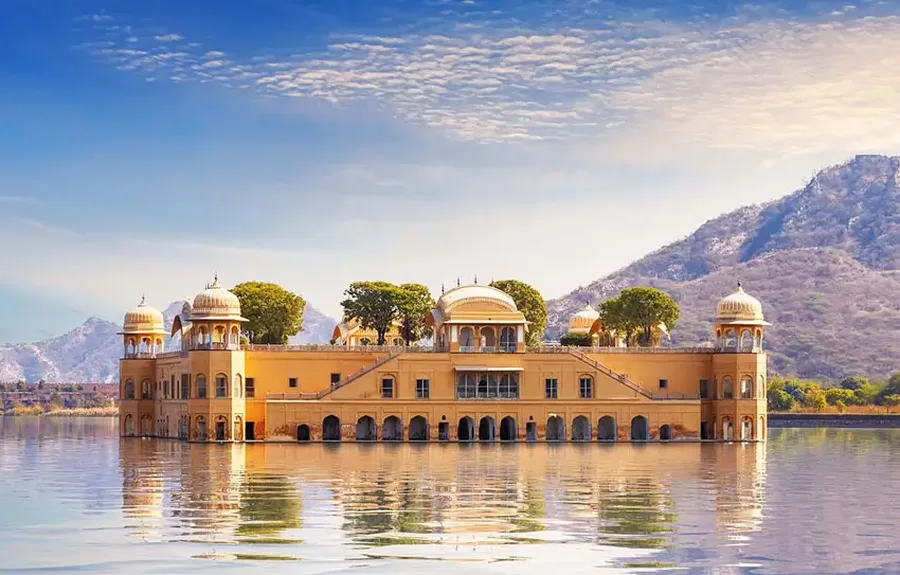
Start early for Amber Fort, the hilltop palace of the Kachwaha Rajputs, built in the late 16th century from pale sandstone and white marble. A jeep takes you up the hill, and your guide leads you through the four main courtyards, including the Diwan-i-Am and the Sheesh Mahal, whose walls are covered with tiny mirrors that sparkle in candlelight. From the ramparts, you see Maota Lake below and the walls of Jaigarh Fort along the ridge. On the way back to the city, stop for photographs of Jal Mahal, the water palace.
After lunch, visit the City Palace, a blend of Rajput and Mughal architecture at the centre of the old walled city. Its museums display royal costumes, arms and paintings, and the Pritam Niwas Chowk is famous for its four painted gateways representing the seasons. Opposite the palace, Jantar Mantar holds 19 giant astronomical instruments built in the 1720s and 1730s by Maharaja Sawai Jai Singh II, listed by UNESCO. Your guide explains how they measure time, track the stars and predict eclipses with remarkable precision.
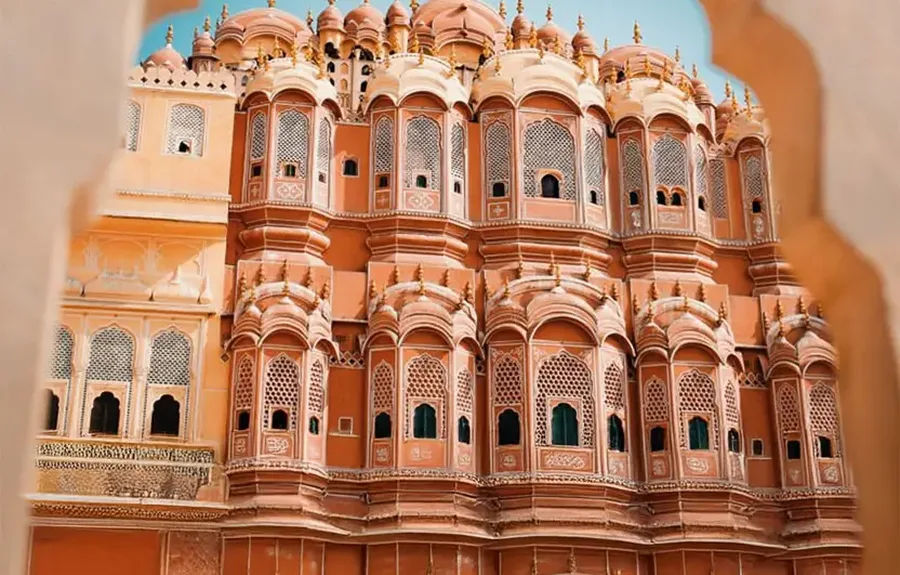
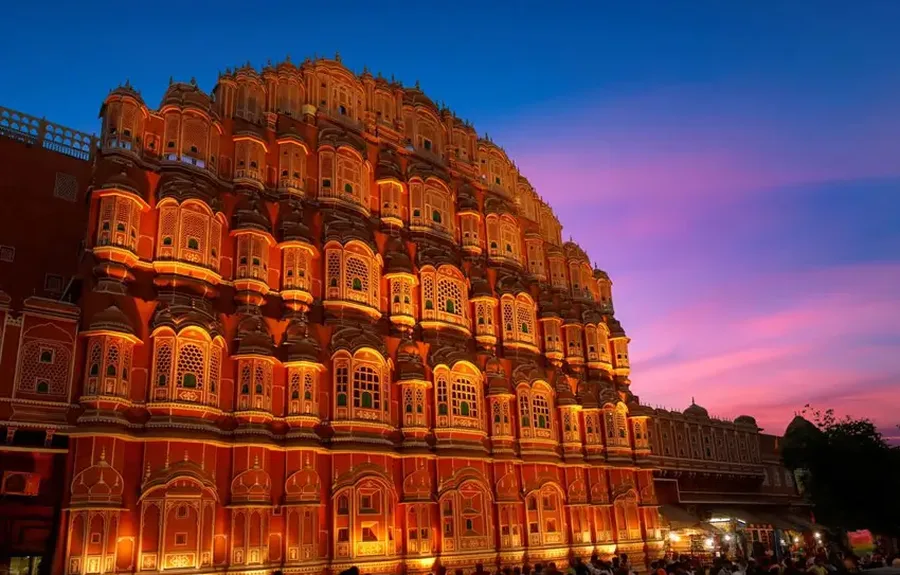
Late in the afternoon, photograph the Hawa Mahal, the Palace of Winds, from a rooftop café opposite. Its pink sandstone facade with 953 small windows was designed so royal women could watch street life without being seen. Then stroll through Johari Bazaar and Bapu Bazaar, where shops sell gemstones, silver jewellery, block-printed textiles and blue pottery. Prices are often negotiable, and your guide can suggest reliable shops. In the evening, enjoy dinner at a traditional Rajasthani restaurant, perhaps with live folk music. Overnight stay at your hotel in Jaipur.
This morning, the Elefantastic team picks you up from your hotel for a day visit with elephants at their sanctuary on the outskirts of Jaipur. You are paired with one elephant and meet the keepers who care for the herd. They explain how each elephant came to the sanctuary, what they eat and how they spend their days. You then help prepare fruit and sugarcane and feed your elephant by hand. The setting is calm and rural, and the visit is relaxed and personal, with time for questions and photographs.
After feeding, walk with the elephants and then help bathe them, splashing water and scrubbing their skin while they enjoy the cool spray. Elefantastic does not offer rides, does not use chains during visits and holds no performances. Wear clothes that can get wet and keep a change of clothes in the car. For guests who want more time with the herd, the sanctuary also runs a night stay with elephants. Please book only through official channels, as the sanctuary is not in Hathi Gaon (Elephant Village). The team returns you to your hotel.
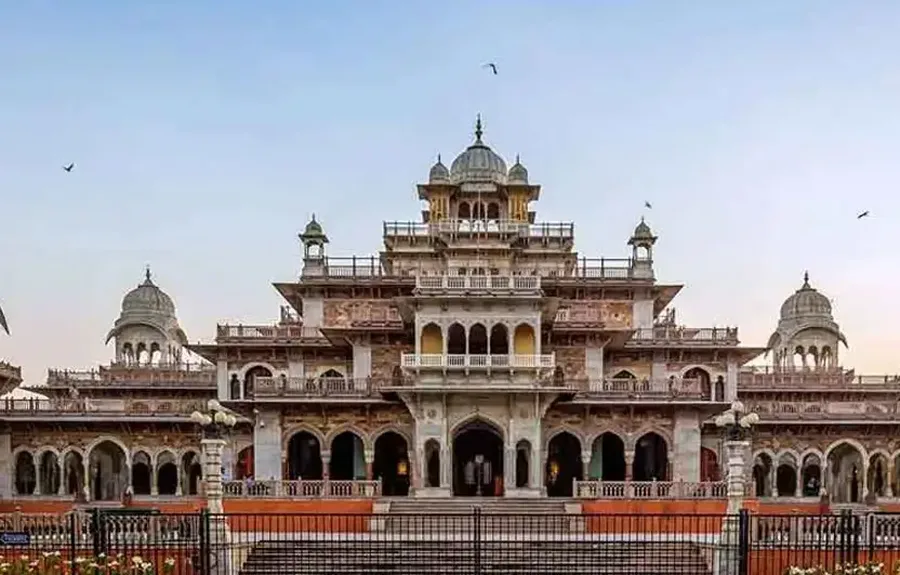
The afternoon is free to enjoy Jaipur at your own pace. You might visit the Albert Hall Museum, with its collections of carpets, armour and an Egyptian mummy, or take a cooking class in a local home to learn how to make Rajasthani dishes. Shoppers may want to visit the Anokhi Museum of Hand Printing in Amber or browse the textile shops of the city. In the evening, Nahargarh Fort on the ridge above the city offers sweeping sunset views. Pack your bags tonight, as tomorrow you fly to Mumbai. Overnight stay at your hotel in Jaipur.
After breakfast, your driver takes you to Jaipur International Airport for the flight to Mumbai, which takes about one hour and 45 minutes. Our Mumbai representative meets you on arrival and drives you to your hotel in South Mumbai, which can take 60 to 90 minutes in traffic. Mumbai, once called Bombay, is India's largest city and financial capital, home to more than 20 million people, Bollywood film studios and some of the finest Victorian and art deco architecture in Asia. The air is humid, and the pace is fast and energetic.
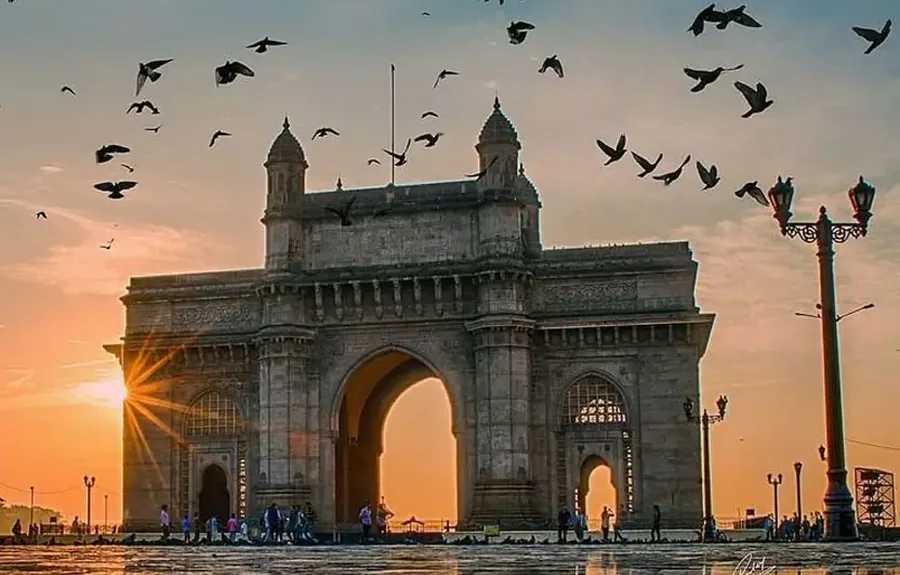
In the afternoon, your local guide takes you to the Gateway of India, the basalt arch on the waterfront built in 1924, facing the famous Taj Mahal Palace hotel. From here, you walk through Kala Ghoda, the city's art district, where Gothic buildings such as the University of Mumbai, the Rajabai Clock Tower and the Bombay High Court form part of a UNESCO-listed ensemble. You drive past the grand Chhatrapati Shivaji Maharaj Terminus railway station, a masterpiece of Victorian Gothic design, and the Flora Fountain at the heart of the old Fort area.
As evening falls, head to Marine Drive, the long seafront promenade known as the Queen's Necklace for its curve of lights after dark. Join locals strolling along the sea wall and watch the sunset over the Arabian Sea. For dinner, try one of the city's famous seafood restaurants, where butter garlic crab, prawn koliwada and pomfret curry are favourites, or enjoy a Parsi meal at one of the old Irani cafés, with dishes such as berry pulao and salli boti. Mumbai's food scene is one of the best in India. Overnight stay at your hotel in Mumbai.
Board an early ferry from the Gateway of India to Elephanta Island, about an hour across Mumbai Harbour. The rock-cut caves, carved between the 5th and 7th centuries and listed by UNESCO, are dedicated mainly to Lord Shiva. The centrepiece is the six-metre Trimurti, a three-headed bust of Shiva as creator, preserver and destroyer. Reaching the caves requires a climb of about 120 steps from the jetty, and palanquins are available. The caves are closed on Mondays, and the last ferry back usually leaves around 5:30 pm. Return to the mainland for lunch.
In the afternoon, visit the Banganga Tank in the Walkeshwar area, a sacred water tank dating from the 12th century and surrounded by temples, old houses and stone steps. Legend says it was created when Lord Rama shot an arrow into the ground to bring forth water from the Ganges. The tank is a peaceful corner of the busy city, where ducks swim and locals perform rituals. Nearby, drive past the hanging gardens of Malabar Hill for views over Marine Drive and the Back Bay. Then continue to Dhobi Ghat, the giant open-air laundry seen from the bridge above.
In the late afternoon, visit Haji Ali Dargah, a white mosque and Sufi shrine built in 1431 on a small islet in the sea, reached by a narrow causeway that floods at high tide. Pilgrims of all faiths visit to pray at the tomb of the saint Haji Ali, and qawwali singers often perform in the courtyard. Check the tide times before going, as the causeway is only open at low tide. Your last evening in Mumbai can be spent at a rooftop bar in Worli or Lower Parel, watching the lights of the Bandra–Worli Sea Link. Overnight stay at your hotel in Mumbai.
After breakfast, transfer to Mumbai airport for the short flight to Aurangabad, officially renamed Chhatrapati Sambhajinagar, which takes about an hour. Our representative meets you on arrival and drives you to your hotel. Aurangabad was named after the Mughal emperor Aurangzeb, who made it his base for campaigns in the Deccan, and the city is the gateway to the Ajanta and Ellora caves. It has a slower, more relaxed feel than Mumbai, with old city gates, markets and Mughal monuments. Check in and enjoy lunch at your hotel.
In the afternoon, visit Bibi Ka Maqbara, built in 1660 by Aurangzeb's son Azam Shah in memory of his mother, Dilras Banu Begum. Its design closely follows the Taj Mahal, which is why it is often called the Taj of the Deccan, though it is smaller and uses marble only for the dome and lower walls. Your guide explains its history and the differences from the Agra original. The gardens are pleasant and calm in the afternoon light. Next, visit the Aurangabad Caves, a group of 12 Buddhist caves cut into a hillside between the 6th and 8th centuries.
In the evening, visit the Panchakki, a 17th-century water mill powered by an underground channel from a spring several kilometres away, which once ground grain for pilgrims at the nearby Sufi shrine. Then browse the old markets, where Aurangabad is known for Himroo shawls, woven from cotton and silk, and for Paithani saris, made with gold thread and peacock motifs. Your guide can take you to a weaving workshop to watch the craft. Enjoy dinner at your hotel, where the local Maratha and Mughlai cuisine is worth trying. Overnight stay at your hotel in Aurangabad.
After an early breakfast, drive about 100 km to the Ajanta Caves, a drive of around two and a half hours through farmland and small towns. The caves are closed on Mondays. From the visitor centre at the T-junction, eco-friendly buses take you the last few kilometres to the caves, which are cut into a horseshoe-shaped cliff above the Waghora River. There are 30 caves in all, carved between the 2nd century BCE and the 6th century CE by Buddhist monks, and they are a UNESCO World Heritage Site. Comfortable shoes and water are essential.
Ajanta is famous for its wall paintings, the finest surviving examples of ancient Indian art. In Cave 1, the graceful figure of the Bodhisattva Padmapani, holding a lotus, is one of the most celebrated images in Asian art. Other caves show scenes from the Jataka tales, the stories of the Buddha's past lives, with princes, dancers, animals and palaces painted in natural colours. Flash photography is not allowed, and light levels are kept low to protect the paintings, so your guide will use a soft torch to point out the details. Allow three to four hours.
Cave 26 holds a large carved image of the reclining Buddha at the moment of his passing into nirvana, surrounded by mourning disciples, and Cave 19 has a beautifully carved prayer hall with a stupa. From the caves, a short walk leads to a viewpoint above the river, where a British officer, John Smith, first came upon the caves in 1819 while hunting a tiger. Have lunch at the restaurant near the visitor centre, then drive back to Aurangabad in the afternoon. The evening is free to rest at your hotel. Overnight stay at your hotel in Aurangabad.
After breakfast, drive about 30 km to the Ellora Caves, a UNESCO World Heritage Site where 34 caves were cut into a basalt cliff between the 6th and 10th centuries. Unlike Ajanta, Ellora includes Buddhist, Hindu and Jain caves side by side, showing the religious harmony of the time. The caves are closed on Tuesdays. The highlight is the Kailasa Temple in Cave 16, the largest monolithic rock-cut structure in the world, carved from the top down out of a single rock, a task that is believed to have taken more than a century to complete.
Your guide shows you the details of the Kailasa Temple, including the life-size elephants, the carved panels of Ravana shaking Mount Kailash and the multi-storey halls, all cut from one piece of stone. You then visit the Buddhist caves, including Cave 10, the Carpenter's Cave, whose ceiling is carved to look like wooden beams, and the Jain caves at the northern end, with finely carved figures of the Tirthankaras. Nearby, the Grishneshwar Temple, one of the 12 Jyotirlinga shrines of Lord Shiva, is a living temple where men must remove their shirts to enter.
On the way back to Aurangabad, stop at Daulatabad Fort, a 12th-century hill fort built by the Yadava dynasty and later used by the Delhi Sultanate as a capital. The climb to the top passes through dark tunnels, moats and spiked gates designed to stop invaders, and the views from the summit are wide and rewarding. The full climb takes about an hour, but the lower levels are easier. Return to your hotel in the evening for a farewell dinner, and pack for tomorrow's flight home. Overnight stay at your hotel in Aurangabad.
After breakfast, transfer to Aurangabad airport for your flight to Mumbai or Delhi, timed to connect with your international departure. Please keep at least four hours between flights. To see more of Rajasthan next time, browse our Rajasthan tour packages.
Our assorted tours, for your first, second or nth time to India!
Light decides everything on the Golden Triangle Photography Tour India, so the days are built around sunrise and sunset rather than opening hours....
Seeing India in later life should mean comfort, time and good company rather than early starts every day and long climbs in the...
Once a year, every rooftop, doorway and market arch across North India is lined with clay lamps and strings of light, and the...
Five UNESCO World Heritage Sites cut, carved or built into stone mark the length of the Golden Triangle Tour with Mumbai and Ajanta...
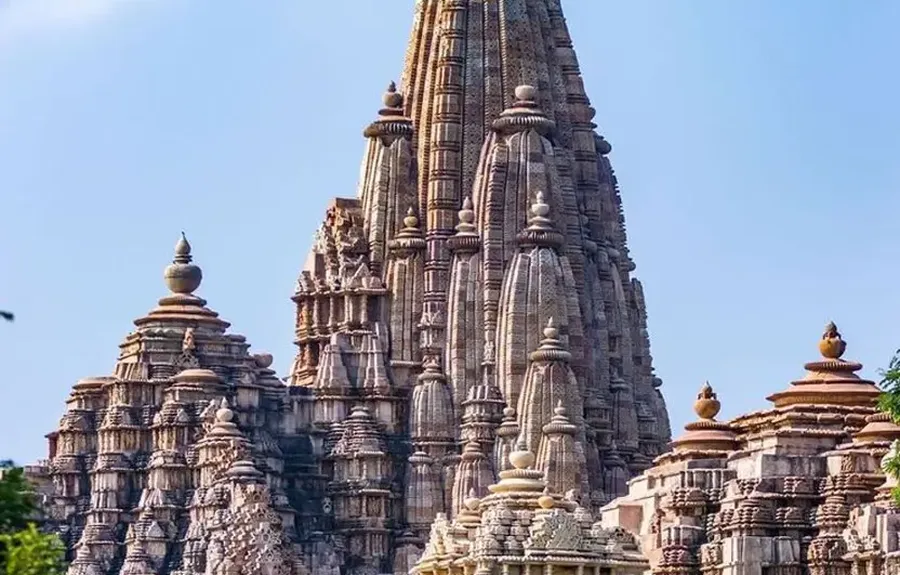
South of Agra, the plains give way to the forests and rocky rivers of Bundelkhand, and very few travellers go that extra distance....
Children remember tigers, trains and elephants long after they forget the dates of an emperor's reign, so the Golden Triangle Family Tour India...
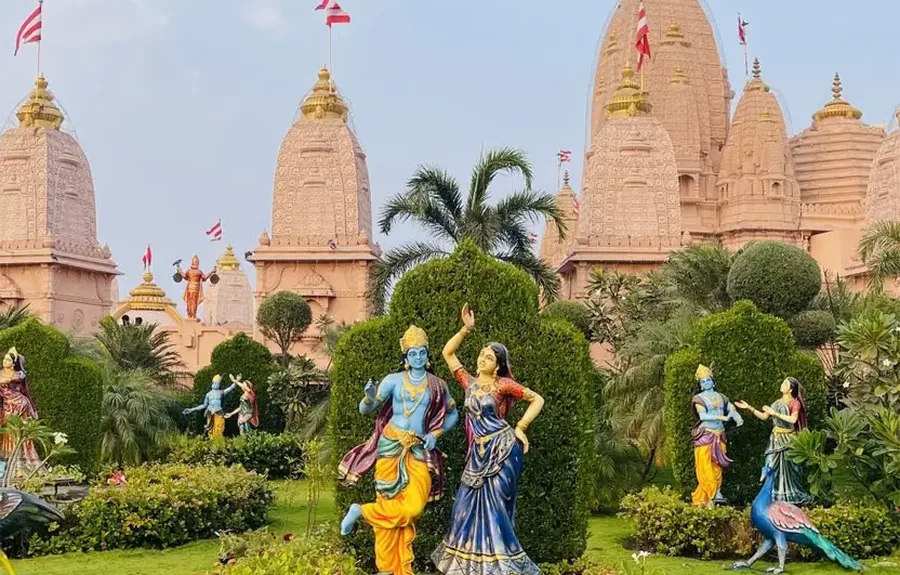
Lord Krishna was born in Mathura and spent his childhood among the cowherds and forests of Vrindavan, and the two towns sit right...
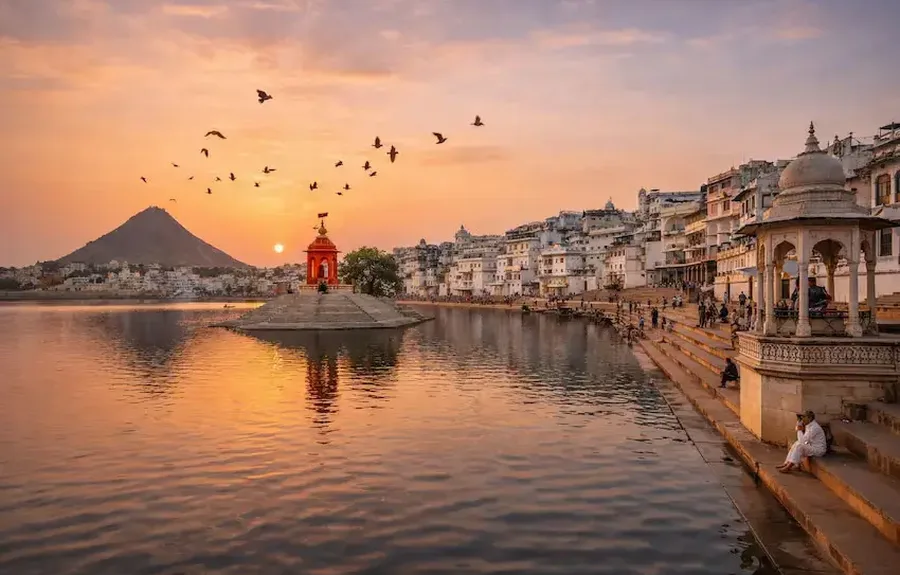
Sufi songs at a 13th-century shrine and temple bells over a sacred desert lake give the Golden Triangle Tour with Pushkar and Ajmer...
Mughal emperors built their tombs in Agra and Delhi, but they planted their pleasure gardens in Kashmir, and the Golden Triangle Tour with...
Cool pine air and a narrow-gauge railway that climbs through 102 tunnels are the reward at the end of the Golden Triangle Tour...