Delhi - Agra - Jaipur - Chandigarh - Shimla - Delhi
Cool pine air and a narrow-gauge railway that climbs through 102 tunnels are the reward at the end of the Golden Triangle Tour with Shimla. Across 9 nights and 10 days, this route begins with the essential monuments of Delhi, Agra and Jaipur before heading north to Chandigarh, the planned city of Le Corbusier, and up into the Himalayan foothills to Shimla, the former summer capital of British India. Colonial churches, Tudor-style villas and the long promenade of Mall Road give Shimla a character quite unlike the plains, and it makes a refreshing finish after a week of forts, palaces and busy bazaars.
On the plains, you travel by private car with an English-speaking driver, with expert local guides at each monument and a quiet morning at the Elefantastic elephant sanctuary in Jaipur, where guests feed, walk with and bathe rescued elephants instead of riding them. A short flight takes you from Jaipur to Chandigarh, and the climb to Shimla is made aboard the Kalka–Shimla toy train, a UNESCO World Heritage railway opened in 1903. The route suits couples, families and older travellers who want variety and a change of climate within one well-paced trip.
Package Highlights
• Red Fort, Chandni Chowk, Humayun's Tomb and Qutub Minar in Delhi
• Taj Mahal, Agra Fort and Fatehpur Sikri
• Amber Fort, City Palace, Jantar Mantar and Hawa Mahal in Jaipur
• Morning with rescued elephants at Elefantastic, with no rides or chains
• Rock Garden, Sukhna Lake and the UNESCO Capitol Complex in Chandigarh
• Kalka–Shimla toy train through 102 tunnels and over 800 bridges
• Mall Road, the Ridge, Christ Church and the Viceregal Lodge in Shimla
• Jakhu Temple and a day trip to Kufri
Your trip opens at Delhi's Indira Gandhi International Airport. Look for our representative holding a name sign as you exit the arrivals hall, then relax as your driver takes you to the hotel in a private air-conditioned car. The ride into central Delhi usually takes 45 minutes to an hour, though rush-hour traffic can add more. Flights are tracked in real time, so even if your plane is delayed, someone will be there to greet you. Bottled water and a local map are ready in the car, and your driver can stop at a pharmacy or money exchange on request.
Check-in begins at 2:00 pm at most hotels, and early arrivals can book the room from the night before for immediate access. The rest of the day is set aside for recovery from the flight. If you feel energetic in the afternoon, a visit to the Dilli Haat crafts market near INA gives a gentle first taste of India, with stalls from every state selling textiles, jewellery and regional food in a relaxed, open-air setting. It is a safe, easy place to try your first momos or a South Indian dosa without the crowds of the older markets.
Later, our local coordinator meets you to hand over your documents, including vouchers, the Jaipur to Chandigarh flight ticket and the toy train booking for Shimla. You also get a 24-hour helpline number. Shimla can be cold, especially from November to February, when night temperatures often drop close to freezing, so pack a warm jacket, gloves and comfortable walking shoes for the hill section. Summer in Shimla is mild and pleasant, which makes this route a good choice even in the hotter months on the plains. Overnight stay at your hotel in Delhi.
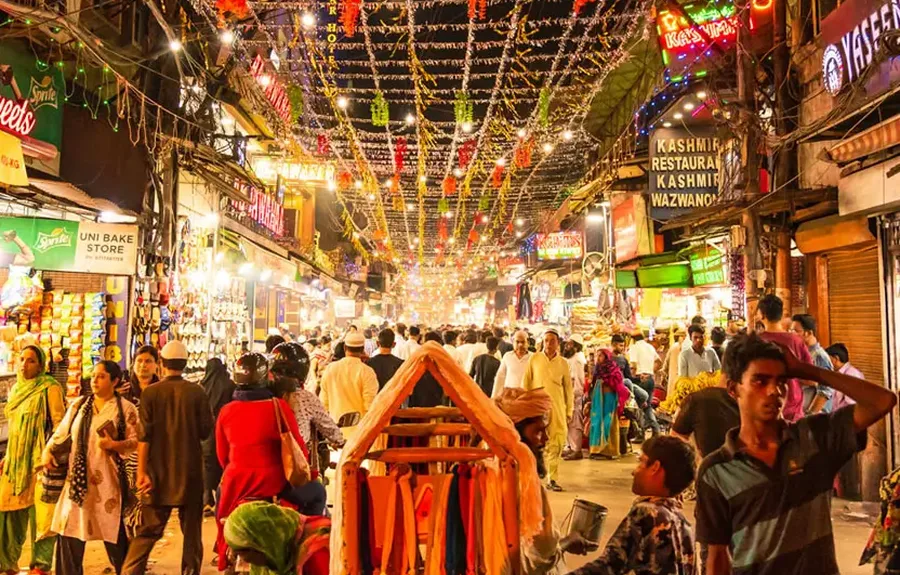
Your guide meets you after breakfast for a full day in Delhi, starting in the old city at the Red Fort, the grand Mughal palace complex Shah Jahan finished in 1648. Inside its red walls, you walk through the Lahori Gate, the covered bazaar of Chhatta Chowk, the Diwan-i-Am where the emperor met his subjects and the marble Diwan-i-Khas, once home to the legendary Peacock Throne. The fort is a UNESCO World Heritage Site and is closed on Mondays. From here, a cycle rickshaw ride carries you into Chandni Chowk, with its jewellery shops, sweet sellers and crowded wholesale lanes.
After lunch, drive to Humayun's Tomb, the Mughal garden tomb that set the style for the Taj Mahal, with its soaring double dome and formal gardens split into four by water channels. It was built in 1570 by Humayun's widow, Bega Begum, and later became the burial place of many members of the royal family. Your guide explains the Persian influences in the design and the restoration that brought back its original glory. Next door, the shrine of Nizamuddin Auliya is a living Sufi centre where visitors leave flowers and prayers.
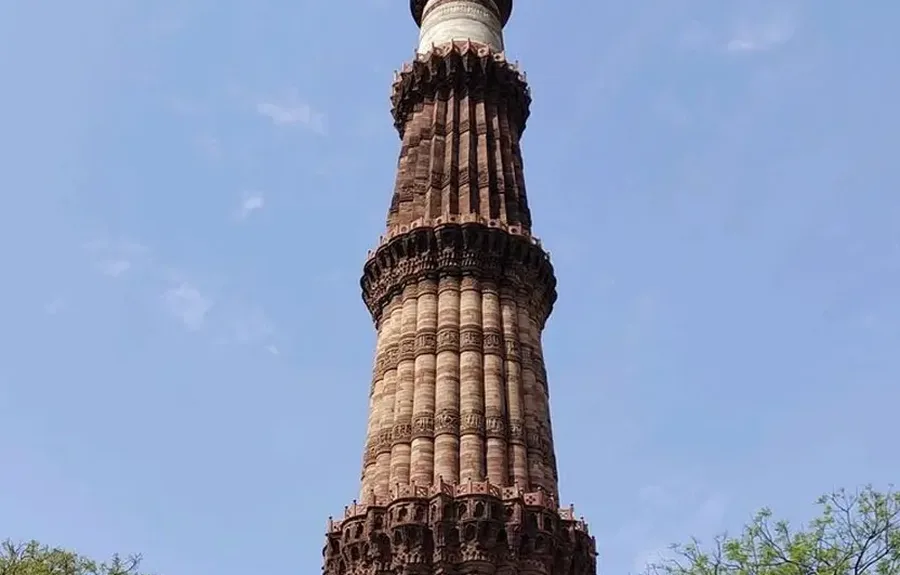
The day ends at the Qutub Minar, the 73-metre victory tower and minaret begun in 1193, the tallest of its kind in India. The surrounding complex has ruined mosques, carved gateways and the famous iron pillar, which has stood for over 1,600 years without rusting. On the way back to the hotel, you drive past India Gate and the government buildings of New Delhi for photographs. Dinner is at leisure, and Delhi has excellent restaurants for every budget, from roadside kebab stalls to elegant Indian dining rooms. Overnight stay at your hotel in Delhi.
After breakfast, drive to Agra along the Yamuna Expressway, a straight, well-kept highway that brings you there in about three and a half to four hours. Clean food plazas on the way make convenient tea stops. Check in at your hotel on arrival and take lunch at leisure. Agra is best known for the Taj Mahal, but it has many other Mughal monuments, gardens and tombs, and the city still has a strong tradition of marble inlay, leather work and carpet weaving passed down through families of craftsmen for generations.
In the afternoon, your local guide takes you to Agra Fort, a UNESCO World Heritage Site built mainly by Emperor Akbar from 1565. Its red sandstone walls rise more than 20 metres above the moat and enclose palaces, audience halls and mosques added by Jahangir and Shah Jahan. Inside, the Jahangiri Mahal shows a blend of Hindu and Central Asian design, while the Khas Mahal and the Musamman Burj are fine examples of Shah Jahan's love of white marble. From the fort's terraces, you get your first view of the Taj Mahal across the bend of the Yamuna.
Late in the day, cross the river to Mehtab Bagh, a Mughal garden directly opposite the Taj Mahal. As the sun sets, the marble dome glows in warm colours across the water, and the peaceful setting makes it one of the best places in Agra for photographs. On the way back, you can visit a marble inlay workshop to see how artisans cut tiny pieces of semi-precious stone and set them into marble, the same technique used on the Taj. Dinner can be at your hotel or a local restaurant serving Mughlai dishes. Overnight stay at your hotel in Agra.
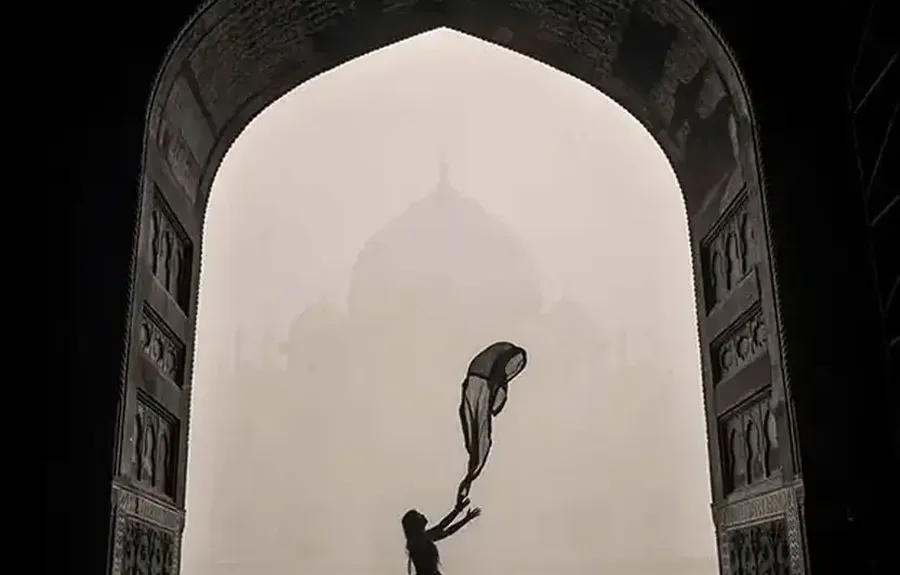
Wake early for the highlight of any visit to India. Your guide collects you about 30 minutes before sunrise and walks you through security to the Taj Mahal, which opens at first light. Seeing the white mausoleum slowly change colour as the sun rises is a memory most guests treasure for years. Your guide explains its symmetry, the calligraphy around the arches and the hidden details of the inlaid flowers. The monument is closed on Fridays, and visitors may carry only small bags, phones, cameras and water, with shoe covers provided for the main platform.
Return to the hotel for breakfast and check-out, then drive about an hour west to Fatehpur Sikri, the abandoned city Akbar built between 1571 and 1585. The palaces, pavilions and courtyards are carved from local red sandstone and remain in remarkable condition. Highlights include the Panch Mahal, a five-storey open pavilion, the Diwan-i-Khas with its unique central pillar and the mosque courtyard with the white marble tomb of the Sufi saint Salim Chishti. Pilgrims still visit the tomb to tie threads on its lattice screens and ask for blessings.
Continue to Jaipur, a drive of about four hours through farmland and small market towns. The road passes villages where you may see potters at work, women carrying water pots and colourful trucks decorated with paintings and slogans. Reach the Pink City in the evening and check in at your hotel. If you are not too tired, the hotel can arrange a light dinner on the terrace with views of the old city walls and the hilltop forts lit up at night. Your driver will confirm the time for the next day's sightseeing before leaving. Overnight stay at your hotel in Jaipur.
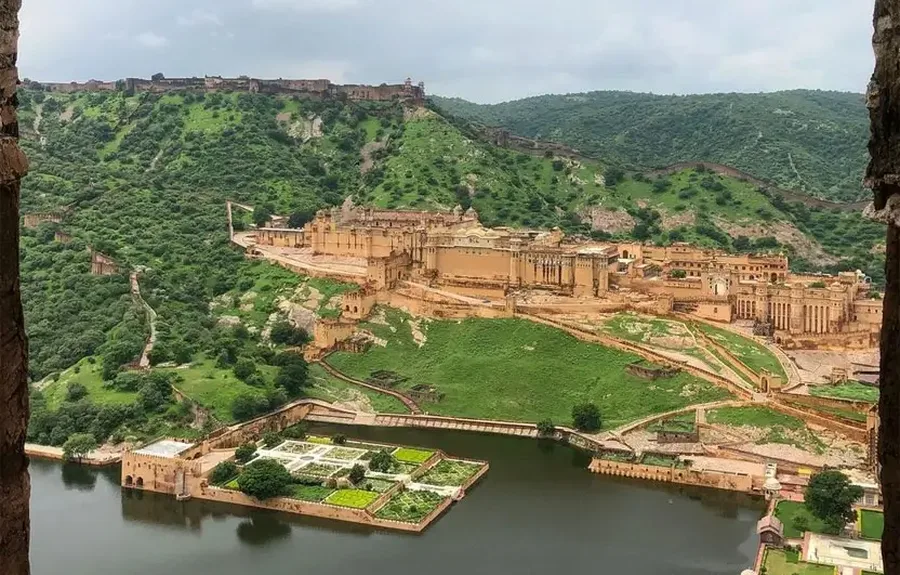
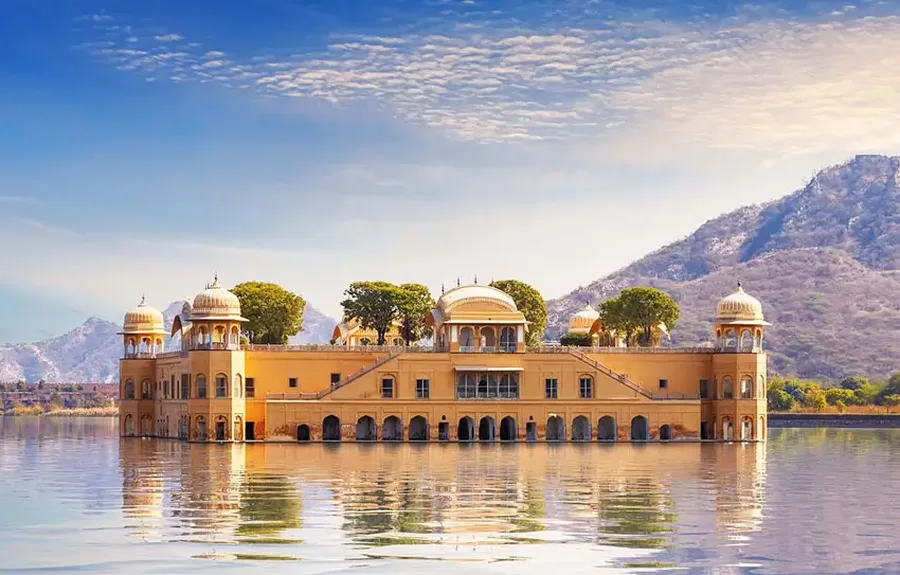
The morning starts at Amber Fort, built in the late 16th century by Raja Man Singh and expanded by later rulers until the capital moved to Jaipur. The fort is reached by jeep up a winding road, and inside your guide leads you through four main courtyards, each more private than the last. The Sheesh Mahal, or Palace of Mirrors, is the most famous room, its walls and ceiling covered in thousands of small glass pieces. On the way back to the city, stop at the edge of Man Sagar Lake for a view of Jal Mahal, the water palace.
In the afternoon, visit the City Palace, a vast complex of courtyards, gardens and buildings in the centre of the old city, still partly lived in by the descendants of the royal family. The museum displays royal garments, arms and two huge silver vessels made to carry Ganges water to London in 1902. Across the street lies Jantar Mantar, a collection of giant stone astronomical instruments built in the 18th century and listed by UNESCO. Your guide explains how the instruments measured time and charted the stars with precision long before modern technology.
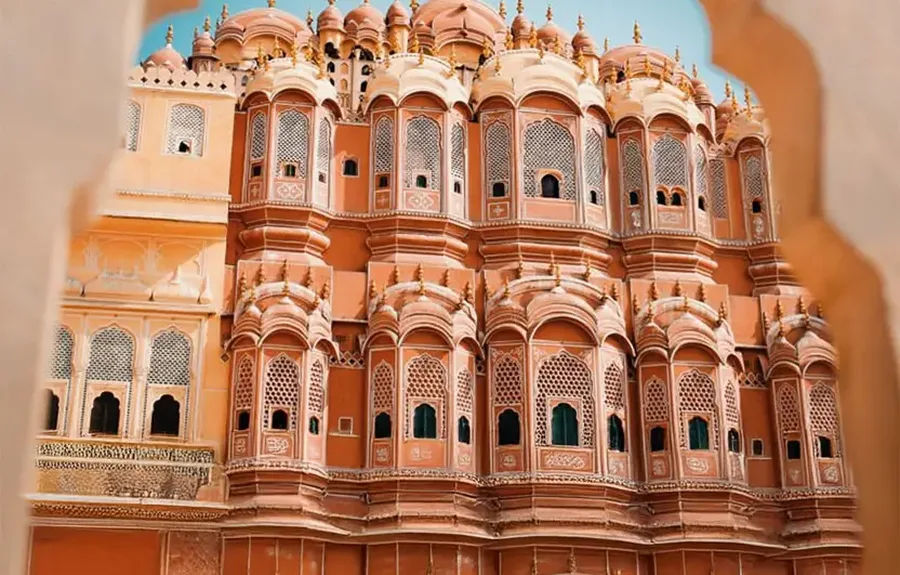
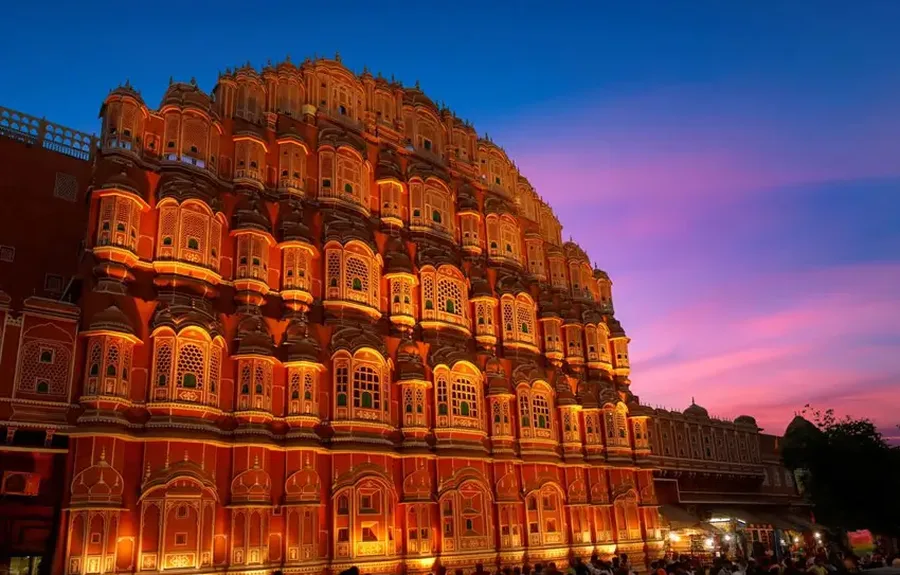
Close the afternoon with a photo stop at the Hawa Mahal, the five-storey Palace of Winds with its delicate pink sandstone facade and 953 small windows. Behind it, the narrow lanes of the old city are filled with markets selling bangles, spices, fabrics and handicrafts. Jaipur is known for its block printing, blue pottery and gemstones, and your guide can recommend reliable shops. In the evening, consider a visit to a Rajasthani cultural village for folk dances, puppet shows and a traditional thali dinner served on low tables. Overnight stay at your hotel in Jaipur.
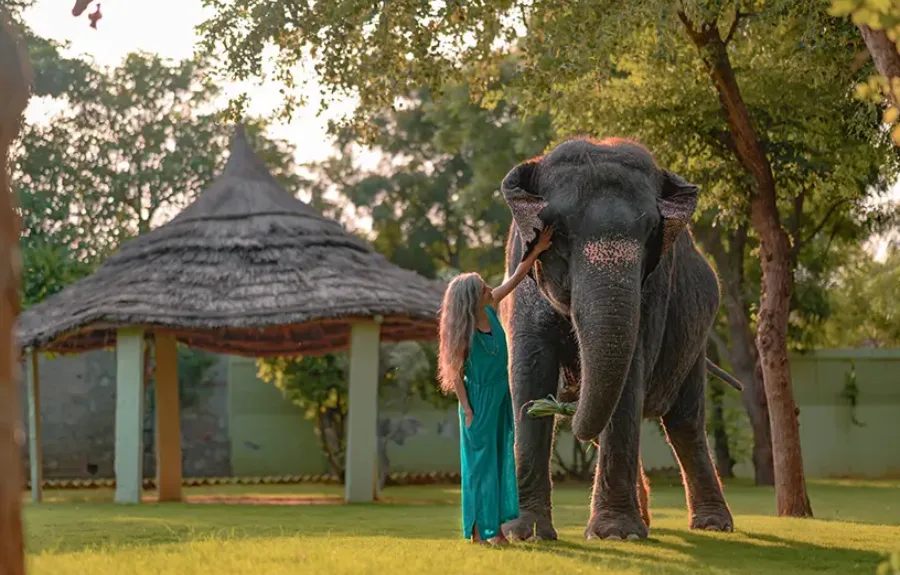
This morning, the Elefantastic team collects you from your hotel for a day visit with elephants at their sanctuary on the edge of the city. Each guest spends the session with one elephant, starting with an introduction to the herd and the keepers who have looked after them for years. You learn about their diets, habits and personalities, then help feed them by hand with bananas, sugarcane and seasonal fruit. The setting is green and quiet, and the visit is relaxed and personal, with plenty of time for questions and photographs.
After feeding, walk with your elephant around the grounds and then help bathe it, splashing and scrubbing as the elephants enjoy the water. Elefantastic does not allow rides, does not use chains during visits and does not stage performances, so everything happens at the elephants' own pace. Wear clothes that can get wet and bring a change. If you love the morning, ask the team about the night stay with elephants, a rare chance to spend the evening and night near the herd. The team then brings you back to your hotel for lunch.
The afternoon is free to enjoy Jaipur in your own way. You might visit the Albert Hall Museum, take a cooking class in a family home, shop for textiles at Anokhi, or relax by the hotel pool. If you want one more viewpoint, Nahargarh Fort on the ridge above the city offers sweeping views at sunset, and its cafe is a popular spot for an evening drink. Your driver remains with you for the afternoon. Pack your bags tonight, as tomorrow you leave Rajasthan behind and head north to the mountains. Overnight stay at your hotel in Jaipur.
After breakfast, transfer to Jaipur International Airport for the direct flight to Chandigarh, which takes about an hour and 20 minutes. Our Chandigarh representative meets you on arrival and drives you to your hotel. Chandigarh was designed in the 1950s by the Swiss-French architect Le Corbusier as the new capital of Punjab after Partition, and it is still one of the greenest and cleanest cities in India. Its wide roads, numbered sectors and modernist buildings make it a sharp contrast to the historic cities you have seen so far.
In the afternoon, visit the Rock Garden, a 40-acre fantasy world created in secret by a road inspector named Nek Chand, using broken tiles, bangles, plates and industrial waste. Paths lead through waterfalls, arches and courtyards filled with thousands of whimsical figures of people, animals and dancers. It is one of the most unusual sights in India. Your guide then takes you to the Capitol Complex, a UNESCO World Heritage Site that includes the Secretariat, the High Court and the Open Hand Monument. Passport details are needed in advance for the guided visit.
As evening falls, walk along the promenade of Sukhna Lake, a man-made lake at the foot of the Shivalik Hills, where locals jog, feed ducks and take paddle boats out on the water. Sunset views over the hills are lovely, and street vendors sell roasted corn and ice cream. For dinner, Chandigarh's Sector 17 and Sector 35 have many restaurants serving Punjabi dishes such as sarson da saag, makki di roti and butter chicken, along with lassi in tall glasses. Retire early, as the toy train departs in the morning. Overnight stay at your hotel in Chandigarh.
Your driver takes you about 25 km to Kalka railway station for the ride on the Kalka–Shimla toy train, one of the Mountain Railways of India listed by UNESCO. The narrow-gauge line climbs about 96 km from the plains to over 2,000 metres, passing through 102 tunnels, crossing more than 800 bridges and turning around 900 curves. The ride takes between five and six hours, depending on the train, and departure times vary by season. Seats are reserved in advance, and the small carriages have large windows for views of the forests and valleys.
Along the way, the train stops at small stations such as Dharampur, Barog and Solan, where you can step out for tea and snacks. Barog station is famous for its long tunnel and the legend of the engineer who built it. As the train climbs, the air grows cooler and the views open up over terraced fields, pine forests and distant snow peaks on clear days. Our representative meets you at Shimla station and transfers you to your hotel, which is usually close to Mall Road, as most of the central area is closed to vehicles.
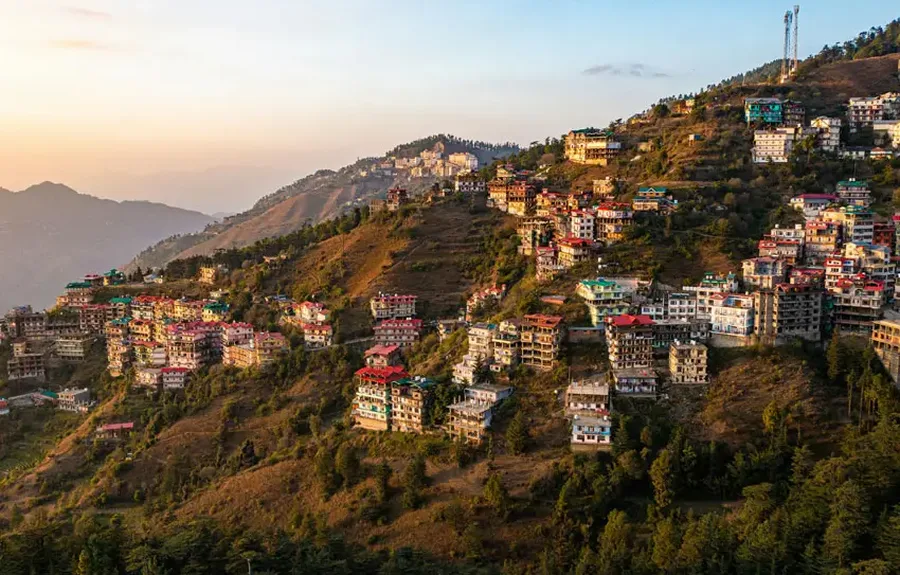
In the late afternoon, take a gentle stroll along Mall Road and up to the Ridge, a large open square with views of the Himalayan ranges. Shimla was the summer capital of British India from 1864 to 1939, and many colonial buildings still stand, including the Gaiety Theatre and the town hall. The neo-Gothic Christ Church, consecrated in 1857, overlooks the Ridge and is beautifully lit at night. Small cafes and bakeries on the Mall offer hot drinks and cakes, and woollen shawls are a popular buy. Overnight stay at your hotel in Shimla.
After breakfast, drive about 16 km to Kufri, a small hill resort surrounded by deodar and pine forests at around 2,500 metres. In winter, Kufri is often covered with snow, and you can try sledding or simply enjoy the white landscape. In other seasons, the Himalayan Nature Park has native wildlife such as the musk deer and the Himalayan black bear. Horse rides are offered by local operators to the Mahasu Peak viewpoint, from where the views stretch across ridges and valleys to the snow-capped ranges on clear mornings.
Return to Shimla for lunch and then visit the Viceregal Lodge, a grand Jacobethan-style building completed in 1888 as the summer residence of the British Viceroy. Today it houses the Indian Institute of Advanced Study, and guided tours show the teak-panelled halls, the library and the gardens. Important meetings that shaped India's independence and partition took place here, and your guide explains this history. The lodge is closed on Mondays. Its lawns offer wide views of the surrounding hills and are especially lovely in the afternoon light.
Later, take a short ride by cable car or car to Jakhu Temple, the highest point in Shimla at about 2,455 metres, dedicated to the monkey god Hanuman. A giant 33-metre statue of Hanuman stands beside the temple and can be seen from all over the town. The temple area is home to many monkeys, so keep sunglasses, hats and food out of reach. In the evening, enjoy a farewell dinner at one of Shimla's historic restaurants on Mall Road, where Himachali dishes such as siddu and madra can be tried. Overnight stay at your hotel in Shimla.
After breakfast, drive down to Chandigarh airport, about three and a half hours away, for your flight to Delhi and onward international connection, or continue by road to Delhi. For a southern Rajasthan add-on in a future trip, see our Golden Triangle Tour with Udaipur, or travel by car and driver across India.
Our assorted tours, for your first, second or nth time to India!
Light decides everything on the Golden Triangle Photography Tour India, so the days are built around sunrise and sunset rather than opening hours....
Seeing India in later life should mean comfort, time and good company rather than early starts every day and long climbs in the...
Once a year, every rooftop, doorway and market arch across North India is lined with clay lamps and strings of light, and the...
Five UNESCO World Heritage Sites cut, carved or built into stone mark the length of the Golden Triangle Tour with Mumbai and Ajanta...
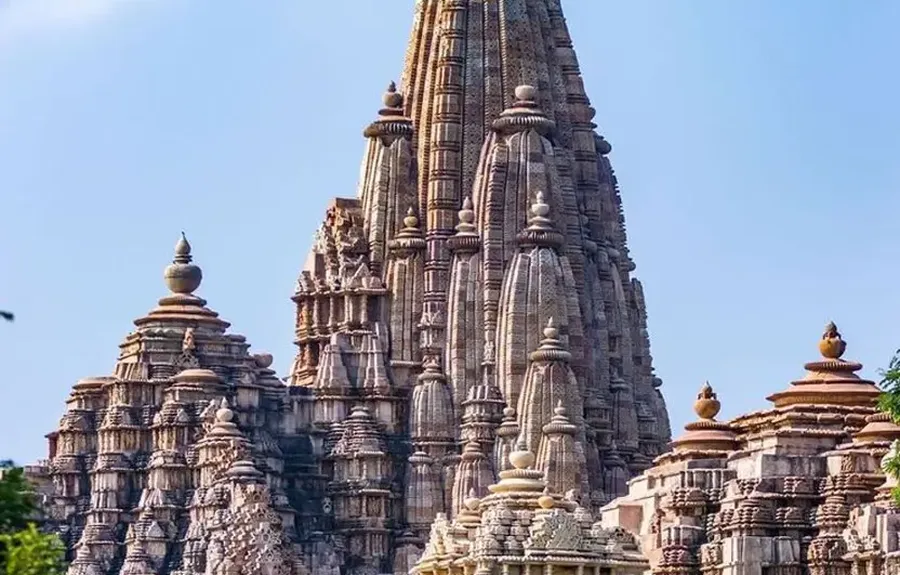
South of Agra, the plains give way to the forests and rocky rivers of Bundelkhand, and very few travellers go that extra distance....
Children remember tigers, trains and elephants long after they forget the dates of an emperor's reign, so the Golden Triangle Family Tour India...
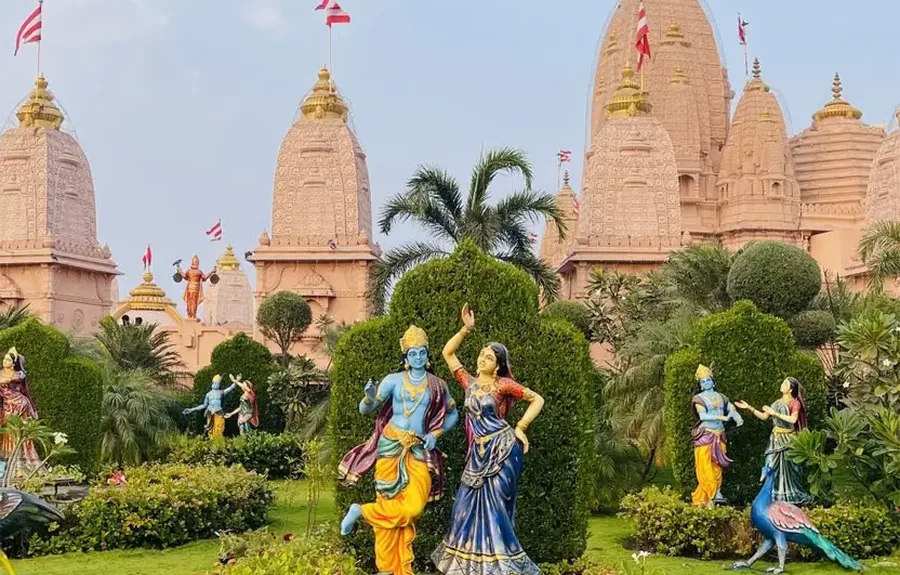
Lord Krishna was born in Mathura and spent his childhood among the cowherds and forests of Vrindavan, and the two towns sit right...
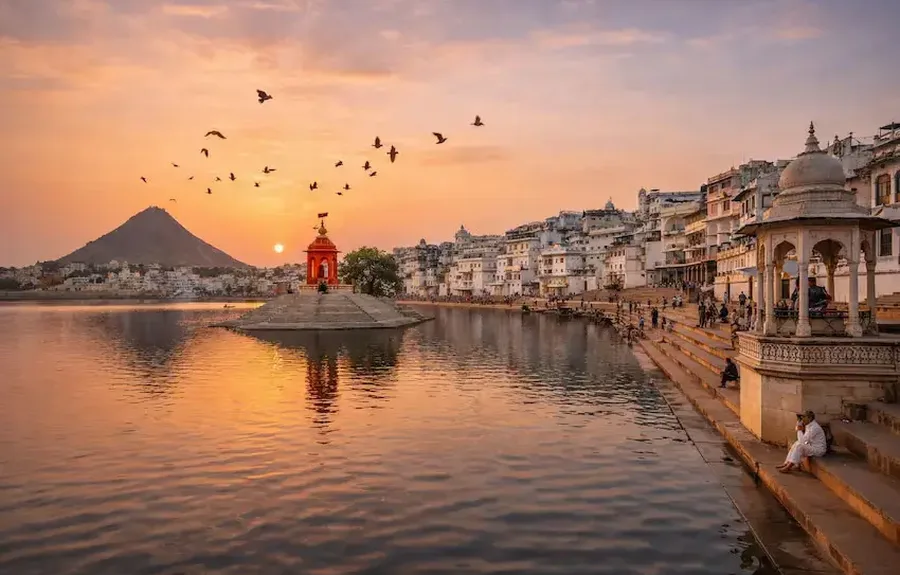
Sufi songs at a 13th-century shrine and temple bells over a sacred desert lake give the Golden Triangle Tour with Pushkar and Ajmer...
Mughal emperors built their tombs in Agra and Delhi, but they planted their pleasure gardens in Kashmir, and the Golden Triangle Tour with...
Cool pine air and a narrow-gauge railway that climbs through 102 tunnels are the reward at the end of the Golden Triangle Tour...