Delhi - Agra - Jaipur - Varanasi - Delhi
Few routes in India pack as much history into a single week as the classic Delhi, Agra and Jaipur circuit covered in our Golden Triangle tour packages, and adding Varanasi turns a sightseeing holiday into something far more personal. Across 7 nights and 8 days, this Golden Triangle Tour with Varanasi moves from the Mughal tombs and crowded spice lanes of Delhi to the white marble of the Taj Mahal, the rose-coloured streets of Jaipur and finally the ancient ghats of the Ganges, where daily bathing, prayer and cremation rituals take place side by side on the riverbank, just as they have for centuries.
Road sections run in a private air-conditioned car with an English-speaking driver, while two short domestic flights replace the long overland haul to the east. Every city gets enough time for its key monuments without rushed mornings, and the Jaipur stay includes a calm morning with rescued elephants at the Elefantastic elephant sanctuary, where guests feed, walk beside and bathe the elephants instead of riding them. The route suits first-time visitors, couples and small families who want the best of North India's heritage along with a closer look at the spiritual life of Varanasi, one of the oldest living cities in the world. Travellers with a few more days can also add the temples of central India through our Golden Triangle with Varanasi and Khajuraho route.
Package Highlights
• Cycle rickshaw ride through the lanes of Chandni Chowk in Old Delhi
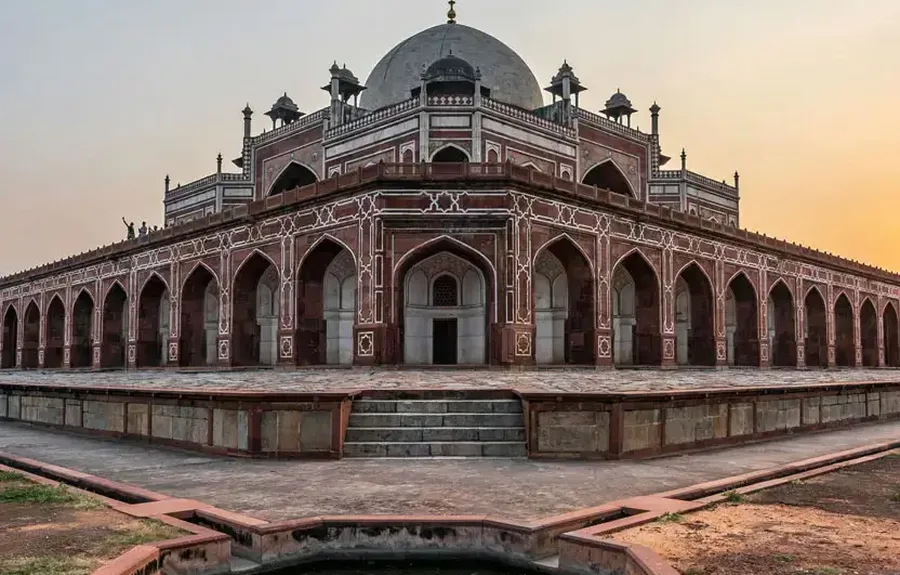
• Humayun's Tomb and Qutub Minar, two UNESCO World Heritage Sites in Delhi
• Sunrise visit to the Taj Mahal, followed by Agra Fort and a sunset view from Mehtab Bagh
• Stop at Fatehpur Sikri, the abandoned red sandstone capital of Emperor Akbar
• Amber Fort, City Palace, Jantar Mantar and the Hawa Mahal in the Pink City
• Ethical elephant morning at Elefantastic, Jaipur: feeding, walking and bathing, with no rides or chains
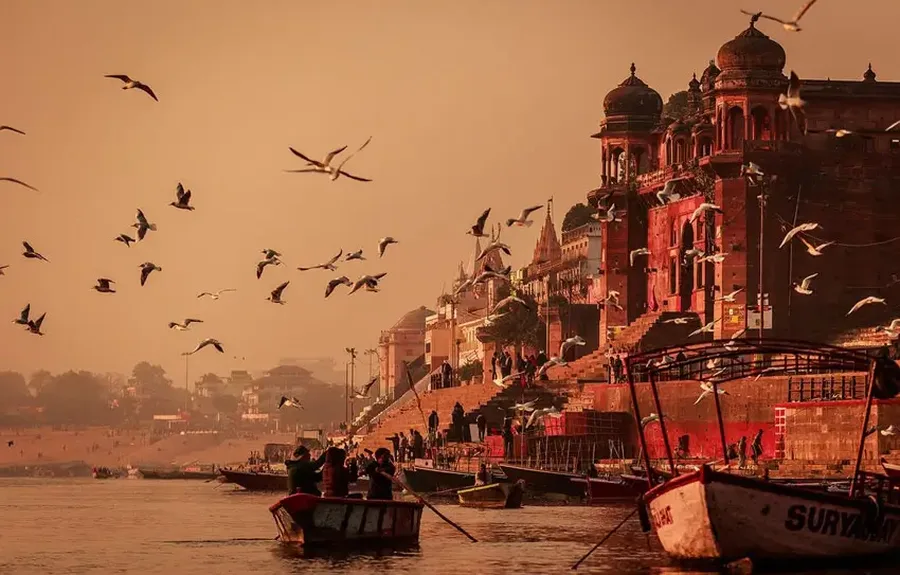
• Dawn boat ride along the ghats of the Ganges in Varanasi
• Half-day visit to Sarnath, where the Buddha gave his first sermon
• Evening Ganga Aarti at Dashashwamedh Ghat
• Private car and driver for all road sections, with local English-speaking guides in every city
Your Golden Triangle tour begins at Indira Gandhi International Airport in New Delhi. Once you clear immigration, collect your bags and walk out of the arrivals hall, our representative will be waiting with a name card to greet you. Many long-haul flights from Europe, the USA and Australia land late at night or in the early hours, so the pickup is timed to your actual landing, not the scheduled one. Your private car with driver then drives you to the hotel, a ride that usually takes 45 minutes to an hour depending on the time of day and the traffic on the way into the city.
Hotel check-in in Delhi is normally at 2:00 pm, and an early check-in can be arranged on request, subject to room availability, or guaranteed by booking the room from the previous night. The rest of the day is free to rest and recover from the flight. If you arrive in the morning and feel fresh, a relaxed evening walk around India Gate and Kartavya Path is a gentle first look at the capital, and the cafes and bookshops of Khan Market are a short drive away. Currency exchange counters and SIM card kiosks at the airport are worth using before you leave the terminal.
Later in the day your driver or our local representative will hand over your printed itinerary, hotel vouchers and a list of contact numbers, including a 24-hour helpline you can call at any point during the tour. This short briefing is also the right time to confirm pickup timings for the next morning and to mention any dietary needs, mobility concerns or special requests. Remember that the Taj Mahal stays closed every Friday, so your Agra dates are fixed around that rule from the start. Overnight stay at your hotel in Delhi.
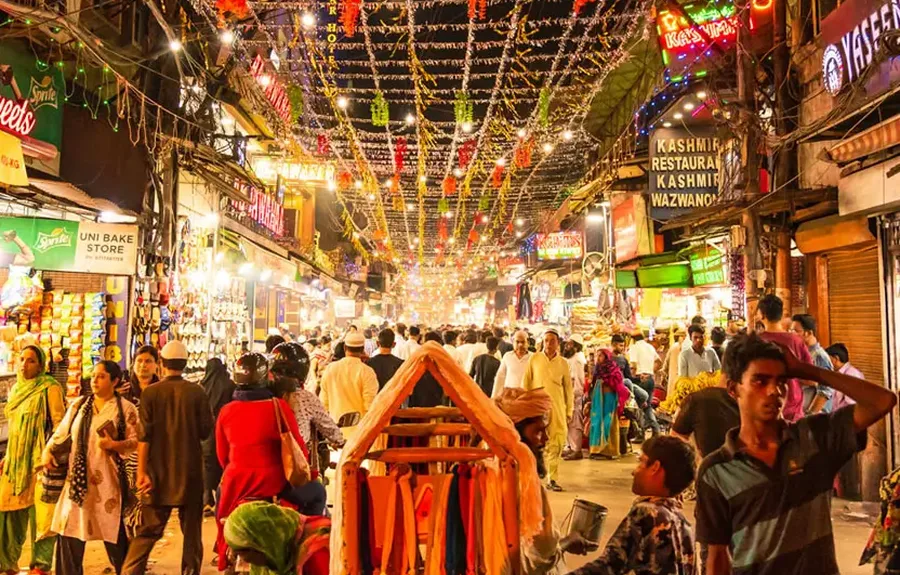
After breakfast, your local guide joins you for a full day of Delhi sightseeing, starting in the old walled city built by Shah Jahan in the 17th century. The first stop is Jama Masjid, completed in 1656 and still one of the largest mosques in India, with a courtyard that holds around 25,000 worshippers. Shoes are removed at the gate, and covering arms and legs is expected, with robes available on site. From here, a cycle rickshaw ride weaves through the narrow lanes of Chandni Chowk, past silver jewellers, wedding card printers and the spice stalls of Khari Baoli, Asia's largest wholesale spice market.
The afternoon moves to New Delhi and its wide, tree-lined avenues. Humayun's Tomb, built in 1570 for the second Mughal emperor, is often called the forerunner of the Taj Mahal, and its gardens are a peaceful place to slow down after the morning crowds. Next comes the Qutub Minar, a 73-metre tower of red sandstone and marble begun in the late 12th century, surrounded by ruins of early mosques and an iron pillar that has barely rusted in over 1,600 years. Along the way, your car passes India Gate, Rashtrapati Bhavan and the government buildings of Lutyens' Delhi.
Before returning to the hotel, a stop at Gurudwara Bangla Sahib gives a different side of the city. This Sikh shrine runs a community kitchen that serves free meals to thousands of visitors every day, and you are welcome to watch the volunteers at work or sit down to eat with everyone else. Heads must be covered inside, and scarves are provided at the entrance. Delhi traffic can be heavy in the evening, so the day usually starts around 9:00 am and ends by 6:00 pm. Overnight stay at your hotel in Delhi.
After an early breakfast, you check out and drive about 230 km to Agra on the Yamuna Expressway, one of the smoothest highways in the country. The drive takes around three and a half to four hours, with clean rest stops on the way for tea and washrooms. On arrival in Agra, you check in at your hotel and take some time to rest. Hotels near the eastern gate of the Taj Mahal are the most practical choice, as they cut the travel time for the sunrise visit the next morning and let you walk back for breakfast without any rush.
In the afternoon, your Agra guide takes you to Agra Fort, a UNESCO World Heritage Site built mainly by Emperor Akbar from 1565 and later filled with white marble halls by his grandson Shah Jahan. Inside its red sandstone walls you will see the Diwan-i-Am, where the emperor met the public, the Diwan-i-Khas for private audiences and the Musamman Burj, the octagonal tower where Shah Jahan spent his final years as a prisoner of his own son, gazing at the Taj Mahal across the river. Allow around two hours here, as the complex is large and the guide's stories bring each courtyard to life.
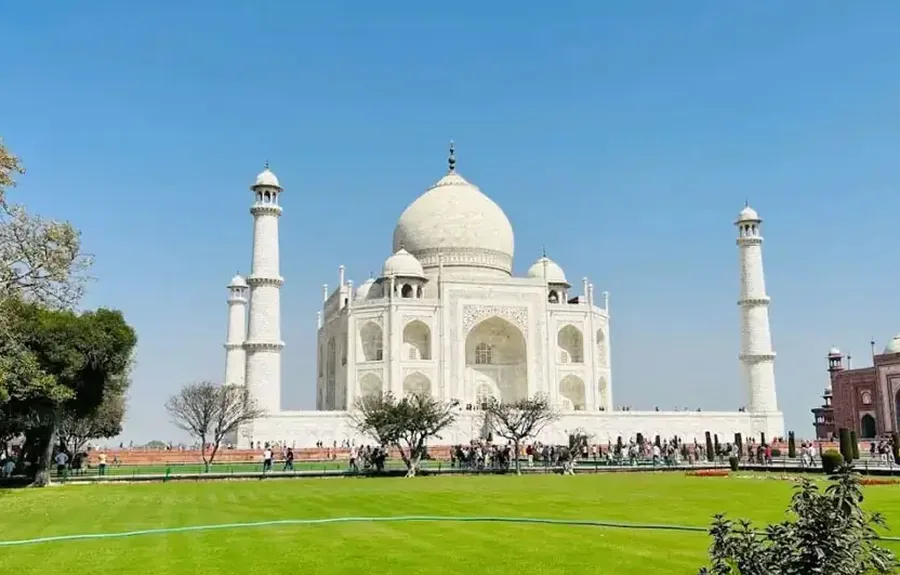
Towards sunset, the car crosses the Yamuna to Mehtab Bagh, a Mughal garden directly opposite the Taj Mahal. From here you get an uninterrupted view of the monument's riverside face as the marble turns gold and then pink in the fading light, with far fewer people around than at the main gates. On the way back, you can stop at a marble inlay workshop to watch craftsmen cut and set semi-precious stones in the same pietra dura style used on the Taj itself, with no obligation to buy anything. Overnight stay at your hotel in Agra.
The day starts early, around 30 minutes before sunrise, when your guide meets you at the hotel and walks or drives you to the gate of the Taj Mahal. The monument opens at sunrise, and the first hour is the calmest time of day, with soft light on the white marble and the reflecting pools still and clear. Built by Shah Jahan between 1632 and 1653 in memory of his wife Mumtaz Mahal, the Taj took about 20,000 workers to complete. Security is strict: food, tripods, large bags and drones are not allowed, and shoe covers are handed out before you step onto the main platform.
After the visit, you return to the hotel for breakfast, check out and drive about 40 km to Fatehpur Sikri, the city Akbar built as his capital in 1571 and abandoned only around 14 years later, most likely because of water shortages. The palaces, courtyards and mosques have survived in remarkable condition, from the five-storey Panch Mahal to the tomb of the Sufi saint Salim Chishti, where visitors tie red threads on the marble screens while making a wish. The 54-metre Buland Darwaza, one of the tallest gateways in the world, makes a fitting finish to the visit.
From Fatehpur Sikri, the road continues west into Rajasthan for around four to four and a half hours to Jaipur. If you have the energy for one more stop, a short detour to the Chand Baori stepwell at Abhaneri adds roughly an hour to the drive, and its 3,500 narrow steps arranged in a deep geometric pattern are a favourite with photographers. You reach Jaipur in the evening, check in at your hotel and have the rest of the night free to rest. Overnight stay at your hotel in Jaipur.
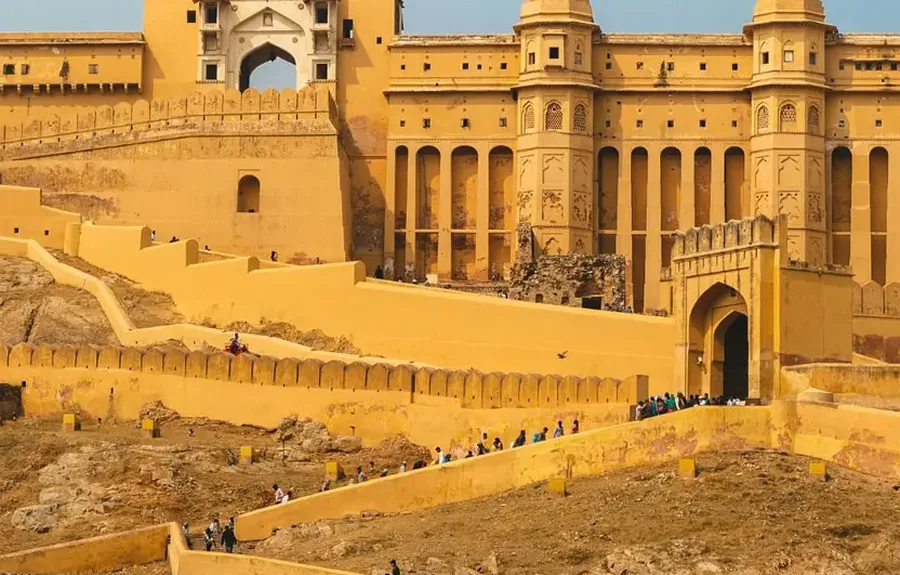
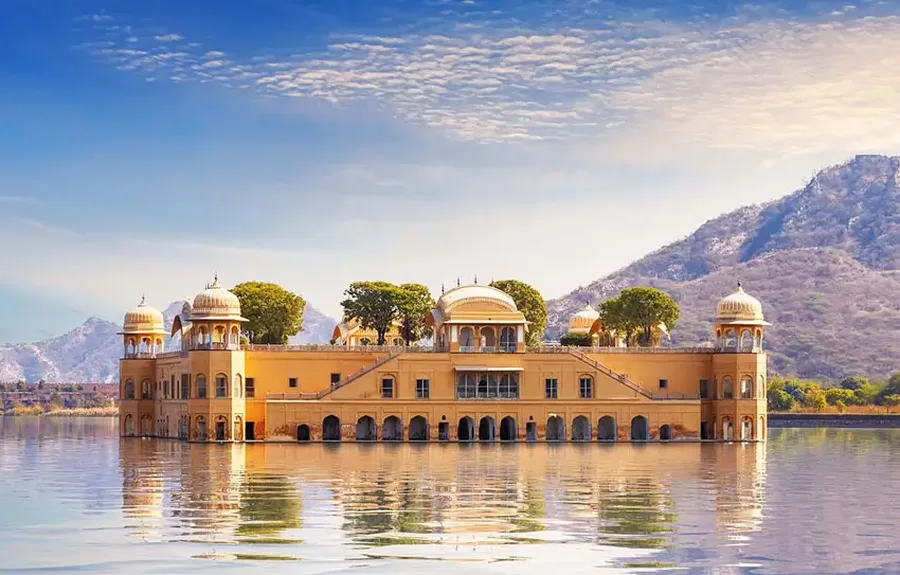
A full day of Jaipur sightseeing begins with an early drive to Amber Fort, about 11 km north of the old city, which opens at 8:00 am. On the way, the car stops for photos at Jal Mahal, the palace that appears to float in the middle of Man Sagar Lake. The fort climbs a ridge above Maota Lake, and instead of the traditional elephant ride up the hill, we take guests up by jeep, which is quicker and kinder to the animals. Inside, the Sheesh Mahal is lined with thousands of tiny mirrors that once glittered in the light of a single candle, and the Ganesh Pol gateway is covered in fine painted detail.
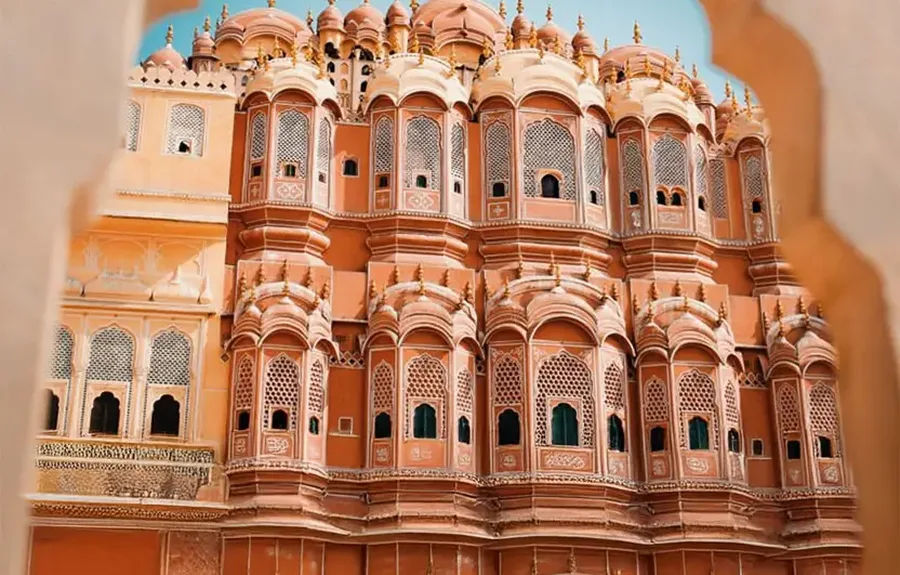
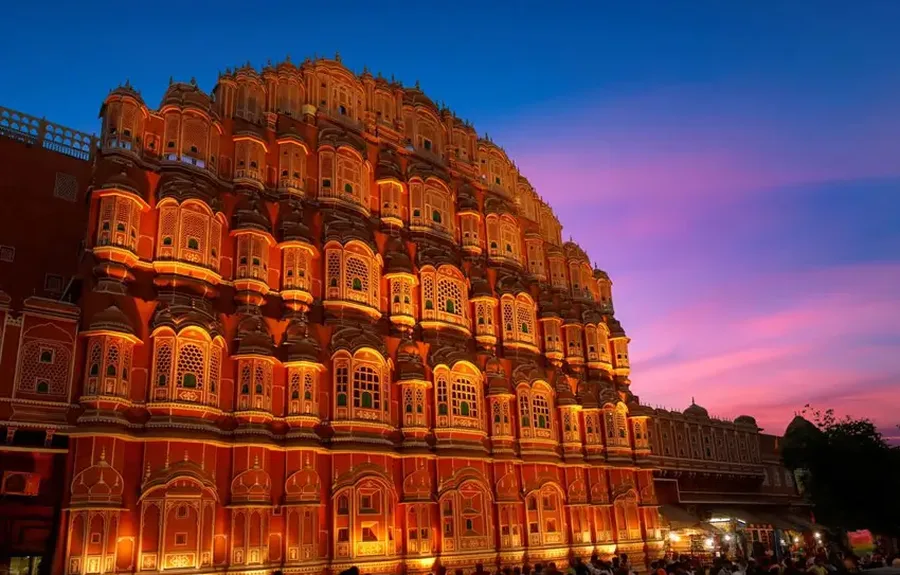
After lunch, your guide leads you through the old walled city, painted pink in 1876 to welcome the Prince of Wales. The City Palace is still partly home to the former royal family, and its museums hold royal costumes, weapons and two enormous silver urns that once carried Ganges water to England. Next door, Jantar Mantar is a UNESCO-listed observatory built by Maharaja Sawai Jai Singh II between 1728 and 1734, and its giant Samrat Yantra sundial is accurate to around two seconds. Finish with the five-storey facade of the Hawa Mahal, best photographed from the rooftop cafes across the road.
The evening is free for the bazaars of the Pink City. Johari Bazaar is known for gemstones and silver jewellery, while Bapu Bazaar and Nehru Bazaar are good for block-printed fabrics, quilts and leather slippers. Prices in these markets are rarely fixed, so polite bargaining is normal, and your driver can suggest trusted shops if you prefer not to haggle. For dinner, several rooftop restaurants near the old city offer views of the lit-up Nahargarh Fort on the hills above. Overnight stay at your hotel in Jaipur.
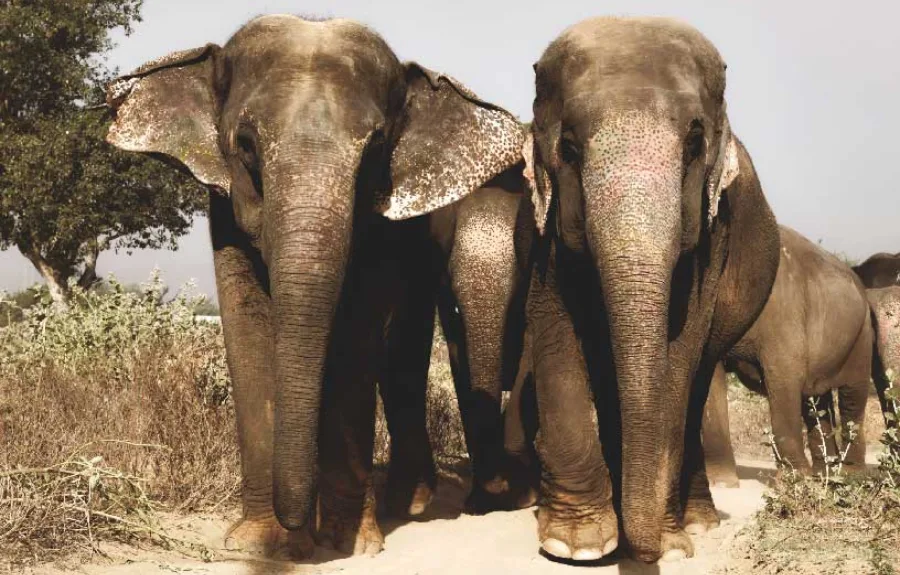
This morning is one of the most personal parts of the tour. The Elefantastic team picks you up from your hotel and drives you to the elephant sanctuary in Jaipur for the day visit with elephants, set on the outskirts of the city away from the tourist traffic. Visits are by appointment only, and we book your slot well in advance as part of the package. Each guest is paired with one elephant, and the session begins with an introduction to the animals, their names, their history and how their keepers look after them every day. You then help prepare and hand-feed fresh fruit and sugarcane to your elephant, which is usually the moment most guests remember best.
Once the elephants have eaten, you walk alongside them through the grounds at their own pace, followed by bath time, when guests scrub and splash the elephants with water. There are no rides, no chains and no performances at Elefantastic, and the whole visit is designed around the comfort of the animals rather than photo opportunities, although there is plenty of time for pictures. Wear light clothes and shoes that you do not mind getting wet and dirty, and carry a change of clothes. Please note that the sanctuary is not in Hathi Gaon (Elephant Village), so always book through official Elefantastic channels.
After the session, the team drops you back at your hotel to shower and pack, and your driver then takes you to Jaipur International Airport for your flight to Varanasi, which takes around one hour and 40 minutes. On arrival at Lal Bahadur Shastri Airport, our Varanasi representative meets you and drives you to your hotel, a ride of about an hour into the old city. Staying close to the ghats makes the early boat ride on the next morning much easier. The rest of the evening is free to settle in. Overnight stay at your hotel in Varanasi.
Wake up before dawn for the most famous sight in Varanasi, a private boat ride on the Ganges as the sun rises over the far bank. Around 5:30 am in summer and 6:00 am in winter, your guide walks you down to the river, where a rowing boat takes you past more than 80 ghats. Pilgrims bathe and pray in the water, priests perform small rituals on wooden platforms and laundry workers beat clothes against the stone steps. The boat also passes Manikarnika Ghat, the main cremation ground, where photography is not allowed and quiet respect is expected from every visitor.
After the boat ride, a short walk through the narrow lanes of the old city brings you close to the Kashi Vishwanath Temple, one of the holiest shrines dedicated to Lord Shiva, where phones and bags must be left in lockers before entry. You return to the hotel for breakfast and a rest, and in the afternoon drive about 10 km to Sarnath, where the Buddha gave his first sermon after reaching enlightenment. Here you see the 43-metre Dhamek Stupa, the ruins of ancient monasteries and the Mulagandha Kuti Vihar temple. The Sarnath Museum, home to the original Lion Capital of Ashoka, is closed on Fridays.
In the evening, you return to the riverfront for the Ganga Aarti at Dashashwamedh Ghat, a ceremony performed every night by a row of young priests holding large brass lamps, incense and conch shells in perfect rhythm. The ritual starts around sunset, roughly 6:30 pm in winter and 7:00 pm in summer, and lasts about 45 minutes. The ghat fills up quickly, so your guide arranges a good spot either on the steps or on a boat moored just offshore, which gives the clearest view. Keep your belongings close in the crowd. Overnight stay at your hotel in Varanasi.
After breakfast, your driver transfers you to Varanasi airport for the flight back to Delhi, timed to connect with your international departure. We recommend keeping a gap of at least four hours between the two flights. If you would rather stay on in Rajasthan, the Golden Triangle Tour with Pushkar and Ajmer is a good companion route. In Delhi, our team can meet you for any hotel stay or airport assistance you need, and your Golden Triangle Tour with Varanasi comes to an end.
Our assorted tours, for your first, second or nth time to India!
Light decides everything on the Golden Triangle Photography Tour India, so the days are built around sunrise and sunset rather than opening hours....
Seeing India in later life should mean comfort, time and good company rather than early starts every day and long climbs in the...
Once a year, every rooftop, doorway and market arch across North India is lined with clay lamps and strings of light, and the...
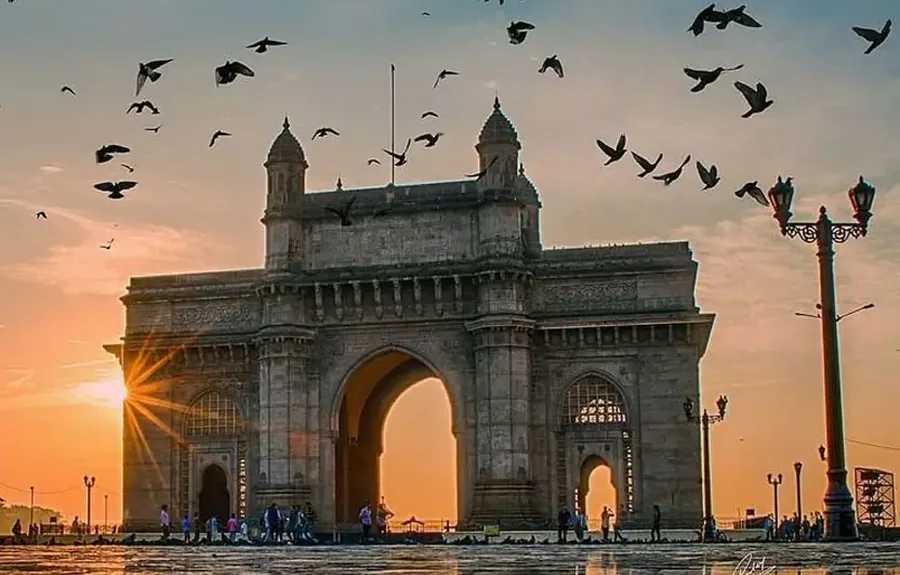
Five UNESCO World Heritage Sites cut, carved or built into stone mark the length of the Golden Triangle Tour with Mumbai and Ajanta...
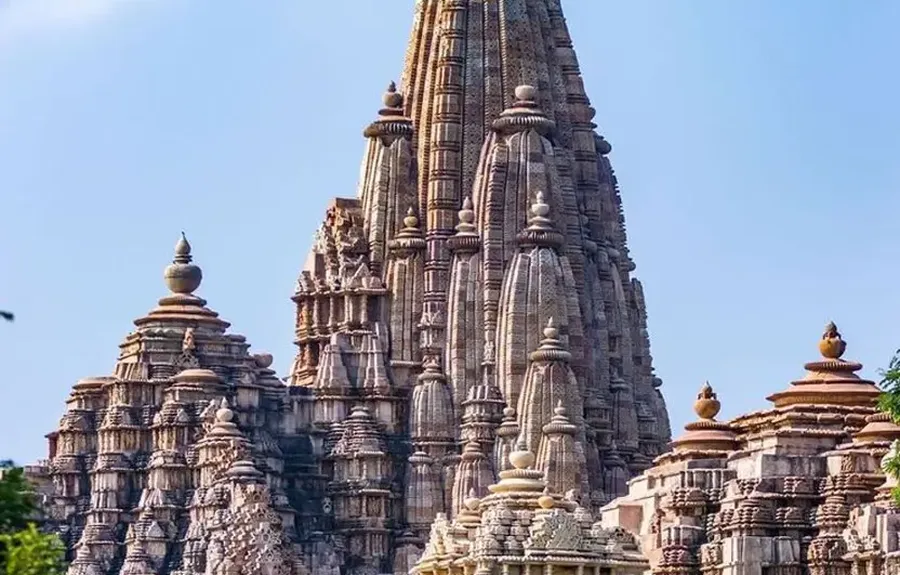
South of Agra, the plains give way to the forests and rocky rivers of Bundelkhand, and very few travellers go that extra distance....
Children remember tigers, trains and elephants long after they forget the dates of an emperor's reign, so the Golden Triangle Family Tour India...
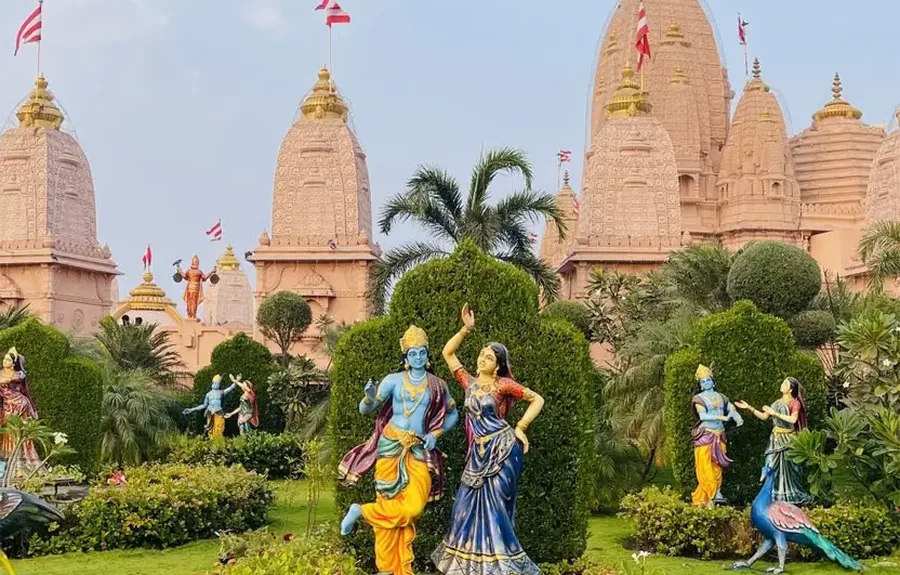
Lord Krishna was born in Mathura and spent his childhood among the cowherds and forests of Vrindavan, and the two towns sit right...
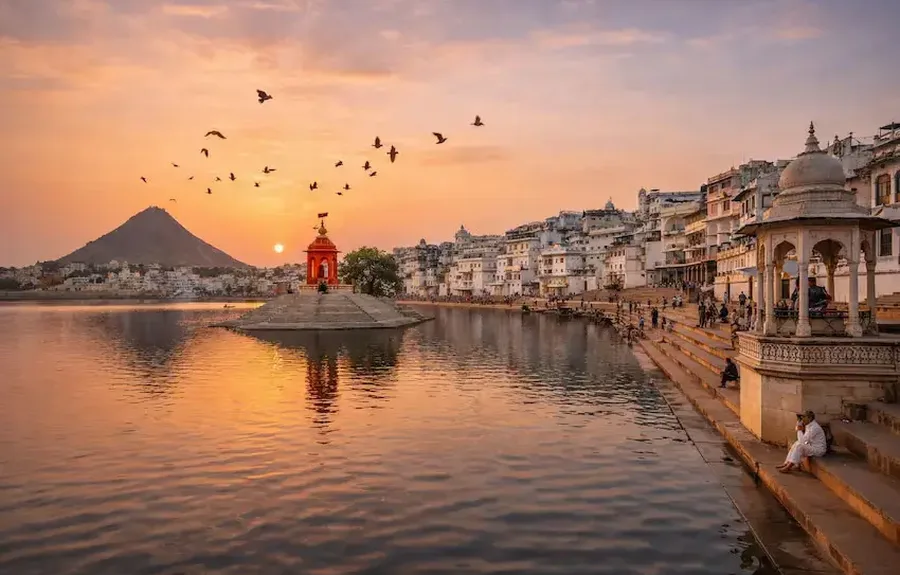
Sufi songs at a 13th-century shrine and temple bells over a sacred desert lake give the Golden Triangle Tour with Pushkar and Ajmer...
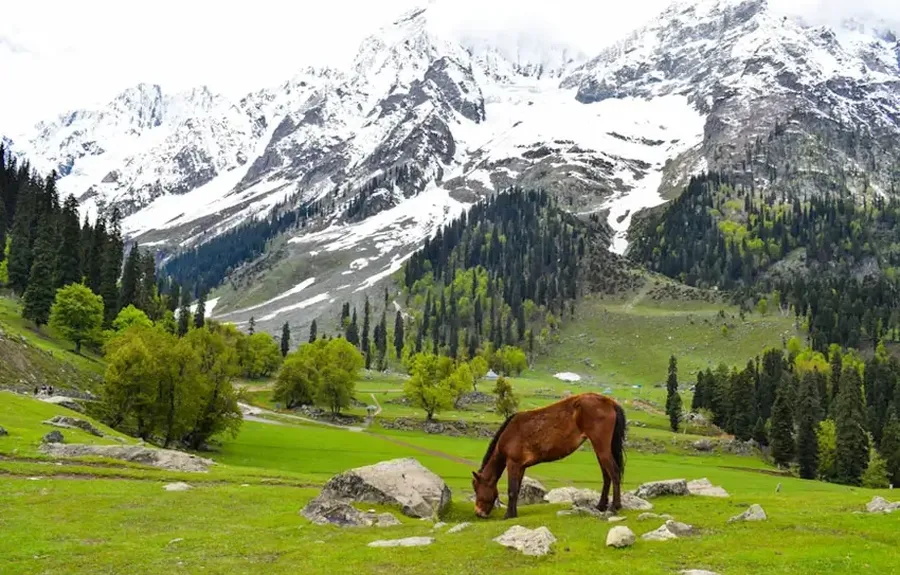
Mughal emperors built their tombs in Agra and Delhi, but they planted their pleasure gardens in Kashmir, and the Golden Triangle Tour with...
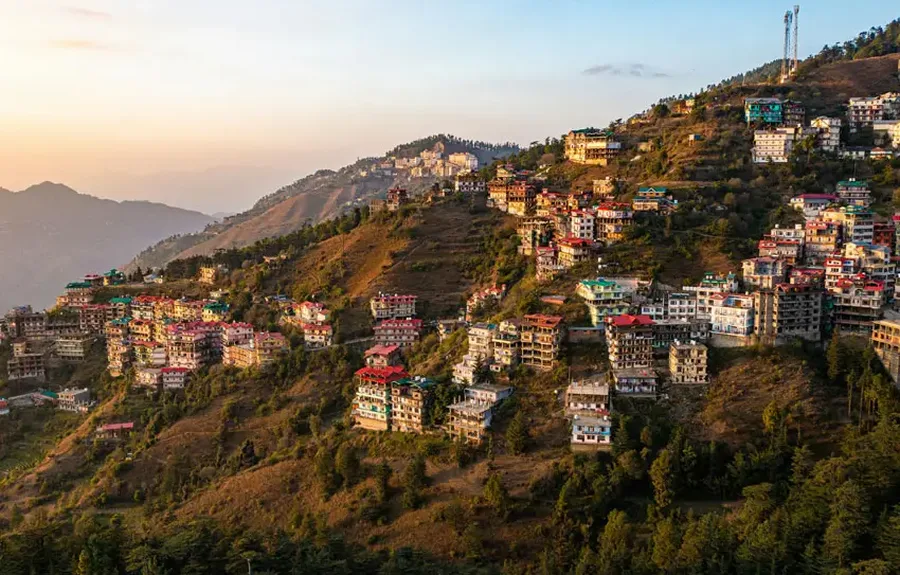
Cool pine air and a narrow-gauge railway that climbs through 102 tunnels are the reward at the end of the Golden Triangle Tour...