Delhi - Jaipur - Agra - Delhi - Haridwar - Rishikesh
Where the Ganges leaves the Himalayan foothills and spreads onto the plains, two small holy towns have drawn pilgrims for thousands of years. The Golden Triangle Tour with Haridwar and Rishikesh pairs those riverside towns with the great monuments of Delhi, Jaipur and Agra across 8 nights and 9 days. The first week covers Mughal tombs, Rajput forts and the Taj Mahal, while the final days slow right down for the fire ceremony at Har Ki Pauri, a yoga class beside the river and the quiet ashrams of Rishikesh, the town that called itself the yoga capital of the world long before the Beatles arrived in 1968.
Travel between the cities is by private air-conditioned car with an English-speaking driver, plus a comfortable Shatabdi Express train from Delhi to Haridwar and a short flight home from Dehradun. Jaipur includes a gentle morning with rescued elephants on a day visit with elephants at Elefantastic, where guests feed, walk and bathe the animals with no rides involved. The route suits travellers interested in Indian spirituality and wellness, as well as anyone who has already seen a standard Golden Triangle tour and wants to add something more reflective to it.
Package Highlights
• Qutub Minar, Humayun's Tomb and Gurudwara Bangla Sahib in Delhi
• Amber Fort, City Palace, Jantar Mantar and Hawa Mahal in Jaipur
• Hands-on elephant morning at Elefantastic – feed, walk and bathe, no rides
• Chand Baori stepwell at Abhaneri on the way to Agra
• Taj Mahal at sunrise and Agra Fort
• Shatabdi Express train ride from Delhi to Haridwar
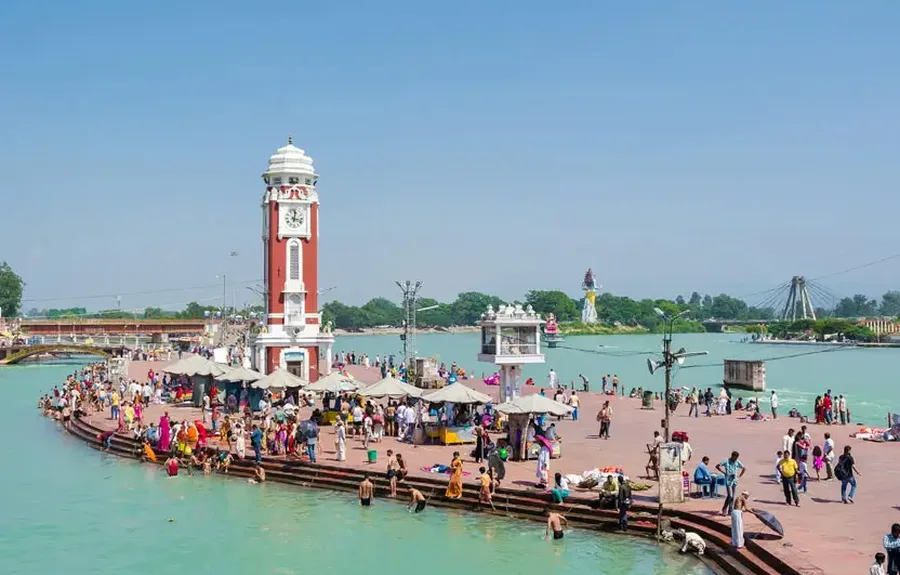
• Evening Ganga Aarti at Har Ki Pauri and the Mansa Devi cable car
• Ram Jhula, the Beatles Ashram, a yoga session and the Parmarth Niketan aarti in Rishikesh
Arrive at Indira Gandhi International Airport, where our representative is waiting in the arrivals area with a board showing your name. After a short welcome, you are taken to your car and driven to your hotel in central or south Delhi, a trip of about 45 to 60 minutes. The driver who meets you is the same person who will take you to Jaipur and Agra over the coming days, so this is a good chance to get to know him. He speaks English, knows the city well and will keep the car stocked with bottled water for the whole trip.
Check-in time is normally 2:00 pm, and if your flight lands early, we can hold the room from the previous night so you can go straight to bed. The afternoon is free for rest, a swim at the hotel pool or a short walk nearby. For a calm first outing, the Gurudwara Bangla Sahib in Connaught Place is open around the clock and is peaceful in the evening, when the golden dome is lit up and hymns drift across the holy pool. Visitors must cover their heads and remove their shoes, and scarves are supplied free at the entrance.
Our Delhi coordinator visits you at the hotel during the day to go over the route, hand over your train tickets for Haridwar, the domestic flight details from Dehradun and your hotel vouchers. You also receive a 24-hour helpline number. For the Haridwar and Rishikesh section, light, modest clothing that covers the shoulders and knees is best, and Rishikesh is a strictly vegetarian, alcohol-free town, so meat and drinks are not served anywhere within its main area. Make the most of tonight's rest, as tomorrow is a full sightseeing day. Overnight stay at your hotel in Delhi.
After breakfast, your guide begins the day in South Delhi at the Qutub Minar, the tallest brick minaret in the world at 73 metres, started in 1193 after the arrival of the Delhi Sultanate. Its fluted storeys of red and buff sandstone are carved with bands of Arabic calligraphy, and the courtyard holds the ruins of the Quwwat-ul-Islam mosque, built partly from the pillars of older Hindu and Jain temples. The iron pillar in the centre dates from the 4th or 5th century and has resisted rust for more than 1,600 years, a puzzle that still interests metallurgists.
Midday takes you to Humayun's Tomb, the grand Mughal garden tomb built in 1570, which inspired the design of the Taj Mahal decades later. The UNESCO-listed complex includes beautifully restored gardens, water channels and several smaller tombs, as well as the neighbouring Sunder Nursery, a 16th-century heritage park with flowering trees and pavilions. Lunch can be taken at a restaurant in Lodhi Colony or Khan Market, where you will find North Indian, South Indian and international food. Your guide can suggest places that suit any dietary needs you mentioned at the briefing.
In the afternoon, drive along the ceremonial boulevard between India Gate and the President's House, stopping for photographs, and then visit Gurudwara Bangla Sahib if you did not see it on arrival. Its community kitchen feeds thousands of people every day for free, cooked by volunteers in huge steel pots, and visitors are welcome to look inside. End the day in Old Delhi with a cycle rickshaw ride through Chandni Chowk, or return to the hotel to rest before the drive to Jaipur. Evening traffic in Delhi can be slow, so the driver will choose the best route. Overnight stay at your hotel in Delhi.
Today you leave the capital and drive about 270 km south-west to Jaipur along the Delhi–Jaipur highway, a drive of five to six hours with a stop for lunch at a highway restaurant. As you cross into Rajasthan, the land turns drier and rockier, and you may spot camels pulling carts, roadside stalls selling clay pots and village women in bright red and yellow odhnis. The Aravalli hills, among the oldest mountains on Earth, appear on the horizon as you approach the city. Your driver will share local stories along the way and stop whenever you want to take photographs.
On reaching Jaipur, check in at your hotel and rest for a while. Jaipur has a wide range of accommodation, from modern hotels to former royal guest houses and painted havelis in the old quarter, and staying in a heritage property is one of the joys of visiting Rajasthan. Late in the afternoon, your driver takes you to the Albert Hall Museum, a striking Indo-Saracenic building finished in 1887 that houses pottery, carpets, arms and an Egyptian mummy. The museum lights up in the evening and looks especially fine from the gardens in front.
Close the day at Birla Mandir, a modern Hindu temple built in white marble in 1988 and dedicated to Lord Vishnu and the goddess Lakshmi. Set at the foot of the Moti Dungri hill, it glows softly after dark, and the evening prayers draw local families. Inside, stained glass windows depict scenes from Hindu scriptures, and the outer walls carry carvings of saints and philosophers from several faiths. Photography is not allowed inside the main hall. Dinner can be enjoyed at your hotel or at a restaurant in the C-Scheme area. Overnight stay at your hotel in Jaipur.
Rise early for Amber Fort, which opens at 8:00 am and sits on a hilltop about 11 km from the old city. The fort was the capital of the Kachwaha Rajputs until 1727, and its palaces combine Hindu Rajput style with Mughal touches. A jeep brings you up the winding road to the main courtyard, from where your guide takes you through the Ganesh Pol, the Diwan-i-Am and the famous Sheesh Mahal, whose ceiling of tiny mirrors sparkles like stars when lit by a candle. The views over Maota Lake and the rugged hills are wonderful from the upper terraces.
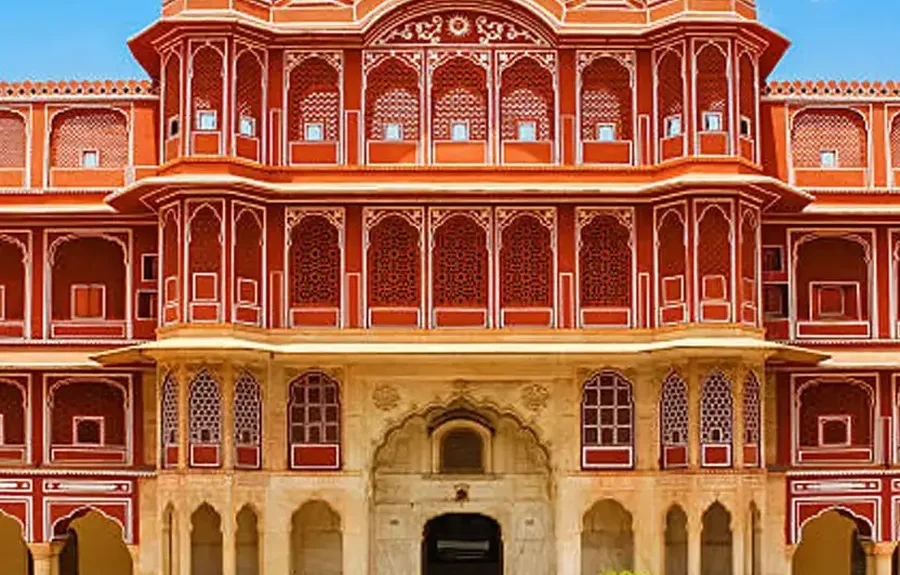
After lunch, return to the walled city for the City Palace, part of which is still home to the former royal family of Jaipur. The museum galleries display royal costumes, swords, carpets and paintings, and the Pritam Niwas Chowk is famous for its four painted gateways, one of them decorated with peacocks. Opposite the palace stands Jantar Mantar, a UNESCO World Heritage Site built by Maharaja Sawai Jai Singh II, an astronomer king who built giant stone instruments to measure time and track the stars. The Samrat Yantra sundial can tell local time to within about two seconds.
Finish the day with photographs of the Hawa Mahal, the Palace of Winds, whose 953 small windows were designed so royal women could watch the street without being seen. The best view is from one of the rooftop cafes across the road, especially in the warm afternoon light. Then wander through the old bazaars, where you can buy block-printed fabric, blue pottery, silver jewellery and colourful lac bangles. Most shops expect friendly bargaining, while government emporiums have fixed prices. Dinner at a Rajasthani restaurant is a good way to try laal maas or gatte ki sabzi. Overnight stay at your hotel in Jaipur.
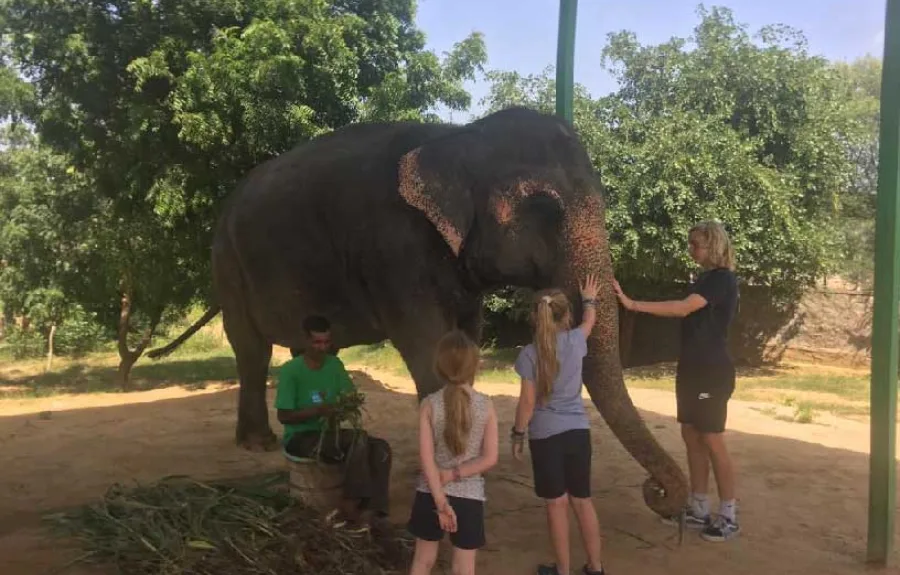
The Elefantastic team picks you up from your hotel after an early breakfast and drives you out to the sanctuary on the edge of Jaipur. Visits run by appointment, and each guest is matched with one elephant for the morning. You begin by meeting the herd and their keepers, who explain how the elephants live, what they eat and how they are kept healthy. Then you feed your elephant by hand with sugarcane and fruit and learn to recognise its gentle signs of trust. The setting is calm and green, far from the city traffic, and photographs are welcome throughout.
After feeding, walk with the elephants around the grounds and then help bathe them, splashing and scrubbing as they relax in the water. There are no rides, no chains and no shows, as the visit is shaped around the comfort of the elephants. Wear clothes you do not mind getting wet and carry a change. Elefantastic also offers a rare overnight stay with the herd for guests who want longer with them, and you can read more about it on the night stay with elephants page. The team returns you to your hotel before lunch to collect your bags.
In the afternoon, drive east towards Agra, a distance of around 240 km that takes five to six hours with breaks. On the way, stop at the village of Abhaneri to see the Chand Baori, a 9th-century stepwell with about 3,500 steps arranged in a deep, symmetrical pattern of 13 levels. Beside it, the Harshat Mata Temple still shows fine carvings despite centuries of damage. Continue to Agra and check in at your hotel in the evening. Dinner is at leisure, and your guide will confirm the pickup time for the Taj Mahal sunrise visit. Overnight stay at your hotel in Agra.
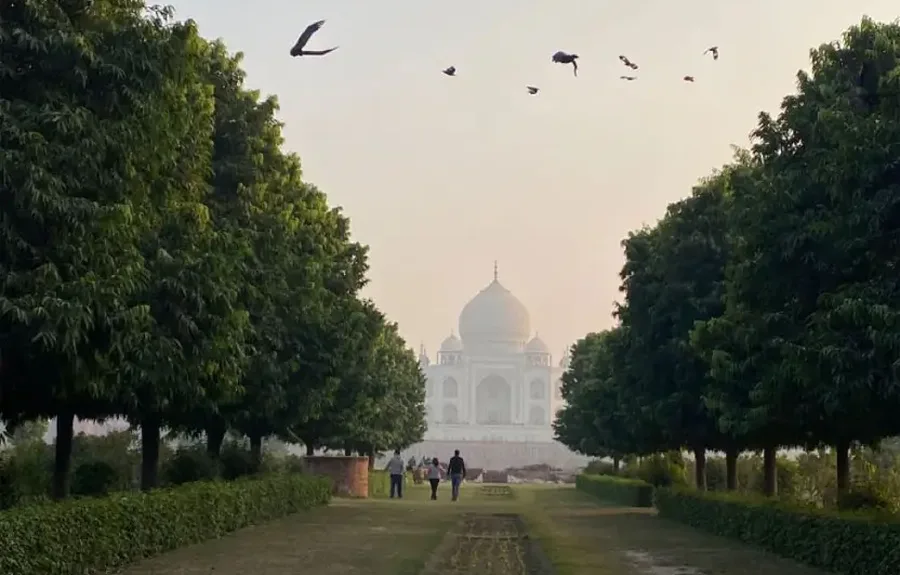
Meet your guide before dawn and walk to the Taj Mahal, which opens 30 minutes before sunrise. The early hour means smaller crowds and soft pink and golden light on the marble, which slowly turns white as the sun rises. Your guide explains how Shah Jahan built the monument in memory of Mumtaz Mahal, who died in 1631, and how about 20,000 craftsmen worked on it for over 20 years. Inside the main hall, the cenotaphs sit behind a delicate marble screen. The monument is closed on Fridays, and food, tripods and large bags are not allowed inside.
Return to your hotel for breakfast, then visit Agra Fort, the red sandstone citadel where four generations of Mughal emperors lived and ruled. Inside, you see the Jahangiri Mahal, built by Akbar for his Rajput queens, the white marble Khas Mahal and the Musamman Burj, where Shah Jahan was held prisoner by his son and spent his last years looking across the river at the Taj Mahal. The fort's large lawns, carved arches and balconies make it pleasant to visit even on warm days. Allow around two hours here before lunch.
In the afternoon, drive back to Delhi on the Yamuna Expressway, arriving in the early evening after a drive of about four hours. Check in at a hotel close to New Delhi railway station, as tomorrow's train to Haridwar leaves early in the morning. The evening is free to rest or to enjoy dinner at a nearby restaurant. Your driver will say goodbye at this point, as the next part of the tour is by train and with a new team in the hills. Pack a small day bag for the train and keep your tickets and passport handy. Overnight stay at your hotel in Delhi.
An early transfer takes you to New Delhi railway station for the Shatabdi Express to Haridwar, which usually departs around 6:45 am and arrives about four and a half hours later. The train has air-conditioned chair-car seating, and breakfast, tea and snacks are served on board as part of the ticket. Watching village life and farmland pass by the window is one of the pleasures of rail travel in India. Our representative meets you on the platform at Haridwar and drives you to your hotel, where you can check in, freshen up and have lunch.
Haridwar, the Gateway to God, is one of the seven holiest places in Hinduism and the site of the Kumbh Mela, the largest religious gathering on Earth, which happens every 12 years. In the afternoon, take the cable car up to the Mansa Devi Temple on the Bilwa Parvat hill, dedicated to the goddess who grants wishes. Devotees tie sacred threads to a tree near the shrine, and the hilltop offers wide views over the town and the river. Back in town, your guide walks you through the lively bazaars selling brass pots, rudraksha beads and prayer items.
In the evening, gather at Har Ki Pauri for the Ganga Aarti, one of the most moving ceremonies in India. As darkness falls, priests wave large, multi-tiered brass lamps while bells ring and chants rise from the crowd. Thousands of small leaf boats filled with flowers and lit candles are set afloat on the fast-flowing river, creating a moving line of lights. The aarti starts around 6:00 pm in winter and 7:00 pm in summer and draws big crowds, so your guide will bring you early to find a good place on the steps. Overnight stay at your hotel in Haridwar.
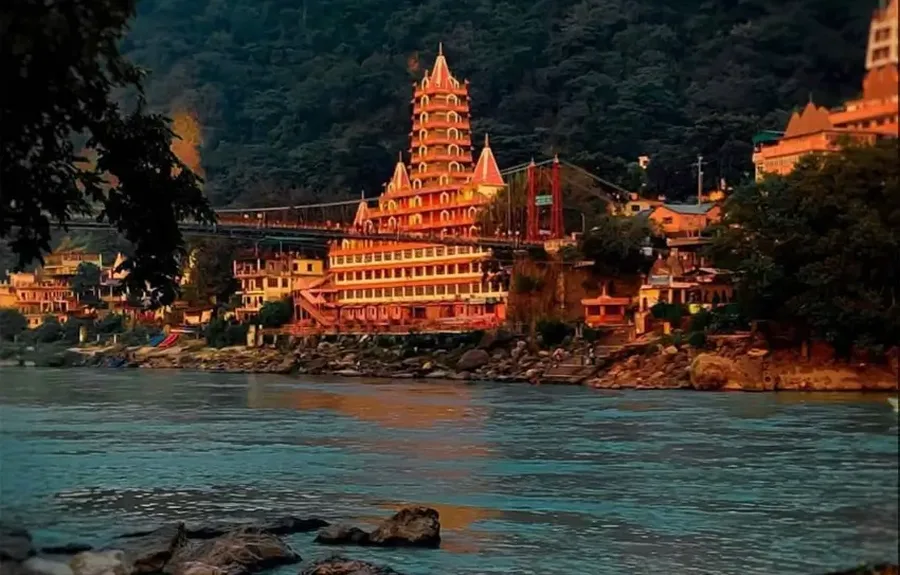
After breakfast, drive about 25 km to Rishikesh, a 45-minute ride along the river into the foothills. Rishikesh sits where the Ganges flows out of the mountains, its banks lined with ashrams, temples and yoga schools. Your guide leads you across the Ram Jhula, the suspension footbridge that connects the two sides of the town, shared by pilgrims, sadhus, scooters and the occasional cow. On the far side, you visit the Swarg Ashram area and walk along the riverside promenade, where the water is clear, green and cold even in summer.
Late in the morning, visit the Beatles Ashram, officially called Chaurasi Kutia, where John, Paul, George and Ringo studied Transcendental Meditation with Maharishi Mahesh Yogi in 1968 and wrote many songs for the White Album. The ashram fell into ruin and is now part of the Rajaji National Park, its abandoned meditation huts and halls covered in colourful murals and graffiti art. After lunch at a riverside cafe, take part in a private yoga session with a qualified teacher, suitable for beginners, focusing on breathing, gentle postures and relaxation. Mats and water are provided.
As evening approaches, head to Parmarth Niketan, one of the largest ashrams in Rishikesh, for its nightly Ganga Aarti on the riverbank. The ceremony here is calmer than in Haridwar, with children from the ashram school singing devotional songs, priests offering fire to the river and visitors invited to join the chanting. Adventurous guests can add white-water rafting from Shivpuri, around 16 km upstream, which runs from September to June and is booked locally at extra cost. Dinner is vegetarian, as everywhere in town. Overnight stay at your hotel in Rishikesh.
After a sunrise walk or meditation by the river, you are transferred about 35 minutes to Dehradun's Jolly Grant Airport for the short flight to Delhi, timed to connect with your international departure. Please keep a gap of at least four hours. For another faith-focused route, see our Golden Triangle Tour with Mathura and Vrindavan.
Our assorted tours, for your first, second or nth time to India!
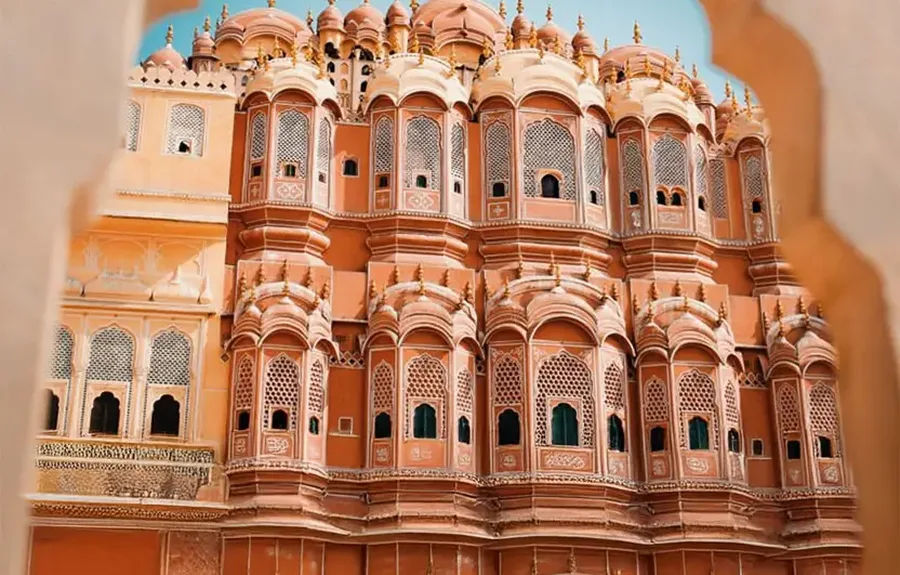
Light decides everything on the Golden Triangle Photography Tour India, so the days are built around sunrise and sunset rather than opening hours....
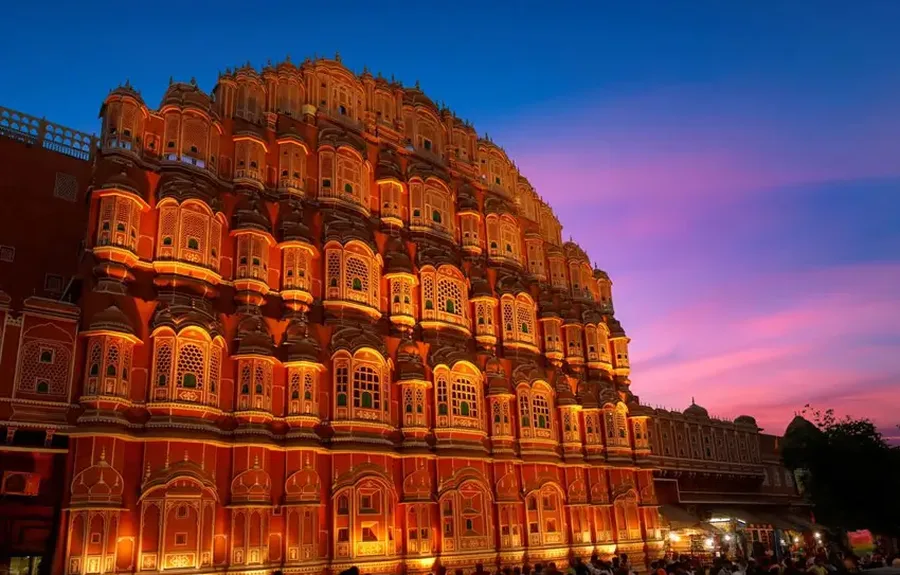
Seeing India in later life should mean comfort, time and good company rather than early starts every day and long climbs in the...
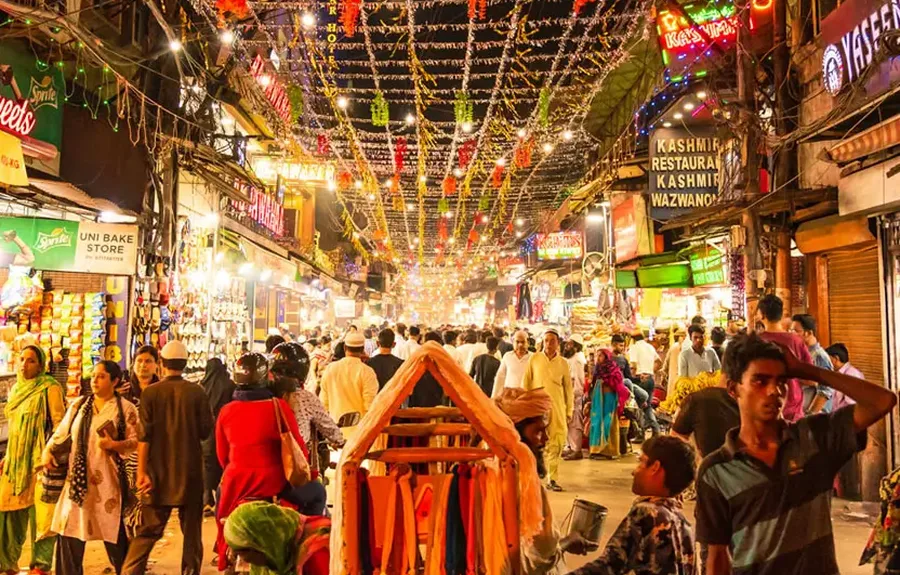
Once a year, every rooftop, doorway and market arch across North India is lined with clay lamps and strings of light, and the...
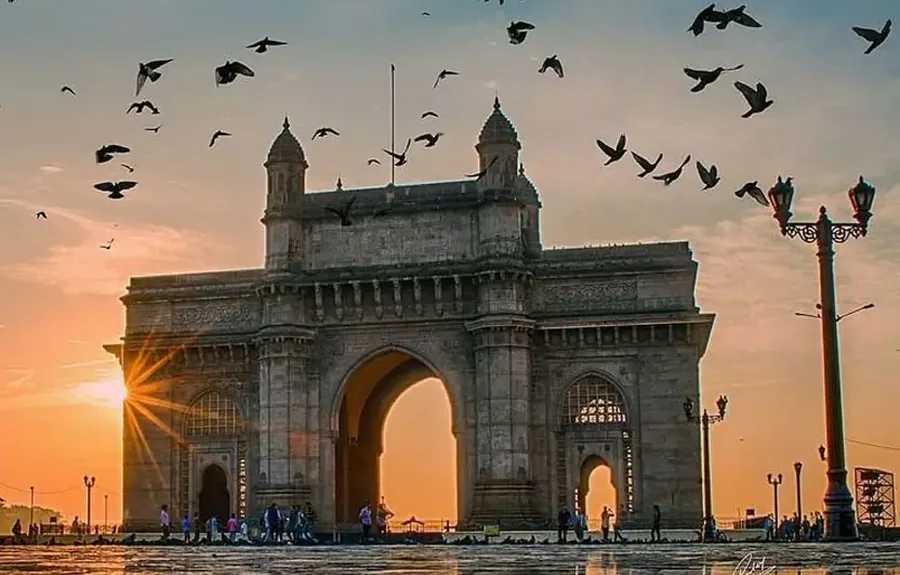
Five UNESCO World Heritage Sites cut, carved or built into stone mark the length of the Golden Triangle Tour with Mumbai and Ajanta...
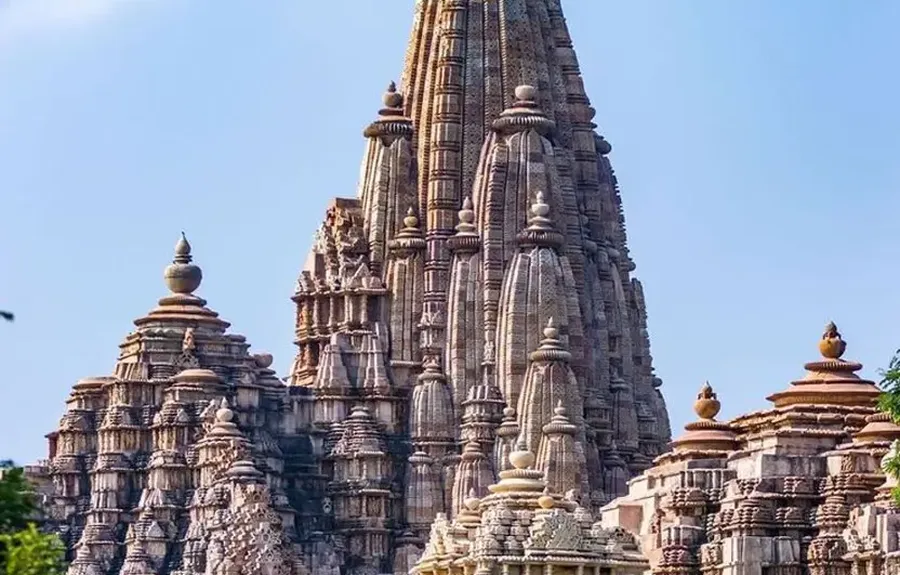
South of Agra, the plains give way to the forests and rocky rivers of Bundelkhand, and very few travellers go that extra distance....
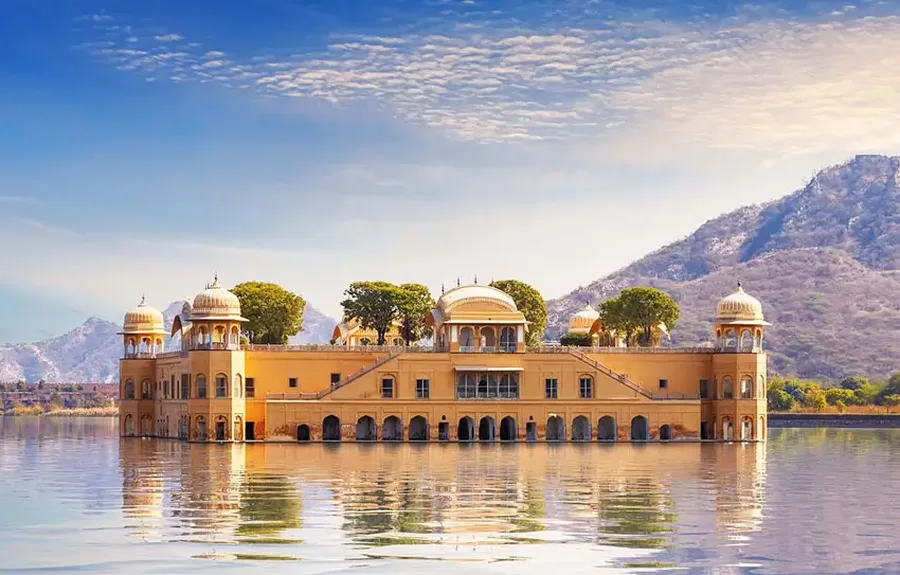
Children remember tigers, trains and elephants long after they forget the dates of an emperor's reign, so the Golden Triangle Family Tour India...
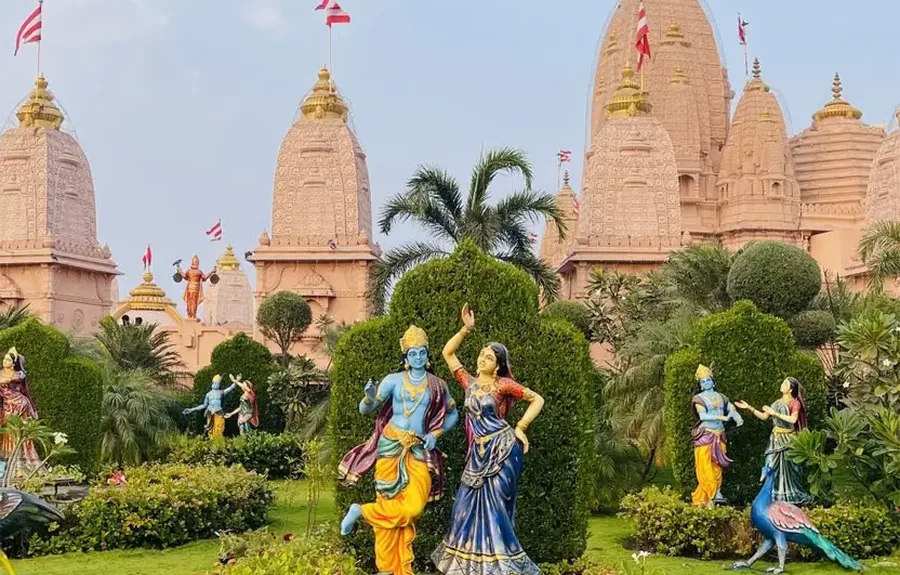
Lord Krishna was born in Mathura and spent his childhood among the cowherds and forests of Vrindavan, and the two towns sit right...
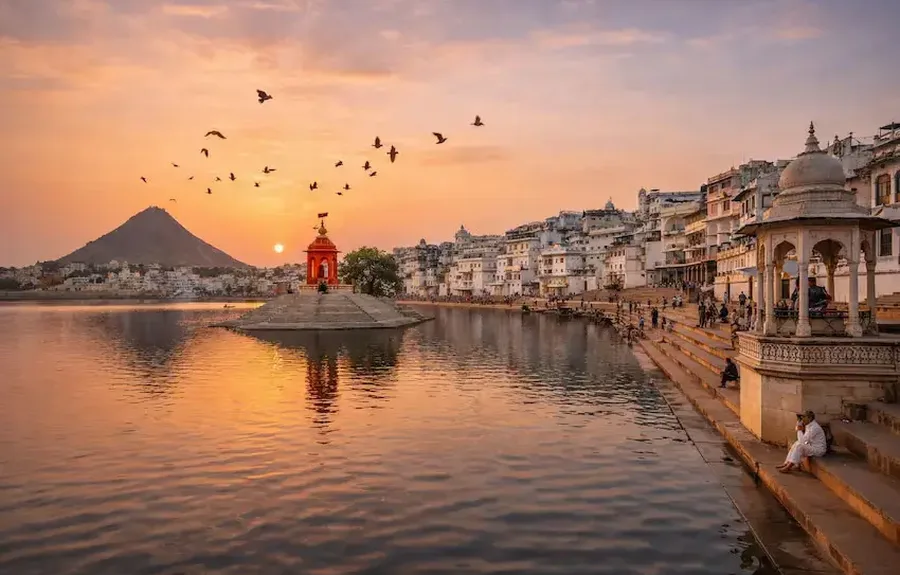
Sufi songs at a 13th-century shrine and temple bells over a sacred desert lake give the Golden Triangle Tour with Pushkar and Ajmer...
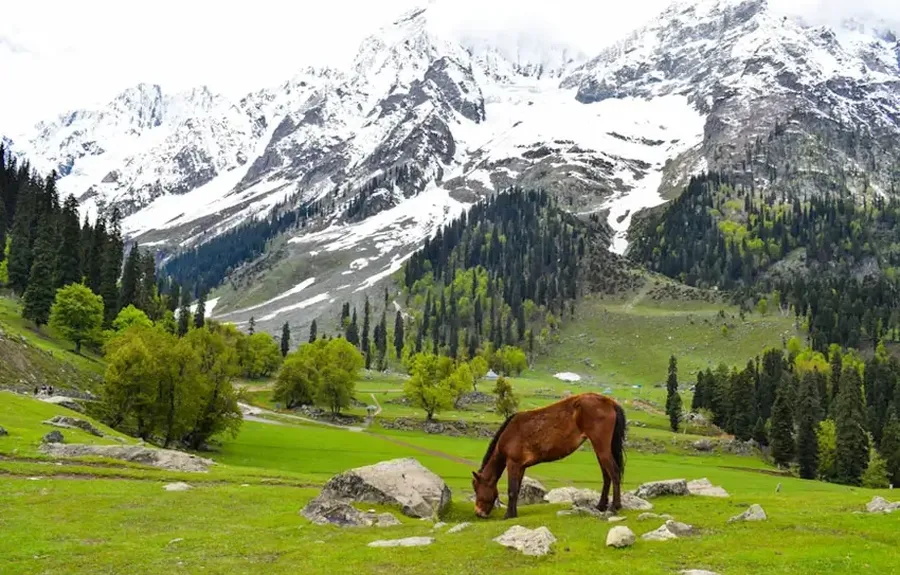
Mughal emperors built their tombs in Agra and Delhi, but they planted their pleasure gardens in Kashmir, and the Golden Triangle Tour with...
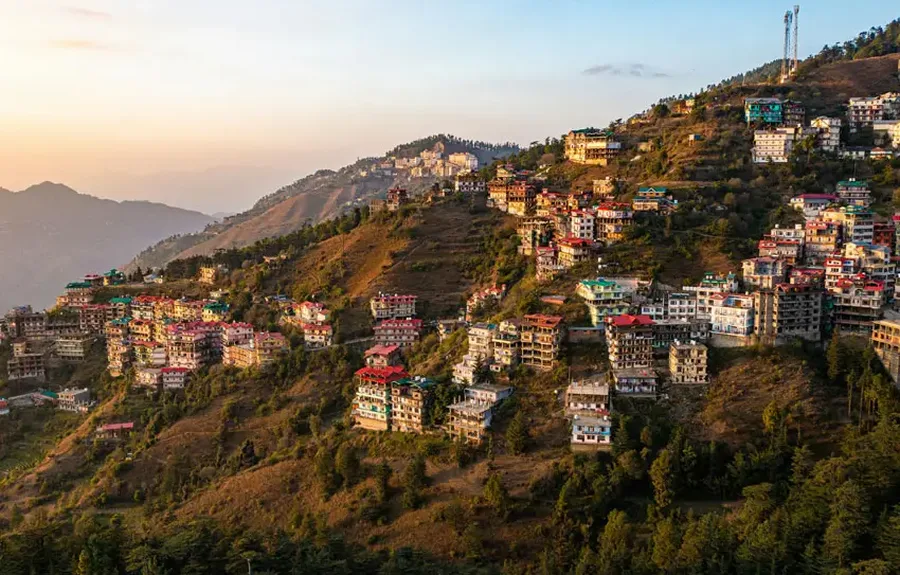
Cool pine air and a narrow-gauge railway that climbs through 102 tunnels are the reward at the end of the Golden Triangle Tour...