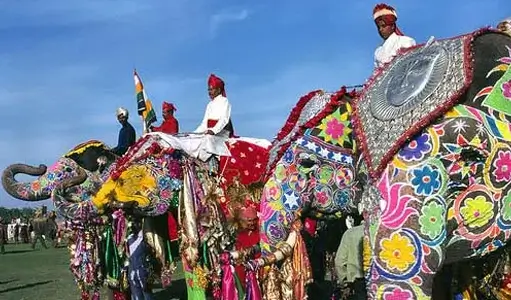
In the heart of Rajasthan’s royal capital, elephants once carried kings through palaces and parades. Their majesty defined the grandeur of Jaipur. Yet as times changed, so did their roles — shifting from royal companions to commercial attractions.
Today, a quiet revolution is restoring their dignity. It’s called ethical elephant tourism, and its most inspiring story begins at Elefantastic Jaipur.
Here, travelers from around the world meet India’s elephants not as entertainers but as equals. They feed them, walk beside them, and learn their stories — replacing exploitation with empathy. This movement is redefining how the world sees wildlife tourism in India.
For centuries, elephants have symbolized power, prosperity, and spirituality in Indian culture. In Rajasthan, they were family members in royal households, used for temple rituals and festivals. Their presence represented grace and strength.
However, with the rise of mass tourism, many elephants found themselves in harsh conditions — overworked, underfed, and misunderstood.
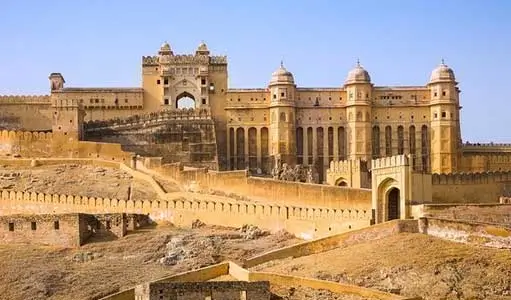
The sight of elephants climbing steep paths to Amber Fort under heavy saddles became common, but it also raised questions: Is this tradition, or is it exploitation?
That question gave birth to a new philosophy — one that Jaipur has embraced beautifully through sanctuaries like Elefantastic, where tourism and ethics finally walk together.
Join hands in promoting responsible and humane elephant experiences. Get guidance on ethical visits, safe interactions, and meaningful activities that protect these gentle giants.
Ethical elephant tourism is simple in principle: treat elephants with respect, not as attractions.
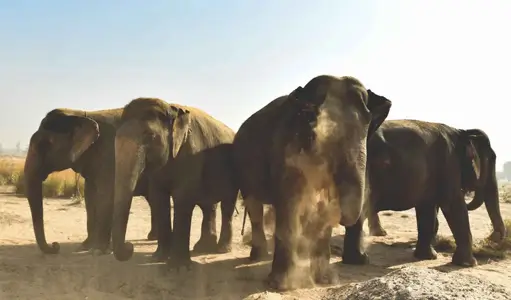
It removes rides, performances, and chains, allowing elephants to live naturally and interact gently with humans.
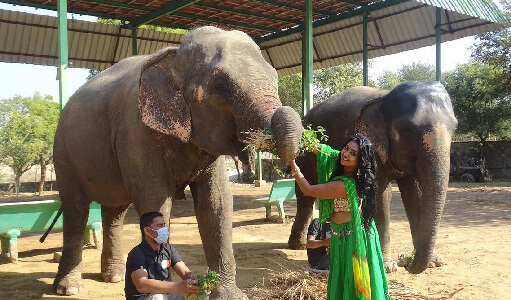
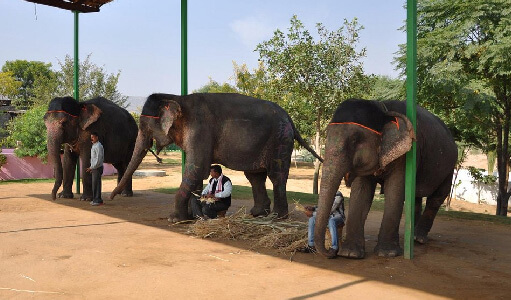
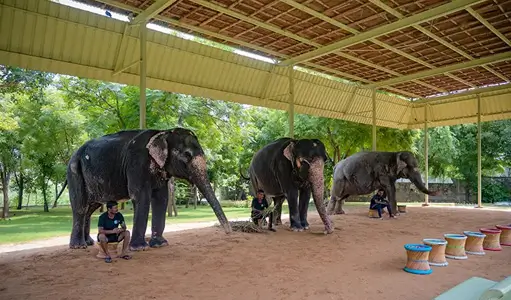
At Elefantastic Jaipur, this philosophy becomes reality. Visitors spend time feeding, bathing, and walking beside elephants, understanding their personalities rather than controlling them.
Every moment is supervised by trained caretakers to ensure comfort for both animals and guests.
Ethical tourism shifts focus from profit to purpose — creating experiences that educate, heal, and inspire.
The story of Elefantastic began with one man’s empathy. Rahul Sharma, born into a family of traditional mahouts (elephant caretakers), witnessed both the beauty and suffering of elephants firsthand.
Determined to change their fate, he founded Elefantastic as a sanctuary that combined care, conservation, and cultural awareness.
His idea was revolutionary — to create a place where elephants could live peacefully, and travelers could meet them in meaningful, ethical ways. Over the years, Elefantastic has become a model for responsible tourism in India, drawing visitors from over 50 countries.
Each elephant here has a story — rescued, retired, or rehabilitated. Their new life reflects a larger movement of kindness sweeping through Indian travel culture.
At Elefantastic, every guest participates in activities that mirror the elephants’ natural routines.
The focus is not on entertainment but on shared experience.
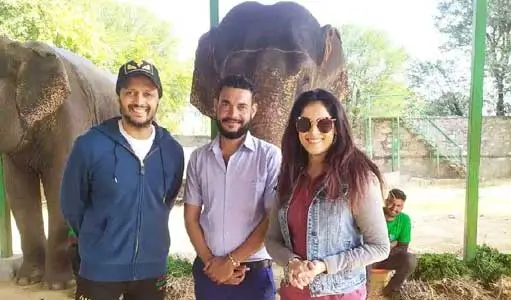
Guests start their visit by meeting their assigned elephant companion. Under the supervision of mahouts, they feed the animal baskets of fresh sugarcane, bananas, and grains. Feeding helps build trust — elephants recognize kindness instantly.
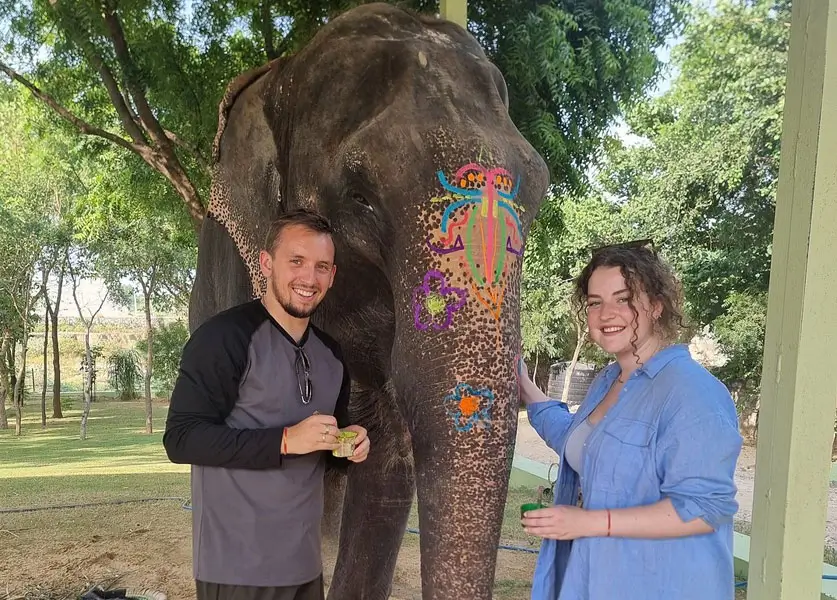
Next comes painting with organic colors — a symbolic act rooted in Rajasthani tradition. Unlike old chemical paints, these are herbal and skin-safe, used to decorate elephants gently. Visitors learn that beauty here comes from joy, not performance.
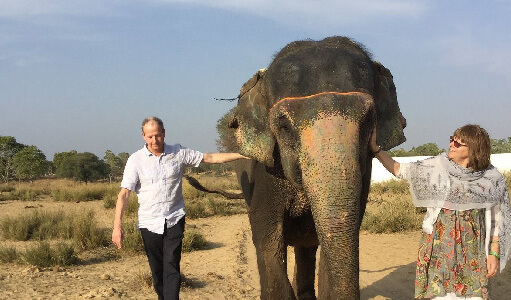
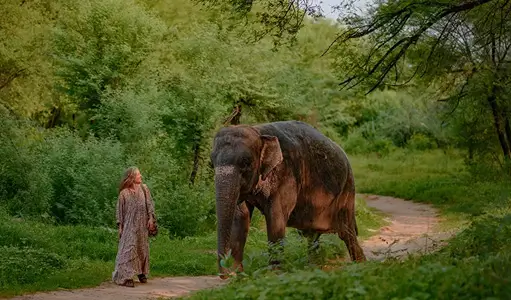
Walking beside the elephant through the sanctuary paths is the most peaceful part of the day. There are no saddles or commands — just mutual respect. In the afternoon, guests may help with bathing rituals or simply watch elephants rest, socializing freely under trees.
The day ends with reflection — not selfies or shows, but a quiet sense of connection.
The shift from rides to respect has not only improved the elephants’ lives — it has transformed the community around them.
Elefantastic operates on a transparent welfare model where every visitor contributes directly to:
This circular model ensures sustainability — tourism funding welfare, welfare ensuring longevity, and longevity bringing more awareness.
The elephants live healthier, happier lives with proper rest, routine, and emotional balance.
Ethical tourism thus becomes a form of conservation — not by keeping animals in the wild, but by protecting them in peace.
Behind every elephant is a caretaker whose life depends on her well-being. Mahouts form deep, emotional bonds with their elephants — bonds that last decades.
At Elefantastic, these mahouts are not workers but guardians. Their traditional knowledge combines with modern veterinary training, creating a care system that is both cultural and scientific.
Travelers often meet these mahouts, learning how elephants recognize their voices, moods, and footsteps. Some elephants even respond to their mahout’s songs — a melody of trust passed down through generations.
Ethical tourism ensures these caretakers are fairly paid and respected, preserving their legacy while improving their quality of life.
Jaipur’s heritage and geography make it ideal for ethical tourism. The city attracts global travelers, yet its outskirts offer calm countryside suited for sanctuaries like Elefantastic.
Moreover, Jaipur’s people understand elephants as part of their history — not just animals, but sacred beings associated with Lord Ganesha, the remover of obstacles.
This cultural respect aligns perfectly with responsible tourism values. It allows travelers to experience elephants within authentic Indian traditions while ensuring humane treatment.
As awareness grows, more visitors now choose Elefantastic over ride operators — transforming the city’s image from commercial hub to compassionate haven.
Many sanctuaries use the word “ethical,” but few practice it as genuinely as Elefantastic Jaipur.
Here, every rule serves one purpose — the elephants’ comfort.
The sanctuary’s calm atmosphere reflects its ethos — kindness over crowds, compassion over commerce.
Foreign travelers find it refreshing: a chance to connect deeply without guilt or pressure.
Choose ethical interactions that protect elephants and support humane care. Get complete guidance for safe, respectful, and unforgettable visits at Elefantastic Jaipur.
Every traveler plays a role in promoting ethical practices.
By choosing Elefantastic Jaipur, you send a clear message — that tourism must evolve.
Here’s how to travel responsibly:
Small choices from travelers create big change for animals.
The influence of Elefantastic extends beyond Jaipur. Wildlife organizations and tour operators across India now reference it as a benchmark for ethical elephant experiences.
Even government departments recognize its contribution to sustainable tourism policy.
More importantly, local mahout families who once depended on exploitative work now have dignified livelihoods. Their children attend school, their homes are stable, and their elephants live stress-free.
This ripple effect proves that kindness can be economically viable — a model where everyone wins: animals, people, and travelers.
Ask anyone who’s visited Elefantastic, and they’ll describe an emotional transformation.
Standing close to an elephant — feeling her trunk, hearing her heartbeat — dissolves barriers. There’s no language, yet there’s communication.
Visitors often say they came as tourists but left as advocates. That emotional shift is what makes ethical elephant tourism truly matter.
It changes how we define travel — not as consumption, but as connection.
India has always been a land of wildlife and spirituality. From tigers to peacocks, every species holds cultural importance. But elephants occupy a unique space — worshipped, yet historically burdened.
Ethical tourism is now reshaping that narrative.
Sanctuaries like Elefantastic show that India can blend tradition with compassion, giving travelers meaningful engagement without harm.
This change isn’t limited to Jaipur — it’s influencing parks in Kerala, Odisha, and Karnataka. The goal is universal: to replace performance with partnership.
Advance booking is required, as only limited visitors are allowed per day to ensure calmness for elephants.
Beyond India, ethical elephant care has become a global discussion.
Countries like Thailand and Sri Lanka are adopting similar practices, moving away from ride-based tourism.
Elefantastic’s model is frequently cited in international wildlife forums as proof that ethical tourism can sustain both livelihoods and wildlife welfare.
It represents a powerful message — compassion travels farther than money ever can.
As travelers grow more conscious, India’s tourism landscape is shifting toward mindfulness. Visitors no longer want to consume culture — they want to contribute to it.
The rise of sanctuaries like Elefantastic Jaipur symbolizes that future: immersive, educational, and ethical.
It aligns with global values of sustainability and with India’s timeless spirit of ahimsa — nonviolence.
The future of travel here is not just about seeing India; it’s about feeling it — through kindness, empathy, and responsibility
It refers to travel experiences that respect elephants’ natural behavior, removing rides, chains, and exploitation.
It’s near Amber Fort, about 30 minutes from central Jaipur.
No. All activities are gentle and based on trust — feeding, walking, and bathing.
Yes, it’s fully supervised and ideal for visitors of all ages.
Your fee funds food, healthcare, and caretaker salaries for the elephants.
Rahul Sharma, a descendant of traditional mahouts, founded and manages the sanctuary.
Full-day programs last 5–6 hours; half-day visits are also available.
Yes, under supervision — all activities are designed for comfort and safety.
No chains, limited visitors, 24-hour vet access, and organic materials only.
Because it combines royal heritage, cultural respect, and compassion through sanctuaries like Elefantastic Jaipur.