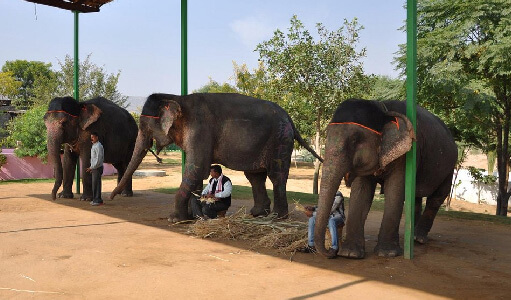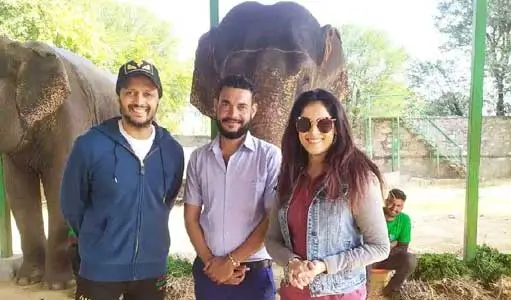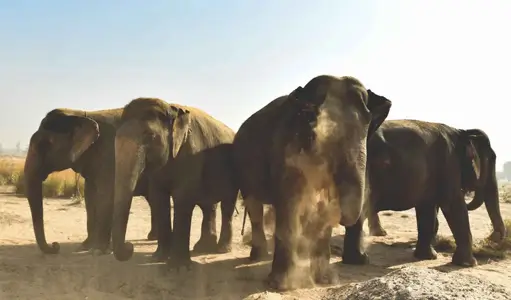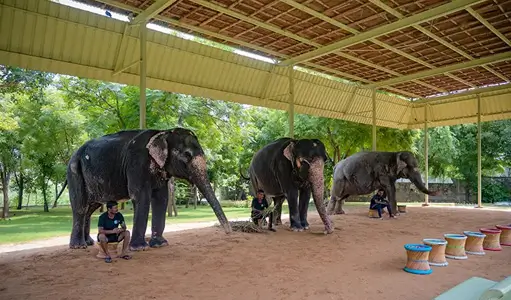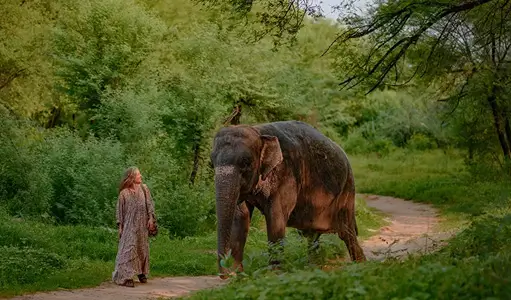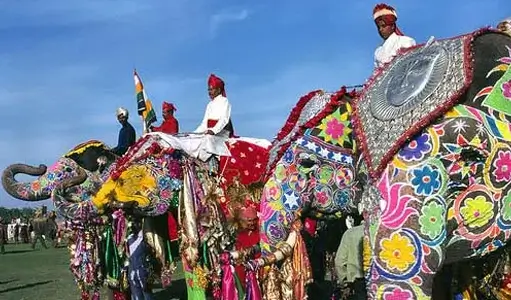
Across India, the connection between a mahout and an elephant cannot be understood through a simple description of training or management. It is a relationship that develops over years, shaped by routine, familiarity and mutual adjustment. Unlike many forms of human-animal interaction that rely on dominance, the bond between a mahout and elephant evolves through daily proximity and shared experience.
A mahout often begins working with an elephant at a young age, learning to interpret behavior through observation rather than force. Over time, subtle patterns become clear. The way an elephant moves, reacts to sound or responds to touch provides continuous feedback. This awareness allows the mahout to adjust actions without relying on overt commands.
From the elephant’s perspective, the mahout becomes a consistent presence. Elephants are known for their strong memory, and repeated interaction with the same individual creates familiarity. This familiarity reduces stress and allows for smoother communication, especially in environments where human interaction is part of daily life.
The relationship is not immediate. It develops gradually, shaped by repetition and consistency. This is what distinguishes a genuine bond from a superficial interaction. Over time, both the mahout and the elephant adapt to each other’s patterns, creating a connection that is based on understanding rather than control.
Experience the remarkable relationship built on trust, care, and understanding between elephants and their caretakers. Learn inspiring stories, observe natural interactions, and gain a deeper appreciation for these gentle giants in an ethical environment.
The strength of the mahout elephant relationship is built through routine. Each day follows a structured pattern that includes feeding, cleaning, movement and rest. These repeated actions create predictability, which is essential for building trust.
Feeding is one of the most important parts of this routine. A mahout is responsible for ensuring that the elephant receives the right quantity and type of food. This process is not mechanical; it involves observing appetite, adjusting portions and understanding preferences. Over time, the elephant begins to associate the mahout with care and consistency.
Cleaning and bathing also play a significant role. Elephants require regular bathing, and this activity often becomes a moment of interaction rather than a task. Physical contact during cleaning helps reinforce familiarity, allowing the elephant to remain calm and responsive.
Movement throughout the day is guided rather than forced. Whether walking, resting or engaging in activity, the elephant relies on cues that are learned over time. This structured routine reduces uncertainty and creates an environment where both the mahout and the elephant understand what to expect.
Communication between a mahout and an elephant does not rely on language in the traditional sense. Instead, it is built on a combination of vocal cues, body language and subtle signals that are understood through repetition.
Simple commands may be used to guide movement, but these are supported by tone and timing. An elephant responds not just to the sound, but to the way it is delivered. Over time, the meaning behind each cue becomes clear, allowing for efficient communication without confusion.
Body language plays an equally important role. A mahout’s posture, position and movement can influence how the elephant reacts. For example, standing in a certain way or moving at a specific pace can signal direction or intent.
The elephant also communicates in return. Changes in posture, ear movement or vocal sounds provide feedback that the mahout learns to interpret. This two-way communication creates a dynamic where both individuals are actively engaged in understanding each other.
Becoming a mahout is not a short-term process. It requires years of observation, practice and gradual learning. The skills involved go beyond physical ability, extending into behavioral understanding and emotional awareness.
A mahout must learn how to read an elephant’s mood and adjust actions accordingly. This includes recognizing signs of discomfort, stress or contentment. Such awareness cannot be taught through instruction alone; it develops through continuous interaction.
Training is often passed down through generations. Experienced mahouts guide new learners, sharing knowledge that has been refined over time. This transfer of knowledge ensures that traditional practices continue while adapting to modern understanding.
The elephant also learns throughout this process. Repetition allows it to understand cues, respond to guidance and develop familiarity with routine. This mutual learning strengthens the bond and creates a stable working relationship.
One of the most defining aspects of the mahout elephant bond is the emotional connection that develops over time. Elephants are known for their ability to recognize individuals and respond to emotional cues, making this connection deeper than simple interaction.
Mahouts often describe their elephants as individuals with distinct personalities. Some may be calm, while others are more active or cautious. Understanding these differences is essential for maintaining a balanced relationship.
The elephant, in turn, becomes accustomed to the presence of the mahout. Familiarity reduces stress and allows for smoother interaction. In situations where the environment changes, the presence of a known individual provides stability.
This mutual dependence creates a connection that is both practical and emotional. It is not based on authority but on recognition and trust, developed through consistent interaction.
Go beyond sightseeing and discover the daily lives of elephants and their dedicated caretakers. Learn how trust, patience, and compassion create lifelong connections while enjoying an authentic and responsible elephant experience.
In recent years, the focus on ethical treatment has reshaped how the mahout elephant relationship is viewed. There is greater emphasis on ensuring that elephants are cared for in a way that prioritizes their well-being.
Ethical environments aim to maintain the traditional bond while removing practices that may cause harm. This includes providing proper space, balanced diet and controlled interaction with visitors.
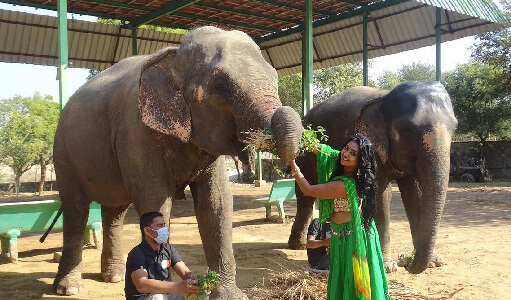
Places like Elefantastic demonstrate how this relationship can exist within a modern framework. Visitors are able to observe elephants in a setting where care, respect and understanding are central.
This shift does not remove tradition; it refines it. By combining historical knowledge with modern standards, the bond between mahout and elephant continues to evolve in a responsible direction.
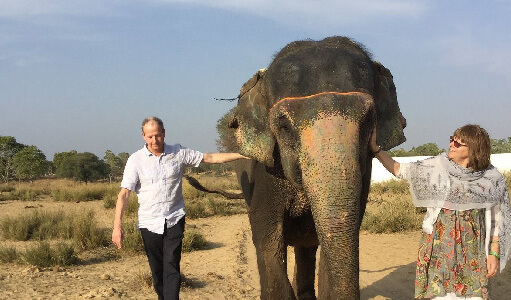
For travelers, understanding the mahout and elephant relationship changes the way elephants are perceived. Instead of viewing them as part of an activity, they are recognized as individuals within a structured environment.
Observing this bond provides insight into how elephants respond to care and consistency. It also highlights the importance of choosing ethical experiences where the focus remains on the well-being of the animal.
This awareness allows travelers to engage more meaningfully, appreciating the depth of the relationship rather than just the surface-level interaction. It transforms the experience into something more informative and respectful.
A mahout is a person who cares for and works closely with an elephant, managing its daily routine and well-being.
The bond develops over years through consistent interaction, routine and understanding of behavior.
Yes, elephants have strong memory and can recognize individuals, including their mahouts, over long periods.
In ethical settings, the relationship is based on trust, routine and communication rather than force.
Communication involves vocal cues, body language and repeated signals that are understood over time.
Elephants can show signs of recognition, comfort and response based on their relationship with the mahout.
Yes, ethical environments like Elefantastic Jaipur allow visitors to observe this bond in a responsible setting.
A mahout needs behavioral understanding, patience and the ability to read and respond to an elephant’s actions.
Yes, the tradition continues, especially in ethical frameworks where care and welfare are prioritized.
Ethical care ensures that the elephant’s well-being is maintained while preserving the traditional bond responsibly.