Rajasthan in January is a popular choice for international visitors because the month generally provides comfortable daytime conditions for long sightseeing days, fort visits, old-city walks and intercity road journeys. Jaipur, Jodhpur, Udaipur and Jaisalmer can all fit naturally into a winter itinerary, while travellers interested in wildlife can add Ranthambore.
January, however, should not be treated as uniformly warm simply because Rajasthan is in India. Early mornings can be cold, evenings cool quickly after sunset, and the difference between afternoon sunshine and a sunrise departure can be substantial. Visitors taking an open-vehicle wildlife safari or staying near the desert can feel the winter conditions much more strongly than someone walking through Jaipur in the middle of the afternoon.
International travellers also need to consider possible winter fog and reduced visibility in parts of North India, particularly when Delhi and Agra form part of the route. Flights, trains and road journeys should therefore have sensible buffers. A tightly packed itinerary where a delayed morning transfer causes the loss of a major prepaid activity creates unnecessary risk.
January is also part of Rajasthan's busy winter travel season. Good hotels, experienced private drivers, specialist guides and popular safari sessions can receive strong demand. Travellers with fixed dates should secure the most important parts of the trip before arrival rather than relying entirely on last-minute availability.
A well-structured Rajasthan trip in January can combine comfortable sightseeing, winter sunshine, heritage hotels, private road travel and outdoor experiences without the intense daytime heat associated with warmer periods. The key is to pack for temperature changes, keep travel times realistic and give each destination enough time.
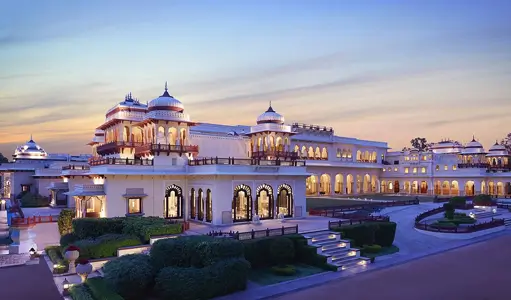
Enjoy Rajasthan's pleasant winter weather with a personalised itinerary, comfortable chauffeur-driven travel, luxury stays, and guided sightseeing across iconic destinations.
Rajasthan is too large for one weather description to apply equally to every destination. Conditions also vary from one week to another, so travellers should use seasonal patterns only as a guide and check a reliable short-range forecast immediately before travelling.
Jaipur in January generally offers comfortable daytime sightseeing conditions, but mornings and evenings can feel cold. Daytime temperatures often move into a pleasant range around the high teens to low twenties Celsius, while colder nights can fall into the single digits. Actual conditions vary, and occasional colder periods are possible. For a visitor leaving the hotel after breakfast, the day may feel mild and sunny. For someone departing before sunrise, a jacket and additional layer can be much more important.
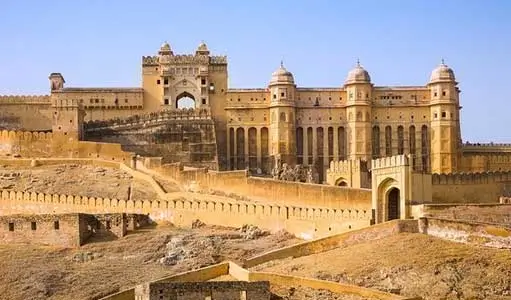
This temperature difference is easy for first-time visitors to underestimate. A traveller may spend the afternoon walking around Amber Fort in a light shirt and then want a warm layer after dinner. Carrying one removable layer during the day is therefore more practical than dressing for only the afternoon temperature.
Jodhpur in January usually provides similarly pleasant sightseeing conditions. The dry climate and strong sunshine can make afternoons feel warmer, especially while climbing through Mehrangarh Fort. Once the sun falls, however, temperatures become noticeably cooler. Visitors spending an evening on a rooftop should keep a jacket available.
Udaipur in January can be particularly enjoyable because much of the visitor experience involves walking, lake views and outdoor spaces. Cool evenings suit many travellers, but lake-side dining after sunset may require another layer. Visitors should not judge evening clothing needs by how warm City Palace felt at midday.
Jaisalmer in January requires more preparation for nighttime conditions. Desert regions can experience a pronounced temperature difference between day and night. A sunny afternoon around Jaisalmer Fort can be comfortable, while an evening at a desert camp can become genuinely cold. Visitors booking tented accommodation should ask about bedding and nighttime comfort rather than assuming every desert camp provides the same facilities.
Ranthambore in January deserves special attention because early safari sessions take place in open vehicles. Sitting still while cold air moves through the vehicle feels very different from walking around a city. Warm layers, a suitable jacket and head covering can substantially improve the experience. Travellers who book a morning safari should prepare for the early conditions even when the afternoon forecast looks mild.
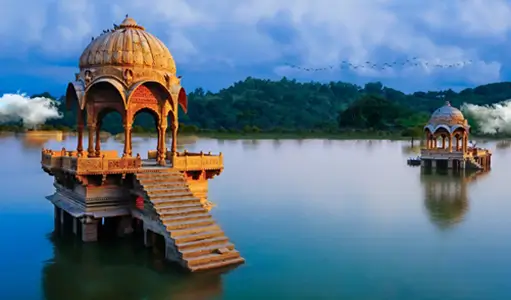
Discover Jaipur, Udaipur, Jodhpur, and Jaisalmer with customised routes, handpicked hotels, and seamless private transfers for an unforgettable January getaway.
One of the most important January considerations for international visitors is winter fog in parts of North India. Rajasthan itself is not affected identically everywhere, but travellers frequently enter the region through Delhi and Agra, where winter visibility can influence transport.
A visitor flying internationally into Delhi and immediately connecting to another flight or starting a long road journey should avoid an excessively tight schedule. Weather-related visibility issues can occasionally contribute to delays, and ordinary airport procedures already require time.
The same principle applies to trains. Travellers should not arrange an important non-refundable experience immediately after a winter train arrival with no margin for disruption.
Road journeys also benefit from flexibility. A Delhi to Jaipur private car generally requires around five to six hours under favourable conditions, but traffic and winter visibility can increase travel time. Starting extremely early in darkness is not always the best solution if conditions are poor.
Agra to Jaipur generally takes around 4.5 to 6 hours directly, with sightseeing stops extending the day. Travellers including Fatehpur Sikri should allow several additional hours rather than treating it as a fifteen-minute roadside stop.
Jaipur to Jodhpur can require around 5.5 to 7 hours, while Jaipur to Udaipur can take around 6.5 to 8 hours. Jaipur to Ranthambore generally requires approximately 3.5 to 5 hours, depending on route and conditions.
These are working travel ranges rather than guaranteed journey times.
January itineraries should avoid a pattern in which travellers leave one city at dawn, drive most of the day, complete five attractions after arrival and repeat the process the following morning.
Winter weather makes sightseeing comfortable, but it does not reduce Rajasthan's geography.
A professional private driver in Rajasthan can make these road days easier because visitors have control over meal and restroom stops and can travel directly from hotel to hotel. The driver should still prioritise safe travel conditions over an unnecessarily aggressive arrival target.
January sits within Rajasthan's strong winter travel period, so visitors should budget according to comfortable high-season travel rather than the lowest prices found in generic India budget guides.
A good comfortable hotel can broadly cost around ₹6,000 to ₹12,000 per night. Heritage and premium properties can move toward ₹12,000 to ₹25,000 or more per night, while luxury palace-style hotels can cost considerably more.
Rates vary by city, location, room category, demand and cancellation conditions. Udaipur lake-facing rooms, attractive Jaipur heritage properties and high-quality Jaisalmer accommodation can command a substantial premium.
Travellers should check whether breakfast and taxes are included before comparing prices. A ₹9,000 room including breakfast can represent better overall value than a ₹7,500 room that adds taxes and meals later.
For private transport, a sedan on a multi-day Rajasthan route can broadly cost around ₹5,000 to ₹8,000 per active travel day. An Innova or Crysta-class vehicle can broadly cost around ₹8,000 to ₹12,000 or more per day, depending on distance, itinerary and inclusions.
These are broad budgeting ranges rather than fixed Elefantastic quotations.
Ask whether fuel, tolls, parking, driver allowance and taxes are included. Also confirm the luggage capacity of the vehicle. Two international travellers with large checked suitcases may value the additional space of an Innova or Crysta even when a sedan technically has enough passenger seats.
Meals for two can broadly cost around ₹2,500 to ₹6,000 or more per day, depending on restaurant choices. Private guides can add around ₹2,000 to ₹4,500 or more for a city or sightseeing session, depending on duration and language.
A comfortable private journey for two people can broadly require ₹22,000 to ₹35,000 per day inside India, while premium travel can move toward ₹35,000 to ₹55,000 or more.
International airfare should be calculated separately.
International visitors often try to include every famous city because January provides attractive sightseeing weather. A better approach is to use the comfortable conditions to spend more meaningful time in each destination.
For travellers entering through Delhi, Delhi → Agra → Jaipur → Jodhpur → Udaipur is a logical first route.
Delhi deserves sufficient time after an international arrival, particularly if the traveller is adjusting to a large time-zone difference. One recovery night can make the rest of the journey considerably more comfortable.
Agra can work with one night for travellers primarily interested in the Taj Mahal and Agra Fort. An overnight stay also allows the Taj Mahal to be visited without turning the experience into an exhausting same-day road excursion from Delhi.
From Agra, continue to Jaipur. A private-car transfer makes it possible to visit Fatehpur Sikri during the journey.
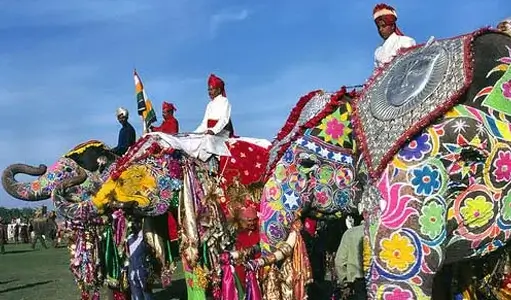
Jaipur deserves at least two nights, with three providing a much stronger pace. Amber Fort, Hawa Mahal, City Palace and Jantar Mantar already create a substantial sightseeing schedule. Markets, food and an elephant-focused experience require additional time.
From Jaipur, continue toward Jodhpur. Pushkar can be incorporated into the road journey when it genuinely interests the traveller and the day has enough time.
Jodhpur works well with approximately two nights before continuing toward Udaipur. Ranakpur can be considered on an appropriate Jodhpur-to-Udaipur road route.
Udaipur deserves two or three nights. The city's appeal is not limited to completing a monument checklist; evenings around Lake Pichola and a slower pace are important parts of the experience.
Travellers with additional time can add Ranthambore or Jaisalmer. Adding both to a short itinerary creates substantially more movement.
The most useful packing principle for January is layers rather than one heavy outfit.
A lightweight shirt or top can work well during sunny afternoon sightseeing. Add a sweater, fleece or jacket for mornings and evenings.
Travellers who feel cold easily should bring a warmer outer layer rather than assuming one thin sweatshirt will be enough everywhere.
For a Ranthambore morning safari, warm clothing deserves particular attention. Sitting in an open vehicle produces wind chill, and visitors are not generating body heat through continuous walking. A warm jacket, scarf and suitable head covering can make a major difference.
Jaisalmer desert stays also require warmer nighttime clothing.
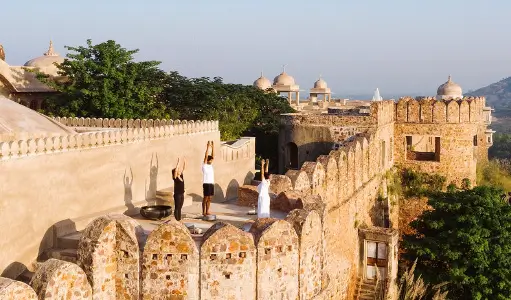
Comfortable walking shoes are essential throughout Rajasthan. Amber Fort, Mehrangarh Fort, City Palace complexes and old-city streets contain steps and uneven surfaces.
A scarf is useful for warmth, sun protection and visits to certain religious sites.
Sunglasses and sunscreen remain important in winter because travellers still spend many hours under direct sun.
Dry air can make moisturiser and lip balm useful, particularly for visitors coming from more humid climates.
International travellers should also bring an appropriate electrical adapter, a portable power bank, essential medication and secure copies of important travel documents.
The best January day bag contains both sun protection and a warm layer because the same sightseeing day can require both.
January is an attractive month for Jaipur sightseeing because walking through large outdoor complexes is generally much more comfortable than during extreme summer heat.
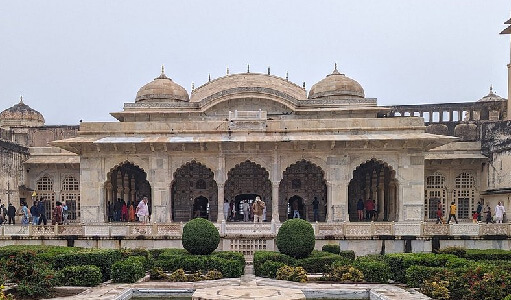
Amber Fort in January is best given several hours rather than treated as a quick photo stop. Arriving earlier can reduce exposure to the larger crowds that build later in the morning.
After Amber, travellers can stop around Jal Mahal before continuing toward the Pink City. City Palace, Jantar Mantar and Hawa Mahal can form another major sightseeing period.
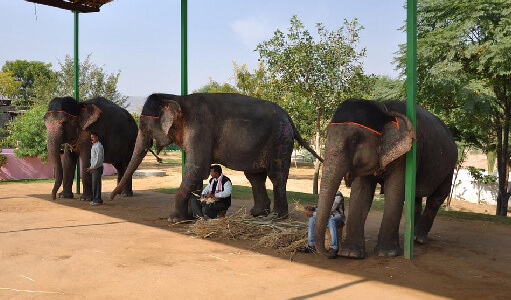
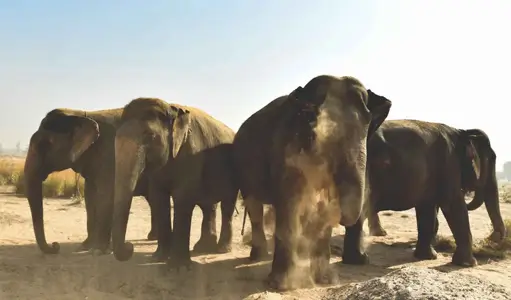
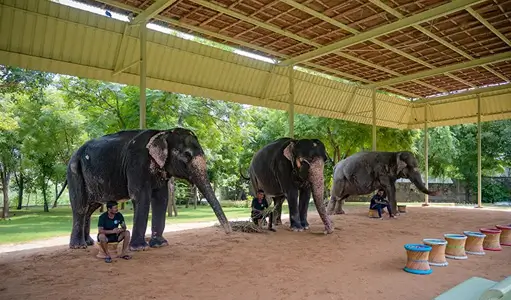
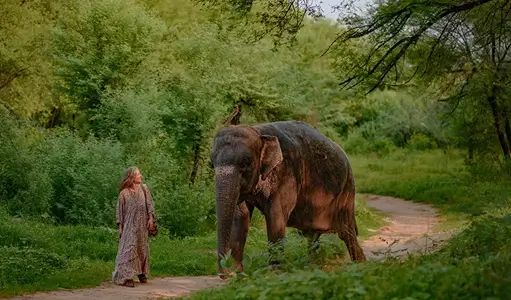
International visitors interested in elephants should carefully compare facilities before booking.
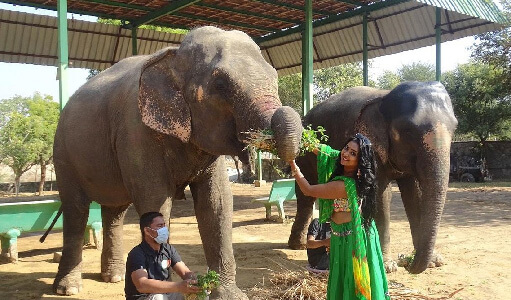
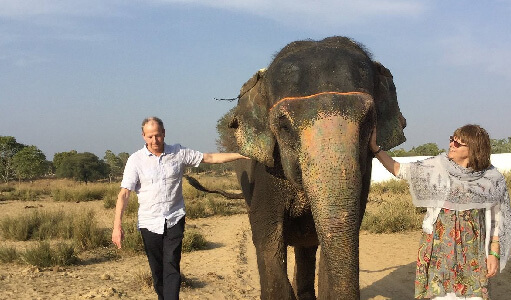
Elefantastic follows a no-riding, no-performance approach, focusing on appropriate time beside elephants rather than using them for tourist rides or staged shows.
An elephant experience should not be squeezed into an already overloaded Jaipur day. A traveller trying to complete Amber Fort, City Palace, Hawa Mahal, Jantar Mantar, multiple markets and an elephant experience between breakfast and dinner will spend much of the day watching the clock.
Three nights in Jaipur provide a more comfortable rhythm for visitors wanting both heritage sightseeing and additional experiences.
January mornings can be cool, so travellers visiting the Amber area early should bring an extra layer even when the afternoon forecast looks warm.
January is a popular period for visitors combining Rajasthan's heritage cities with wildlife.
The first practical point is that a safari is not a zoo visit. Tiger sightings are never guaranteed, regardless of month, zone or number of safaris booked.
Travellers should approach Ranthambore as an opportunity to spend time in a protected landscape with the possibility of seeing tigers and other wildlife.
Early-morning safari conditions can be cold. Open vehicles provide limited protection from moving air, so clothing suitable for an ordinary Jaipur morning may not be enough.
Layering is particularly useful because the temperature can rise during the safari.
Safari reservations should receive early attention because visitor capacity is controlled. Travellers with fixed dates should not leave arrangements until they arrive in Sawai Madhopur.
A two-night stay is useful for many visitors because it provides room for safari sessions without turning Ranthambore into a rushed transfer stop.
The road journey from Jaipur can broadly require 3.5 to 5 hours, so a traveller should be careful about scheduling a safari too close to the expected road arrival.
Wildlife travel always benefits from flexibility. Weather, park operations and animal movement do not follow a tourist's desired photography schedule.
Jaisalmer is particularly attractive in winter because daytime sightseeing around the fort and old city can be much more comfortable than during hotter periods.
The major difference appears after sunset.
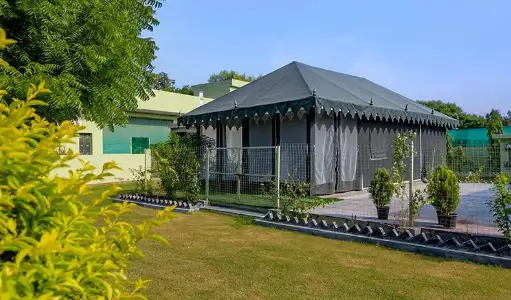
Visitors booking a Jaisalmer desert camp in January should ask exactly what type of accommodation they are purchasing. “Luxury tent” can describe very different products, from relatively simple canvas accommodation to highly equipped tented rooms with private bathrooms and premium furnishings.
Ask about bedding and nighttime arrangements.
Travellers should bring warm clothing for outdoor evenings, especially when a programme includes dinner or entertainment in an open desert setting.
Desert experiences also vary in style. Some are large commercial operations with substantial visitor numbers, while others offer smaller and quieter stays.
Read recent reviews rather than relying only on promotional photographs.
Jaisalmer itself deserves time beyond the desert. Jaisalmer Fort, havelis and historic streets form an important part of the destination.
The main itinerary question is distance. Jaisalmer lies far west, so adding it to Jaipur, Jodhpur and Udaipur requires enough days.
A visitor with only seven days in Rajasthan should think carefully before including every major city plus Jaisalmer.
Winter does not substantially change the basic food and water precautions international visitors should follow.
Use sealed bottled water or appropriately purified water and select freshly cooked food from established restaurants.
Rajasthan offers extensive vegetarian choices, making it straightforward for vegetarian visitors to eat varied meals.
International travellers with allergies should state the specific ingredient that must be avoided rather than relying only on broad terms such as “allergy-friendly.”
Cash remains useful even though cards are accepted widely at established hotels, restaurants and larger shops.
Keeping approximately ₹5,000 to ₹10,000 in accessible cash per couple can provide a practical reserve when major costs are paid by card or have already been settled.
There is no reason to carry the entire holiday budget physically.
ATMs are widely available in major cities. International travellers should check their own bank's foreign withdrawal and currency-conversion fees before travelling.
A small amount of cash in ₹100, ₹200 and ₹500 denominations is useful for tips and smaller purchases.
January's cooler weather can also reduce how thirsty travellers feel, but hydration remains important. Long fort visits involve significant walking, stairs and sun exposure.
Keep water available even when the temperature does not feel hot.
January visitors should secure the parts of the trip where availability genuinely matters.
Start with the international arrival and departure structure, followed by key hotels and major intercity transportation.
Travellers using the same Rajasthan private driver across several cities should reserve the vehicle ahead of time, especially when a particular vehicle category is required.
Ranthambore safari arrangements should also receive early attention.
A special heritage hotel, Udaipur lake-view room or high-quality desert camp deserves earlier booking than an ordinary restaurant lunch.
Visitors should still maintain flexibility inside each sightseeing day. There is no need to reserve every café and every hour of free time.
The strongest itinerary has firm arrangements where capacity is limited and open space where spontaneity improves the trip.
Check hotel cancellation conditions carefully. A cheaper non-refundable room is not always the best value when international flights or other travel arrangements could change.
Private-driver quotations should clearly explain inclusions and exclusions before payment.
Travellers should also reconfirm airport transfers and early departures shortly before they occur.
The first mistake is packing only for warm weather. Rajasthan's afternoon sunshine can create the impression that winter clothing is unnecessary, but early mornings, desert nights and open safaris can feel much colder.
The second mistake is creating tight transport connections. Winter fog and ordinary travel delays mean sensible buffers are valuable.
Another common problem is adding too many cities. Comfortable weather does not make Jaipur and Udaipur suddenly close together.
Visitors also sometimes underestimate how much time Rajasthan's major monuments deserve. Mehrangarh Fort, Amber Fort and City Palace Udaipur are large complexes, not twenty-minute photo stops.
A further mistake is booking a beautiful heritage hotel without checking practical details. Historic buildings may contain stairs, limited vehicle access or unusual room layouts. Travellers with mobility requirements should ask before paying.
Visitors should also avoid assuming every private driver quotation includes the same services. Fuel, tolls, parking, taxes and driver allowance should be clearly addressed.
Finally, leave room for ordinary enjoyment. A Rajasthan holiday should contain time for a relaxed lunch, market walk or quiet evening rather than turning every day into a competition to complete the maximum number of attractions.
Yes. January is a popular month for Rajasthan because daytime conditions are generally comfortable for forts, palaces, markets and road travel, although mornings and nights can be cold.
Conditions vary by city and week. Jaipur can have pleasant daytime temperatures while colder nights fall into the single digits Celsius. Desert areas and early safari sessions can feel significantly colder.
Bring layered clothing, including comfortable daytime clothes, a sweater or fleece and a jacket for colder mornings and evenings. Pack warmer layers for Ranthambore safaris and Jaisalmer desert stays.
Winter fog can affect parts of North India and may influence flights, trains or road travel, particularly around Delhi and Agra. Keep sensible buffers around important connections.
For two people, comfortable private travel can broadly cost ₹22,000 to ₹35,000 per day inside India, while premium travel can move toward ₹35,000 to ₹55,000 or more.
A sedan can broadly cost around ₹5,000 to ₹8,000 per active travel day, while an Innova or Crysta-class vehicle can cost approximately ₹8,000 to ₹12,000 or more depending on the route and inclusions.
Jaipur receives strong winter visitor numbers. Popular attractions can become busy, particularly later in the day, so an early start can provide a more comfortable experience.
January can be an enjoyable period for a Ranthambore visit, but morning safaris can be cold and tiger sightings are never guaranteed. Safari reservations should be arranged ahead of time.
Daytime conditions can be comfortable, but desert evenings and nights may feel cold. Visitors staying in desert camps should bring warm layers and check the property's bedding arrangements.
Around 10 to 14 days provides a strong first multi-city itinerary. Travellers with less time should reduce the number of destinations rather than spending most of the holiday on long transfers.