Choosing between a private driver in India and an organised group tour can shape almost every part of an international visitor's holiday. The difference is much larger than simply travelling in a private car instead of a coach. It affects departure times, hotel choices, sightseeing pace, luggage handling, restaurant stops, privacy, route flexibility and how much control travellers have when something changes.
A group tour normally follows a fixed schedule shared by several travellers. Hotels, transport, major attractions and departure times are usually decided in advance. This structure can be convenient for visitors who prefer knowing that the main logistics have already been arranged and who enjoy travelling socially with other people.
A private driver offers a different type of trip. The vehicle is dedicated to the traveller or travelling party, and road transfers happen according to the agreed itinerary rather than a coach timetable. A couple can leave Jaipur after breakfast instead of waiting for twenty other passengers. A family can stop when a child needs a break. Travellers can spend longer at a fort they enjoy and reduce time at a place that does not interest them.
Neither format should be chosen solely according to the cheapest advertised price. A useful comparison needs to include total trip cost, convenience, sightseeing time, hotel quality, transport standard and personal travel style.
This is particularly important in Rajasthan and the Golden Triangle, where road journeys between Delhi, Agra, Jaipur, Jodhpur and Udaipur form a major part of many itineraries.
Enjoy complete travel flexibility, personalised sightseeing, comfortable vehicles, and a professional chauffeur for a hassle-free journey across India.
Hiring a private car with driver in India means having a dedicated vehicle for agreed transfers and sightseeing. On a multi-day Rajasthan trip, the driver may collect guests in Delhi and remain with them through Agra, Jaipur, Pushkar, Jodhpur, Udaipur and other destinations before the final drop-off.
The driver handles the road logistics. Travellers do not need to find a taxi every morning, carry suitcases through railway stations for every intercity move or negotiate a new fare in each destination. The car arrives at the hotel, luggage is loaded and the journey continues.
This does not mean the driver automatically replaces a professional sightseeing guide. A driver is responsible for transportation, road knowledge and practical logistics. A licensed local guide provides detailed historical interpretation inside monuments. International visitors who want deeper historical information can combine a private driver with local guides in major cities.
The private-car format is particularly useful in Rajasthan because many worthwhile destinations sit between the major cities. Fatehpur Sikri can be visited between Agra and Jaipur. Pushkar can be included between Jaipur and Jodhpur. Ranakpur can fit naturally into certain Jodhpur–Udaipur routes.
A private vehicle makes these stops much easier than a fixed train or coach schedule.
The arrangement also gives travellers a consistent point of contact for transportation. After several days, the driver understands whether the guests prefer early starts, longer lunches or frequent photography stops. This continuity can make a long road journey much more comfortable.
Choose a travel experience that suits your budget, schedule, and preferences with customised itineraries, private transfers, and handpicked stays.
A group tour in India normally combines travellers who follow the same scheduled itinerary. The package may include a coach or minibus, hotels, selected meals, guides and admission to specified attractions.
The major advantage is structure.
Travellers know when the group leaves, which attractions are included and where they will stay. Visitors who do not want to make many logistical decisions can find this reassuring.
Group tours can also be social. Solo travellers may appreciate meeting other visitors rather than spending every road transfer alone. Meals and sightseeing can become shared experiences.
The limitation is that the itinerary belongs to the group rather than the individual traveller.
If the coach leaves at 7:30 AM, one passenger cannot normally decide to sleep until 9:00 AM. If the group has forty-five minutes at a market, a traveller who wants two hours cannot simply remain behind without affecting later arrangements.
Large groups also require coordination. Hotel departures take longer because everyone must board. Restroom stops take longer because multiple passengers need facilities. Entering attractions can involve waiting for the entire group to assemble.
A well-operated small-group tour can reduce some of these disadvantages, but it still cannot provide the same personal control as a private vehicle.
Cost is one of the most misunderstood parts of the private driver vs group tour decision.
A group tour can appear cheaper because transport and guide costs are distributed across many passengers. For a solo traveller, this can provide strong value. One person does not need to pay the entire cost of a private vehicle.
Private travel becomes more financially attractive as the number of people sharing the vehicle increases.
For a Rajasthan trip, a comfortable sedan with driver can broadly cost around ₹5,000 to ₹8,000 per active travel day, depending on kilometres and inclusions. An Innova or Crysta-class vehicle can broadly cost ₹8,000 to ₹12,000 or more per day. Long transfers, unusual routes and premium vehicles can increase these figures.
A couple sharing a ₹7,000 vehicle is effectively allocating ₹3,500 per person before other expenses. A family of four sharing a larger ₹10,000 vehicle is allocating ₹2,500 per person for that vehicle day.
Hotels, monument tickets, meals and local guides may be separate unless the private package includes them.
Group-tour pricing varies even more because packages can contain very different hotel standards and inclusions. A cheap group tour may use basic accommodation and large coaches, while a premium small-group tour can cost considerably more than an ordinary private-car journey.
The correct comparison is therefore not “private car price versus group tour price.” Compare the complete services included in both quotations.
Flexibility is where private travel separates itself most clearly from group travel.
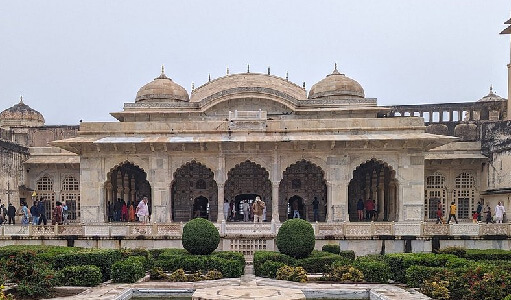
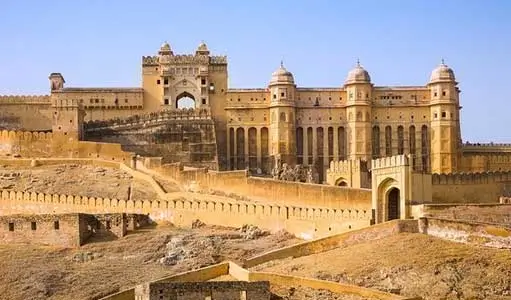
Imagine a traveller reaches Amber Fort and becomes fascinated by the architecture. With a private driver, spending another hour at the fort may be possible if the rest of the day has enough space.
On a group tour, departure time is determined by the schedule.
The same applies when a traveller dislikes a particular stop. A private itinerary can sometimes shorten or remove it. A group itinerary generally continues as advertised because other passengers may want the attraction.
Meal times are another example. A private group can eat earlier, later or choose a different restaurant. Travellers with children, dietary requirements or medical meal schedules may find this particularly useful.
Road journeys also become more adaptable. A couple driving from Agra to Jaipur can add Fatehpur Sikri or Abhaneri when this has been arranged appropriately. Travellers moving from Jaipur to Jodhpur can spend time in Pushkar.
This flexibility should not be misunderstood as unlimited spontaneity. Hotels, safari permits, monument hours and pre-booked activities still impose restrictions.
A private driver gives travellers more control within those practical limits. It does not make every attraction available at any hour.
The quality of sightseeing depends partly on how the traveller likes to experience historical places.
Some visitors are satisfied with a forty-five-minute overview and several photographs. Others want to spend three hours inside a fort, use an audio guide, visit museum galleries and stop repeatedly for photography.
A private itinerary can accommodate the second style much more easily.
At Amber Fort, for example, a visitor may want time for courtyards, Sheesh Mahal, Ganesh Pol and architectural details. A rigid schedule can make the visit feel rushed.
The same issue appears at City Palace, Mehrangarh Fort, Chittorgarh and Udaipur's palace complex.
Group tours have an advantage when they include a knowledgeable tour leader or guide who provides consistent interpretation throughout the trip. Travellers do not need to arrange guides independently in every city.
Private travellers can achieve the same depth by booking qualified local guides where historical interpretation matters most.
A strong private journey often combines both roles: one driver handles intercity transport while local guides are added in Delhi, Agra, Jaipur or other destinations.
This gives visitors transportation continuity without expecting the driver to perform a specialist guide's job.
Rajasthan contains substantial distances. Jaipur to Jodhpur can require around six hours. Jaipur to Udaipur can occupy much of a day. Jodhpur to Jaisalmer is another long road journey.
Vehicle comfort therefore matters.
In a private car, travellers can choose a sedan, Innova, Crysta or larger vehicle according to passenger and luggage requirements. A couple can use the rear seats comfortably, keep personal items nearby and request breaks when needed.
A group coach provides more passenger capacity and may offer good seats, air conditioning and luggage storage. Premium tour coaches can be very comfortable.
The difference is control.
A private traveller can ask for a restroom stop after ninety minutes. A group coach generally stops according to the collective schedule.
Private travel also avoids waiting for other passengers to return to the vehicle.
Families with young children may find this especially valuable. A child who suddenly needs a restroom does not care that the official group stop is forty minutes away.
Senior travellers can also benefit from controlling break frequency and avoiding repeated group assembly.
Comfort should therefore be measured not only by seat quality but by how the entire road day functions.
International travellers often arrive in India with substantially more luggage than a short domestic traveller.
A couple may have two large checked suitcases, two cabin bags and backpacks. Families can carry much more.
A private vehicle keeps luggage handling simple. Bags are loaded at one hotel and unloaded at the next. On sightseeing transfer days, luggage can remain with the vehicle according to the transport arrangement.
Travellers should still select the correct car. Four adults plus four large suitcases may technically fit into some vehicles but not comfortably.
An Innova or Crysta-class vehicle is often a stronger choice for groups with substantial international luggage.
Group tours usually have luggage compartments, but they may impose baggage limits because storage space is shared across all passengers.
Train-based group itineraries can involve additional luggage handling through stations.
Travellers should check baggage restrictions before choosing a tour rather than assuming every suitcase will automatically be accepted.
For a two-week Rajasthan trip, the convenience of loading luggage into the same private vehicle repeatedly can become one of the biggest practical advantages.
Couples are particularly well positioned to use a private driver for Rajasthan because they can share both hotel rooms and transport expenses.
Privacy is an important advantage. Long road journeys become personal time rather than shared coach travel with strangers.
Couples can also adjust stops around their interests. One pair may prioritise photography and architecture. Another may want food, markets and slower mornings.
A private vehicle makes these differences easy to accommodate.
For honeymooners or couples celebrating a special occasion, hotel selection can also be more personal. They can combine an affordable private car with one or two premium heritage hotels rather than accepting the same hotel category used by an entire tour group.
Group tours can still be attractive for sociable couples who enjoy meeting other travellers and prefer a completely structured schedule.
The decision should depend on whether privacy and flexibility are worth the additional per-person transport cost.
For many couples taking a seven-to-fourteen-day Rajasthan journey, private road transport can provide a strong balance between comfort and price without requiring luxury-level spending.
Families often gain some of the greatest practical benefits from private transport.
Children do not always operate according to sightseeing schedules. They become hungry, tired or bored at unpredictable times. A private car allows parents to shorten a museum visit, stop for food or return to the hotel without affecting twenty other travellers.
Families can also keep useful items in the vehicle: jackets, spare clothing, snacks and other non-valuable travel essentials.
Parents should still keep passports, money and expensive electronics personally secured.
A larger vehicle such as an Innova or Crysta is usually worth considering for families because luggage and passenger space become more important.
Group tours can work well for older children who enjoy social interaction and can follow a fixed schedule. Some family-focused group tours are specifically designed with slower pacing and child-friendly activities.
The important factor is the type of group tour. A fast-moving adult sightseeing schedule may be exhausting for younger children.
Private travel allows parents to build shorter sightseeing blocks and return to the hotel for rest when necessary.
Private travel does not automatically provide the best value for every solo visitor.
A solo traveller pays the entire cost of the vehicle. If a sedan costs ₹6,000 for a day, there is no second passenger sharing that expense.
Group tours spread transportation and guide costs across several people, which can make them financially attractive.
They also provide immediate social contact. Solo visitors who enjoy meeting other travellers may prefer sharing meals, sightseeing and road journeys with a group.
A tour leader can also reduce the mental effort of managing daily logistics.
On the other hand, some solo travellers value privacy enough to pay for a private driver. Photographers, researchers, repeat visitors and people with very specific interests may find group schedules restrictive.
Solo female travellers may also consider private transport when they want a consistent driver and direct hotel-to-hotel transfers, although the operator and driver should still be properly vetted.
The decision is therefore not simply about being alone. It depends on budget, social preference and the amount of personal control the traveller wants.
Senior travellers should look closely at pace rather than just price.
Group tours can involve early departures, repeated boarding, substantial walking and fixed schedules. Some premium tours are very comfortable, while others move quickly to cover many attractions.
A private journey can be adjusted around mobility and energy levels.
Visitors can begin later, take longer lunch breaks, reduce the number of monuments and return to the hotel earlier.
A suitable vehicle is important. Senior travellers should consider ease of entry and exit rather than simply selecting the cheapest sedan.
Hotels should also be chosen with lifts, accessible bathrooms and manageable stair arrangements in mind. Some beautiful heritage properties contain steep stairs because of the original architecture.
A private driver can reduce unnecessary walking by using the most practical permitted drop-off locations.
This does not eliminate walking inside forts and palaces, but it can reduce the energy spent merely moving between destinations.
For travellers who prefer group travel, a slower-paced premium small-group tour can provide a useful compromise.
International visitors should choose a private transport provider based on more than price.
The vehicle should be suitable for long-distance travel and have working air conditioning, seat belts where fitted and enough luggage capacity.
The driver should be experienced with the Rajasthan route rather than relying entirely on navigation software.
Clear communication is also important. Travellers should know who is collecting them, where the meeting point is and how to contact the provider if a flight or train is delayed.
A reputable service should provide transparent pricing and explain what is included.
Travellers should not feel pressured into unwanted shops, restaurants or commission-based stops. If shopping is not wanted, say so clearly.
Private transport can offer a reassuring level of continuity because the same driver may remain with guests for several days. However, travellers should still follow normal precautions with valuables and personal documents.
For late arrivals, airport pickups and long intercity transfers, booking through an established operator is preferable to selecting an unknown driver purely because of a very low quote.
One issue international visitors sometimes encounter in both private and group travel is commission-based shopping.
A driver, guide or tour may suggest a textile showroom, gemstone shop, carpet business or handicraft store. Some of these businesses sell genuine products and provide interesting demonstrations. Others rely heavily on tourist commissions and high-pressure sales.
Travellers should never assume that a recommended shop is automatically the cheapest or best place to buy something.
If shopping is not part of the trip, say clearly that no commercial stops are wanted.
Private travel gives guests more ability to decline because the vehicle serves only their party. Group tours may include a shopping stop as part of the fixed itinerary, although reputable operators should make this clear.
Visitors interested in expensive gemstones, jewellery or carpets should compare sellers, request proper documentation and avoid making large purchases under pressure.
The value of private travel is control. That control should include deciding where money is spent.
The Golden Triangle of Delhi, Agra and Jaipur works particularly well with private road transport because the cities connect naturally by car.
A private vehicle can collect travellers in Delhi, continue to Agra, stop at Fatehpur Sikri between Agra and Jaipur and then complete the route in Rajasthan.
This avoids repeated station transfers and makes intermediate sightseeing easier.
Group tours also serve the Golden Triangle extremely well because it is one of India's most established tourism routes. Visitors can choose from budget coach tours, premium small groups and luxury escorted journeys.
The difference again comes down to control.
Private travellers can decide whether Delhi needs one day or three. They can leave Agra after a sunrise Taj Mahal visit or stay another night. They can spend extra time in Jaipur without affecting anyone else.
Group travellers receive a ready-made structure and usually know the overall cost earlier.
For first-time visitors who want convenience without a rigid group timetable, a Golden Triangle private driver can be a useful middle ground between independent backpacking and a fully escorted tour.
The difference becomes even more significant on a longer Rajasthan route.
Distances between Jaipur, Jodhpur, Udaipur, Jaisalmer and other destinations are substantial, and the journey itself becomes part of the holiday.
A private route might follow:
Delhi → Agra → Jaipur → Pushkar → Jodhpur → Udaipur
A longer version could include:
Delhi → Agra → Jaipur → Bikaner → Jaisalmer → Jodhpur → Udaipur
A private vehicle makes smaller stops possible without constantly checking public transport schedules.
Group tours offer a stronger social structure and can be easier for visitors who do not want to make daily decisions. However, the itinerary may include destinations the traveller considers less important while allocating less time to places they love.
International visitors should therefore read the complete itinerary before booking. Count how many nights are actually spent in each destination rather than looking only at the number of cities advertised.
A ten-day tour containing eight cities may involve more road time and hotel check-ins than meaningful sightseeing.
The first question should be about the vehicle. Ask for the category, luggage capacity and air-conditioning arrangement.
Next, confirm the full price and what it includes. Fuel, tolls, parking, driver allowance and taxes should be addressed clearly.
Ask whether the price is calculated according to days, kilometres or both.
Confirm whether local sightseeing is included or only intercity transfers.
Travellers should also ask what happens if the route changes. Adding a distant city can reasonably increase the price, but small adjustments should have a clear process.
For airport pickup, provide the flight number and confirm the meeting arrangement.
For multi-day travel, ask whether the same driver normally remains with the guests.
Payment and cancellation conditions should be written clearly.
Finally, remember that a driver is not automatically a licensed guide. If historical interpretation is important, ask whether qualified local guides can be arranged separately.
It depends on vehicle type and route. A multi-day sedan can broadly cost ₹5,000 to ₹8,000 per active travel day, while an Innova or Crysta-class vehicle can cost around ₹8,000 to ₹12,000 or more.
Group tours can be cheaper per person, particularly for solo travellers, because transportation and guide costs are shared. Couples and families can make private transport more economical by sharing one vehicle.
Not necessarily. A driver handles transportation and road logistics, while a professional local guide provides detailed historical interpretation at monuments.
Yes, particularly for visitors who value door-to-door transport, flexible breaks and simpler luggage handling. A structured group tour can also work well for travellers who prefer a fixed schedule.
It can be especially convenient because parents control meal stops, departure times and rest breaks rather than following a large group's timetable.
They can offer better per-person value and more social interaction. Solo travellers who value privacy or have specialist interests may still prefer a private driver.
Yes. Multi-day private car tours in India commonly connect Delhi, Agra, Jaipur and additional Rajasthan destinations.
Reasonable changes are often possible, subject to distance, monument hours, hotel reservations and any pre-booked activities. Major route changes may affect the price.
A sedan works well for one or two travellers with moderate luggage. An Innova or Crysta-class vehicle is generally more comfortable for families, groups and travellers carrying several large suitcases.
The quotation should clearly address the vehicle, fuel, tolls, parking, driver allowance, taxes, included kilometres or days, sightseeing use, payment terms and any additional charges.