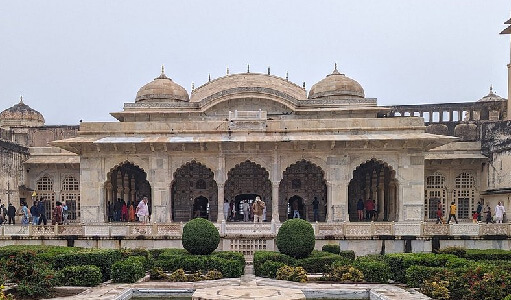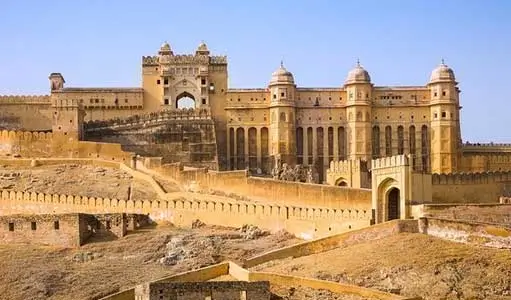
Travelling from Jaipur to Ranthambore by car is one of the most practical ways to combine Rajasthan's forts and palaces with a wildlife stay. Jaipur and Ranthambore offer completely different experiences. Jaipur is built around royal architecture, historic markets and major monuments, while Ranthambore is visited primarily for wildlife safaris, forest landscapes and the possibility of seeing Bengal tigers in their natural habitat.
The road distance between Jaipur and the Ranthambore area is approximately 180 to 200 kilometres, depending on the pickup point, hotel location and route used. Travellers should normally allow around three and a half to five hours for the journey. Road conditions, Jaipur traffic, village traffic, meal stops and the exact resort location can all affect the final time.
Although the distance is shorter than Jaipur to Jodhpur or Jaipur to Udaipur, this transfer needs more careful timing because Ranthambore safaris operate within fixed entry windows. A traveller who reaches a Jaipur hotel an hour later than expected can simply check in later. A traveller who reaches Ranthambore too late for a booked safari may lose the session.
For this reason, the strongest Jaipur to Ranthambore private car transfer is not simply the cheapest vehicle. Reliability, a sensible departure time, luggage capacity and enough buffer before the safari are much more important.
International visitors should also understand that Ranthambore is not a zoo where a tiger sighting can be guaranteed. It is a protected wildlife landscape. The safari is valuable because of the forest, wildlife and unpredictability, whether or not a tiger appears during a particular drive.
Travel comfortably with a professional chauffeur, flexible departure times, and a hassle-free transfer to your Ranthambore safari destination.
The distance from Jaipur to Ranthambore is usually quoted at roughly 180 to 200 kilometres by road, but the destination is more accurately Sawai Madhopur or a resort in the surrounding Ranthambore area. Two travellers can therefore follow similar routes and still record different total distances depending on where their hotels are located.
A realistic private-car journey generally takes around three and a half to five hours. Travellers should avoid assuming that 190 kilometres will always take the same amount of time as a similar distance on a high-speed motorway. Parts of the route pass through active towns and rural areas where local traffic, slower vehicles and road conditions influence speed.
Leaving Jaipur can also add time. Someone staying close to the southern side of the city may reach the open road sooner than a traveller beginning near Amber. During busy periods, simply crossing part of Jaipur can add a noticeable amount of time to the day.
Most visitors will want at least one short stop for coffee, tea or a restroom. Families and senior travellers may want a longer break. Once these stops are included, a nominal four-hour journey can easily become four and a half or five hours from hotel door to resort reception.
This is especially important when a safari has been booked for the same day. Travellers should work backward from the required reporting time rather than from the safari's approximate start. Safari operators may require visitors to complete checks, meet the vehicle or provide identification before entry.
A private driver from Jaipur to Ranthambore should be given the resort name and safari details in advance so the departure can be timed conservatively.
Departure time depends primarily on whether a safari is scheduled on the arrival day.
Travellers who have no safari until the following morning can leave Jaipur after breakfast. A departure around 8:00 AM to 9:00 AM allows a comfortable road journey, a break along the way and arrival around lunchtime or early afternoon under normal conditions.
That schedule gives guests enough time to check into the resort, eat, rest and prepare for the next morning.
A same-day afternoon safari requires a more cautious approach.
Visitors should leave Jaipur early enough to arrive several hours before the safari reporting time. This protects the booking from moderate traffic delays and gives travellers time to check in, use the restroom, eat something and organise passports or identification.
Leaving Jaipur at the last possible time based on a navigation application's current estimate is a poor strategy. A temporary road delay can immediately place the safari at risk.
Travellers arriving in Jaipur by flight or train on the same morning should be even more careful. A delayed flight can destroy a tightly scheduled Jaipur–Ranthambore connection.
When a Ranthambore safari is one of the most important experiences of the holiday, spending the previous night in Jaipur and leaving early by private car is generally more dependable than creating multiple same-day transport dependencies.
Morning safaris create the opposite issue. Travellers should already be staying near Ranthambore the previous night rather than attempting a pre-dawn drive from Jaipur.
Combine a comfortable private road trip with exciting tiger safari experiences, carefully planned timings, and personalised travel arrangements.
The Jaipur to Ranthambore private car cost varies according to vehicle category, one-way or return service, pickup location, waiting requirements and whether the vehicle remains available after reaching Sawai Madhopur.
For a comfortable one-way private transfer, travellers can broadly keep a higher-side budget of approximately ₹6,000 to ₹9,000 or more for a sedan. The exact amount can change according to service standard and what is included.
An Innova, Crysta or similar larger vehicle can broadly cost around ₹9,000 to ₹13,000 or more for a one-way private service. Premium vehicle categories can cost more.
These figures are budgeting guidance rather than fixed Elefantastic rates.
A return booking may be structured differently. If the driver waits in Ranthambore for one or two nights and then returns guests to Jaipur or continues toward another city, the quotation may be based on total days and kilometres rather than two separate transfer prices.
Travellers should ask whether fuel, tolls, parking, driver allowance and applicable taxes are included. If the vehicle remains with the guests overnight, confirm whether the driver's accommodation or overnight allowance is part of the quoted amount.
A low initial price is less useful when multiple charges appear later.
International visitors booking a larger Rajasthan route can include Ranthambore within a multi-day private-car arrangement. This often simplifies the journey because the same driver can handle Jaipur, Ranthambore and the next destination without separate transport negotiations.
A sedan is usually sufficient for one traveller or a couple carrying moderate luggage. The Jaipur–Ranthambore journey is not extremely long, so two passengers can travel comfortably in a good air-conditioned sedan when the luggage fits properly.
The main reason to upgrade is space.
International travellers often carry large checked suitcases, cabin bags and backpacks. A sedan may technically seat three or four passengers, but passenger capacity and luggage capacity are not the same thing.
An Innova or Crysta-class vehicle is generally more comfortable for families, three or four adults, senior travellers or anyone carrying substantial baggage. The extra space is particularly valuable when Ranthambore forms part of a longer Rajasthan journey and passengers will spend many additional hours in the same car.
Travellers should also remember that the private intercity car is not necessarily the vehicle used inside Ranthambore National Park. Safari entry uses authorised safari vehicles operating under the park's system. Your Jaipur transfer vehicle takes you to the resort or appropriate safari meeting location; it does not simply drive into the tiger reserve because it is a private booking.
When requesting a quotation, tell the operator how many people are travelling and how many large suitcases they have. This allows the correct vehicle to be assigned before departure.
Comfort is worth considering seriously. Saving a modest amount on a smaller vehicle can be poor value if luggage fills the passenger space for several hours.
A Ranthambore tiger safari should be reserved before the trip whenever possible, particularly when travel dates are fixed. Safari capacity is limited, and demand can be strong during popular travel periods.
Visitors normally encounter two principal shared safari vehicle categories: gypsy and canter. A gypsy is a smaller open vehicle, while a canter carries more passengers. Availability, permitted routes and allocation are governed through the relevant safari system rather than simply according to a hotel's preference.
Travellers need to provide accurate identification details when making a safari reservation. International visitors should use passport details exactly as required and carry the same valid identification used for the booking. Differences between reservation information and the identification presented can create avoidable problems.
Safari arrangements can involve zone or route allocation. Visitors often become highly focused on obtaining a particular zone because of recent tiger sightings. That should be kept in perspective. Tigers move freely, wildlife behaviour changes and no legitimate operator can guarantee a tiger sighting merely because a certain zone was requested.
The safari should be viewed as a wildlife experience in Ranthambore National Park, not as a guaranteed tiger photography session. Spotted deer, sambar deer, langurs, crocodiles, birds and other wildlife can form an important part of the drive.
Travellers should also distinguish official safari costs from additional resort transfers or private service charges. When comparing quotations, ask exactly what the price covers.
Both morning and afternoon safaris can provide rewarding wildlife experiences, and neither can guarantee better tiger sightings on a specific date.
A morning safari in Ranthambore often requires a very early start. Depending on the season and current operating schedule, guests may need to be ready before sunrise. Temperatures can be surprisingly cool in winter, particularly in an open safari vehicle.
Morning light can be attractive for photography, and the forest atmosphere around sunrise is one of the reasons many wildlife enthusiasts enjoy early drives.
An afternoon safari allows a slower morning and can be convenient for travellers who arrived the previous day. Temperatures may be warmer at the beginning of the drive, while later light can become softer as sunset approaches.
The exact safari reporting and operating times vary seasonally and should always be confirmed for the travel date. Sunrise and sunset change throughout the year, and park schedules can be adjusted accordingly.
Visitors staying two nights may consider taking both a morning and an afternoon safari. Two drives provide more time in the landscape and expose travellers to different light and animal activity. They also increase opportunities to observe wildlife, although even multiple safaris cannot guarantee a tiger sighting.
Travellers with only one safari should choose the session that fits the broader itinerary rather than becoming convinced that one time automatically guarantees better wildlife.
Yes, a Jaipur to Ranthambore same-day afternoon safari can work when the road transfer is handled carefully.
The key is leaving Jaipur with a large buffer.
If the safari requires guests to report during the early afternoon, the journey should begin in the morning rather than around lunchtime. Travellers need time for road delays, resort check-in and any required safari formalities.
A private driver is particularly valuable in this situation because the vehicle is ready at the Jaipur hotel at a fixed time. There is no additional transfer to a bus station or railway station.
However, visitors should ask whether a same-day safari is genuinely necessary.
If the itinerary contains enough time, arriving in Ranthambore during the afternoon, resting overnight and taking a safari the following morning can feel considerably less rushed.
The same-day approach is more suitable for travellers working with a tight Rajasthan schedule.
What should be avoided is arriving in Jaipur by a potentially delayed morning flight, collecting luggage, beginning the road journey and booking a safari with almost no margin. Too many separate timings need to work perfectly.
Wildlife experiences are more enjoyable when passengers arrive calm rather than spending the final hour of the road journey worrying about a missed entry.
A two-night Ranthambore stay works well for many first-time international visitors. It creates room for more than one safari without forcing every stage of the visit into a single day.
For example, travellers can arrive from Jaipur during the afternoon, settle into the resort, take a morning safari the next day, consider an afternoon safari, spend a second night and continue to the next destination the following morning.
A one-night stay can work, but it leaves less flexibility. If the only booked safari is affected by an unexpected issue, there may be no second opportunity.
Wildlife enthusiasts may prefer three nights, particularly when photography is important and multiple safaris are desired.
The correct length also depends on the overall Rajasthan itinerary. Someone with seven days total should not automatically spend three nights in Ranthambore if doing so leaves almost no time for Jaipur or Udaipur. A visitor with two weeks has much more flexibility.
Resort style can also influence the stay. Some properties are designed simply as comfortable bases between safaris, while luxury wildlife resorts encourage guests to spend significant time on the property.
International travellers should therefore consider both safari frequency and the type of accommodation experience they want.
Safari clothing should be comfortable, practical and appropriate for the weather rather than selected primarily for photographs.
Neutral-coloured clothing works well in a wildlife setting. Comfortable trousers, breathable shirts and closed shoes are practical choices. During warmer conditions, a hat, sunscreen and sunglasses are useful.
Winter mornings can be genuinely cold in an open vehicle. Travellers visiting during cooler months should bring layers, a warm jacket and possibly a scarf or other wind protection. The temperature at a resort after breakfast can feel very different from the temperature inside an open gypsy shortly after sunrise.
A camera with a useful zoom lens is valuable for wildlife photography, but visitors should avoid becoming so focused on equipment that they miss the experience. Binoculars can also be useful for birds and animals at a distance.
Carry the identification required for the safari reservation. International visitors should be especially careful with passport requirements and booking details.
Water arrangements should be confirmed according to current park rules. Visitors should never leave plastic, food packaging or any other rubbish inside the reserve.
Wildlife should not be fed, called toward vehicles or disturbed for photographs.
Ranthambore is famous for Bengal tigers, and seeing one can be extraordinary. However, a Ranthambore tiger sighting is never guaranteed.
This is one of the most important expectations to establish before paying for a safari.
Tigers move across large territories. Their activity depends on weather, prey, water, breeding behaviour and many other factors. A vehicle can be in a zone where a tiger was photographed the previous afternoon and still see no tiger the following morning.
Claims that a particular driver, guide or zone can guarantee a sighting should be treated cautiously.
Safari guides and drivers use their knowledge of the forest, animal alarm calls, tracks and recent movement to improve the quality of the search, but they cannot control wildlife.
A successful safari can still include sambar deer, spotted deer, wild boar, langurs, crocodiles, numerous bird species and beautiful forest scenery.
Visitors who take multiple safaris naturally spend more time in tiger habitat than those taking one drive, but even this does not create certainty.
Approaching Ranthambore with realistic expectations usually produces a much more enjoyable experience.
Accommodation around Ranthambore ranges from straightforward hotels to high-end wildlife resorts.
Budget and mid-range properties can work well for travellers who spend most of their time on safari and primarily need a clean, comfortable room, reliable meals and transport coordination.
Premium and luxury resorts may offer larger grounds, pools, spa services, high-end dining and additional nature-related activities. Prices can rise substantially during popular travel periods.
Location deserves attention.
A property described as “Ranthambore” may not necessarily sit beside the exact safari entry point associated with a particular booking. Transfer time between the hotel and safari meeting location should therefore be checked.
International travellers should also ask about early-morning tea or breakfast arrangements. A standard hotel breakfast beginning at 8:00 AM is not useful when a safari requires guests to leave much earlier.
Some resorts provide packed breakfast or serve food after the morning safari.
When comparing hotels, look beyond room photographs. Safari coordination, pickup arrangements, meal timing and staff familiarity with park procedures can make a major difference.
Ranthambore can fit naturally into several larger Rajasthan and Golden Triangle routes.
A common sequence is Delhi → Agra → Ranthambore → Jaipur, particularly for travellers approaching from the east. Another route is Delhi → Agra → Jaipur → Ranthambore → Udaipur, depending on the number of available days.
Visitors should consider road geography before adding Ranthambore between two distant destinations. Rajasthan is large, and an itinerary that looks compact on a map can contain several long driving days.
Using the same private driver for Rajasthan can simplify these transfers. The driver can collect guests from Jaipur, take them to Ranthambore and continue toward the next destination after the wildlife stay.
However, the intercity driver does not replace authorised safari vehicles or safari guides inside the national park.
A well-structured Rajasthan journey should also avoid placing a major road transfer immediately after every safari. An early morning safari followed by a six-hour road drive is possible, but travellers may feel exhausted by evening.
Giving Ranthambore enough breathing room produces a much stronger wildlife experience.
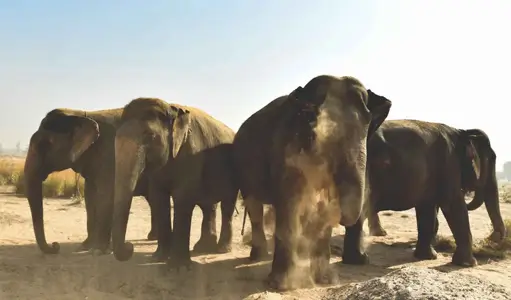
Travellers interested in animals sometimes combine Ranthambore with an ethical elephant experience in Jaipur. These are very different activities and should be approached differently.
Ranthambore is a wild habitat. Visitors enter designated areas in authorised safari vehicles and observe animals without controlling where those animals appear.
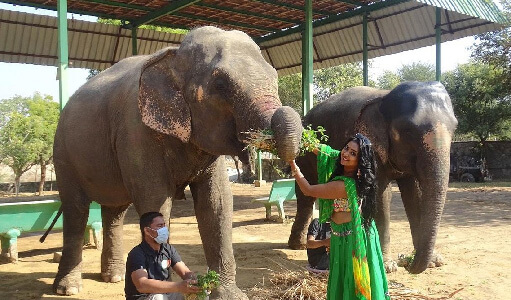
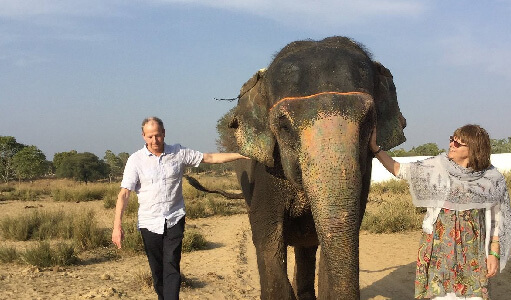
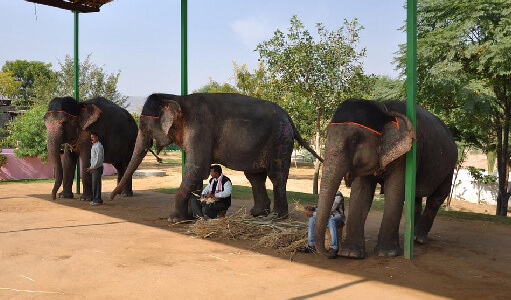
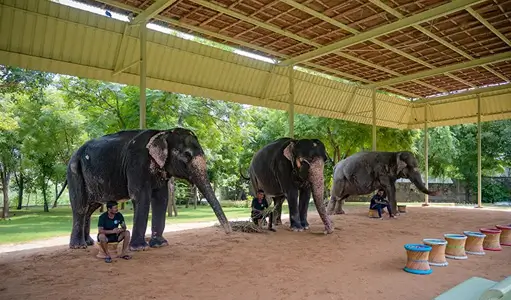
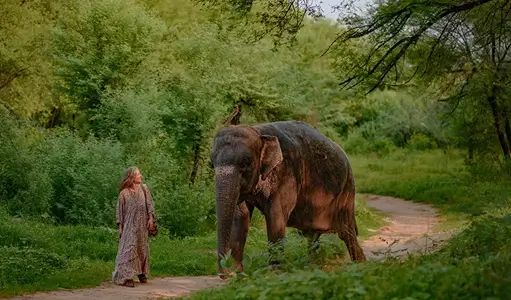
Elefantastic in Jaipur offers a no-riding, no-performance elephant experience focused on spending time beside elephants through appropriate interaction.
Visitors interested in both can spend their Jaipur days on heritage sightseeing and a pre-booked elephant experience before travelling to Ranthambore for wildlife safaris.
The important principle is to avoid treating animals as guaranteed entertainment. A responsible wildlife safari cannot promise a tiger appearance, while a responsible elephant facility should not force elephants to perform tricks merely to satisfy a visitor's expectations.
Travellers should reserve enough time for both experiences rather than rushing from an elephant visit directly into a long road transfer with no break.
For international visitors who care about animal welfare, asking specific questions about riding, performances, restraint, visitor numbers and animal routines before booking any elephant activity is worthwhile.
The journey is approximately 180 to 200 kilometres by road, depending on the Jaipur pickup point and the exact hotel or resort location near Ranthambore.
Travellers should normally allow around three and a half to five hours. Traffic, meal breaks and road conditions can increase the total journey time.
A sedan can broadly cost around ₹6,000 to ₹9,000 or more, while an Innova or Crysta-class vehicle can cost approximately ₹9,000 to ₹13,000 or more, depending on service and inclusions.
Yes, when the safari reporting time allows it. Leave Jaipur with a substantial buffer rather than relying on the shortest road estimate.
This is generally impractical because morning safaris begin early. Staying near Ranthambore the previous night is the more sensible option.
No. Tiger sightings cannot be guaranteed in a natural wildlife reserve. The animals move freely, and sightings vary from one safari to another.
A gypsy is smaller and carries fewer passengers, while a canter is a larger shared safari vehicle. Availability and official allocation can influence which option is possible for a particular visit.
Two nights work well for many first-time visitors because they provide enough time for one or more safaris without making the stay excessively rushed.
A sedan works well for one or two travellers with moderate luggage. An Innova or Crysta-class vehicle is more comfortable for families, groups and passengers carrying several large suitcases.
Yes. Jaipur and Ranthambore combine well within a private Rajasthan tour, particularly for travellers who want both cultural sightseeing and wildlife. Keep enough time for road transfers and reserve safaris before arrival.