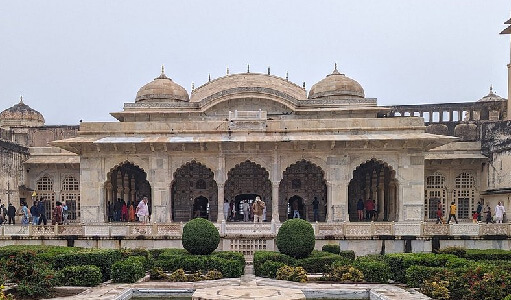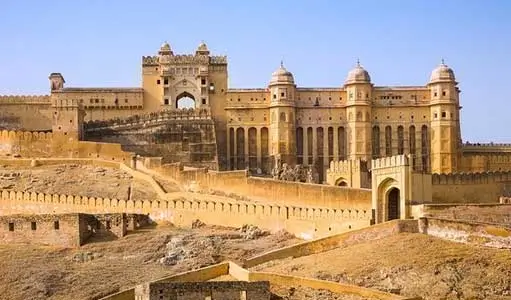
Travelling from Jaipur to Jodhpur by car is one of the most practical intercity journeys for visitors moving deeper into Rajasthan. Jaipur and Jodhpur are both major heritage destinations, but they offer noticeably different experiences. Jaipur is associated with Amber Fort, the Pink City, City Palace and Hawa Mahal, while Jodhpur is dominated by the enormous Mehrangarh Fort, blue-painted neighbourhoods and the landscape of western Rajasthan.
The road distance between Jaipur and Jodhpur is approximately 330 to 350 kilometres, depending on the route, hotel locations and any diversions. A direct private-car journey normally requires around five and a half to seven hours under reasonable conditions. Travellers adding Pushkar, Ajmer or another substantial stop should expect most of the day to be occupied by the transfer.
For international visitors, travelling with a private car and driver from Jaipur to Jodhpur can be especially convenient. There is no need to transfer luggage between a hotel, railway station and another hotel. The driver collects guests directly from their Jaipur accommodation and drops them at their Jodhpur hotel. Food, restroom and photography stops can also be taken according to the passengers' needs rather than a fixed timetable.
The route is also commercially useful for travellers taking a longer Rajasthan circuit. The same private vehicle can continue from Jodhpur toward Jaisalmer, Udaipur or another destination, allowing travellers to avoid arranging new transport in every city.
The strongest road journey is not necessarily the one with the largest number of stops. The goal should be a comfortable transfer with one worthwhile addition when desired, enough time for lunch and an arrival in Jodhpur that still leaves passengers with energy for the next day.
Travel comfortably with a professional chauffeur, transparent pricing, flexible departure times, and convenient stops at interesting attractions along the route.
The Jaipur to Jodhpur distance by road is roughly 330 to 350 kilometres. The exact figure changes according to the starting hotel, the final destination in Jodhpur and whether the driver follows the most direct road or makes a sightseeing detour. Travellers should normally keep around five and a half to seven hours for a direct journey, but that estimate should include some flexibility.
Leaving Jaipur can itself take time. A traveller staying near Amber Fort begins farther north than someone staying close to the Ajmer Road side of Jaipur. Morning traffic, local construction and the exact route out of the city can influence the first hour. Jodhpur traffic at the end of the journey also matters, especially when accommodation is located in or near the older part of the city where roads become narrower.
The drive should not be viewed as six continuous hours inside a moving car. Most travellers will want at least one substantial meal stop and one or two shorter restroom or tea breaks. Once those are included, a direct transfer can easily occupy seven hours from hotel departure to hotel arrival.
International visitors who have not previously travelled long distances by road in India should avoid building another demanding activity immediately after the expected arrival. A map may show an estimated arrival at 2:30 PM, but a relaxed lunch, traffic or an unscheduled break can move that to 4:00 PM without anything having gone wrong.
When Pushkar is added between Jaipur and Jodhpur, the day becomes longer. A meaningful Pushkar visit can require two to three hours, particularly if lunch or market time is included. This can turn the entire Jaipur–Jodhpur journey into an eight-to-ten-hour travel day.
That is completely manageable when expected in advance. It becomes frustrating only when travellers assume that sightseeing will somehow add no time to the transfer.
Discover Rajasthan’s heritage and culture with customised sightseeing stops, comfortable private transport, and a relaxed road trip experience.
Several road combinations can connect Jaipur and Jodhpur, and the best choice can vary with road conditions. Travellers do not need to memorise individual highways. A competent private driver should select the practical route according to current traffic, construction and requested stops.
For travellers interested in Pushkar, the route can move from Jaipur toward the Ajmer–Pushkar area before continuing west toward Jodhpur. This is attractive because Pushkar provides a culturally interesting break roughly within the broader direction of travel.
Travellers whose priority is reaching Jodhpur as efficiently as possible should avoid unnecessary detours and allow the driver to follow the most suitable direct road. Road conditions can change, so insisting on a route found in an old travel forum may actually make the journey slower.
The scenery changes gradually as the journey moves west. Jaipur's dense urban environment gives way to smaller towns, agricultural areas and increasingly dry Rajasthan landscapes. For international visitors travelling through Rajasthan for the first time, the road itself provides useful context that is lost when flying between cities.
A Jaipur to Jodhpur road trip also makes it easier to stop for photographs when there is a genuinely safe and appropriate location. Travellers should never ask a driver to stop suddenly on a high-speed road simply because a view looks interesting. A safe pull-off or village stop is more important than capturing one particular photograph.
The driver should also know reliable fuel stations and restaurants. This is one of the practical advantages of booking an experienced Rajasthan driver rather than treating the journey as a simple point-to-point taxi ride.
For many first-time international visitors, Pushkar is the most rewarding substantial stop between Jaipur and Jodhpur. It changes the character of the transfer day by introducing a smaller pilgrimage town between two major Rajasthan cities.
Pushkar is centred around Pushkar Lake, whose ghats hold religious importance for Hindu pilgrims. The town is also associated with the Brahma Temple, one of its best-known religious sites. Narrow market streets, cafés, shops and the lake area give Pushkar a very different atmosphere from Jaipur's forts and palaces.
Travellers should allow around two to three hours for a useful Pushkar stop. That gives enough time to walk near the lake, see part of the town, visit a temple area where appropriate and have lunch without constantly watching the clock. Visitors who want serious shopping or a long café break should allow more.
Respectful behaviour around the ghats is important. Visitors may need to remove shoes in certain religious spaces, and photography restrictions should always be followed. Travellers should also be cautious around unsolicited religious ceremonies that later involve pressure for a large donation. Anyone who wants to participate in a ritual can do so, but expectations should be clear beforehand.
Pushkar is predominantly vegetarian, making it an easy place for a vegetarian lunch. Numerous cafés and restaurants cater to both Indian and international visitors.
Adding Pushkar makes the Jaipur to Jodhpur private car journey longer, but it adds genuine value rather than simply another roadside photograph. Travellers who already intend to stay overnight in Pushkar should, of course, divide the route into two days instead.
Ajmer is located close to Pushkar but offers a very different cultural experience. The city is particularly known for the Ajmer Sharif Dargah, one of India's important Sufi shrines and a major pilgrimage destination.
For travellers interested in religious history, Ajmer can be a meaningful addition. The shrine attracts visitors from different backgrounds and can provide insight into a spiritual tradition very different from the forts and royal palaces that dominate many Rajasthan itineraries.
However, Ajmer should not be treated as a quick roadside stop.
The streets around the shrine can be extremely busy. A private vehicle may need to stop some distance away, after which visitors continue on foot or use suitable local transport. Crowds can be substantial, particularly around religious dates and busy periods.
Visitors should dress respectfully, follow local instructions and keep valuables secure. Footwear must be removed where required. Travellers who dislike dense crowds should consider whether the visit suits them.
A useful Ajmer stop can consume one and a half to three hours once access, walking and traffic are included.
Trying to visit both Ajmer and Pushkar before continuing to Jodhpur is possible, but it creates a much longer day. Visitors with a genuine interest in both religious centres may find it worthwhile. Travellers simply looking for one interesting break should usually choose the place that better matches their interests.
The Jaipur to Jodhpur private car cost depends on vehicle category, one-way or multi-day service, total distance, waiting time and sightseeing stops.
For a comfortable private one-way transfer, international travellers can keep a higher-side working budget of approximately ₹8,000 to ₹12,000 or more for a sedan. The exact quotation may vary according to vehicle standard, season and inclusions.
An Innova, Crysta or similar larger vehicle can broadly cost around ₹12,000 to ₹17,000 or more for the transfer. Premium vehicles and specialised services can exceed these ranges.
A route including several hours in Pushkar or Ajmer may cost more than a direct transfer because the driver and vehicle remain engaged for longer.
These are broad budgeting ranges rather than fixed Elefantastic quotations.
Travellers booking a multi-city Rajasthan private car tour may receive a completely different structure. Instead of pricing Jaipur–Jodhpur as a single transfer, the operator may calculate total days, kilometres and final drop-off location.
A multi-day sedan can broadly fall around ₹5,000 to ₹8,000 per active travel day, while an Innova or Crysta-class vehicle can move toward ₹8,000 to ₹12,000 or more per day depending on mileage and service.
Always compare inclusions rather than headline prices. Ask whether fuel, tolls, parking, driver allowance and applicable taxes are included.
A sedan can be perfectly comfortable for one traveller or a couple with moderate luggage. It is generally the more economical option and can handle the Jaipur–Jodhpur road journey comfortably when passenger and luggage capacity are appropriate.
International luggage changes the calculation.
Two travellers carrying two large checked suitcases, cabin bags and backpacks may find that a sedan's luggage space becomes tight. The passengers may technically fit, but the journey is less comfortable when bags begin entering the seating area.
An Innova or Crysta-class vehicle offers substantially more room and is often the stronger choice for families, three or four adults, senior travellers and anyone carrying several large bags.
The difference matters even more when Jaipur–Jodhpur is part of a longer Rajasthan circuit. A traveller may spend thirty, forty or more hours inside the same vehicle across a ten-day journey. Comfort then becomes an important part of the holiday rather than a minor luxury.
Groups should provide the transport operator with both passenger count and luggage count. Saying “four people” is not enough if those four people are carrying eight bags.
The vehicle should also have reliable air conditioning, particularly during warmer months.
A good private driver in Rajasthan will prefer assigning an appropriate vehicle over squeezing too many passengers into a smaller car simply to quote a lower price.
For a direct transfer, departure around 8:00 AM works well for many travellers. This allows breakfast at the hotel before leaving and can result in an afternoon arrival in Jodhpur under reasonable road conditions.
Travellers adding Pushkar should leave earlier. A departure around 7:00 AM to 7:30 AM gives more room for sightseeing, lunch and unexpected delays.
Hotel location matters. Someone staying near Amber Fort may need additional time to leave Jaipur compared with a traveller staying toward the western side of the city.
Visitors should also consider the previous day. If they have spent ten hours sightseeing in Jaipur and returned late from dinner, forcing a 5:00 AM departure simply to gain more sightseeing time may reduce enjoyment.
Road travel in Rajasthan should be comfortable rather than exhausting.
A sensible departure also helps the driver complete the journey during reasonable working hours. A schedule containing Jaipur sightseeing in the morning, three hours in Pushkar and a very late Jodhpur arrival is unnecessarily demanding when the same activities can be distributed more sensibly.
Travellers who need to reach Jodhpur for a fixed event should leave additional buffer time rather than relying on the shortest predicted journey.
Lunch should be treated as part of a long intercity journey rather than an inconvenience.
Travellers visiting Pushkar can eat there. The town has a wide range of vegetarian restaurants, cafés and simple local establishments. Because Pushkar attracts international visitors, menus can range from traditional Indian food to familiar international dishes.
Travellers taking a more direct route can stop at a clean highway restaurant or another established location recommended by the driver.
International visitors should prioritise freshly cooked food, clean facilities and sealed bottled or appropriately purified water. Long road days are not ideal for taking unnecessary food-hygiene risks.
A meal break of around 45 to 60 minutes works well. It gives passengers time to eat properly, use the restroom and walk around before returning to the vehicle.
Travellers with dietary allergies should communicate the exact ingredient they need to avoid. “Not spicy” does not mean dairy-free, gluten-free or nut-free.
The driver may have regular restaurants used on this route. Passengers can accept those recommendations, request another option or choose a place themselves.
A professional private car service should not pressure guests into a restaurant merely because the driver receives a benefit from taking tourists there.
Before confirming a Jaipur to Jodhpur taxi, ask for the complete price and what it covers.
Fuel should be clearly addressed. Toll charges and parking should also be stated. If the driver receives a daily allowance, travellers should know whether that is already included.
When Pushkar or Ajmer is added, confirm whether the sightseeing waiting time is covered.
If the car is part of a multi-day Rajasthan tour, ask about daily kilometre limits and charges for additional distance. Also confirm whether the driver's accommodation is included in the package.
Travellers should understand whether the quotation includes only transportation or also a licensed local guide. A driver and a sightseeing guide perform different jobs. The driver manages transportation; a guide provides detailed historical interpretation.
Payment terms should be clear before the trip begins.
Ask whether a deposit is required, when the balance is due and what cancellation conditions apply.
International travellers may also want to know whether card payment is available or whether part of the amount must be paid in Indian rupees.
A transparent quotation makes price comparison much easier and prevents disagreements at the end of the journey.
Train travel can be a good option between Jaipur and Jodhpur. It can be economical and provides a distinctly Indian travel experience.
The main limitation is flexibility.
Passengers must reach Jaipur railway station, manage their luggage, travel according to the railway timetable and arrange transport again after arriving in Jodhpur.
A train also does not allow a spontaneous three-hour Pushkar stop.
A private car from Jaipur to Jodhpur collects travellers directly from their hotel, keeps their luggage with them and delivers them to the next accommodation. Food and restroom breaks can happen when needed.
Families, senior travellers and people carrying several large suitcases may find this door-to-door convenience particularly valuable.
The train can still be the better choice for solo travellers working with a limited budget or visitors who actively want a railway experience.
The decision should therefore be based on travel style rather than assuming that one transport type is always superior.
A flight looks faster when only the time in the air is considered, but airport travel includes several additional stages.
Travellers need to leave their Jaipur hotel, reach the airport, complete check-in and security, wait for boarding, fly, collect baggage and then travel from Jodhpur Airport to their hotel.
Depending on the available flight schedule, a direct private car can be surprisingly competitive in total door-to-door time.
Road transport also avoids airline baggage restrictions and provides complete flexibility regarding departure time.
For a couple or family, the car price is shared across passengers, while each airline passenger needs a separate ticket.
The road journey also allows Pushkar or another stop to become part of the day.
Flying may still make sense when a suitable direct service fits perfectly with the wider itinerary or when a traveller strongly prefers avoiding a six-hour road journey.
For many Rajasthan itineraries, however, private road transport connects the cities naturally.
Travellers arriving in Jodhpur during the afternoon should resist the temptation to rush directly into every major attraction.
Mehrangarh Fort deserves substantial time and is better visited when travellers are fresh. Depending on interest, visitors can easily spend several hours inside the fort complex and museum areas.
After a long road journey, a quieter introduction to Jodhpur can be more enjoyable.
Visitors staying near the old city can walk around the Clock Tower and Sardar Market area, browse shops or find a rooftop restaurant with views toward Mehrangarh.
The blue-painted streets around parts of the old city also attract photographers, although visitors should remember that these are real residential areas rather than a theme park. Privacy and local life should be respected.
Travellers arriving later can simply check in, have dinner and begin sightseeing the following morning.
A relaxed first evening is particularly useful for visitors continuing toward Jaisalmer the next day or soon afterward.
Jodhpur is strategically useful because it connects naturally with both western and southern Rajasthan.
Travellers heading deeper into the desert can continue from Jodhpur to Jaisalmer. The road journey typically occupies another substantial portion of a day, so visitors should spend enough time in Jodhpur before moving on.
Travellers heading south can continue from Jodhpur to Udaipur, often incorporating places such as Ranakpur depending on the selected route.
A popular Rajasthan circuit can therefore look like:
Delhi → Agra → Jaipur → Pushkar → Jodhpur → Udaipur
Another option is:
Delhi → Agra → Jaipur → Jodhpur → Jaisalmer → Jodhpur → Udaipur
The exact sequence should match the total number of days available. Adding cities without adding days simply reduces every destination to a hotel check-in and check-out.
Using the same private car and driver in Rajasthan across these routes can simplify transportation significantly. Guests keep the same vehicle, luggage arrangements remain consistent and the driver becomes familiar with the group's preferred travel pace.