A long layover at Jaipur International Airport does not necessarily mean spending the entire day inside the terminal. With enough time between flights, travellers can leave the airport, see part of Jaipur and return without turning the stopover into a stressful race against the clock. The key is to calculate the usable sightseeing window correctly.
A Jaipur layover tour is very different from a normal sightseeing day. A six-hour connection does not provide six hours in the city. Travellers need time to leave the aircraft, collect luggage when necessary, exit the airport, travel into Jaipur and return with a comfortable buffer before the next flight. International connections may require even more caution because immigration, baggage procedures and airline check-in requirements can consume additional time.
Jaipur International Airport is in the southern part of the city. Hawa Mahal and the historic Pink City are roughly 12 to 14 kilometres away by road, while Amber Fort is considerably farther north. Depending on traffic, reaching central Jaipur can commonly take around 30 to 50 minutes, while the Amber area can require roughly 45 to 75 minutes or more from the airport.
For that reason, the amount of time available should determine the route. With six hours, keep the sightseeing compact. With eight hours, the historic centre becomes much easier to enjoy. With twelve hours, Amber Fort and several additional Jaipur landmarks become realistic.
Turn your 6, 8, or 12-hour stopover into a memorable city experience with private airport transfers and a customised sightseeing itinerary.
The first mistake travellers make during a Jaipur airport layover is treating the scheduled gap between flights as sightseeing time. If one flight lands at 9:00 AM and the next leaves at 5:00 PM, the traveller does not have eight full hours for Jaipur.
Disembarkation itself takes time. Checked luggage can add another wait. International arrivals may involve immigration and customs. Even domestic passengers can spend twenty to forty minutes getting out of the airport after landing, depending on baggage and terminal conditions.
The return journey needs an even larger safety margin.
For a domestic flight, travellers should generally aim to return well before airline check-in and security deadlines. For an international departure, a larger airport buffer is sensible. Exact check-in and gate-closing requirements vary by airline, so passengers should follow the instructions on their ticket and from the operating carrier rather than relying on a generic sightseeing schedule.
Traffic is the second major variable. Jaipur roads can be busy during commuting periods, around the old city and near popular attractions. A journey that takes thirty minutes under light traffic can take considerably longer when congestion increases.
Weather can also influence road conditions, particularly during heavy rain.
A traveller with a 6-hour Jaipur layover should therefore be much more conservative than someone with twelve hours.
Luggage deserves attention too. Travellers carrying cabin baggage may find sightseeing inconvenient if they cannot leave it securely. Those with checked baggage transferred automatically to the next flight have an easier situation. Never assume baggage will transfer automatically between separate tickets or different airlines; confirm this before leaving the terminal.
Finally, verify that you are legally able to enter India if the connection involves international travel. Visa and immigration requirements depend on nationality and travel circumstances.
Only after these practical questions are resolved should the sightseeing route begin.
Discover Jaipur’s iconic forts, palaces, and local markets with a private chauffeur, flexible timings, and hassle-free airport pick-up and drop-off.
A 6-hour layover in Jaipur should be treated as a short city introduction rather than a full sightseeing tour.
After airport procedures and return buffers are deducted, the usable city time may be only two and a half to three and a half hours. That is enough for a carefully selected route, but not enough for Amber Fort, City Palace, Jantar Mantar, Hawa Mahal, shopping and a long restaurant lunch.
For most first-time visitors, the historic Pink City is the better target.
A private car can collect the traveller from Jaipur airport and drive toward Hawa Mahal. The famous façade provides an immediate visual introduction to Jaipur and does not require a long visit when time is limited.
Allow around twenty to thirty minutes for an exterior view and photographs. Entering the monument is possible, but on a six-hour connection every additional ticket queue and internal visit uses valuable time.
From Hawa Mahal, travellers can see part of the surrounding Pink City and pass through the market streets. Johari Bazaar and Bapu Bazaar are nearby enough to provide a quick impression of Jaipur's commercial centre without requiring another long transfer.
If airport exit and traffic have gone smoothly, choose either City Palace or Jantar Mantar as the main paid attraction.
City Palace generally deserves more time and offers royal architecture, museum collections and courtyards. Jantar Mantar is more compact and can often be visited in around forty-five minutes to one hour.
Travellers should not attempt both if doing so leaves an uncomfortable airport return margin.
A quick meal can be included, but this is not the day for a distant destination restaurant. Select a reputable restaurant near the sightseeing route.
The return to Jaipur airport should begin earlier than the absolute minimum required. Traffic is unpredictable, and missing a flight is not worth one additional monument.
For a short connection, a private Jaipur airport sightseeing car is far more efficient than repeatedly booking separate taxis. The driver remains available, luggage arrangements can be discussed in advance, and the route can be shortened immediately if traffic becomes heavy.
An 8-hour Jaipur layover gives travellers noticeably more flexibility.
After allowing time to leave and return to the airport, approximately four to five useful sightseeing hours may remain, depending on flight type, baggage and traffic.
This is enough for a meaningful Pink City route.
Begin with Hawa Mahal. Spend around thirty minutes appreciating the façade and surrounding streets. Travellers interested in photography can use one of the elevated viewpoints opposite the monument, but should avoid turning a short layover into a long café stop.
Continue to City Palace, which is within the same historic area. Allocate around one and a half hours. Ticket categories vary, and premium palace access can require more time, so travellers on a layover should choose an admission option appropriate to the available window.
After City Palace, walk to Jantar Mantar. The astronomical observatory sits beside the palace and is one of the most efficient major attractions to add because it does not require another drive across Jaipur.
Approximately forty-five minutes is sufficient for many visitors, although a knowledgeable guide can make the instruments far more understandable.
At this stage, a traveller may have seen three of Jaipur's major landmarks without excessive road travel.
A short lunch can follow. Rajasthani food can be part of the layover, but avoid ordering an elaborate multi-course meal if the airport return deadline is approaching. Dal baati churma, gatte ki sabzi and other regional dishes are widely available at established restaurants.
If time remains, the driver can pass Albert Hall Museum or another central landmark on the way back toward the airport. Whether to stop should depend on actual traffic and remaining time, not on the original schedule.
An eight-hour connection is still not ideal for adding Amber Fort unless the traveller is prepared to make Amber the main attraction and skip most of central Jaipur. The fort lies north of the city while the airport is to the south, so the route creates significantly more driving.
For most first-time visitors, Hawa Mahal, City Palace and Jantar Mantar provide a safer and more satisfying Jaipur stopover itinerary.
A 12-hour layover in Jaipur changes the possibilities considerably.
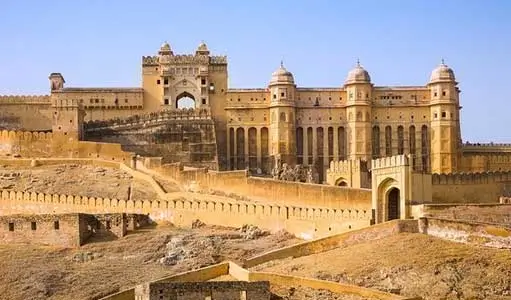
With careful timing, travellers can visit Amber Fort and still spend meaningful time in the Pink City. The day should nevertheless remain geographically logical because driving from the airport to Amber and then back toward central Jaipur already covers a substantial portion of the city.
A private airport pickup should head directly toward Amber Fort. Depending on traffic, the drive from Jaipur airport to the Amber area may take roughly forty-five minutes to more than an hour.
Allow approximately two to three hours at Amber Fort.
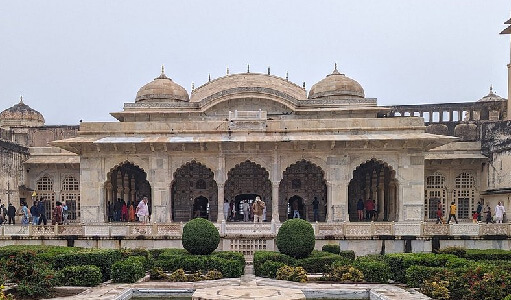
The palace-fort complex contains courtyards, gateways, halls and viewpoints that deserve more than a quick photograph. Ganesh Pol and Sheesh Mahal are among its best-known architectural features, while the elevated position provides broad views over the surrounding area.
Comfortable footwear is important because the fort involves walking, stone surfaces and stairs.
After Amber, make a brief stop at Panna Meena ka Kund if time permits. The historic stepwell is close enough to fit naturally into the route and does not require a long visit.
Continue toward central Jaipur with a stop at Jal Mahal. The palace within Man Sagar Lake is usually viewed from the roadside, so twenty minutes is often sufficient.
The next destination should be Hawa Mahal, followed by City Palace or Jantar Mantar according to remaining time.
With a full twelve-hour connection and smooth airport procedures, both may be possible. However, travellers should continuously protect their airport return margin.
Lunch can be taken in the old city or another convenient area along the route.
A twelve-hour stopover is also long enough to spend a little time shopping for Jaipur textiles, jewellery or handicrafts. High-value purchases should never be rushed simply because a flight departure is approaching.
This route provides a genuine introduction to Jaipur rather than simply filling time between flights.
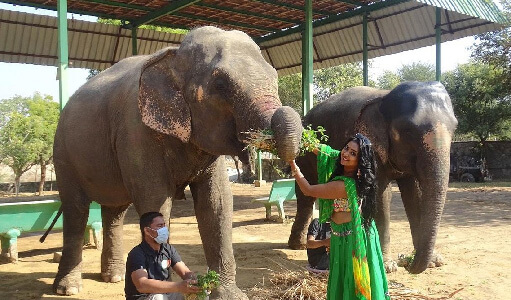
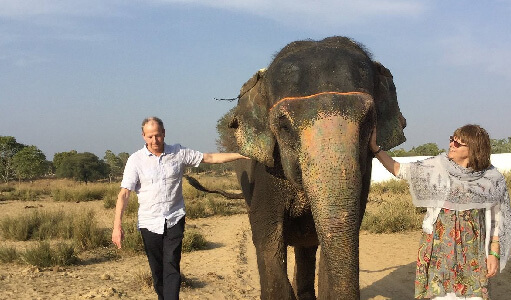
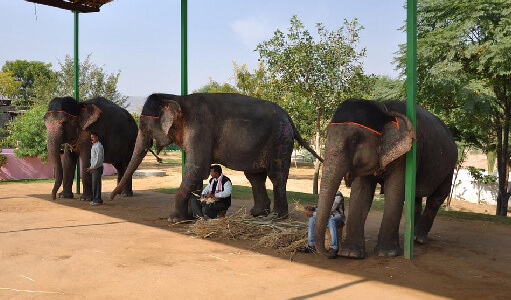
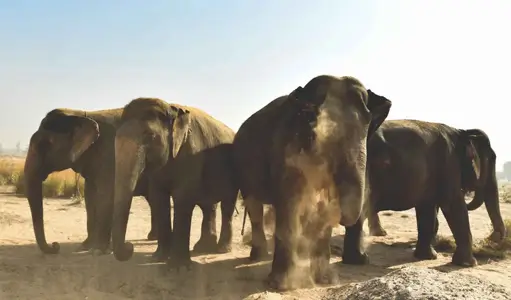
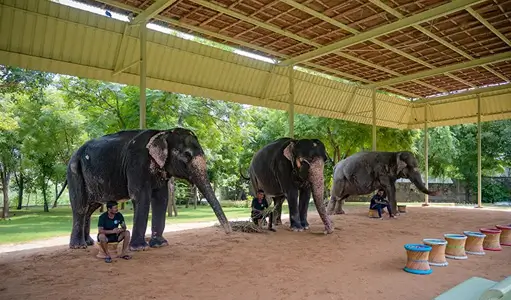
An elephant sanctuary visit during a Jaipur layover is possible, but only with a sufficiently long connection and an advance reservation.
Travellers should not arrive at Jaipur airport with six hours between flights and assume they can casually add a multi-hour elephant experience. Airport procedures, driving time and the experience itself make that risky.
Elefantastic is located on the Amber side of Jaipur rather than beside the airport. Its current daytime elephant experience is approximately two hours, and transportation time must be added.
For this reason, a longer connection—closer to the twelve-hour category—is far more suitable.
A traveller whose main priority is elephants could structure the stopover around the sanctuary rather than attempting a full city tour. The route might include airport pickup, a pre-booked ethical elephant experience in Jaipur, a short Amber or Jal Mahal stop depending on available time, lunch and the return to the airport.
Elefantastic follows a no-riding, no-performance approach. The focus is on spending time beside elephants through appropriate interactions rather than using them as transportation or entertainment.
The current daytime experience is listed at ₹5,500 per person, with Jaipur pickup and drop included under the normal experience arrangement. A passenger requiring airport-specific pickup, luggage handling or a strict flight schedule should confirm those details directly before booking.
The elephant visit should never be squeezed between flights with an unsafe return margin. A sanctuary experience is meant to be unhurried, and airport anxiety can quickly undermine it.
Transfer time is one of the most important parts of a successful Jaipur layover itinerary.
Jaipur International Airport is situated in Sanganer, south of the historic centre. The old Pink City lies to the north, while Amber Fort lies farther beyond it.
The drive from Jaipur airport to Hawa Mahal commonly requires approximately 30 to 50 minutes, but traffic can increase that estimate.
City Palace and Jantar Mantar are in the same general historic area as Hawa Mahal, which is why these attractions work so well together.
Amber Fort can require roughly 45 to 75 minutes or more from the airport depending on traffic and the time of day.
Jal Mahal sits on the road between the central city and Amber, making it a logical stop when travelling in that direction.
Nahargarh Fort requires an additional climb and road transfer, so it is generally not the first recommendation for a short airport connection.
A layover route should therefore move in one direction rather than repeatedly crossing Jaipur.
International visitors should also remember that driving time is not sightseeing time. Parking, walking to entrances, buying tickets and security checks can add another ten to twenty minutes at individual attractions.
A route that looks easy on a map can become tight after these smaller delays accumulate.
App-based taxis can be useful for a simple airport-to-hotel journey, but a private car with driver in Jaipur has several advantages during a short stopover.
The most important is continuity.
The same vehicle can collect the traveller, wait during sightseeing and return to the airport. There is no need to request a new taxi after each attraction or explain the airport deadline repeatedly.
Luggage can also be easier to manage when the vehicle remains with the traveller, although valuables and travel documents should always remain personally secured.
A private driver who knows Jaipur can modify the route when traffic becomes heavy. If City Palace takes longer than expected, the driver can recommend skipping a less important stop rather than blindly following the original sequence.
For two or more travellers, the difference in total transport cost can also become less significant because the vehicle cost is shared.
A sedan is normally sufficient for one or two passengers with moderate luggage. Travellers carrying several large international suitcases should consider an Innova, Crysta or similar larger vehicle.
Before confirming the car, ask whether airport parking, fuel, tolls if applicable, waiting time and driver charges are included.
A clearly quoted private transfer is preferable to discovering extra charges shortly before a flight.
Food can provide a quick introduction to Rajasthan even when sightseeing time is limited.
Travellers who want traditional flavours can look for dal baati churma, gatte ki sabzi, ker sangri and other regional dishes. Meat eaters may also find restaurants serving laal maas.
The restaurant should be chosen according to location as well as reputation. Travelling forty minutes in the opposite direction for a famous restaurant makes little sense during a layover.
A restaurant near Hawa Mahal, City Palace or the return route toward the airport is far more practical.
Allow approximately forty-five minutes for a proper meal.
International visitors with sensitive stomachs should select clean, established restaurants and drink sealed bottled or appropriately purified water.
Travellers with food allergies should state the specific allergen clearly. “No spice” and “no nuts” are entirely different requests.
Street food may be tempting, but passengers with an onward flight should be particularly cautious if they are not accustomed to local food hygiene conditions.
The biggest mistake is trying to see too much.
With six hours, do not attempt Amber Fort, City Palace, Hawa Mahal, Nahargarh and shopping.
With eight hours, do not assume that every minute between flights can be used outside the airport.
Even with twelve hours, leave a generous return margin.
Travellers should also avoid making high-value shopping purchases under pressure. Jaipur is known for gemstones, jewellery, textiles and handicrafts, but an airport deadline is a poor environment for making expensive decisions.
Do not depend on a single estimated travel time from a map application. Traffic conditions can change quickly.
Avoid booking an attraction that cannot be shortened if the incoming flight is delayed.
Most importantly, never risk the onward flight simply to add one more monument.
Jaipur will still be here for a longer visit.
It can be, particularly for domestic connections, but the usable sightseeing time may be only a few hours after airport procedures and return buffers. Keep the route limited to central Jaipur and protect plenty of time for the return.
A practical route can include Hawa Mahal, part of the Pink City and either City Palace or Jantar Mantar, depending on traffic and airport timing.
Eight hours can allow Hawa Mahal, City Palace, Jantar Mantar, a short market walk and a meal when airport procedures run smoothly.
Yes. A twelve-hour connection can make Amber Fort, Jal Mahal and selected Pink City attractions realistic, provided the traveller keeps a safe airport return buffer.
Hawa Mahal is roughly 12 to 14 kilometres by road from Jaipur International Airport. Driving commonly takes around thirty to fifty minutes depending on traffic.
Travellers should generally allow approximately 45 to 75 minutes or more each way depending on traffic, route conditions and time of day.
Yes, when the connection is long enough and the experience is reserved in advance. A longer layover is preferable because the elephant experience itself takes approximately two hours and road transfers must also be included.
A private Jaipur car with driver is one of the easiest options because the same vehicle can handle airport pickup, sightseeing, luggage and the return transfer without waiting for separate taxis.
This should be confirmed with the transport provider before booking. Even when luggage remains in a vehicle, passports, cash, electronics and other valuables should stay with the traveller.
Return time depends on whether the onward flight is domestic or international and on the airline's check-in requirements. Follow the operating airline's current instructions and add extra time for Jaipur traffic rather than aiming for the latest possible arrival.