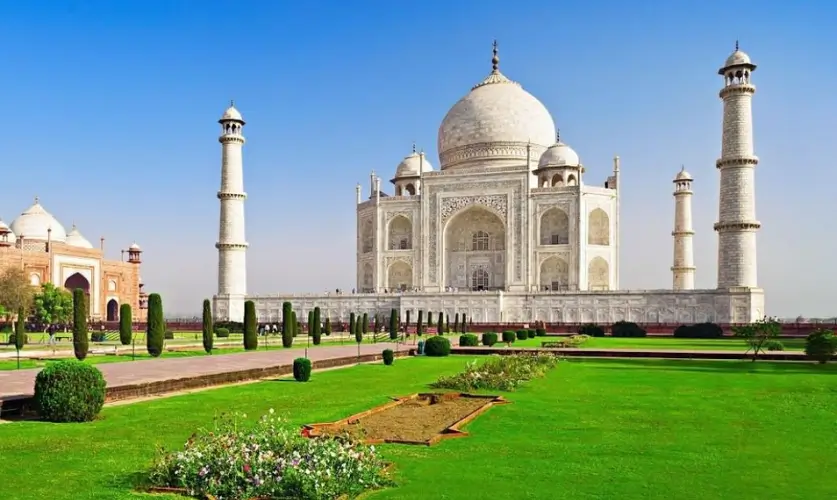
The Taj Mahal is one of the world's most admired monuments and the main reason millions of travelers visit Agra every year. Its white marble architecture, fascinating Mughal history, and position on the banks of the Yamuna River have made it one of India's most recognizable landmarks. For many international visitors following the Golden Triangle India itinerary, seeing the Taj Mahal is the highlight of their entire journey. Because travel plans often involve tight schedules, one of the most common questions travelers ask is whether the monument is open every day.
The answer is straightforward. The Taj Mahal is closed to visitors every Friday. This surprises many first-time travelers who assume that such a famous monument remains open throughout the week. Arriving in Agra on a Friday without knowing this rule can lead to disappointment, particularly for visitors who have only planned a day trip from Delhi or are travelling on a fixed holiday schedule.
The Friday closure is not related to maintenance or tourism management. The Taj Mahal also functions as a mosque, and every Friday it is reserved for congregational prayers. During this time, regular sightseeing is suspended, allowing worshippers to use the mosque within the Taj Mahal complex for religious purposes. This long-standing practice reflects the monument's continuing cultural and religious importance in addition to its architectural significance.
Understanding this schedule before booking hotels, train tickets, flights, or private transportation can save both time and money. Travelers planning the Golden Triangle tour should ideally arrange their Agra visit on any day other than Friday if seeing the Taj Mahal is a priority.
Fortunately, a Friday in Agra does not mean the city has nothing to offer. Agra contains several outstanding historical attractions that receive far fewer visitors than the Taj Mahal while providing equally fascinating insights into Mughal architecture and Indian history. Agra Fort, Mehtab Bagh, Itmad-ud-Daulah's Tomb, and the nearby UNESCO World Heritage Site of Fatehpur Sikri remain open and can easily fill an entire day of sightseeing.
Many experienced travelers even use Friday strategically. Instead of rushing through Agra, they spend the day exploring these alternative attractions before visiting the Taj Mahal early Saturday morning when sightseeing resumes. This approach creates a more relaxed itinerary while allowing additional time to appreciate Agra's rich historical heritage beyond its most famous monument.
Visitors should also understand that although general entry is prohibited on Fridays, there are limited exceptions related to religious activities. These exceptions apply only under specific conditions and should not be considered part of an ordinary sightseeing visit.
This guide explains why the Taj Mahal closes every Friday, who may still enter, how the closure affects travel plans, and the best places to visit in Agra instead so that your itinerary remains enjoyable regardless of the day you arrive.
Many travelers assume that the Taj Mahal functions only as a historical monument. While it is undoubtedly one of the world's greatest architectural masterpieces and a UNESCO World Heritage Site, it also includes an active mosque on the western side of the complex. This religious function explains why the monument follows a weekly closure that differs from many other major tourist attractions in India.
Every Friday, the mosque inside the Taj Mahal is reserved for Jumu'ah (Friday congregational prayers). To respect the religious purpose of the mosque and provide worshippers with appropriate access, the Archaeological Survey of India closes the monument to regular tourists throughout the day. As a result, visitors cannot purchase sightseeing tickets or enter the complex for tourism on Fridays.
This arrangement has existed for many years and forms part of the monument's normal operating schedule rather than being an occasional restriction. Travelers should therefore consider the Friday closure as a fixed part of itinerary planning rather than an unexpected exception.
Although the Taj Mahal is closed for general tourism, local worshippers attending Friday prayers may be permitted entry under specific regulations established by the authorities. These arrangements are intended exclusively for religious purposes and do not provide access for ordinary sightseeing, photography, or guided tours.
For international visitors, this means that scheduling is extremely important. Those arriving in Agra specifically to see the Taj Mahal should avoid planning their only visit on a Friday. Fortunately, the monument remains open on all other days of the week from sunrise until sunset, allowing visitors ample opportunity to experience one of the world's most remarkable examples of Mughal architecture.
Another common misunderstanding is that the Taj Mahal closes for the entire weekend. This is incorrect. The monument reopens on Saturday morning according to its normal visiting hours, and sightseeing continues as usual. Many travelers who stay overnight in Agra simply spend Friday exploring other attractions before visiting the Taj Mahal early the following morning.
Understanding this schedule in advance prevents unnecessary changes to transportation bookings, hotel reservations, and sightseeing plans. It also allows visitors to make better use of their time in Agra by discovering several other exceptional monuments that often receive far less attention than the Taj Mahal itself.
A common misunderstanding among travelers is that the Taj Mahal remains completely inaccessible every Friday. In reality, the restriction applies to tourist visits, not to religious worship.
The mosque located within the Taj Mahal complex continues to serve the local Muslim community. Every Friday, worshippers gathering for Jumu'ah (Friday prayers) may be permitted to enter the mosque according to the rules established by the local authorities and the Archaeological Survey of India. This access is intended solely for religious purposes and should not be confused with normal sightseeing.
International tourists, photographers, tour groups, and visitors holding regular entrance tickets cannot enter the monument for tourism on Fridays. The ticket counters remain closed for sightseeing, guided tours do not operate inside the complex, and photography visits are not permitted.
Because these arrangements are based on religious practice rather than tourism management, visitors should respect the closure and avoid attempting to access the monument for sightseeing during Friday prayer hours.
If your itinerary includes Agra on a Friday, it is advisable to reorganize your sightseeing schedule instead of expecting an exception. Fortunately, Agra offers numerous historical attractions that easily fill an entire day without visiting the Taj Mahal.
A perfect Taj Mahal experience begins before you reach its gates. Let us plan your Agra journey around the right timings, seamless private travel and unforgettable heritage experiences—so even a Friday arrival becomes part of a beautifully crafted itinerary.
When the Taj Mahal is closed, Agra Fort becomes the city's most rewarding attraction. Located only a few kilometres from the Taj Mahal, this UNESCO World Heritage Site served as the principal residence of the Mughal emperors before the capital shifted to Delhi.
Unlike the Taj Mahal, Agra Fort combines military architecture with elegant royal palaces, audience halls, gardens, courtyards, mosques, and impressive defensive walls. Built primarily from red sandstone and later enhanced with white marble additions, the fort reflects several generations of Mughal architectural development.
Visitors can explore remarkable structures including Jahangiri Mahal, Khas Mahal, Diwan-i-Am, Diwan-i-Khas, Musamman Burj, and Sheesh Mahal. Each section offers fascinating insights into royal life, administration, and court ceremonies during one of India's most influential historical periods.
One particularly moving location inside the fort is the Musamman Burj, where Emperor Shah Jahan is believed to have spent his final years under house arrest. From this pavilion, visitors enjoy distant views of the Taj Mahal across the Yamuna River, making the historical connection between the two monuments especially meaningful.
A thorough visit generally requires two to three hours, making Agra Fort an ideal centerpiece for a Friday itinerary.
If seeing the Taj Mahal from outside the complex is still part of your plans, Mehtab Bagh provides one of the finest viewpoints in Agra.
Located on the opposite bank of the Yamuna River, this beautifully restored Mughal garden offers uninterrupted panoramic views of the Taj Mahal without entering the monument itself. The peaceful atmosphere makes it particularly attractive for photographers seeking reflections, sunset views, and wide landscape compositions.
Compared with the crowds normally surrounding the Taj Mahal, Mehtab Bagh remains relatively quiet throughout much of the day. Visitors can walk through landscaped gardens while appreciating the monument from a unique perspective that many tourists overlook.
Sunset is widely regarded as the most beautiful time to visit, when the changing light gradually alters the appearance of the white marble across the river.
Although Mehtab Bagh cannot replace a visit inside the Taj Mahal, it provides an excellent opportunity to admire one of the world's most famous monuments even on a Friday.
Often called the "Baby Taj," Itmad-ud-Daulah's Tomb is one of Agra's finest yet least crowded Mughal monuments.
Constructed before the Taj Mahal, this elegant marble mausoleum introduced many architectural techniques later perfected in the Taj Mahal itself. Visitors will notice intricate gemstone inlay work, delicate marble lattice screens, symmetrical gardens, and refined decorative details that influenced later Mughal architecture.
Because visitor numbers remain considerably lower than at the Taj Mahal, the atmosphere feels calm and relaxed. Travelers interested in architecture often appreciate the opportunity to examine decorative craftsmanship without large crowds.
A visit usually requires one to one and a half hours, making it an excellent addition to a Friday sightseeing schedule.
Whether you arrive on a Friday or any other day, discover Agra beyond the Taj Mahal with private travel, carefully timed sightseeing and authentic heritage experiences designed around your comfort.
Travelers with a full day available may consider visiting Fatehpur Sikri, located approximately 40 kilometres from Agra.
This magnificent UNESCO World Heritage Site served briefly as the capital of the Mughal Empire under Emperor Akbar. Although the city was later abandoned because of water shortages, its palaces, mosques, courtyards, gateways, and audience halls remain remarkably well preserved.
Important attractions include the Buland Darwaza, Jama Masjid, Tomb of Salim Chishti, Diwan-i-Khas, Panch Mahal, and numerous royal residences.
Unlike the Taj Mahal, Fatehpur Sikri generally offers far more open space, allowing visitors to explore comfortably even during busy travel seasons.
The journey from Agra requires approximately one hour by road, making it an excellent day excursion while waiting for the Taj Mahal to reopen the following morning.
Instead of viewing Friday as a wasted day, travelers can easily create a rewarding itinerary that highlights several of Agra's remarkable historical attractions.
Begin the morning at Agra Fort, where cooler temperatures make exploring the extensive palace complex more comfortable.
Afterward, continue to Itmad-ud-Daulah's Tomb, spending time appreciating its detailed marble craftsmanship and peaceful gardens.
Enjoy lunch at one of Agra's highly rated restaurants before heading to Mehtab Bagh during the late afternoon. The changing light across the Yamuna River provides excellent photography opportunities while offering memorable views of the Taj Mahal from outside the complex.
Travelers with additional time may replace one of these attractions with a half-day excursion to Fatehpur Sikri, particularly if they are staying overnight in Agra.
The following morning, arrive at the Taj Mahal shortly after sunrise to experience the monument under its most beautiful lighting conditions while avoiding much of the daytime crowd.
Before confirming transportation or accommodation, always verify that your planned Taj Mahal visit does not fall on a Friday.
If your broader itinerary requires being in Agra on a Friday, consider booking accommodation for two nights. This allows a relaxed exploration of Agra's other monuments before visiting the Taj Mahal on Saturday morning.
Purchasing Taj Mahal tickets online in advance remains advisable for all other days of the week, particularly during the busiest travel months.
Visitors should also wear comfortable walking shoes, carry drinking water, and allow sufficient time at each attraction rather than attempting to rush through multiple monuments in a single afternoon.
Although the Taj Mahal naturally receives most international attention, Agra's broader Mughal heritage is extensive. Exploring these additional monuments often gives travelers a much deeper understanding of the empire that created one of the world's most celebrated architectural masterpieces.
Yes. The monument is closed to regular tourists every Friday for congregational prayers.
The mosque inside the complex is used for Friday prayers, so sightseeing is suspended for the day.
No. Regular sightseeing visitors are not permitted to enter on Fridays.
Access is generally limited to worshippers attending Jumu'ah prayers, subject to local regulations.
Yes. The monument reopens according to its normal visiting hours from sunrise until sunset.
Agra Fort is the most popular alternative and is a UNESCO World Heritage Site with outstanding Mughal architecture.
Yes. You can enjoy exterior views from Mehtab Bagh, although entry into the monument is not permitted.
Absolutely. Its intricate marble decoration and peaceful atmosphere make it one of Agra's finest Mughal monuments.
Yes. It is approximately one hour from Agra and makes an excellent full or half-day excursion.
Not necessarily. Many travelers use Friday to explore Agra Fort, Mehtab Bagh, Itmad-ud-Daulah's Tomb, and Fatehpur Sikri before visiting the Taj Mahal early on Saturday morning.