A custom India tour quote can be extremely accurate or almost meaningless depending on the information given at the beginning. Sending a message that says “I need a two-week India trip for two people” is not enough for a tour operator to calculate a realistic price. Two travelers can spend $4,000 on the ground or more than $15,000 following roughly the same route simply because their hotel standards, vehicle preferences, private guiding and activities are completely different.
International travelers should therefore treat a quote request like a practical travel brief. The operator needs to know the dates, number of travelers, arrival and departure cities, destinations, number of nights, preferred hotel category, vehicle requirements, sightseeing interests and any special expectations before producing a meaningful price.
For a comfortable private journey, a couple may reasonably receive quotations around $350 to $700 per day for two people, depending on accommodation and inclusions. Premium private travel can move toward $700 to $1,100+ per day for two, while luxury arrangements with palace hotels, suites, high-end vehicles and exclusive services can exceed $1,500 per day.
That is why the phrase “best price” is not particularly useful without defining what should be included. A $5,000 quotation can be excellent value if it uses strong hotels, an appropriate private vehicle and clearly included services. A $4,200 quotation can become more expensive after adding hotel taxes, guides, tolls, tickets and airport transfers that were excluded from the headline amount.
The best private India tour quote is not simply the cheapest number. It is a clear price for the journey the traveler actually wants.
Travel dates are the foundation of any meaningful quotation because hotel rates, domestic flights and availability can change significantly from one period to another. An operator cannot calculate the same price for every month and every date.
Instead of writing “around October,” provide exact arrival and departure dates whenever possible. If the dates are flexible, say how flexible they are. A traveler who can shift the journey by two or three days may gain access to better hotel availability or more convenient flights.
Passenger count also matters because several private-tour costs are shared.
A private vehicle priced at $100 per day costs the same whether one traveler or two travelers occupy it. A hotel room is also generally shared by two people. This means a couple usually receives better per-person value than a solo traveler.
Families should provide adults and children's ages because hotel room configuration can change according to age and occupancy rules. A family requiring two connecting rooms will receive a very different quotation from a family comfortable with one larger suite.
A useful opening message should therefore include exact dates, passenger count, ages of children where relevant and whether everyone is arriving and departing together.
These details allow the operator to begin calculating a realistic India private tour price rather than providing a generic starting rate.
Share your travel dates, destinations, group size, and preferences to receive a customised itinerary and transparent pricing from our local travel experts.
Arrival and departure cities can change the complete route.
A traveler arriving in Delhi and departing from Delhi may require a circular itinerary. Someone arriving in Delhi and flying home from Mumbai can use a one-way route that avoids returning to the original city.
Open-jaw international flights can therefore make a private journey more efficient.
The operator should know the airport, flight arrival time and departure time once those details are confirmed. This matters because a flight landing at 11:30 p.m. requires a very different first day from one arriving at 9:00 a.m.
Late-night airport pickups can also affect costs. A private transfer may reasonably cost around $30 to $70+, while premium hotel transfers can cost considerably more.
Departure timing matters just as much. A 7:00 a.m. international flight can require leaving the hotel several hours earlier, which may affect whether the final hotel night should be near the airport or in the city center.
Providing these details enables the tour operator to structure airport transfers correctly and avoid unnecessary hotel nights or road travel.
A common mistake is asking the operator to “include all major places.”
India is too large for that instruction to be practical.
A ten-day journey cannot comfortably include every major destination, and trying to fit too many cities into a short period can turn the holiday into a sequence of long drives, airports and hotel check-ins.
Travelers should identify their most important destinations first.
For example, a couple may say they definitely want Delhi, Agra, Jaipur and Udaipur but are unsure whether Jodhpur or Jaisalmer should be added. That gives the operator room to suggest the stronger route.
The number of nights matters as much as the city list. One night in every destination can look efficient on paper but usually creates excessive packing and travel.
A good custom India itinerary quote should account for realistic road times and sightseeing rather than simply fitting every requested place into the calendar.
Travelers should also mention which destinations are optional. This lets the operator adjust the route if the trip becomes too rushed or expensive.
Tell us what you want to experience in India, and we'll help you create a private tour with suitable hotels, comfortable transport, and flexible sightseeing.
Hotel category is often the largest single factor affecting a private-tour quotation.
The phrase “good hotel” is too vague.
A traveler may consider $120 per night a good hotel, while another expects a $400 five-star property. Without a clear standard, two operators can provide completely different quotations while both believe they are meeting the request.
For a comfortable private journey, international travelers can reasonably use approximately $120 to $250 per room per night as a working range for strong four-star and entry-level five-star accommodation.
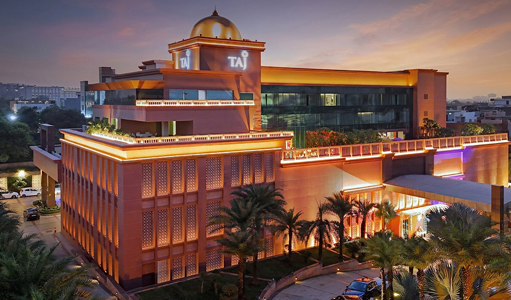
Premium five-star and heritage hotels may cost approximately $250 to $500+ per night, while palace hotels and luxury properties can move toward $500 to $1,000+ per night.
A couple taking a 10-night trip can therefore spend $1,500 on hotels or more than $7,000 depending on property choices.
Tell the operator whether you prefer four-star, five-star, heritage or luxury accommodation. If a mixture is acceptable, say so.
For example, travelers might request strong four-star hotels in Delhi and Agra, a heritage hotel in Jaipur and one premium luxury stay in Udaipur.
This approach allows the India tour quote to reflect the places where accommodation matters most rather than placing every night at the same price level.
Travelers who have already researched hotels should send the names.
This can save considerable time and prevent the operator from suggesting properties that do not match expectations.
A message such as “We like the style and price level of these three hotels” gives the operator a much clearer idea of the required standard than simply saying “luxury.”
If the exact hotel is unavailable, the operator can suggest a comparable alternative.
Room category should also be mentioned when important. A standard room, lake-view room, heritage room and suite can have dramatically different prices even within the same hotel.
Honeymoon travelers should be particularly specific. If a lake view or palace-style room is important, state that before the quote is prepared.
A quotation should identify hotel names and room categories wherever possible. Generic terms such as “five-star hotel” make comparison more difficult.
Transportation is another area where incomplete information creates misleading prices.
A sedan may be perfectly suitable for one or two travelers with moderate luggage. A couple with two large suitcases and multiple cabin bags may prefer a Toyota Innova with driver in India.
Families need to consider both passengers and luggage. Four people may technically fit in a sedan, but four people plus four large international suitcases may not.
A premium working estimate for a sedan can be around $60 to $100 per day, while an Innova-type vehicle can reasonably cost approximately $80 to $130+ per day. Larger vehicles can move toward $120 to $220+ per day, while luxury chauffeur vehicles can cost substantially more.
The quote request should therefore include passenger count, luggage count and preferred vehicle category.
If the traveler has no preference, the operator should recommend an appropriate vehicle based on the actual requirements.
The private car with driver cost in India should also state whether fuel, tolls, parking, interstate taxes, driver allowance and driver accommodation are included.
A private driver and private guide are different services.
The driver manages transportation. A professional guide provides historical and cultural interpretation inside major attractions.
Travelers should state whether they want guides in every major city, only at selected historical destinations or not at all.
A strong private English-speaking guide can reasonably cost around $80 to $150 per full sightseeing day, while premium specialists and certain foreign-language guides can cost around $150 to $300+.
For a ten-day journey, hiring guides in three or four major destinations might add approximately $300 to $700+ to the total trip cost.
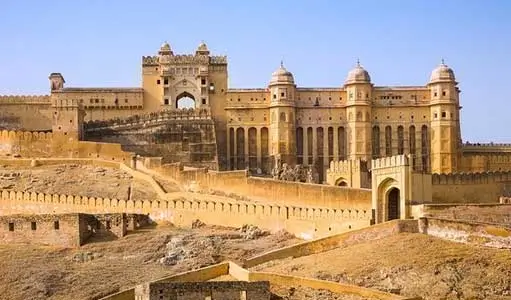
Some travelers appreciate detailed guiding at the Taj Mahal, Amber Fort and major Delhi sites but prefer independent sightseeing elsewhere.
Others want one guide accompanying them throughout the trip.
The operator needs to know which style you prefer before building the price.
A generic tour quote often includes the standard attractions because the operator does not know what the traveler prefers.
Providing interests can produce a much stronger itinerary.
Someone interested in architecture may want more time in forts, palaces and historic neighborhoods. A traveler interested in photography may value early starts and visually distinctive locations. Food-focused travelers may want restaurant recommendations or culinary activities.
Families may prefer fewer monuments and more interactive experiences.
Couples may want a slower pace and more time at hotels.
Senior travelers may want to avoid schedules containing extensive walking every day.
The quote request should therefore explain the travel style in a few sentences.
This does not require writing a long essay. A clear statement such as “We enjoy history, architecture and local food, prefer comfortable days rather than early starts every morning, and do not want shopping stops unless requested” can be extremely useful.
That information helps the operator create a tailor-made India tour rather than sending a generic route used for every traveler.
Many travelers hesitate to mention a budget because they worry the operator will simply quote the maximum amount.
However, a realistic range can save both sides significant time.
A couple asking for a ten-day luxury journey with palace hotels and a total budget of $2,500 has expectations that do not match the likely cost. The operator needs to know this immediately so the hotel standard or route can be adjusted.
For a comfortable private trip, a couple can reasonably use around $350 to $700 per day for two travelers as a working higher-side range.
A premium journey might sit around $700 to $1,100+ per day for two, while genuine luxury arrangements can exceed $1,500 per day.
A budget does not need to be exact.
Travelers can say, “We would like to keep the ground arrangements around $6,000 to $8,000 for two, excluding international flights.”
That gives the operator enough information to choose appropriate hotels and services.
A custom India trip cost is much easier to control when budget expectations are discussed before hotels are selected.
A headline price can be misleading if inclusions differ between operators.
Travelers should state whether they want hotels, breakfast, private vehicle, airport transfers, guides, attraction admission and domestic flights included.
One quotation might cost $5,500 and include almost everything. Another might cost $4,700 but exclude guides, tickets, tolls and airport transfers.
The second quote may eventually cost more.
A useful private-tour quotation can include hotel accommodation, breakfast, private transportation, driver costs, airport pickups and selected local guides. Monument admission and domestic flights may be included or listed separately depending on the arrangement.
The traveler should know what is included before comparing total prices.
Monument tickets are often excluded from private-tour prices because travelers may prefer to pay directly.
This is not necessarily a problem, but the exclusion should be clear.
A sightseeing-heavy itinerary can accumulate meaningful admission costs, particularly for international visitors.
If the quote excludes tickets, ask for an approximate allowance.
For a multi-city trip, travelers can reasonably keep $150 to $350+ per person available for major monuments and activities depending on the route.
Premium private experiences can increase that amount significantly.
A cheap-looking quotation that excludes every paid attraction should not be compared directly with one that includes them.
Long distances should not always be covered by road.
A good private itinerary may combine road transportation with domestic flights or trains where they save substantial time.
Travelers should ask whether the quote includes those tickets.
Domestic flights can reasonably cost around $70 to $200+ per person per sector depending on route, timing, demand and baggage requirements.
Premium fares can cost more.
Baggage allowances are especially important for international travelers carrying large suitcases. The cheapest domestic fare may not include enough checked luggage.
A complete quote should either include realistic baggage costs or make them clear as an exclusion.
Dietary preferences can affect restaurant and hotel recommendations.
Vegetarian requirements are generally easy to accommodate in India, but travelers with severe allergies, gluten restrictions or other specific dietary requirements should state them in advance.
If hotel dinners are included, the operator should know the requirements before selecting the meal arrangement.
Travelers should not assume that dietary restrictions significantly increase the entire trip price, but premium or specialist food requirements can affect restaurant choices.
This information is particularly important for families and travelers with medical dietary needs.
Travelers with mobility limitations should include practical requirements in the initial request.
Historic attractions can contain stairs, uneven surfaces and substantial walking. A private itinerary can often reduce unnecessary physical strain, but the operator needs to know before designing the sightseeing days.
Travelers may request elevators where possible, fewer hotel changes, ground-floor rooms, a larger vehicle or shorter sightseeing days.
Senior travelers can also benefit from avoiding extremely early departures and long road days back-to-back.
Providing this information allows the operator to select hotels and route structure more carefully.
This small detail can dramatically improve traveler satisfaction.
Some visitors enjoy shopping for textiles, jewelry, handicrafts and local products. Others want absolutely no commercial stops.
State the preference clearly.
A private itinerary should not include unwanted shopping visits presented as mandatory sightseeing.
Travelers who do want shopping should say what interests them. Someone interested in textiles needs different recommendations from someone seeking high-end jewelry.
Clear expectations prevent the driver or guide from guessing.
A useful custom India tour quotation should not be only a total price.
The traveler should receive a day-by-day outline showing where they sleep each night, major road transfers and the main sightseeing structure.
This makes it possible to identify overly long road days before booking.
If one day contains eight hours of driving followed by a full sightseeing program, the itinerary may need adjustment.
The quote should also identify free time.
A private journey should not automatically fill every hour simply because more sightseeing can be added.
A quotation saying “four-star hotels throughout” does not provide enough information.
Hotel quality varies considerably within the same category.
The traveler should know the actual property names before making a substantial payment, or at minimum receive representative options that will be confirmed before payment.
Location should also be considered.
A well-located four-star hotel can provide better practical value than a five-star hotel requiring an hour of additional driving every day.
Hotel details are one of the most important parts of comparing two quotations.
Transportation quotes should be transparent.
The operator should clarify whether fuel, tolls, parking, interstate taxes, driver allowance and accommodation are included.
If local sightseeing is included on non-transfer days, that should also be stated.
Airport waiting policy can matter when international arrivals are involved.
A quote that says “car included” without any further detail is not enough for a multi-day booking.
Before accepting a quotation, travelers should know how much must be paid immediately.
A custom private trip may require a deposit around 15% to 30%, although the amount can be higher when expensive hotels and flights need immediate confirmation.
The quote should state the final payment deadline.
It should also explain which services become non-refundable after payment.
Travelers should avoid treating payment terms as something to discuss after the itinerary has already been confirmed.
Cancellation conditions are part of the true price of the trip.
A $6,000 quotation with flexible hotels may provide better financial value than a $5,700 quotation built around non-refundable rates.
Travelers should ask what amount would be lost if cancellation occurred several months before arrival, one month before arrival or shortly before the trip.
Domestic flights and special experiences may follow separate conditions.
The terms should be available in writing.
Two quotations should be compared line by line rather than only by total amount.
Check hotel names, room categories, breakfast, transportation, vehicle type, guides, admission, domestic flights, taxes and cancellation terms.
Suppose Operator A quotes $6,500 and Operator B quotes $5,700.
Operator A includes strong five-star hotels, an Innova, guides in four cities and monument tickets.
Operator B uses four-star hotels, a sedan and excludes guides and admission.
The $800 difference no longer represents the same product.
Travelers should first adjust the comparison until both offers represent similar service levels.
Only then does the price difference become meaningful.
A useful request does not need to be long, but it should contain the critical details.
A couple might send a message stating that they are two adults arriving in Delhi for a twelve-night journey, departing from Udaipur, interested in Delhi, Agra, Jaipur, Jodhpur and Udaipur, seeking strong four-star and selected five-star heritage hotels, preferring an Innova with an English-speaking driver, wanting private guides in Delhi, Agra and Jaipur, carrying two large suitcases and two cabin bags, and wanting to keep the ground arrangements around $7,000 to $9,000 for two people.
They could add that breakfast should be included, shopping stops should occur only when requested, and monument tickets can either be included or shown separately.
That one paragraph gives an operator enough information to prepare a far more accurate quotation.
A strong quotation should feel specific to the traveler.
The hotels should match the requested standard. The route should be realistic. Transportation should fit the passenger and luggage requirements. Major inclusions and exclusions should be clear.
Pricing should be understandable.
The operator should not avoid reasonable questions about hotels, vehicles or cancellation terms.
A good private India tour quote also leaves enough flexibility for minor refinement. Travelers often adjust one hotel, add a night or change the sightseeing pace before final confirmation.
The quote should therefore be treated as a detailed proposal rather than simply a number.
For international visitors, sending accurate information at the beginning is one of the easiest ways to improve both the itinerary and the price. The more clearly the traveler explains dates, route, hotel level, vehicle, interests and budget, the less likely they are to receive a generic package that needs to be rebuilt later.
Send exact dates, passenger count, arrival and departure cities, preferred destinations, hotel standard, vehicle needs, luggage, sightseeing interests, guide requirements and approximate budget.
A comfortable private journey for two can reasonably cost around $350–$700 per day, while premium arrangements can reach $700–$1,100+ per day. Luxury travel can cost significantly more.
Yes. A realistic budget range helps the operator select hotels and services that match your expectations instead of producing a proposal that is far above or below what you want to spend.
Ideally, yes. Hotel names and room categories make it much easier to judge the true value of a custom India tour quotation.
The quote should clearly state whether fuel, tolls, parking, interstate taxes, driver allowance and driver accommodation are included.
They can be included or shown separately. The important point is that travelers should know whether they are part of the quoted total before comparing offers.
A working range of around 15%–30% can occur, though premium hotels, flights and special services can require larger upfront payments.
Yes. Travelers with larger luggage, families or couples taking long road journeys can specifically request a Toyota Innova with driver.
Compare the same hotels or hotel standards, vehicle category, guides, tickets, domestic transport, taxes, cancellation terms and major exclusions before comparing the final price.
A reliable quote clearly states the route, hotels, room categories, vehicle, services, inclusions, exclusions, payment schedule and cancellation conditions so the traveler understands the true cost before booking.