Hiring a private guide can completely change the quality of a sightseeing day in India. A palace becomes more than a collection of rooms, a fort becomes easier to place within its historical period, and the architectural details of a monument begin to make sense when someone knowledgeable explains what happened there and why it matters.
For international travelers, the practical question is usually straightforward: how much does a tour guide cost in India?
A sensible higher-side budget for a professional private tour guide in India is approximately $50 to $90 for a half-day and $80 to $150 for a full day. Highly experienced guides, specialist historians, guides speaking less commonly requested foreign languages, or premium private services can cost around $150 to $300+ per day.
For travelers who want one dedicated guide to accompany a longer journey, the pricing structure changes. A multi-day private guide in India may cost approximately $120 to $250+ per day, with the traveler generally responsible for or being quoted separately for the guide's transportation, accommodation and meals when the guide travels between cities.
These figures intentionally sit on the comfortable to premium side. Cheaper guides can certainly be found, but selecting a guide solely on price can be a poor decision when an international traveler has only one day to see a destination. Language ability, historical knowledge, professionalism, punctuality and the ability to adapt sightseeing to the guest's interests often matter much more than saving $20 or $30.
There is no single national tariff that accurately describes every India tour guide price. Rates depend on the destination, duration, language, type of sightseeing, group size and guide's expertise.
For ordinary city sightseeing, international travelers can use the following higher-side figures as a practical starting point:
| Guide Service | Typical Premium Working Budget |
| Short 2–3 hour guided visit | $40–$70 |
| Half-day private guide | $50–$90 |
| Full-day private guide | $80–$150 |
| Premium experienced guide | $120–$200+ |
| Specialist historian or expert | $150–$300+ |
| Foreign-language private guide | $100–$220+ |
| Multi-day accompanying guide | $120–$250+ per day |
| Private guide for family/group | $100–$200+ per day |
These amounts normally refer to the guide service itself. They should not automatically be assumed to include monument admission, transportation, meals, airport transfers or paid activities.
For example, a traveler booking an Agra private tour guide for the Taj Mahal and Agra Fort might pay around $70–$130 for strong private guiding depending on duration and service level. A Jaipur private tour guide handling Amber Fort, City Palace, Jantar Mantar and other major stops could reasonably fall around $80–$150 for a complete day. Similar pricing logic applies to a private guide in Delhi, where a full sightseeing day can involve numerous monuments and substantial movement between Old Delhi and New Delhi.
The cheapest online quote should therefore not automatically be treated as the normal rate. A $20 guide and a $120 guide may technically perform the same job category, but the quality of English, depth of knowledge, communication style and professionalism can be very different.
When sightseeing is one of the main reasons for visiting India, allocating $80–$150 for a quality full-day private guide can represent a relatively small portion of the total holiday cost while significantly improving the day.
India's greatest landmarks have stories worth discovering. Explore them with a professional local guide who explains the history, hidden details and cultural significance behind every attraction.
Duration has a major influence on the final private guide cost in India, but guide pricing does not always increase proportionally with the number of hours.
A half-day service typically means around four hours of guiding. A premium working budget of $50–$90 is appropriate for many major tourist destinations. This format works well when a traveler wants detailed guidance at one or two important attractions rather than continuous assistance throughout the day.
A short guided visit can make sense at a monument where historical interpretation is particularly useful. For example, someone arriving in Agra primarily to visit the Taj Mahal might prefer a knowledgeable private guide for the monument rather than paying for an entire sightseeing day.
Full-day guiding usually provides better value when several major attractions are involved. A full sightseeing day commonly requires around six to eight hours, although the exact duration should always be agreed before booking. A sensible premium budget is approximately $80–$150.
The additional cost pays for more than extra hours. A full-day guide can coordinate the sightseeing sequence, advise when to take breaks, help manage entry procedures, explain multiple sites and adjust the day if traffic or other conditions affect the schedule.
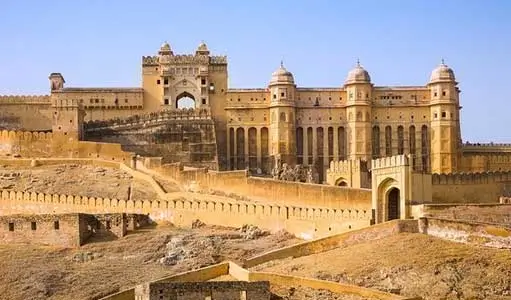
For example, a full Jaipur sightseeing guide might begin with Amber Fort, continue toward City Palace and Jantar Mantar, include other agreed stops and help arrange the order efficiently. A Delhi guide may need to account for much greater travel distances between attractions.
Travelers should ask exactly what “full day” means before paying. One operator may define it as eight hours, another as six hours, and another may quote by the sightseeing program rather than an exact hourly limit.
Overtime should also be clarified. If a standard service ends after eight hours and the traveler wants the guide to remain for dinner, shopping or an evening activity, additional fees may apply.
This is particularly relevant when booking a private tour guide for India sightseeing independently rather than through a complete private tour arrangement.
A good quotation should state the expected duration, meeting location, attractions covered, language and any additional charges. That small amount of detail prevents misunderstandings later.
Private guiding costs are not identical across India. Major international tourism destinations tend to have a large number of guides, but they also attract travelers seeking premium service and foreign-language expertise.
In Delhi, a premium private tour guide in Delhi can reasonably be budgeted at $80–$160 for a full day. Delhi sightseeing can involve long distances, busy traffic and a mixture of historic, religious and governmental areas. A capable guide should do more than recite historical dates; the guide should help keep the sightseeing day efficient.
For a half day in Delhi, approximately $50–$90 is a useful budget.
Agra is slightly different because many visitors arrive primarily for the Taj Mahal. A shorter private service can cost approximately $40–$70, while a more complete day covering the Taj Mahal, Agra Fort and additional sightseeing can be budgeted around $70–$130+.
A strong Taj Mahal private guide should be able to explain Mughal history, architectural features, the construction story and the relationship between the Taj Mahal and the wider Agra heritage landscape.
In Jaipur, a full-day private guide can reasonably fall around $80–$150, while half-day services may cost around $50–$90. Jaipur contains enough major attractions that a full day is often worthwhile for first-time visitors.
Udaipur, Jodhpur, Jaisalmer and Varanasi can also benefit substantially from local guiding. A premium private guide can commonly be budgeted around $70–$150 per day, depending on the service.
Special experiences can cost more. A guide with deep expertise in architecture, religion, photography, textiles, food or history may charge substantially above ordinary city-tour rates.
Travelers should therefore compare expertise rather than assuming the same rate should apply in every destination.
The visible part of a guide's job is talking about attractions, but high-quality private guiding involves much more.
A professional guide should arrive at the agreed meeting point on time, communicate clearly, know the day's sightseeing sequence and adapt the information to the traveler rather than delivering the same memorized speech to everyone.
Language quality is particularly important for international visitors. A guide may possess excellent historical knowledge, but that knowledge has limited value if explanations are difficult to follow. This is one reason travelers searching for an English-speaking tour guide in India should consider communication quality alongside price.
Strong guides also know how much information to provide. Some travelers want detailed architectural history. Others are interested in photography, religion, royal families, food or everyday life. Families with children may need a completely different style of explanation.
The guide can also help visitors use time efficiently. Large attractions can have multiple entrances, ticket procedures and sections. Knowing the logical route through a site reduces unnecessary walking and confusion.
A private guide should never pressure guests into unwanted shopping. Travelers should be able to say clearly that they are not interested in shopping stops. If shopping is requested, a professional guide can help identify appropriate areas without turning the sightseeing day into a sequence of commission-based visits.
This is why professional tour guide rates in India should be assessed against service quality rather than treated as a commodity where the lowest rate always wins.
For someone spending several thousand dollars on an international holiday, saving $30 on the person responsible for interpreting India's most important monuments rarely makes sense if the cheaper service is noticeably weaker.
Go beyond ordinary sightseeing with a knowledgeable private guide who brings India's history, architecture and culture to life.
English-speaking guides are widely available in India's major tourism destinations. Travelers requesting another language may face higher rates because the pool of qualified guides is smaller.
A foreign-language tour guide in India can reasonably cost approximately $100 to $220+ for a full day, depending on language, destination, demand and experience.
Languages frequently requested by international visitors can include French, Spanish, German, Italian and Japanese. Availability differs by destination, and less common languages may require more advance booking.
Specialist language guides can become particularly difficult to secure during busy travel periods. Someone requiring a specific language should not leave the booking until arrival and assume an appropriate guide will be available.
The difference between paying $100 and $180 for a guide becomes relatively minor if the higher-priced guide allows every member of the party to understand the historical explanation comfortably.
Families and private groups should also ask whether the quoted rate is per guide or per person. Private guiding is frequently priced for the guide's service rather than individually for each traveler, but group size can affect the quote.
For example, two people may pay $120 for one full-day guide rather than $120 each. A group of eight may receive a different rate because communication and logistics become more demanding.
When comparing quotes, always ask for the total amount payable for the complete party.
Usually, travelers should assume monument entrance tickets are separate unless the quotation specifically states otherwise.
This distinction is important because a $100 guide fee does not mean the complete sightseeing day will cost only $100.
A traveler may need to pay the guide fee, foreign visitor admission charges, transportation, parking, camera-related fees where applicable, meals and optional activities.
If several paid monuments are visited during the same day, the total sightseeing expense can become significantly higher than the guide rate.
The cleanest approach is to request an itemized quotation showing:
This makes the cost of hiring a guide in India much easier to evaluate.
It also prevents confusion when comparing two offers. One operator might quote $90 for guide service only, while another quotes $170 including guide, transportation and some admission. The second quotation initially looks more expensive but may actually represent better overall value.
International travelers should also avoid handing over large amounts of cash for tickets without knowing what is being purchased. At major attractions, official ticketing channels should be used whenever practical.
A reliable private tour operator can combine guides, transportation and sightseeing arrangements into one itinerary, which may be easier for travelers who do not want to coordinate each service independently.
One of the most common misconceptions among first-time international visitors is that a private driver automatically acts as a sightseeing guide.
These are different roles.
A private driver in India is responsible for transportation. The driver manages the vehicle, route, luggage, road conditions, pickup times and transfers between destinations.
A licensed private tour guide focuses on sightseeing interpretation. The guide accompanies travelers at attractions and explains history, architecture, culture and local context.
A driver may know a great deal about routes and destinations after years of experience, but travelers should not expect the driver to provide specialist guiding inside monuments.
This distinction matters when calculating costs.
A traveler may spend $70–$120 per day for a premium private vehicle and driver, depending on vehicle and route, and another $80–$150 for a private guide on sightseeing days.
Not every day requires both.
During a long road transfer between cities, the driver may be the only service needed. On a full sightseeing day in Jaipur, Delhi or Agra, adding a guide can be worthwhile.
This combination allows travelers to spend money where it produces the most value rather than paying for guiding during days when little formal sightseeing occurs.
Some travelers prefer having one guide accompany them throughout a longer journey instead of hiring a different local guide in every city.
This can provide continuity. The guide becomes familiar with the travelers' interests, pace and preferences, and the guests do not need to establish a new relationship at every destination.
A premium multi-day private tour guide in India can reasonably be budgeted at approximately $120 to $250+ per day.
However, the guide's daily fee is not necessarily the complete cost.
If the guide travels from Delhi to Agra, Jaipur, Jodhpur and Udaipur with the guests, the quotation may also need to cover accommodation, meals and transportation for the guide.
For ten days, a guide charging $160 per day creates a base professional fee of $1,600. Add accommodation and travel-related expenses and the total can move above $2,000.
For many travelers, local city guides are more economical. A different specialist guide can be used in each destination, while the private driver remains consistent throughout the road journey.
A dedicated accompanying guide makes more sense for travelers who value continuous assistance, require a specific language or want a highly personalized premium service.
Tipping is separate from the contracted guide fee and should be based on service quality.
For a strong full-day private guide, international travelers may keep approximately $10 to $25 per couple or small party available as a practical gratuity range. Exceptional specialist service may justify more.
For a half-day guide, approximately $5 to $15 can be appropriate when the service has been good.
These are working ranges rather than compulsory fixed charges.
A gratuity should reflect punctuality, knowledge, communication, flexibility and the overall quality of the day. Travelers should not feel pressured to provide a large tip for poor service.
On a multi-day journey, tipping can be handled at the end of the guide's service rather than every evening.
Travelers should also remember that guides and drivers perform separate roles, so gratuities are normally considered separately when both have provided good service.
A private guide is most valuable when a destination has substantial historical depth and the traveler wants more than photographs.
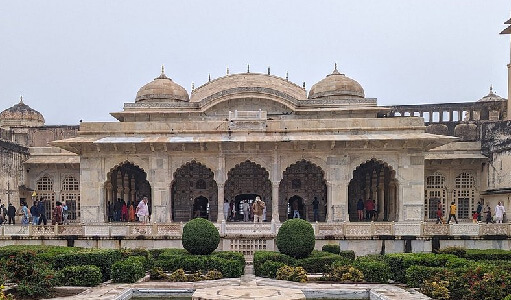
The Taj Mahal is visually impressive without explanation, but Mughal history and architectural context add considerable meaning. The same applies to Amber Fort, Jantar Mantar, Agra Fort and many other major attractions.
A private guide can also be worthwhile when time is limited. Travelers who have only one full sightseeing day do not want to waste several hours deciding where to enter, what to see first and how long to spend at each site.
Families can benefit because a good private guide can adjust the pace around children. Older travelers can ask for fewer stairs, more breaks and a less rushed schedule.
For experienced independent travelers who enjoy researching every attraction in advance, a guide may be less important at simpler sites. Selective guiding can therefore provide excellent value: hire strong guides at the most historically significant destinations and remain independent elsewhere.
For a ten-day private journey, spending $300 to $700 total on selected professional guides can significantly improve several key sightseeing days without becoming one of the largest trip expenses.
Price should be one part of the decision, not the entire decision.
Before booking, confirm the guide's language, service duration, meeting point, sightseeing coverage and total fee in writing. Ask whether transportation, monument admission and taxes are included.
Travelers should also state their interests. Someone fascinated by architecture may want a different guide from a family primarily seeking an accessible introduction to the city.
For a private India tour, guides can be arranged city by city as part of the wider itinerary. This can reduce the amount of coordination required after arrival and ensure that guiding fits the transportation schedule.
During busy travel periods, guides should be secured before arrival, especially if a specific foreign language or specialist expertise is required.
A realistic budget of $80–$150 for a quality full-day English-speaking private guide is a sensible benchmark in major destinations. Half-day services commonly sit around $50–$90, while premium specialists and foreign-language guides can exceed $200 per day.
Travelers spending thousands of dollars on flights, hotels and transportation should consider the guide as part of the quality of the experience rather than simply another expense to minimize. The right person can turn several hours of sightseeing into one of the most memorable parts of an India journey.
A comfortable higher-side estimate is approximately $50–$90 for a half day and $80–$150 for a full day. Premium specialists and foreign-language guides can cost $150–$300+ per day.
A professional English-speaking tour guide in India can generally be budgeted at around $80–$150 for a full day in major tourism destinations, depending on experience and sightseeing requirements.
A shorter private guiding service can reasonably cost around $40–$70, while more extensive Agra sightseeing with a private guide can cost approximately $70–$130+.
For full-day private sightseeing, keeping approximately $80–$150 available is a useful premium working budget. Half-day services can fall around $50–$90.
Usually not unless specifically stated. Tour guide fees in India should generally be treated separately from monument admission, transportation and optional activities.
Not every day. A driver handles transportation, while a guide provides sightseeing interpretation. Travelers often use a driver throughout a road journey and add local guides on major sightseeing days.
Approximately $100–$220+ per full day is a useful working range, although rates depend heavily on language, destination and availability.
For good full-day service, approximately $10–$25 per couple or small party can be a reasonable gratuity. Tipping remains dependent on service quality rather than being a compulsory fixed charge.
A dedicated accompanying guide can cost approximately $120–$250+ per day, with accommodation, meals and travel-related expenses potentially charged separately.
For major historical destinations, a knowledgeable private India tour guide can provide substantial value through historical interpretation, efficient sightseeing and personalized attention. Selective guiding at important destinations can be particularly cost-effective.