
Few animals inspire as much admiration as elephants. Their enormous size often captures attention first, but their intelligence is what leaves a lasting impression on scientists, wildlife experts and travelers who spend time around them. For decades, researchers have studied elephant behavior and repeatedly discovered evidence that these animals possess cognitive abilities far beyond what many people once believed possible.
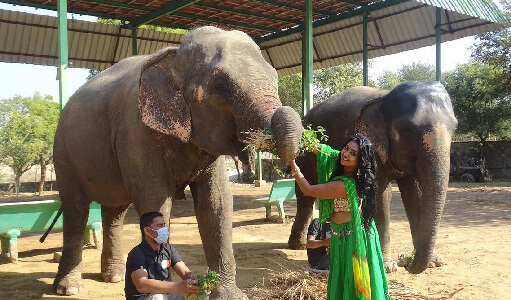
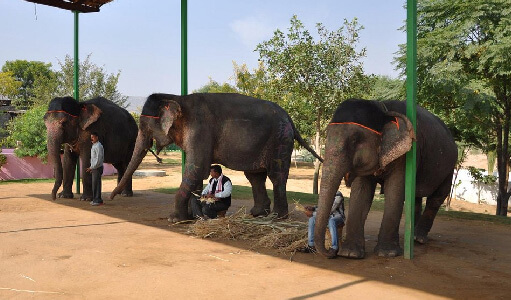
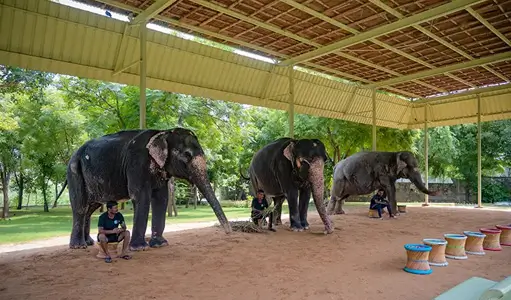
When visitors meet elephants at ethical facilities such as Elefantastic Jaipur, they are often surprised by how aware, responsive and emotionally expressive the animals appear. An elephant can recognize familiar individuals, remember routines, solve problems and respond differently depending on its surroundings. These behaviors are not random. They are signs of a highly developed brain capable of complex thinking and decision-making.
The question is not simply whether elephants are intelligent. The more fascinating discussion is how their intelligence works and why it evolved in such extraordinary ways. Unlike predators that rely primarily on hunting skills, elephants depend on memory, communication, cooperation and social learning to survive. Their lives revolve around relationships, environmental knowledge and collective decision-making.
Scientific research continues to reveal new insights into elephant cognition. Studies show that elephants can recognize themselves in mirrors, demonstrate empathy, understand cooperation and remember locations for many years. These abilities place them among the most intelligent animals on Earth alongside dolphins, great apes and certain species of whales.
Understanding elephant intelligence changes the way people view these animals. They become more than wildlife attractions or symbols of strength. They emerge as individuals with personalities, emotions, social responsibilities and remarkable mental abilities. The deeper scientists explore elephant cognition, the clearer it becomes that these animals possess minds far more sophisticated than previously imagined.
Experience elephants in an ethical environment where you can witness their remarkable memory, emotional bonds, and natural behavior while building a deeper appreciation for these extraordinary animals.
One reason elephants display such impressive intelligence is the extraordinary structure of their brains. The elephant brain is the largest brain of any land animal and weighs approximately 10 to 12 pounds. While brain size alone does not determine intelligence, the complexity of the elephant brain provides important clues about its cognitive abilities.
Researchers have discovered that elephant brains contain an enormous number of neurons. Certain regions associated with memory, emotional processing and social awareness are particularly well developed. These structures support the behaviors that make elephants unique among mammals.
The cerebral cortex, responsible for advanced thinking and decision-making, is highly folded and complex. This increased surface area allows for more sophisticated information processing. Scientists often compare the structure of elephant brains with those of dolphins and primates because of their similarities in certain cognitive functions.
Equally important is the development of the temporal lobes, which play a significant role in memory. Elephants rely heavily on memory throughout their lives. Remembering migration routes, water sources, social relationships and environmental conditions requires exceptional mental capacity. In many cases, survival depends on information stored over decades.
Brain development also supports emotional processing. Research suggests elephants experience a wide range of emotions including joy, fear, curiosity, grief and affection. Their responses often appear remarkably similar to those observed in humans and other highly intelligent social species.
The complexity of the elephant brain did not evolve by accident. Living in dynamic environments and maintaining strong social bonds required advanced cognitive abilities. Over thousands of generations, natural selection favored elephants capable of learning, remembering and adapting to changing circumstances.
The phrase "an elephant never forgets" has become famous worldwide, and surprisingly, science suggests there is significant truth behind it. Memory represents one of the most impressive aspects of elephant intelligence and plays a critical role in their survival.
Wild elephants often travel across enormous territories where food and water availability changes seasonally. During droughts, experienced matriarchs may lead their families to water sources they have not visited for many years. These locations can be dozens or even hundreds of miles away. Remembering such information demonstrates remarkable long-term memory.
Research has shown that elephants recognize individual elephants even after years of separation. They can identify family members through vocalizations, scent and visual cues. Reunions between separated elephants frequently involve emotional displays that suggest strong social memories remain intact over long periods.
Memory also influences social structure. Older female elephants serve as living libraries of knowledge. Their experiences help younger generations navigate environmental challenges and avoid dangers. Herds led by experienced matriarchs often enjoy higher survival rates because of the knowledge these leaders possess.
Human interactions further demonstrate elephant memory. Elephants frequently recognize caretakers, researchers and guides they have encountered previously. Some individuals remember specific people after years without contact. Such recognition requires sophisticated memory systems capable of storing detailed information about individuals and experiences.
The importance of memory extends beyond practical survival. It forms the foundation of elephant culture, allowing knowledge to be transferred across generations. In many ways, memory helps create continuity within elephant societies, strengthening social bonds and preserving valuable information.
Intelligence is often measured by an animal's ability to solve problems, and elephants consistently perform well in situations requiring creative thinking. Researchers studying elephant cognition have documented numerous examples of innovation and adaptability.
In controlled experiments, elephants have demonstrated the ability to use tools to achieve goals. Some have moved objects into position to reach food placed beyond their immediate access. Others have manipulated branches to scratch difficult-to-reach areas of their bodies. These actions indicate understanding of cause and effect relationships.
Problem-solving abilities also appear in the wild. Elephants regularly overcome obstacles while searching for food and water. They may remove barriers, alter pathways or cooperate with others to access resources. Such behaviors suggest flexibility in thinking rather than reliance on simple instinct.
One famous study involved elephants moving large boxes beneath suspended food. Instead of repeatedly attempting to reach the food directly, the elephants recognized the usefulness of the box and repositioned it accordingly. This behavior demonstrated planning and strategic thinking.
Adaptability represents another important aspect of intelligence. Elephants frequently adjust their behavior in response to environmental changes. Whether dealing with droughts, altered migration routes or new challenges created by human activity, they often find innovative ways to survive.
These examples reveal minds capable of more than automatic responses. Elephants evaluate situations, consider options and implement solutions. Such cognitive flexibility is characteristic of highly intelligent species and contributes significantly to their ecological success.
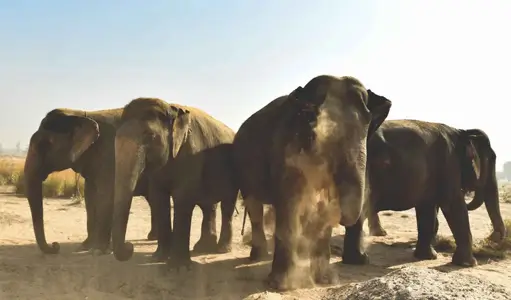
Elephant intelligence becomes especially evident when examining their social lives. Few animals maintain social networks as complex and enduring as those found among elephant families.
Family groups typically revolve around related females and their offspring. Within these groups, individuals develop long-lasting relationships characterized by cooperation, communication and mutual support. Maintaining such relationships requires sophisticated social awareness.
Elephants recognize individual personalities and adjust their behavior accordingly. They understand social hierarchies, remember previous interactions and respond differently to various members of their group. These abilities reflect advanced social cognition.
Young elephants learn by observing older individuals. Mothers, aunts and grandmothers serve as teachers, demonstrating behaviors necessary for survival. This process of social learning allows knowledge to accumulate and spread throughout the herd.
Conflict resolution further demonstrates intelligence. Disagreements occasionally occur, yet elephants often employ behaviors that reduce tension and restore harmony. Physical contact, vocal communication and calming gestures help maintain group stability.
Social intelligence also enables cooperation. Family members work together to protect calves, locate resources and respond to threats. Successful cooperation requires communication, trust and awareness of others' needs.
These complex social dynamics resemble aspects of human communities. They highlight the importance of intelligence not only for individual survival but also for maintaining healthy social relationships.
One of the most fascinating areas of elephant research involves emotional intelligence. Scientists increasingly recognize that elephants experience emotions in ways that appear remarkably sophisticated.
Grief provides one of the strongest examples. Numerous observations document elephants responding to the death of family members with behaviors suggesting mourning. Individuals may remain near deceased companions, touch bones with their trunks and revisit locations associated with lost relatives.
Empathy represents another important emotional capability. Elephants often respond to distressed individuals with comforting behaviors. They may offer physical reassurance, remain close to injured companions or assist struggling calves.
Playfulness also reveals emotional depth. Young elephants frequently engage in games, chase one another and interact with objects purely for enjoyment. Adults occasionally participate as well, suggesting play remains important throughout life.
Researchers have documented apparent expressions of joy during reunions. Family members separated for extended periods often greet each other enthusiastically through vocalizations, physical contact and excited behavior.
Fear, curiosity and affection all appear within elephant societies. The ability to experience and respond to such a wide range of emotions indicates significant emotional intelligence and contributes to the strength of social bonds.
Understanding elephant emotions encourages greater respect for their welfare. Recognizing them as emotionally complex individuals highlights the importance of ethical treatment and responsible wildlife tourism.
Experience the emotional world of elephants through thoughtful encounters that celebrate their unique personalities, lifelong friendships, and incredible resilience.
Communication lies at the heart of elephant intelligence. These animals possess one of the most advanced communication systems in the animal kingdom.
Elephants use vocalizations, body language, touch and chemical signals to share information. Their communication extends beyond sounds audible to humans. Low-frequency rumbles can travel several miles, allowing elephants to communicate across large distances.
Different vocalizations convey different meanings. Elephants may signal danger, coordinate movement, maintain contact with family members or express emotional states. Understanding these signals requires both cognitive sophistication and social learning.
Body language plays an equally important role. Ear position, trunk movements, posture and facial expressions communicate intentions and emotions. Other elephants interpret these signals and adjust their behavior accordingly.
Touch strengthens social relationships. Trunks function as communication tools as much as physical appendages. Gentle touches can provide reassurance, reinforce bonds or convey information.
The complexity of elephant communication demonstrates advanced mental processing. Effective communication requires understanding messages, remembering previous interactions and responding appropriately. Such abilities further support the conclusion that elephants rank among the world's most intelligent animals.
The more researchers learn about elephants, the clearer it becomes that intelligence extends far beyond physical strength or survival skills. Elephants possess memory, emotional awareness, social understanding, communication abilities and problem-solving skills that place them among the most remarkable animals on Earth.
Their intelligence influences every aspect of their lives. It helps them navigate vast landscapes, maintain strong family bonds, care for their young and adapt to changing environments. These abilities have allowed elephants to survive for millions of years despite numerous challenges.
For visitors meeting elephants in ethical environments, understanding their intelligence creates a deeper connection. Every interaction becomes more meaningful when viewed through the lens of cognition and emotion. Observing an elephant solve a problem, recognize a familiar person or communicate with another elephant reveals a mind operating at a remarkably sophisticated level.
As scientific knowledge continues to expand, elephants increasingly challenge traditional assumptions about animal intelligence. They remind us that intelligence exists in many forms and that some of the world's most impressive minds may belong to species very different from our own.
Yes. Elephants are widely recognized as some of the most intelligent animals on Earth due to their memory, social behavior, communication skills and problem-solving abilities.
An elephant's brain weighs approximately 10 to 12 pounds, making it the largest brain of any land animal.
Yes. Elephants can recognize and remember individual humans, caretakers and family members even after long periods of separation.
Research strongly suggests that elephants experience emotions including joy, grief, affection, fear and empathy.
Yes. Elephants regularly demonstrate creative problem-solving abilities in both controlled studies and natural environments.
They communicate through vocalizations, body language, touch, scent and low-frequency sounds that can travel long distances.
Yes. Mirror self-recognition tests have shown that elephants possess self-awareness, a trait shared by only a few species.
Memory helps elephants locate food and water, recognize family members and navigate large territories.
Elephants rank among the most intelligent animals alongside dolphins, great apes and certain whale species.
Understanding elephant intelligence promotes respect, ethical treatment and stronger support for conservation efforts that protect these remarkable animals.