
Few animals in the world depend on family as much as elephants. From the moment a calf is born, its education begins. Unlike species that rely heavily on instinct alone, elephants spend years learning from parents, grandparents, siblings and other members of their social group. Every day brings new lessons about survival, communication, relationships and life within the herd.
This extended learning period is one of the reasons elephants are considered among the most intelligent animals on Earth. A baby elephant is not born knowing how to navigate forests, locate water, communicate effectively or interact within a complex social structure. These skills are acquired gradually through observation, practice and guidance from experienced family members.
For wildlife researchers, elephant families represent one of the most fascinating examples of social learning in nature. Young elephants spend years surrounded by teachers. Mothers provide care and protection, while grandmothers, aunts and older siblings contribute valuable lessons. Every interaction becomes part of the calf's education.
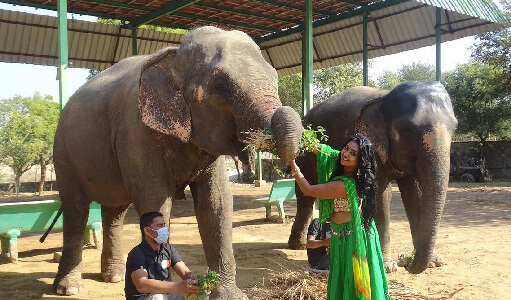
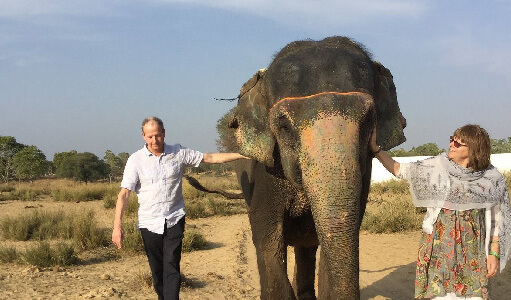
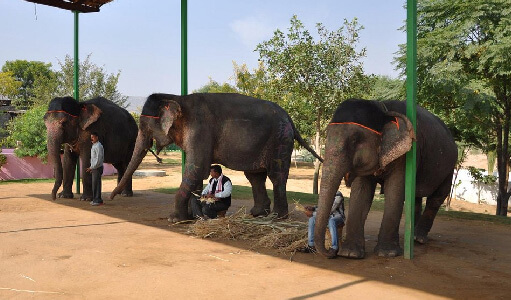
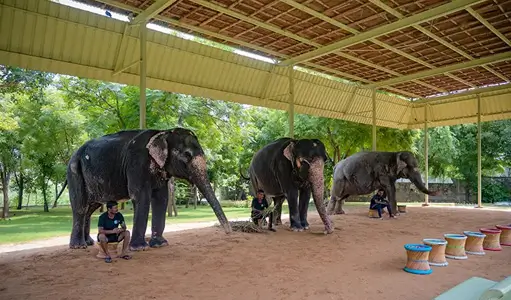
Visitors participating in ethical elephant experiences are often surprised by how closely young elephants remain connected to their families. Calves rarely wander far from trusted adults. They constantly observe, imitate and learn from those around them. This behavior highlights the importance of family within elephant society.
The learning process extends far beyond practical survival skills. Baby elephants also develop emotional intelligence, social awareness and communication abilities. They learn how to build relationships, respond to challenges and cooperate with others. These lessons shape their personalities and influence their future roles within the herd.
Understanding how baby elephants learn helps explain why elephant families are so important. Their social structure is not simply about protection. It is a sophisticated system designed to transfer knowledge from one generation to the next, ensuring the survival and success of the entire family.
Every confident elephant begins as a curious calf, guided by the love, wisdom, and protection of its family. Visit Elefantastic to witness these extraordinary family bonds.
A newborn elephant enters the world surrounded by family. Unlike many animals that receive care from only their mothers, elephant calves are welcomed by an entire support network of related females.
Within minutes of birth, family members often gather around the calf. Mothers provide immediate care, while other females help protect and guide the newborn. This early attention creates a safe environment where learning can begin.
One of the first lessons involves movement. A newborn elephant may struggle to stand initially, but family members remain nearby as it learns to balance and walk. These first attempts are essential because mobility is critical for survival. The herd cannot remain stationary for long periods, so calves must quickly learn to keep up.
Observation plays an important role from the very beginning. Even during the first weeks of life, calves watch adults constantly. They observe feeding behavior, social interactions and movement patterns. Although they may not fully understand what they see, these observations lay the foundation for future learning.
The presence of multiple caregivers increases learning opportunities. Different family members demonstrate different behaviors, exposing calves to a wide range of experiences and skills. This diversity helps young elephants develop a broader understanding of their environment.
The first days of life establish a pattern that continues for years. Learning becomes a constant process supported by family members who serve as teachers, protectors and role models.
Among all the influences in a young elephant's life, none is more important than the mother. She provides food, protection, emotional support and countless opportunities for learning.
A mother elephant remains extremely attentive to her calf. She responds quickly to signs of distress, guides the calf through unfamiliar situations and helps it navigate the challenges of early life. This close relationship creates a strong foundation for development.
Feeding provides one of the earliest lessons. Calves initially depend entirely on their mother's milk, but as they grow, they begin observing how adults gather and consume vegetation. Through repeated observation and experimentation, they learn which plants are suitable for food.
Mothers also teach social behavior. Young elephants learn how to interact with family members by watching their mothers communicate, cooperate and respond to different situations. These observations help calves understand the rules governing elephant society.
Protection is another important aspect of maternal teaching. When danger approaches, calves observe how adults react. They learn when to remain close, when to move quickly and how to respond to potential threats.
The relationship between mother and calf often lasts for many years. During this time, the calf gradually becomes more independent while continuing to benefit from maternal guidance. This extended learning period contributes significantly to elephant intelligence and social complexity.
The patience and dedication displayed by elephant mothers highlight the importance of family in shaping future generations.
Elephant society operates very differently from many other animal societies. Parenting is rarely the responsibility of the mother alone. Instead, a network of female relatives contributes to the upbringing of every calf.
This cooperative caregiving system is often called allomothering. Aunts, older sisters and grandmothers frequently assist with supervision, protection and social development. These helpers provide additional support while exposing calves to a wider range of experiences.
Grandmothers are particularly valuable because of their experience. Having raised calves of their own, they possess extensive knowledge about elephant behavior and survival. Their presence increases the likelihood that young elephants will thrive.
Older sisters also play important roles. By helping care for younger calves, they gain parenting experience that will benefit them later in life. At the same time, young calves receive additional attention and guidance.
This communal approach creates a rich learning environment. Calves interact with multiple caregivers, each contributing unique perspectives and skills. The result is a broader education than any single individual could provide.
Researchers believe allomothering contributes significantly to the success of elephant societies. By sharing responsibilities, families improve calf survival rates and strengthen social bonds.
The involvement of multiple caregivers demonstrates that raising an elephant is truly a family effort. Every member of the group contributes to the development of the next generation.
One of the primary ways baby elephants learn is through observation. They spend countless hours watching older family members and imitating what they see.
This process begins early and continues throughout childhood. Calves observe how adults use their trunks, interact socially, locate food and respond to environmental challenges. Over time, they attempt to replicate these behaviors themselves.
Using the trunk provides a perfect example. Although elephants are born with trunks, learning to control them takes practice. Young calves often appear clumsy as they experiment with grasping objects, drinking water and exploring their surroundings.
Adults do not provide formal instruction in the human sense. Instead, calves learn by observing successful behavior and practicing repeatedly. Trial and error play important roles in development.
Observation also teaches communication. Calves learn the meaning of vocalizations, body language and touch by watching interactions among family members. This knowledge helps them participate effectively in social life.
The ability to learn through observation reflects advanced cognitive abilities. Rather than relying solely on instinct, elephants acquire knowledge by studying others and adapting their behavior accordingly.
This learning strategy allows information to accumulate across generations. Valuable knowledge can be passed from older elephants to younger ones without requiring direct experience of every situation.
Communication is essential for elephant society, and calves spend years mastering this complex skill. From a young age, they are surrounded by a rich network of sounds, gestures and social signals.
Elephants communicate through vocalizations, touch, body language and low-frequency sounds that can travel long distances. Understanding these signals requires extensive learning and practice.
Young elephants begin by listening. They hear rumbles, trumpets and other vocalizations used by family members. Over time, they learn to associate different sounds with specific situations and emotional states.
Touch provides another important form of communication. Family members frequently use their trunks to greet, comfort and guide one another. Calves learn the meaning of these interactions through direct experience.
Body language also conveys valuable information. Ear position, posture and movement patterns communicate intentions and emotions. Learning to interpret these signals helps calves navigate social relationships more effectively.
Communication skills improve gradually over several years. As calves mature, they become more capable of expressing themselves and understanding others. These abilities contribute to social cohesion and effective cooperation within the herd.
The complexity of elephant communication highlights the importance of social learning. Such sophisticated systems cannot be mastered through instinct alone.
Beyond practical skills, baby elephants learn important emotional lessons from their families. These lessons influence how they build relationships, respond to challenges and interact with others throughout life.
Empathy is one of the most important emotional skills. By observing how adults comfort distressed individuals and care for vulnerable family members, calves learn the value of compassion and support.
Trust develops through consistent positive interactions. Family members provide safety, guidance and reassurance, creating strong emotional bonds that shape future social behavior.
Calves also learn how to cope with fear and uncertainty. Watching adults respond calmly to challenges helps young elephants develop confidence and resilience.
Play serves as another important educational tool. Through playful interactions, calves practice social skills, strengthen relationships and develop problem-solving abilities. Playfulness contributes to both emotional and cognitive growth.
The emotional environment created by elephant families supports healthy development and social stability. These lessons become deeply embedded within behavior and continue influencing individuals throughout their lives.
See how baby elephants grow through the guidance of their mothers, aunts, and herd. Witness these touching moments in an ethical sanctuary where every interaction celebrates their natural lives.
The lessons taught within elephant families extend far beyond childhood. Knowledge acquired during early life often remains useful for decades.
Young elephants learn where to find food, how to locate water, how to recognize danger and how to maintain social relationships. These skills improve survival and contribute to the success of future generations.
Older elephants serve as repositories of knowledge accumulated over many years. By sharing this information through observation and experience, they help younger family members avoid mistakes and adapt more quickly to challenges.
This transfer of knowledge is one reason elephant societies remain so successful. Families function as living libraries where information passes naturally from one generation to the next.
Without these learning opportunities, young elephants would face far greater risks. Family education provides a foundation upon which intelligence, social behavior and survival skills are built.
Few species invest as much time and energy in raising young as elephants. Their long childhood reflects the complexity of the skills they must learn and the importance of social relationships within the herd.
Every stage of development is shaped by family influence. Mothers provide guidance, grandmothers share wisdom and siblings contribute companionship and support. Together, they create an environment where learning never stops.
The result is a highly intelligent, socially aware animal capable of thriving within one of the most sophisticated societies in the natural world.
Understanding how baby elephants learn from their families reveals why elephants are so remarkable. Their intelligence is not developed in isolation. It is nurtured through relationships, experience and the collective knowledge of generations.
Baby elephants remain closely connected to their mothers for several years and often stay within their family groups for life.
Allomothering occurs when female relatives help care for and raise calves that are not their own offspring.
They learn through observation, imitation, practice and interaction with family members.
Grandmothers provide experience, knowledge and additional support that help young elephants survive and thrive.
Yes. Play helps develop social skills, coordination and problem-solving abilities.
They learn through observation and repeated practice over several years.
Yes. They gradually learn vocalizations, body language and touch-based communication from family members.
They require extended periods to learn the complex skills needed for survival and social life.
Older siblings often help supervise and care for younger calves while gaining parenting experience themselves.
Families provide protection, knowledge, emotional support and learning opportunities that help young elephants develop successfully.