A first Rajasthan trip from the USA is very different from a short domestic vacation. The flight to India is long, the time-zone change is substantial, distances between Rajasthan's major cities are greater than they first appear on a map, and transport works differently from a typical American road trip. The strongest itinerary therefore leaves enough room for arrival recovery, realistic road journeys and meaningful time in each destination.
For most American travellers, Rajasthan works best as part of a 10-to-14-day India trip, particularly when Delhi and Agra are included. Travellers with more time can extend the journey to Jaisalmer, Ranthambore or another destination without reducing every city to a single rushed night.
Delhi is the most practical international gateway for many Rajasthan routes. From Delhi, visitors can continue to Agra for the Taj Mahal, travel to Jaipur and then move farther into Rajasthan toward Jodhpur and Udaipur. This creates a logical route instead of repeatedly returning to the same city.
A first trip also becomes easier when visitors separate the decisions that need to be made early from those that can remain flexible. International flights, major hotels, a reliable private driver in Rajasthan, Ranthambore safaris and important special experiences deserve early attention. Restaurant choices and ordinary shopping can remain flexible.
American visitors do not need to turn the trip into a military schedule. Rajasthan is more enjoyable when there is enough time to absorb a fort, have a proper lunch, return to the hotel for a break and occasionally change the pace without worrying that the entire itinerary will collapse.
Explore Rajasthan with a personalised itinerary, luxury hotels, private chauffeur-driven transport, and expert local guidance for a smooth first visit to India.
For most first-time visitors travelling from the United States, Delhi is the most practical gateway to Rajasthan. Flight availability depends on the departure city and airline schedules, but major American gateways can connect to Delhi directly or with one international connection. Travellers should compare the complete journey rather than selecting a flight solely because one ticket is slightly cheaper.
A connection that creates an extremely long layover can consume much of the first day. Conversely, a very short international connection can create unnecessary stress when immigration, terminal changes or delays are involved. The best ticket is often the one that creates a manageable total travel day and arrives in India at a useful time.
Jet lag deserves more attention than many first-time travellers give it. The time difference between the United States and India varies according to the American time zone and daylight-saving period, but it is large enough to disrupt sleep significantly. A traveller may feel energetic immediately after arrival and then become exhausted at an unexpected time the following afternoon.
For this reason, avoid placing the Taj Mahal, a long Jaipur transfer or another major experience immediately after a late international arrival. Spending the first night in Delhi and beginning sightseeing after proper sleep can protect the quality of the rest of the trip.
Airport pickup is also worth arranging in advance for a first visit. After a long international flight, finding transport while carrying luggage and adjusting to a new country is an unnecessary complication. A pre-arranged driver can meet visitors at the designated pickup point and take them directly to the hotel.
American travellers should also check passport validity and India's current visa requirements well before departure through the appropriate official government channels. Entry rules can change, so an old travel blog should never be treated as the final authority for immigration requirements.
Discover Jaipur, Udaipur, Jodhpur, and Jaisalmer with carefully planned routes, comfortable private transfers, and unforgettable cultural experiences.
A useful first Rajasthan route should prioritise quality over the number of cities. The classic Delhi, Agra, Jaipur, Jodhpur and Udaipur route provides a strong introduction to North India and Rajasthan without requiring visitors to change hotels every night.
Delhi deserves approximately two nights for many first-time visitors. The city is large and contains layers of Mughal, colonial and modern Indian history. Trying to see Old Delhi, major monuments and contemporary areas immediately after a transatlantic journey can be exhausting, so the first day should remain relatively light when possible.
From Delhi, travellers can continue to Agra. One night is enough for many visitors whose primary interest is the Taj Mahal and Agra Fort. Staying overnight makes it easier to see the Taj Mahal early rather than turning the visit into a long same-day excursion from Delhi.
The journey from Agra to Jaipur is particularly suitable for private road transport because Fatehpur Sikri can be included along the way. Travellers with additional time can also consider Abhaneri, depending on the selected route and desired arrival time.
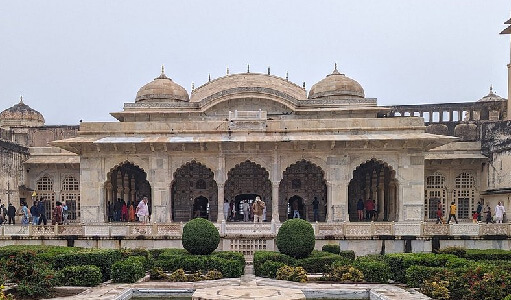
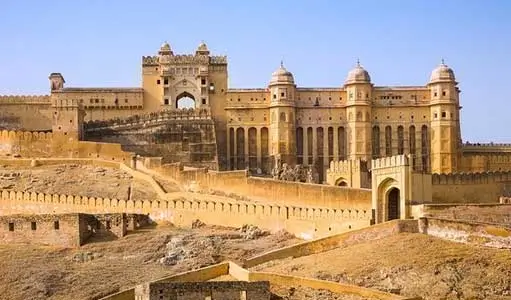
Jaipur deserves at least two full sightseeing days for a first visit. Amber Fort, City Palace, Jantar Mantar, Hawa Mahal, markets and food already create a substantial schedule. Travellers interested in an ethical elephant experience should allocate additional time rather than forcing it between multiple monuments.
From Jaipur, visitors can continue west toward Jodhpur. Pushkar can be included as a stop when its religious atmosphere and market town character genuinely interest the traveller.
Jodhpur deserves approximately two nights, allowing proper time for Mehrangarh Fort and the old city. Udaipur can then form the final Rajasthan destination with two or three nights around City Palace, Lake Pichola and the surrounding areas.
Travellers with fourteen days have more breathing room and can add Ranthambore, Pushkar or an extra rest day. Jaisalmer is possible, but its western location adds significant travel time. It should not be added merely to increase the number of destinations.
A private driver for Rajasthan from Delhi can remove a large amount of logistical work from a first visit. Instead of arranging a separate taxi, train transfer and station pickup in every city, travellers use the same vehicle for major road sections.
This is especially valuable for American visitors carrying large suitcases. Bags can be loaded at the hotel and unloaded at the next property without repeated movement through railway platforms and crowded transport hubs.
Private road travel also makes intermediate attractions much easier to include. Fatehpur Sikri between Agra and Jaipur is an obvious example. Pushkar can fit into certain Jaipur–Jodhpur journeys, while Ranakpur can work naturally on some Jodhpur–Udaipur routes.
The driver should not automatically be treated as a professional historical guide. The driver's role is transportation, route knowledge and practical road logistics. Visitors who want detailed historical interpretation should hire licensed local guides in major destinations.
Cost depends on the vehicle and route. A sedan on a multi-day Rajasthan journey can broadly cost around ₹5,000 to ₹8,000 per active travel day, while an Innova or Crysta-class vehicle can move toward ₹8,000 to ₹12,000 or more per day, depending on distance and inclusions.
These figures are broad budgeting guidance rather than fixed Elefantastic prices.
American visitors should ask whether fuel, tolls, parking, driver allowance and taxes are included. The final drop-off city also matters because it affects the operator's vehicle logistics.
A couple or family can find private transport especially attractive because the vehicle cost is shared between passengers.
The Rajasthan trip cost from the USA should be divided into two categories: international airfare and spending inside India. Airfare changes considerably according to departure city, travel dates, airline and booking conditions, so it is more useful to calculate the India portion separately.
For comfortable private travel inside Rajasthan, a couple can broadly keep ₹22,000 to ₹35,000 per day available for accommodation, private transport, meals and ordinary sightseeing expenses. Premium travel can move toward ₹35,000 to ₹55,000 or more per day for two people.
At a comfortable level, hotels can broadly cost around ₹6,000 to ₹12,000 per night. Strong heritage or premium properties can move toward ₹12,000 to ₹25,000 or considerably more.
Private-car costs depend on vehicle category and distance. A sedan may broadly cost ₹5,000 to ₹8,000 per active travel day on a multi-day route, while an Innova or Crysta-class vehicle may cost ₹8,000 to ₹12,000 or more.
Two travellers can broadly keep ₹2,500 to ₹6,000 or more per day for meals, depending on restaurant choices. Fine dining and luxury hotel restaurants can raise the amount substantially.
Guides, monument tickets, shopping and special experiences should be budgeted separately.
For a 10-day comfortable private trip for two, a broad India-side budget can reach ₹2.20 lakh to ₹3.50 lakh, while premium travel can move toward ₹3.50 lakh to ₹5.50 lakh or more. A 14-day journey can broadly reach ₹3.10 lakh to ₹4.90 lakh at a comfortable level, with premium travel rising significantly above that.
The point is not to hit an exact number. It is to avoid arriving with a budget based on outdated claims that every part of India is extremely inexpensive.
Hotels in Rajasthan range from straightforward modern properties to restored havelis, palace-style hotels and world-class luxury resorts. The strongest choice is not automatically the most expensive property.
First-time American visitors should pay attention to location, recent cleanliness reviews, air conditioning, breakfast, vehicle access and room size.
A beautiful heritage hotel can provide a memorable Rajasthan atmosphere, but some historic buildings contain steep stairs, small bathrooms or unusual room layouts because they were not originally built as modern hotels. Travellers with mobility concerns should check these details before booking.
Location matters significantly in Jaipur. Staying near Amber can be useful when the fort and northern Jaipur are priorities. C-Scheme offers access to modern restaurants, while the Pink City provides immediate historic atmosphere.
In Udaipur, lake-facing accommodation can command a substantial premium. Travellers should decide whether the view is worth the extra cost or whether they would rather spend that money on a better room, private guide or another experience.
For a longer trip, mixing hotel styles can provide better value. Visitors might use comfortable mid-range hotels in transit-heavy cities and spend more on a special heritage property in Jaipur or Udaipur.
Breakfast inclusion is useful because sightseeing days often begin early. Travellers taking a dawn activity should ask whether the hotel can provide an early breakfast or packed food.
Food is often one of the highlights of an India trip, but first-time visitors should make sensible choices while their bodies adjust.
Use sealed bottled water or appropriately purified water. Avoid drinking untreated tap water. Hotels can advise guests about their own filtration arrangements.
Freshly cooked hot food from established restaurants is generally a sensible choice. Travellers do not need to avoid Indian cuisine; they simply need to use reasonable hygiene judgment.
American visitors who do not normally eat spicy food should understand that “spicy” can refer both to chilli heat and to the use of spices more generally. Asking for less chilli can be more useful than requesting food with no spices at all.
Vegetarian food is widely available in Rajasthan. Dal, paneer, vegetable dishes, rice and freshly prepared breads can make complete meals without meat.
Food allergies require precise communication. A traveller with a nut allergy should state that clearly rather than simply asking whether a dish is “safe.” The same applies to dairy, gluten and other ingredients.
Two travellers using good mid-range restaurants can broadly spend ₹2,500 to ₹6,000 or more per day on food, particularly when breakfast is included at the hotel. High-end dining can raise this significantly.
American visitors should also remember that portion sizes, meal times and breakfast styles may differ from home. Keeping a few familiar snacks during long road journeys can be useful without missing the opportunity to enjoy local food.
American travellers should arrive with more than one way to access money.
Credit and debit cards are accepted at many hotels, established restaurants and larger shops. Cash remains useful for tips, small purchases, local markets and places where card facilities are unavailable.
There is usually no need to carry the entire holiday budget in cash.
A visitor can keep a moderate amount of Indian rupees for daily expenses and use cards for larger payments. ATMs operated by established banks are available in major cities, although the traveller's own bank may charge foreign withdrawal or currency-conversion fees.
Before departure, visitors should check their card provider's foreign transaction policy. Carrying a second card stored separately from the primary wallet provides useful backup.
When a payment terminal offers to convert a transaction into US dollars, visitors should check the exchange rate carefully. Depending on the card provider, paying in Indian rupees may offer a better conversion than accepting dynamic currency conversion.
Large shopping purchases should be made carefully. Jaipur is known for jewellery, gemstones, textiles, carpets and handicrafts. Visitors should compare sellers and avoid buying expensive products under pressure.
Keep receipts for valuable purchases and understand customs rules when returning to the United States.
Reliable mobile data makes a Rajasthan trip easier because travellers can communicate with drivers and hotels, use maps, access reservations and contact family.
International roaming from a US carrier can be convenient but may be expensive depending on the traveller's plan. Visitors should compare roaming costs with local connectivity or suitable travel eSIM options before departure.
Wi-Fi is available in many hotels, cafés and restaurants, but travellers should not rely on public Wi-Fi as their only connection during intercity journeys.
Offline copies of hotel addresses, flight details, passport information and important booking confirmations are useful in case mobile data temporarily fails.
Travellers using a private driver should save the driver's contact number as well as the transport company's contact information.
A portable power bank can also be valuable during full sightseeing days. Maps, photography and messaging can consume phone battery quickly.
American visitors should remember that India uses different electrical sockets and voltage standards from the United States. A suitable travel adapter is essential, and travellers should verify that personal electrical devices support the local voltage before plugging them in.
Road travel in Rajasthan can feel very different from driving in the United States. Traffic may include cars, motorcycles, buses, trucks, pedestrians and animals sharing the broader road environment.
Visitors should avoid judging travel time purely by mileage.
A 200-kilometre road journey does not necessarily mean two hours of driving. Average speeds can be lower because of towns, local traffic and road conditions.
This is one reason a professional Rajasthan car with driver is attractive for first-time visitors. Travellers can relax rather than trying to adapt immediately to unfamiliar traffic behaviour.
Seat belts should be used whenever available.
Long road journeys should include reasonable breaks. A ten-day route becomes tiring when every day contains six hours inside a vehicle followed by five hours of sightseeing.
American visitors accustomed to self-drive vacations may initially like the idea of renting a car, but driving conditions, navigation and local traffic customs make a driver a more practical choice for many first-time visitors.
The driver also handles parking and hotel approach roads, which can be particularly useful in historic city areas.
International visitors should consider comprehensive travel insurance that matches their trip and personal circumstances. Coverage terms vary, so travellers should read the policy rather than assuming every disruption or medical expense is automatically included.
Prescription medicines should be carried according to applicable travel rules, preferably in original packaging when appropriate. Visitors who rely on important medication should bring enough for the trip plus a reasonable buffer.
A small personal kit containing familiar over-the-counter items can be useful, although medical advice should come from a qualified professional.
Sun protection is important in Rajasthan. Sunglasses, sunscreen, a hat and regular hydration can make long fort visits considerably more comfortable.
Air quality can occasionally be a concern in parts of North India, particularly for sensitive travellers. Visitors with relevant medical conditions should seek appropriate professional advice before travelling.
Travel insurance documents, emergency contacts and passport copies should be stored securely and also kept digitally accessible.
Visitors should not carry passports loosely in an exterior bag pocket. Hotel safes or other secure arrangements may be appropriate when the original document is not required for a particular activity.
Rajasthan does not require visitors to wear traditional Indian clothing, but practical and respectful clothing makes travel easier.
Lightweight, breathable clothing works well during warmer conditions. Shoulders and knees covered by comfortable clothing are useful when entering religious sites.
A light scarf can be valuable for sun protection and certain religious visits.
Winter conditions require more thought than many American visitors expect. Rajasthan days can be pleasant while early mornings and evenings become cool. Open safari vehicles in Ranthambore can feel especially cold around sunrise.
Comfortable walking shoes are essential. Amber Fort, Mehrangarh Fort, palace complexes and old-city streets involve uneven surfaces and substantial walking.
Visitors should avoid packing so much luggage that every hotel transfer becomes difficult. Laundry services are widely available at hotels, making it possible to travel with fewer clothes on a longer trip.
A compact day bag should hold water, sunscreen, tissues, phone, power bank and other daily essentials. Money and passports should be carried securely.
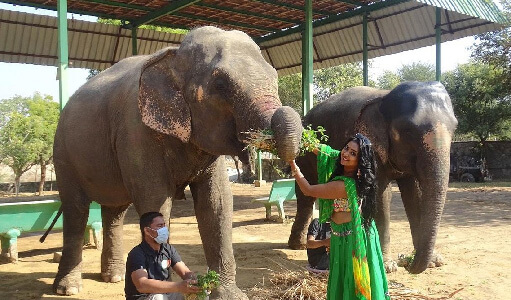
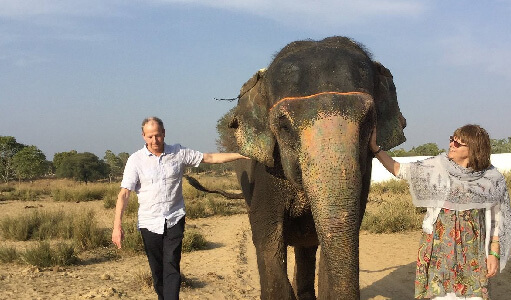
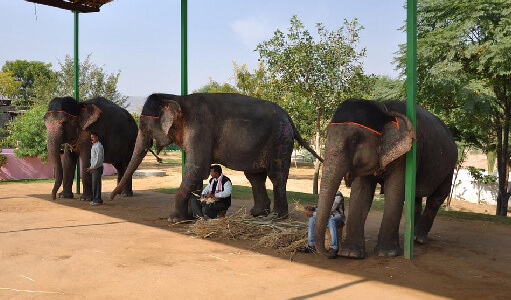
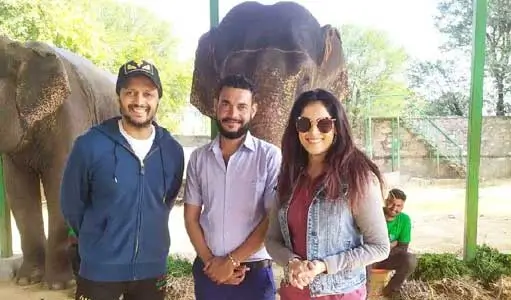
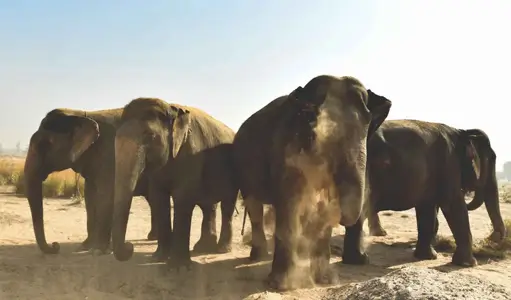
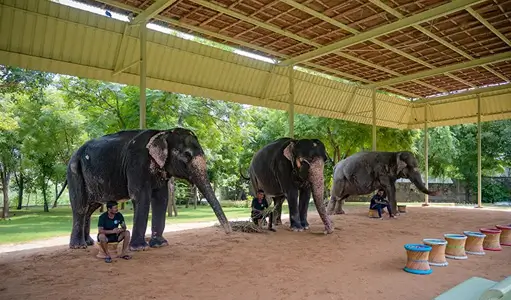
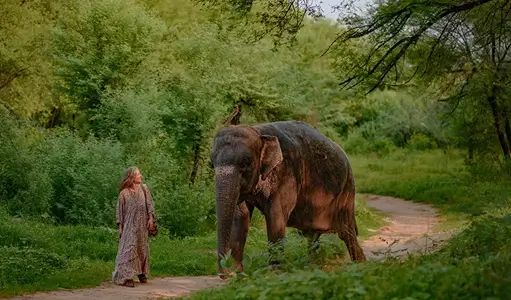
American visitors interested in elephants should carefully distinguish between an ethical elephant sanctuary in Jaipur and businesses built around rides or performances.
Elefantastic follows a no-riding, no-performance approach, allowing visitors to spend time beside elephants through appropriate interaction.
The experience is located around the Jaipur area and can be combined with Amber Fort when enough time is allocated.
Travellers should not try to fit Amber Fort, City Palace, Hawa Mahal, several markets and an elephant experience into one rushed day. Two Jaipur sightseeing days create a much better pace.
Before booking any elephant facility, ask whether rides are offered, whether elephants perform tricks, how visitor interaction is controlled and what daily care routines look like.
A responsible experience should not depend on forcing an elephant to entertain visitors.
Animal-focused travellers can also combine Jaipur with Ranthambore, where wildlife is observed in a completely different setting through authorised safaris in a natural reserve.
For a first visit, Delhi generally deserves around two nights, particularly when it is also the international arrival point. Travellers suffering from jet lag may appreciate additional recovery time.
Agra can work with one night for visitors primarily interested in the Taj Mahal and Agra Fort.
Jaipur deserves at least two nights, and three can be better when markets, food or an elephant experience are included.
Jodhpur works well with approximately two nights, giving visitors enough time for Mehrangarh Fort, the old city and a less rushed evening.
Udaipur deserves two or three nights because its atmosphere is part of its appeal. Travellers who rush through in one night miss much of the reason people enjoy the city.
Ranthambore should usually receive around two nights when safaris are important.
Jaisalmer needs enough time to justify the substantial journey west. Adding it for a single rushed night is rarely efficient.
A strong Rajasthan itinerary should contain fewer destinations with proper stays rather than more cities with constant packing.
The first major mistake is trying to see too much.
Rajasthan looks compact when viewed as part of the enormous map of India, but intercity drives are substantial. Jaipur, Jodhpur, Jaisalmer and Udaipur cannot be treated like neighbourhoods of one metropolitan area.
The second mistake is booking important activities too tightly around transport. A flight delay should not automatically cause a missed safari or another non-refundable experience.
Another mistake is selecting the cheapest available transport without checking the vehicle, luggage capacity and included charges.
Overpacking is also common. Large suitcases become inconvenient when changing hotels repeatedly.
Some visitors over-schedule every evening because they assume rest is wasted vacation time. After long flights, fort visits and road journeys, an unstructured dinner or quiet hotel evening can substantially improve the next day.
Finally, avoid judging India entirely through comparisons with American systems. Traffic, service style, meal timing and public spaces work differently. The trip becomes much more rewarding when visitors arrive informed but flexible.
Around 10 to 14 days works well for a first trip that includes Delhi, Agra and several Rajasthan destinations without making every stop excessively rushed.
Delhi is the most practical international gateway for many first-time Rajasthan routes because it connects naturally with Agra and Jaipur.
Comfortable private travel can broadly cost ₹22,000 to ₹35,000 per day for two people inside India. Premium travel can cost ₹35,000 to ₹55,000 or more per day, excluding international flights.
Yes. A private driver in Rajasthan provides hotel-to-hotel transportation, flexible breaks and easier luggage handling, particularly on multi-city routes.
Both can work. Trains are useful for selected routes, while a private car provides greater flexibility and makes intermediate sightseeing stops easier.
A sedan can broadly cost ₹5,000 to ₹8,000 per active travel day, while an Innova or Crysta-class vehicle can cost around ₹8,000 to ₹12,000 or more, depending on distance and inclusions.
Cards are accepted at many hotels, established restaurants and larger shops. Travellers should still keep some Indian rupees for small purchases and places where cards are unavailable.
Two nights can cover the major highlights, but three nights in Jaipur provide a more comfortable pace when food, markets or an ethical elephant experience are included.
Yes. Safari capacity is limited, so visitors with fixed dates should reserve appropriate safari arrangements in advance rather than relying on last-minute availability.
A practical first route is Delhi → Agra → Jaipur → Jodhpur → Udaipur, with Pushkar, Ranthambore or another destination added only when the total trip length provides enough time.