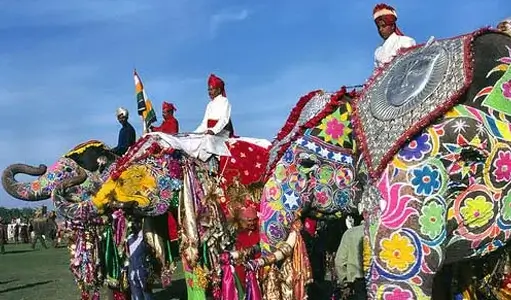
A first Rajasthan trip from Europe combines some of India's most impressive forts, palaces, historic cities, desert landscapes and cultural experiences, but the journey works best when travellers understand the distances involved before booking hotels. Jaipur, Jodhpur, Udaipur and Jaisalmer may all appear relatively close when viewed on a map of India, yet moving between them can require several hours on the road. Adding Delhi, Agra and Ranthambore makes the route even more varied and increases the importance of choosing the right sequence.
For most first-time European visitors, 10 to 14 days provides a useful amount of time for Delhi, Agra and several major Rajasthan destinations. Travellers with only one week should reduce the number of cities rather than spending every day packing bags and sitting in a vehicle. Visitors with two weeks can move more slowly or add Ranthambore, Pushkar or Jaisalmer according to their interests.
Delhi is the most practical international gateway for many European travellers. Starting there creates a natural route through Agra and Jaipur before continuing deeper into Rajasthan. A visitor can then move west toward Jodhpur and Jaisalmer or south toward Udaipur without repeatedly returning to Delhi.
Transport choice has a major influence on the character of the trip. Trains can be useful on selected routes, domestic flights can reduce travel time on certain long sectors, and a private driver in Rajasthan provides the greatest flexibility for hotel-to-hotel travel and intermediate sightseeing stops. Many visitors use a combination rather than relying on one transport type for the entire holiday.
A comfortable Rajasthan journey from Europe does not require luxury spending, but it should be budgeted realistically. Good hotels, reliable private transport, monument tickets, restaurant meals, guides and special experiences can add up quickly. The goal should be value and comfort rather than chasing the lowest possible daily cost.
Discover Rajasthan with a customised itinerary, comfortable private transport, handpicked hotels, and expert local guidance for a smooth and memorable holiday.
For many travellers from the United Kingdom, France, Germany, Italy, Spain, the Netherlands, Switzerland and other European countries, Delhi is the most useful arrival point for a first Rajasthan journey. Flight schedules differ by departure city and airline, so travellers should compare total journey time, connection quality, baggage conditions and arrival time rather than looking only at the cheapest ticket.
A flight arriving in Delhi late at night should normally be followed by a hotel stay rather than an immediate long road transfer. Even though flights from Europe are shorter than journeys from North America, time-zone changes, airport procedures and overnight travel can still leave passengers tired.
Starting a holiday with a four-to-six-hour road journey after an international flight rarely improves the experience.
A pre-arranged airport transfer is valuable for first-time visitors. The driver can collect travellers from the designated meeting area and take them directly to the hotel, avoiding the need to compare transport options immediately after arrival.
Delhi also makes geographical sense because Agra sits naturally between the capital and Jaipur. This allows travellers to see the Taj Mahal without making an unnecessary return journey.
A common sequence begins with Delhi → Agra → Jaipur. From Jaipur, the route can continue toward Jodhpur and Udaipur or incorporate Ranthambore depending on the available days.
Some European travellers may find useful flight connections to other Indian cities, but choosing an arrival airport purely because the ticket is slightly cheaper can create additional domestic travel that cancels the saving.
The complete route should be considered before purchasing international flights.
Explore Jaipur, Udaipur, Jodhpur, and Jaisalmer with flexible routes, private chauffeur-driven transfers, and personalised cultural experiences.
Ten days is enough for a strong first visit when the number of destinations remains controlled.
A traveller can begin with approximately two nights in Delhi. This provides enough time for a first introduction to the city while allowing some recovery after the international journey.
From Delhi, continue to Agra. One night can be sufficient for visitors whose main priorities are the Taj Mahal and Agra Fort. Staying overnight also makes an early Taj Mahal visit much easier than travelling from Delhi and returning on the same day.
The journey from Agra to Jaipur works particularly well by private car because Fatehpur Sikri can be visited between the two cities. Travellers with enough time can consider another stop, but the day should not become overloaded.
Jaipur deserves at least two nights. Amber Fort, Hawa Mahal, City Palace and Jantar Mantar already require substantial time. Markets, restaurants and an ethical elephant experience can justify a third night.
From Jaipur, travellers can continue toward Jodhpur. A private-car transfer provides the option of including Pushkar when desired.
Jodhpur deserves around two nights for Mehrangarh Fort, the old city and a comfortable pace.
The journey can finish in Udaipur with two nights before onward travel.
A ten-day schedule should avoid adding Jaisalmer simply because it is famous. Its western location adds considerable travel time. Visitors determined to include it should remove another destination or increase the trip length.
Fourteen days gives European visitors much more freedom.
The additional time can be used to stay longer in existing destinations rather than automatically adding four more cities.
A comfortable route can begin with Delhi and Agra before moving into Jaipur. Jaipur can receive three nights instead of two, giving visitors enough time for major monuments, food, shopping and a separate animal-focused or cultural experience.
From Jaipur, Pushkar can be visited during the road journey toward Jodhpur or treated as an overnight stop for travellers who enjoy smaller towns.
Jodhpur can receive two nights before continuing to Udaipur. Depending on the chosen road route, Ranakpur can be considered between Jodhpur and Udaipur.
Udaipur benefits greatly from a slower stay. Three nights allow visitors to see City Palace, spend time around Lake Pichola and enjoy the city without treating every hour as scheduled sightseeing.
Travellers who prioritise wildlife can use the extra days for Ranthambore instead. A two-night stay is useful because it allows room for one or more safaris without building the entire visit around a single wildlife drive.
Jaisalmer can also be included in a fourteen-day trip, but route design becomes more important because of its western location.
A strong two-week Rajasthan itinerary should feel like a journey through different regions rather than a race between hotel receptions.
A private car with driver in Rajasthan is one of the simplest transport formats for European visitors travelling through several cities.
The driver collects guests from the hotel, handles intercity road transport and drops them at the next accommodation. When the vehicle is retained for several days, travellers do not need to find a new taxi every morning or repeatedly negotiate long-distance transfers.
The same vehicle can also handle local sightseeing according to the agreed arrangement.
One major advantage is the ability to include destinations between major cities. A train from Agra to Jaipur does not stop for a personal two-hour visit to Fatehpur Sikri. A private vehicle can include the stop when the route and timing are agreed.
Similarly, Pushkar can fit into a Jaipur–Jodhpur journey, while Ranakpur can be useful on certain Jodhpur–Udaipur routes.
Luggage handling becomes easier as well. European visitors travelling with large suitcases can load them at one hotel and unload them at the next rather than carrying them through stations.
The driver should not automatically be expected to act as a historical guide. For detailed interpretation of forts, palaces and monuments, a licensed local guide is the appropriate addition.
Private transport therefore works particularly well when combined with local guides in selected cities.
The Rajasthan private driver cost depends on vehicle type, total kilometres, number of days, route and final drop-off location.
For a multi-day trip, a comfortable sedan can broadly cost around ₹5,000 to ₹8,000 per active travel day. An Innova or Crysta-class vehicle can broadly cost around ₹8,000 to ₹12,000 or more per day.
Long-distance days, premium vehicles and unusual routes can increase the amount.
These are broad budgeting figures rather than fixed Elefantastic quotations.
Travellers should ask whether fuel, tolls, parking, driver allowance and taxes are included. The quotation should also explain whether local sightseeing is included or whether the price covers only intercity transfers.
A couple can share the vehicle cost, making private travel more attractive than the headline price initially suggests. Families gain even more value per person when one appropriately sized vehicle is shared.
Solo travellers may find trains or group tours more economical because they would otherwise pay the entire private-car price alone.
The cheapest driver quotation is not automatically the best value. Vehicle quality, air conditioning, luggage capacity, reliability and route experience matter greatly on a journey involving dozens of hours in the car.
Indian trains can be an enjoyable and useful part of a Rajasthan trip. They provide a different perspective on the country and can work well on selected routes.
The limitation is door-to-door convenience.
Train passengers must travel from the hotel to the station, handle luggage, locate the correct platform and arrange another transfer after arrival. Departure times are fixed, and sightseeing between cities becomes more difficult.
A private car in Rajasthan provides hotel-to-hotel service and flexible meal or restroom stops.
This makes the car especially attractive for couples, families, senior travellers and visitors carrying large luggage.
The train can still be the stronger choice for a long route where road travel would consume most of the day. Some travellers also actively want the railway experience and should include it rather than using private transport everywhere.
The best Rajasthan journey can combine both.
For example, a visitor might use a train for one longer sector and a private car through Jaipur, Pushkar, Jodhpur and Udaipur where intermediate stops provide more value.
Transport should serve the itinerary rather than becoming a rule that every journey must use the same method.
Domestic flights can be useful when the alternative is a very long road or rail journey.
However, travellers should compare door-to-door travel time, not just flight duration.
A one-hour flight also requires transport to the airport, early arrival for check-in and security, boarding, baggage collection and another transfer after landing.
For shorter Rajasthan sectors, a private car can therefore be more efficient than flying.
Flights become more useful when connecting distant regions of India or when the traveller needs to return quickly to Delhi or another major city before an international departure.
Baggage allowance also matters. European visitors travelling with large checked luggage should check domestic airline limits carefully because they may differ from the allowance included with the international ticket.
A cheap domestic fare can become less attractive after additional baggage charges.
Flight schedules can change, so avoid creating a connection with an international departure that has no reasonable buffer.
When the route can be comfortably completed by road while adding a worthwhile sightseeing stop, the car often provides greater value.
A comfortable private Rajasthan journey for two people can broadly cost around ₹22,000 to ₹35,000 per day inside India. This can include a comfortable hotel, private transport, meals and ordinary sightseeing expenses.
Premium travel can move toward ₹35,000 to ₹55,000 or more per day for two people, particularly when heritage hotels, premium vehicles, private guides and high-end dining are included.
At a comfortable level, hotels can broadly cost around ₹6,000 to ₹12,000 per night. Premium and heritage properties can move toward ₹12,000 to ₹25,000 or more.
Meals for two can broadly cost around ₹2,500 to ₹6,000 or more per day, depending on restaurant style.
Private guides can add approximately ₹2,000 to ₹4,500 or more per city or sightseeing session, depending on language and duration.
Monument tickets and special experiences should be calculated separately.
A comfortable 10-day private journey for two can broadly reach ₹2.20 lakh to ₹3.50 lakh, excluding international flights. Premium travel can rise toward ₹3.50 lakh to ₹5.50 lakh or more.
A 14-day comfortable journey can broadly reach ₹3.10 lakh to ₹4.90 lakh, while premium arrangements can rise substantially above this.
These ranges are deliberately realistic rather than based on the lowest possible backpacker costs.
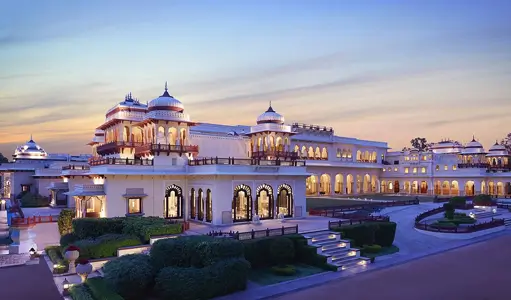
Rajasthan has one of India's most interesting accommodation ranges. European visitors can stay in modern hotels, traditional havelis, restored heritage properties, palace-style hotels and luxury resorts.
A comfortable mid-range hotel does not need to feel basic. Properties around ₹6,000 to ₹12,000 per night can provide strong comfort when selected carefully.
Heritage hotels are attractive because the architecture itself contributes to the trip. Courtyards, traditional decorative elements and historic buildings can make the accommodation feel distinctly Rajasthani.
However, old architecture can also mean stairs, unusual room layouts or limited lift access. Senior travellers and visitors with mobility requirements should check carefully.
A useful strategy is to mix hotel categories.
Spend moderately in cities where the itinerary involves long sightseeing days and very little hotel time. Allocate more money to a special property in Udaipur or Jaipur where the hotel atmosphere itself is part of the experience.
Location should also be considered. A cheaper hotel far from every attraction can create additional transportation time and cost.
Always compare the final price including taxes and breakfast.
Visitors do not need to carry large amounts of cash throughout Rajasthan.
Cards are accepted at many hotels, established restaurants and larger shops. Cash remains useful for smaller purchases, tips and market transactions.
Travellers can withdraw Indian rupees from bank ATMs, although both the Indian ATM operator and the traveller's European bank may apply charges.
Before departure, check foreign transaction and cash-withdrawal fees. Some European travel cards offer more favourable currency conversion than standard bank cards.
A backup card should be stored separately from the primary wallet.
When a payment terminal offers to charge the transaction in euros, pounds or another home currency, check the conversion carefully. Paying in Indian rupees may provide a better exchange rate through the traveller's own card issuer.
For everyday use, keeping approximately ₹5,000 to ₹10,000 in accessible cash can be practical without carrying excessive amounts.
Expensive jewellery, gemstone, textile or carpet purchases deserve additional care. Ask for receipts, compare sellers and understand the relevant customs rules before returning to Europe.
Rajasthan offers excellent vegetarian and non-vegetarian food, and visitors can eat very well without relying exclusively on luxury hotel restaurants.
A good casual lunch for two can broadly cost ₹1,000 to ₹2,500. A comfortable dinner at an established restaurant can cost approximately ₹2,000 to ₹4,500 or more, depending on location, dishes and drinks.
High-end hotel dining can exceed these ranges significantly.
Visitors should use sealed bottled or appropriately purified water and prioritise freshly cooked food.
Vegetarian travellers will find Rajasthan particularly easy. Dal, paneer, vegetable dishes, rice and Indian breads are widely available.
Visitors with allergies should clearly identify the exact ingredient that must be avoided. European dietary terminology is not always interpreted in the same way by every restaurant, so precise communication is important.
Travellers do not need to avoid street food completely if they are comfortable with it, but first-time visitors should make careful choices regarding hygiene, turnover and food preparation.
A long Rajasthan journey is more enjoyable when food is treated as part of the cultural experience rather than merely fuel between monuments.
Packing should reflect both the season and the type of activities included.
Comfortable walking shoes are essential. Rajasthan's forts and historic streets involve uneven surfaces, steps and substantial walking.
Lightweight clothing works well in warmer conditions. Clothing that comfortably covers shoulders and knees is useful for religious sites and also provides sun protection.
A scarf can be valuable for temples, sun and cooler evenings.
European travellers visiting during cooler months should not assume Rajasthan is always hot. Early mornings and evenings can become chilly, and an open Ranthambore safari vehicle can feel cold around sunrise.
A light jacket or warmer layer can therefore be important.
Sunscreen, sunglasses and a hat are useful during fort visits.
Bring a suitable electrical adapter and confirm that personal devices support India's voltage. Phones and laptop chargers commonly handle multiple voltages, but every device should be checked individually.
A portable power bank is valuable during full sightseeing days.
Travellers should also carry digital and secure backup copies of important documents.
Jaipur is one of the strongest destinations for a first Rajasthan journey and deserves more than a rushed overnight stop.
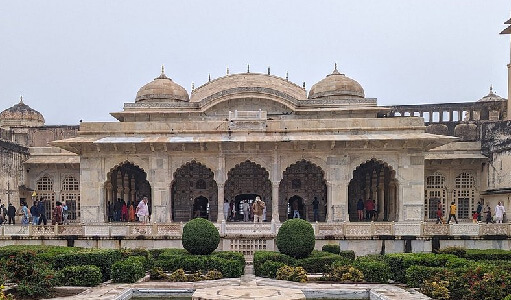
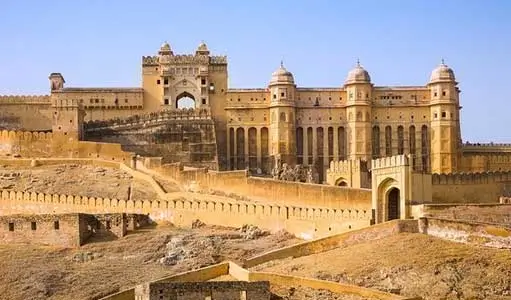
Amber Fort should receive several hours. Its courtyards, gateways and palace sections are more rewarding when visitors are not racing toward the next attraction.
The Pink City can occupy another substantial sightseeing period with Hawa Mahal, City Palace, Jantar Mantar and markets.
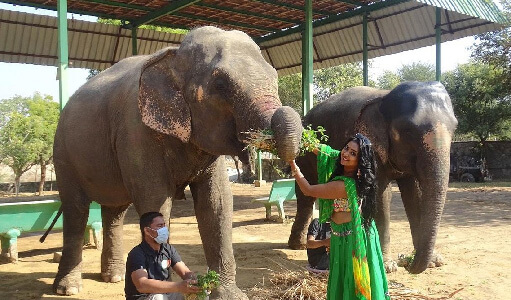
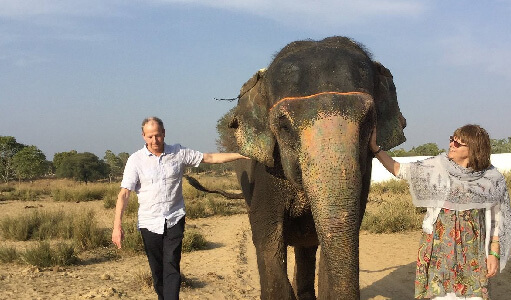
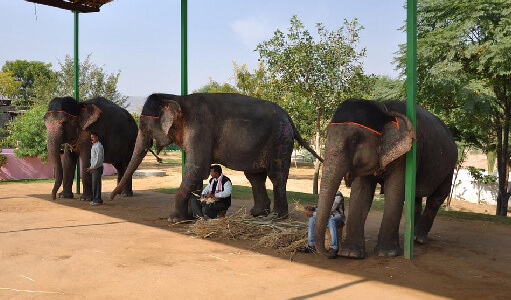
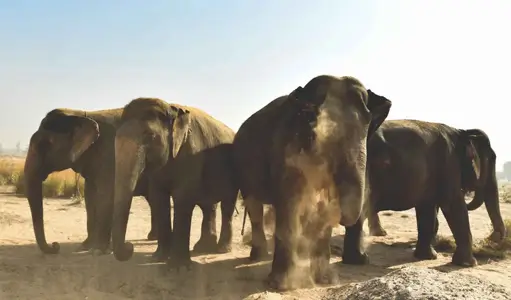
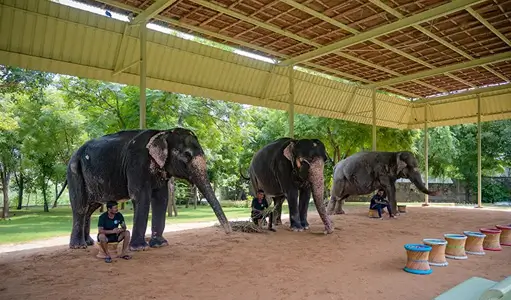
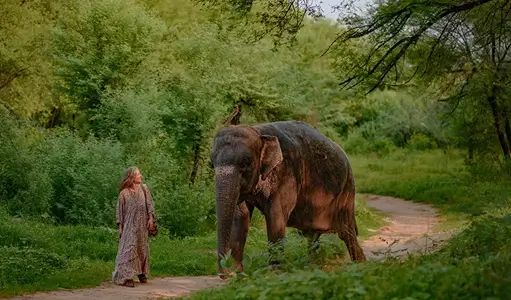
Travellers interested in elephants should carefully assess the welfare standards of any facility before booking.
Elefantastic follows a no-riding, no-performance approach, focusing on appropriate time beside elephants rather than using animals for rides or staged tricks.
Visitors should reserve a separate block of time for the experience rather than squeezing it between multiple monuments.
When evaluating any ethical elephant sanctuary in Jaipur, ask directly about riding, performances, restraint practices, visitor interaction and daily animal routines.
The aim should be respectful animal interaction rather than collecting another tourist photograph.
The most common mistake is including too many cities.
A seven-day route containing Delhi, Agra, Jaipur, Jodhpur, Jaisalmer and Udaipur may look impressive on paper but leaves a large percentage of the holiday inside vehicles or checking into hotels.
Another mistake is assuming Rajasthan road journeys work like European motorway travel. Distances that appear modest can take several hours because of traffic, towns and road conditions.
Visitors also sometimes choose hotels only according to price. Location, cleanliness, vehicle access and breakfast quality can matter more than saving a small amount per night.
Overpacking creates another problem. Laundry is available at many hotels, so there is little need to carry an enormous wardrobe.
Travellers should also avoid placing non-refundable activities immediately after flights or long road journeys.
Finally, leave some unscheduled time. A memorable Rajasthan trip does not require every hour to contain a monument. A quiet rooftop dinner, an unhurried market walk or an afternoon beside a hotel pool can be as valuable as adding another attraction.
Around 10 to 14 days works well for a first journey involving Delhi, Agra and several major Rajasthan destinations. Shorter trips should include fewer cities.
A practical route is Delhi → Agra → Jaipur → Jodhpur → Udaipur. Pushkar, Ranthambore or Jaisalmer can be added when enough additional time is available.
Comfortable private travel can broadly cost ₹22,000 to ₹35,000 per day for two people inside India. Premium travel can reach ₹35,000 to ₹55,000 or more per day.
A sedan can broadly cost ₹5,000 to ₹8,000 per active travel day, while an Innova or Crysta-class vehicle can cost around ₹8,000 to ₹12,000 or more depending on the route and inclusions.
A private car provides greater flexibility and hotel-to-hotel convenience. Trains can be efficient and enjoyable on selected routes. Many visitors combine both.
Two nights can cover major highlights, while three nights in Jaipur provide a more relaxed experience with time for markets, food or an elephant experience.
Yes, many hotels, established restaurants and larger shops accept international cards. Travellers should still carry some Indian rupees for smaller transactions.
Yes, particularly for travellers interested in western Rajasthan and desert landscapes, but its location adds substantial travel time. It works better when the trip is long enough to justify the journey.
A guide is useful for detailed historical interpretation at major monuments. The private driver handles transportation, while a qualified guide performs a different role.
Yes. Rajasthan combines major heritage cities, established tourism infrastructure, diverse accommodation and practical road connections, making it a strong region for first-time international visitors.