Meeting an elephant can become one of the most memorable moments of a trip to Jaipur, but the quality of that memory depends heavily on where the encounter takes place and how the elephants are treated. A photograph of an elephant beside a fort or a website using words such as “sanctuary,” “rescue,” or “ethical” does not automatically tell a visitor what happens behind the scenes.
For international travellers, selecting an ethical elephant sanctuary in Jaipur requires more than comparing prices and online photographs. The important questions concern elephant rides, restraints, performances, daily routines, social interaction, visitor numbers, handler behaviour, rest periods and the amount of choice given to the animal.
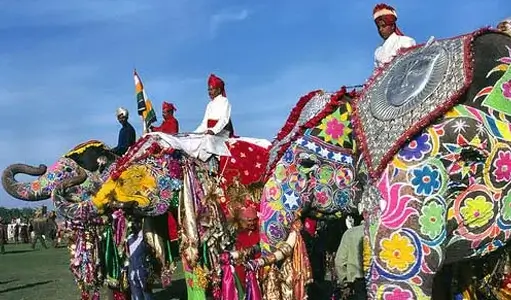
Jaipur has a long cultural connection with elephants, particularly around the Amber area. That history is part of the city, but modern travellers increasingly want an experience that does not depend on riding an elephant or making the animal perform for entertainment.
A responsible elephant experience in Jaipur should therefore be judged by the elephant's daily life, not merely by what visitors are allowed to do during a short visit.
Before making a reservation, ask direct questions. A genuinely responsible operator should be comfortable answering them.
Discover ethical elephant experiences that prioritise animal welfare, natural behaviour, and responsible care during your Jaipur visit.
The first question should be simple: Are elephant rides offered?
If the answer is yes, visitors should think carefully about whether that matches their definition of ethical elephant tourism.
Riding has historically been one of the most visible forms of elephant tourism in Jaipur. For many visitors, however, an ethical elephant experience without riding is now the preferred alternative. Spending time beside an elephant, observing its behaviour and participating in suitable care activities creates a very different interaction from sitting on its back.
The same scrutiny should apply to performances.
Ask whether elephants are expected to perform tricks, adopt unnatural poses, repeatedly salute visitors, dance, balance objects or complete entertainment routines for photographs. An elephant encounter should not need a performance schedule to keep tourists entertained.
Another useful question is whether the elephant can move away from an interaction. If an animal must remain in exactly the same position while group after group arrives for photographs, the experience deserves closer examination.
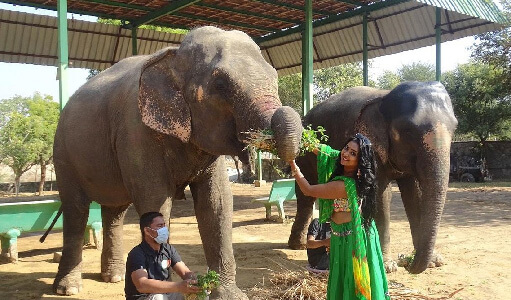
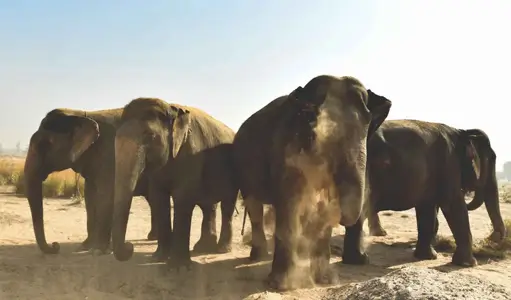
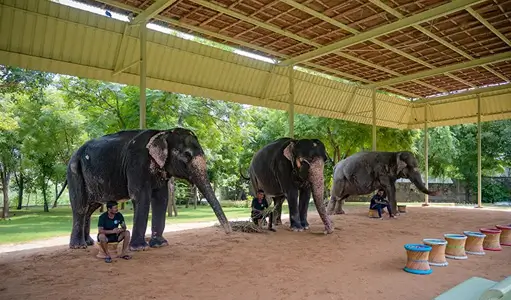
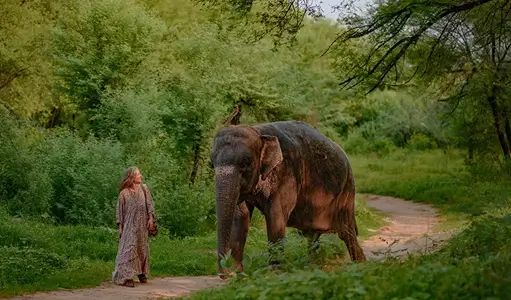
At Elefantastic, the visitor experience is explicitly built around a no-riding, no-performance approach. The emphasis is on spending time with elephants through activities such as feeding, walking alongside them and appropriate care-based interaction.
This distinction matters because the word “sanctuary” itself is not enough. Travellers should examine what the establishment actually sells.
Look closely at photographs and videos before booking. If virtually every promotional image shows tourists sitting on elephants, elephants carrying decorative seating equipment or animals performing for crowds, that provides useful information about the nature of the attraction.
A responsible visitor should also avoid assuming that an activity becomes ethical simply because it is described as “traditional.” Cultural history deserves respect, but tourism practices can change as knowledge about animal welfare develops.
The best responsible elephant tourism in Jaipur should allow visitors to appreciate elephants without requiring the animal to act as a vehicle or stage performer.
Plan a personalised Jaipur tour with knowledgeable local guidance and carefully selected experiences that respect animal welfare.
A second critical question concerns restraints.
Ask directly: Will the elephant be chained during my visit?
The answer should not be hidden behind vague statements about safety. Visitors deserve to know whether an elephant will be restrained throughout feeding, photography or other activities.
Elephants are extremely large animals, and responsible management naturally involves safety procedures. However, permanent or prolonged restraint is very different from carefully managed handling.
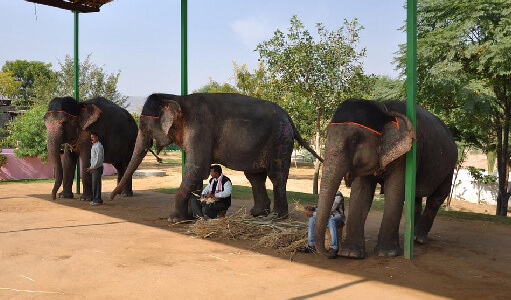
When examining an elephant sanctuary near Jaipur, look at the animal's ability to move. Does it appear able to walk naturally? Can it change position? Is it standing in one place for long periods while visitors rotate around it?
Photographs can provide clues, although they should not be the only evidence. Look at recent visitor images rather than relying exclusively on polished promotional photography.
The environment also matters. Elephants require space, shade and access to water, particularly during Rajasthan's warmer months. A visitor facility should not feel like a narrow photography station designed primarily around tourist throughput.
Ask how much time the elephants spend away from visitors. Ethical care cannot be evaluated solely during the two hours when tourists are present. The other twenty-two hours of the day matter even more.
Questions about sleeping arrangements, free movement, shade, social contact and rest periods are therefore legitimate.
Visitors should also understand that responsible elephant management is more complex than judging one photograph. There can be veterinary or emergency situations where temporary restraint is required. The relevant issue is whether restraint forms a routine part of the tourist entertainment experience.
An ethical elephant sanctuary Jaipur visit should make it possible to observe the elephant as an animal rather than as a stationary prop.
One of the most revealing questions is rarely asked:
What does the elephant do when tourists are not here?
A sanctuary can create an attractive two-hour visitor programme, but welfare depends on the elephant's entire daily routine.
Ask about feeding schedules, walking, bathing, resting, sleeping, social interaction and veterinary monitoring. Elephants consume large quantities of food and require consistent care throughout the day.
A responsible facility should be able to explain these routines clearly.
Visitors may also ask whether each elephant follows exactly the same schedule. Individual elephants can have different ages, histories, temperaments and physical needs. A senior elephant should not automatically be expected to participate in the same level of activity as a younger animal.
The best elephant sanctuary experience in Jaipur should reflect these differences.
Climate is another important factor. Jaipur can become extremely hot, particularly during the warmer part of the year. Activities suitable for a cool morning may not be appropriate during intense afternoon heat. Shade, water and rest should influence the daily routine.
This is one reason travellers should ask about the best time to visit elephants in Jaipur rather than simply choosing the time that fits most conveniently between two sightseeing stops.
Feeding is another major part of elephant care. Visitors often enjoy offering appropriate food, but tourist feeding should never replace a properly managed diet.
Ask what elephants normally eat and whether visitor feeding is controlled. Unlimited tourist snacks throughout the day should not be mistaken for good welfare.
A useful conversation with staff can reveal a great deal. People who work closely with elephants should be able to talk naturally about individual animals—their preferences, habits and personalities—rather than treating every elephant as interchangeable.
Visitor volume has a direct effect on the character of an elephant experience.
A small, controlled group can spend time quietly around an elephant. A constant stream of large tour groups creates a very different environment.
Before booking, ask how many people participate at one time and whether visits are scheduled in advance.
Prior reservations can be a positive sign when they are used to control numbers rather than accepting unlimited walk-in traffic. They allow the facility to organise staffing and prevent the elephant experience from becoming an assembly line.
The duration also matters.
An extremely short encounter may consist primarily of a photograph before the next group arrives. A longer ethical elephant experience in Jaipur can allow time for introductions, feeding, observation and walking without making every minute revolve around getting the perfect social-media image.
At the same time, longer does not automatically mean better. The elephant should not have to interact continuously simply because tourists have purchased a lengthy session.
Ask whether the animal receives breaks between visits.
A responsible programme should balance visitor access with the elephant's comfort. That balance may mean limiting bookings during certain hours or changing activities according to weather.
Travellers should also be cautious of establishments promising every possible elephant activity at any time of day. Animal care cannot operate exactly like an amusement attraction with guaranteed performances on demand.
Elefantastic requires prior booking for its elephant visits rather than positioning the experience as unrestricted walk-in entertainment. This allows visitor arrangements to be coordinated in advance.
For international guests with limited time in Jaipur, booking ahead is also practical. It prevents arriving after a long drive only to discover that the desired session cannot be accommodated.
Watch the people, not only the elephants.
The relationship between an elephant and its regular handler can tell visitors a great deal about the environment.
Observe voice tone, body language and the elephant's response when a handler approaches. Does the interaction appear calm, or does the animal seem immediately tense?
Ask how long the handlers have worked with the elephants and what their daily responsibilities include.
An experienced elephant caretaker does far more than stand beside tourists for photographs. Daily work can involve feeding, cleaning, walking, monitoring behaviour and noticing changes that may indicate a health issue.
International visitors sometimes arrive with simplified ideas about elephant handling because they have seen either romantic tourism advertising or disturbing online footage from unrelated facilities. A better approach is to evaluate what is happening in front of them and ask specific questions.
At a responsible elephant sanctuary in India, staff should be willing to discuss elephant care without becoming defensive when visitors ask about welfare.
Language also matters. Listen to how staff describe the animals. Are elephants discussed as individuals with preferences and needs, or mainly as attractions?
Visitors should never be encouraged to control an elephant themselves. The purpose of the encounter is not to demonstrate dominance over a large animal.
A good handler also manages the human visitors. Guests may become excited, approach too quickly, make loud noises or attempt inappropriate photographs. Staff should provide clear instructions about where to stand and how to behave.
This creates a safer experience for both elephants and people.
An elephant activity in Jaipur should be evaluated according to how it is carried out, not merely its name.
Feeding, for example, can be a gentle interaction when suitable food is offered in controlled amounts. It becomes less responsible if the animal is continuously fed by large groups throughout the day.
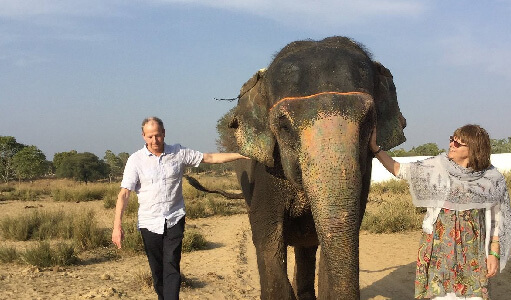
Walking alongside an elephant can allow visitors to observe its movement and behaviour without riding it. The route, weather and elephant's condition should determine how long such a walk lasts.
Water-based activities require similar judgement. Rajasthan's temperature and season matter. An activity should never be forced merely because a visitor saw a photograph online and expects to recreate it.
Ask whether activities can change according to the elephant's mood, health or weather.
A responsible answer is not necessarily “everything is always guaranteed.”
In fact, flexibility can be reassuring. Living animals do not follow tourist scripts with perfect consistency.
Photography should also remain secondary to the encounter itself. Visitors naturally want photographs, but an ethical elephant encounter should not require an elephant to repeat unnatural poses for dozens of cameras.
Before booking, read the activity description carefully. If the page focuses almost entirely on selfies, rides, tricks or elaborate performances, the experience may be designed more around human entertainment than elephant welfare.
Jaipur's climate makes the physical environment particularly important.
During hot periods, elephants need reliable access to shade and water. Visitors also benefit from avoiding the harshest part of the day.
When researching a Jaipur elephant sanctuary, look beyond close-up photographs. Wide images can reveal more about the property.
Is there room for elephants to walk? Are shaded areas visible? Does the environment appear clean and maintained?
Ask whether the elephant has access to water throughout the day and how activities change during extreme heat.
Visitors should also think about surfaces. Spending long periods on unsuitable hard ground is different from moving through a varied environment.
No tourist can conduct a complete welfare assessment during one short visit, but physical surroundings provide useful evidence when combined with other questions.
This is another reason not to select an elephant experience solely according to distance from Amber Fort or the lowest ticket price.
Convenience matters, but the environment matters more.
Transparency should extend beyond animal welfare.
A trustworthy operator should clearly explain elephant sanctuary Jaipur prices, duration, pickup arrangements, included activities and payment expectations.
Visitors should know whether transportation is included or charged separately. If hotel pickup is available, confirm the pickup area.
Ask how long the experience lasts and whether meals, drinks or transfers form part of the price.
Elefantastic currently lists its daytime elephant experience at ₹5,500 per person, with Jaipur hotel pickup and drop included. Prior booking is required.
Travellers should verify the current rate when making a reservation because pricing and operating arrangements can change.
Very low prices deserve scrutiny when the experience claims to include several hours of private interaction, transportation, staff and animal care. Elephants are expensive animals to feed and care for properly.
The highest price does not automatically prove ethical standards either. Price should be evaluated together with welfare practices, transparency and the quality of care.
Reviews can help, but they need to be read carefully.
Do not look only at the average star rating. Search recent reviews for specific descriptions of elephant treatment.
Useful comments mention whether rides were offered, whether elephants were chained, how handlers behaved, how much time visitors spent with the animals and whether the experience matched the website description.
Photographs uploaded by guests can be particularly useful because they show the setting from many different angles.
Be cautious when a review focuses only on photographs and says nothing about how the elephants were treated.
Likewise, one negative review should not automatically define an establishment. Look for patterns across a meaningful number of recent experiences.
International travellers can also search reviews written by people with similar expectations. Someone specifically seeking ethical elephant tourism in Jaipur may evaluate an attraction differently from a visitor whose main objective was simply getting close to an elephant.
The final test is straightforward: ask questions before booking.
A responsible elephant facility should be able to answer questions about rides, chains, visitor numbers, elephant routines, activities and pricing.
You do not need to interrogate staff aggressively. Clear, respectful questions are enough.
Ask:
Do you offer elephant rides?
Are elephants chained during tourist visits?
How many guests meet an elephant at one time?
What happens if the elephant does not want to participate?
How much rest does the elephant receive?
What activities are included?
How long is the experience?
Is hotel transportation included?
What is the current price?
Can activities change because of weather or the elephant's condition?
The answers collectively provide far more information than the word “sanctuary” printed on a website.
For visitors seeking an ethical elephant sanctuary in Jaipur, the objective should not be to collect the maximum number of elephant activities for the lowest price. The objective should be to spend meaningful time around elephants in a setting where their care remains more important than tourist entertainment.
Check whether it offers elephant rides, performances or forced entertainment, ask about restraints and visitor numbers, observe handler behaviour and find out what the elephants do outside tourist hours. Recent visitor photographs and detailed reviews can also provide useful evidence.
Travellers seeking a welfare-focused experience increasingly choose no-ride elephant experiences in Jaipur. A visitor can spend time around elephants without sitting on them or requiring them to perform.
No. Elefantastic's current visitor programme follows a no-riding approach and focuses on activities such as feeding, walking alongside elephants and suitable care-based interaction.
Elefantastic currently lists its daytime elephant experience at ₹5,500 per person, including Jaipur hotel pickup and drop. Visitors should confirm the current price directly when reserving because rates can change.
Yes. Advance reservations are sensible, particularly when the facility limits visitor numbers. Elefantastic requires prior booking for its elephant experience.
Children can enjoy an elephant experience when the facility accepts their age group and parents follow staff safety instructions. Families should confirm age requirements and activity suitability before booking.
Ask about rides, chains, performances, visitor numbers, elephant rest periods, handler practices, activities, duration, price and transportation. Clear answers are more useful than promotional claims.
Controlled feeding using appropriate food can form part of an elephant interaction. The important questions are what food is provided, how much is given and whether tourist feeding is managed responsibly.
Yes. Elephant experiences are available in the wider Amber area of Jaipur. Travellers should choose according to welfare practices rather than simply selecting the attraction closest to the fort.
A combination of rides, forced performances, prolonged restraint, unclear welfare information and an entertainment-first approach should encourage travellers to investigate further before paying. The word “sanctuary” alone should never be treated as proof of responsible elephant care.