For many travelers, elephants are symbols of strength, wisdom, and calm presence. Yet even those who admire them often carry misconceptions about what elephants can and cannot do. One of the most common questions asked by international visitors in Jaipur is simple yet surprising: can elephants swim? The answer opens a doorway into a deeper understanding of elephant intelligence, anatomy, behavior, and emotional connection with water.
In Jaipur, ethical elephant environments provide a rare opportunity to observe these fascinating facts in real life rather than through documentaries or textbooks. For travelers from the USA, UK, Australia, Canada, and Europe, learning about elephants through respectful observation adds depth to the experience. These insights transform curiosity into appreciation and reinforce why ethical wildlife experiences matter.
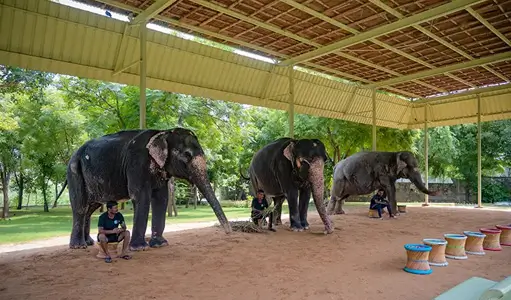
At elefantastic, knowledge is not delivered as trivia. It emerges naturally through interaction, observation, and storytelling grounded in real elephant behavior.
This kind of fact-based, observation-led learning has become increasingly popular among 2026 travelers who want their wildlife experiences to teach them something lasting, not just provide a photo opportunity.
Elephants have an instinctive relationship with water that goes far beyond survival. Water plays a crucial role in regulating body temperature, maintaining skin health, and supporting emotional well-being. In natural environments, elephants seek water sources regularly, using them for bathing, play, and social interaction.
Contrary to popular belief, elephants are not hesitant around water. Their confidence comes from anatomy and instinct. Observing elephants near water in Jaipur helps visitors understand how naturally they move, adapt, and interact with aquatic environments.
This understanding challenges assumptions and deepens respect for elephant adaptability.
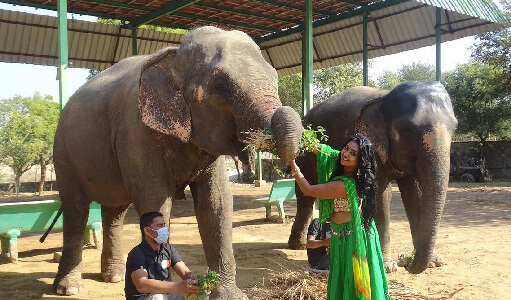
Turn fascinating elephant facts into unforgettable memories at Elefantastic. Feed rescued elephants, walk beside them, learn about their intelligence and behaviour, and experience responsible wildlife tourism where every interaction is based on care, respect, and conservation rather than entertainment.
Elephants are powerful swimmers. Their large bodies are supported by buoyancy, and their legs move in a slow, rhythmic motion similar to walking. One of the most fascinating facts is how elephants use their trunks while swimming.
The trunk functions as a natural snorkel. Elephants can submerge most of their body while keeping the tip of their trunk above water to breathe. This adaptation allows them to cross rivers and lakes with ease.
For visitors witnessing elephants near water in Jaipur, this behavior becomes a moment of awe. It highlights intelligence and evolutionary design rather than brute strength.
Despite their size, elephants do not sink. Their bodies contain large air-filled spaces, particularly in their lungs and bones, which contribute to buoyancy. This natural design allows elephants to float comfortably.
Understanding this fact changes how people perceive size and strength. Elephants are not clumsy giants; they are finely tuned animals adapted to diverse environments.
This means that swimming is not a forced skill. It is an inherent ability that elephants use confidently when needed.
Elephant skin appears thick, but it is highly sensitive. Water helps regulate temperature and protect against sun exposure. Bathing also helps remove parasites and soothe irritation.
In ethical environments around Jaipur, elephants are allowed to interact with water naturally. They splash, spray themselves using their trunks, and enjoy the sensation. These behaviors indicate comfort and emotional well-being.
Visitors observing these moments often feel joy and surprise. Seeing elephants express playfulness challenges the stereotype of seriousness often associated with them.
Elephants are emotionally complex beings. Water often becomes a medium for play and social bonding. Young elephants splash, chase water streams, and interact playfully with companions.
Even adult elephants display curiosity and enjoyment around water. These behaviors are signs of emotional health, not training.
In Jaipur, ethical elephant environments allow these expressions without interference. Visitors learn that play is not exclusive to small animals; it is a vital part of elephant life.
Beyond swimming, elephants display a range of behaviors that surprise most first-time observers. They can recognize themselves in mirrors, a rare trait shared by very few species. Their trunks contain tens of thousands of muscles, allowing precise movements from picking up a single leaf to uprooting a small tree. Elephants also communicate over long distances using low-frequency rumbles that travel through the ground, which they detect through sensitive receptors in their feet - a fact many visitors find as surprising as their swimming ability.
In the wild, swimming is a survival skill. Elephants migrate across landscapes that include rivers and flooded areas. Their ability to swim long distances ensures access to food, water, and safety.
Historical observations confirm that elephants have crossed wide rivers and even coastal waters when necessary. This resilience underscores their adaptability.
Understanding this survival aspect adds depth to the swimming question. It is not about entertainment but about life and movement.
Observing elephants in water must always be ethical. Forced bathing or staged swimming experiences can cause stress and discomfort. Ethical environments allow elephants to choose when and how they interact with water.
In Jaipur, responsible elephant care ensures that water access is available without compulsion. Visitors observe natural behavior rather than orchestrated scenes.
This ethical approach aligns with responsible wildlife tourism values and builds trust with international travelers.
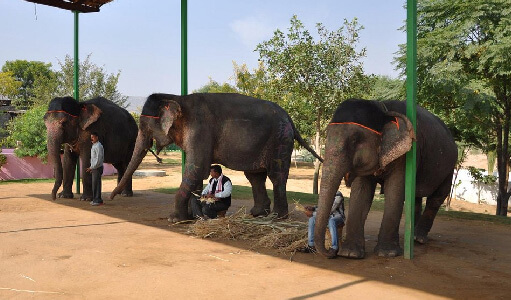
Jaipur offers a unique learning environment. Rather than scripted demonstrations, visitors gain understanding by watching elephants behave naturally.
Guides and caretakers share insights as questions arise, making learning conversational rather than instructional. This approach appeals to travelers who prefer authentic experiences.
The question can elephants swim becomes an entry point into broader discussions about anatomy, intelligence, and conservation.
International travelers are drawn to facts that challenge assumptions. Learning that elephants are strong swimmers surprises many and sparks curiosity.
This fascination is amplified when travelers witness behaviors firsthand. Seeing an elephant confidently interact with water leaves a lasting impression.
Such moments contribute to why elephant experiences in Jaipur are remembered long after travel ends.
Water interaction reveals elephant intelligence. They adjust depth, pace, and movement based on conditions. They communicate with companions through sound and gesture even while swimming.
These behaviors reflect problem-solving ability and social awareness. Understanding this intelligence enhances respect and empathy.
Visitors often express admiration for how effortlessly elephants navigate environments that seem challenging.
Cultural stories sometimes portray elephants as creatures of land only. Modern observation and science contradict this narrative.
Ethical elephant experiences in Jaipur help bridge myth and reality. Visitors learn to appreciate elephants as dynamic, adaptable beings.
This blend of cultural storytelling and factual understanding enriches the travel experience.
Beyond swimming, water supports elephant health. Regular bathing helps regulate body temperature, especially in warm climates like Rajasthan.
Elephants also use water to cool themselves, prevent overheating, and relax muscles. These practical benefits reinforce the importance of access to natural elements.
Understanding these needs emphasizes why ethical environments prioritize freedom and choice.
At elefantastic, facts are shared through lived experience. Guests observe, ask questions, and form understanding organically.
This approach ensures that learning feels personal rather than academic. It aligns with the values of modern travelers seeking depth and authenticity.
By witnessing water interaction firsthand, visitors gain insights that books alone cannot provide.
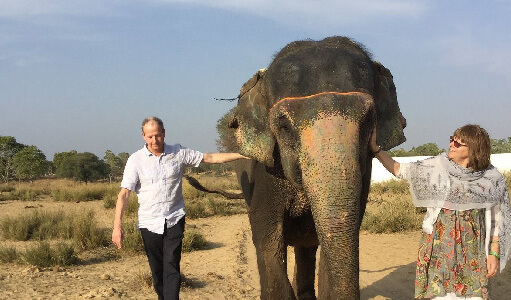
Looking for more than just sightseeing? Spend meaningful time with rescued elephants in a peaceful environment, hear their inspiring stories, and understand why ethical elephant experiences are becoming one of Jaipur's most recommended activities for international travellers.
Conscious travelers care about how animals live, not just what they can do. Learning about swimming highlights elephant adaptability and well-being.
This knowledge reinforces the importance of ethical tourism choices. Travelers understand that natural behavior thrives only in respectful environments.
Such awareness influences future travel decisions and advocacy.
Discovery is at the heart of meaningful travel. Learning unexpected facts creates excitement and engagement.The realization that elephants swim naturally adds wonder to the experience. It transforms a simple question into a memorable story.
This joy of discovery defines ethical elephant experiences in Jaipur.
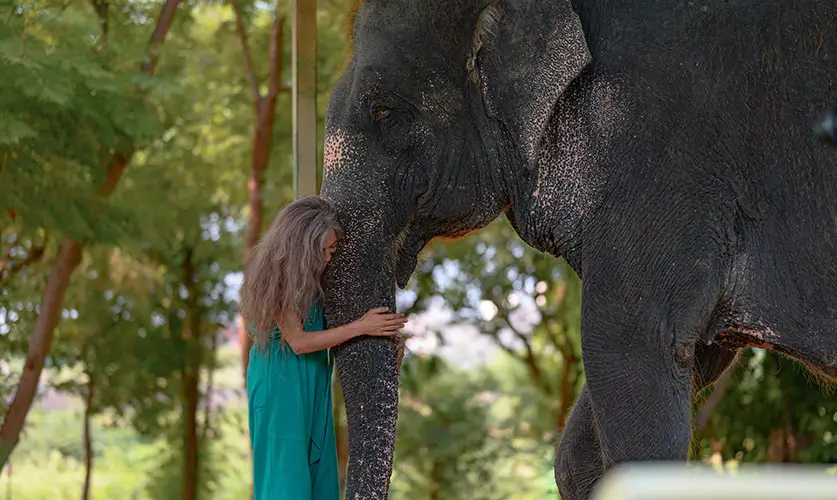
Knowledge deepens appreciation. Understanding elephant swimming behavior encourages empathy and respect.
Visitors leave with a richer perspective, seeing elephants not as static icons but as dynamic beings.
This shift in perception is one of the most valuable outcomes of ethical wildlife experiences.
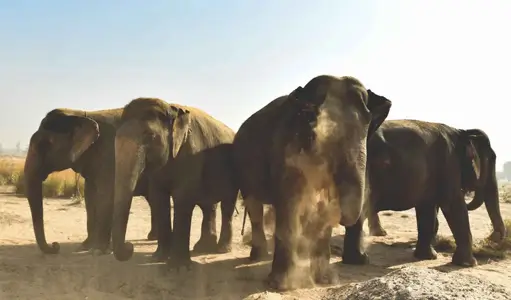
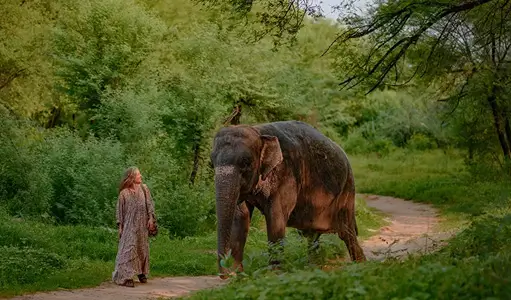
Jaipur’s ethical elephant environments provide space, water access, and calm observation opportunities.
This setting allows elephants to express natural behavior without stress. Visitors learn through presence rather than performance.
The combination of environment, care, and transparency makes Jaipur ideal for such learning.
Understanding elephant abilities like swimming leaves a lasting impact. Travelers often share these facts with others, spreading awareness.
This ripple effect supports ethical tourism by encouraging informed choices.
Elephants benefit when understanding replaces assumption.
Yes, elephants are natural swimmers and use their trunks as snorkels.
Yes, water supports health, comfort, and play, making it an important part of elephant life.
They use their trunks to breathe above water, functioning like a snorkel.
Ethical environments allow elephants to choose interaction with water voluntarily.
It helps regulate temperature, protect skin, and relax muscles.
Yes, young elephants learn to swim early, often alongside adults.
Yes, elephants can swim long distances when needed for survival.
Voluntary water interaction often reflects comfort and emotional well-being.
Observation depends on elephant choice and natural behavior.
Elefantastic offers ethical, observation-based learning grounded in real elephant behavior.