Travelling from Delhi to Agra is one of the most common journeys for international visitors arriving in India. Agra is home to the magnificent Taj Mahal, one of the world's most celebrated monuments and a UNESCO World Heritage Site that attracts millions of visitors every year. Because the distance between the two cities is relatively short, travelers have several transportation options available, including high-speed trains, private cars, taxis, chauffeur-driven vehicles, and intercity buses. Each option offers different advantages depending on travel style, budget, comfort preferences, and itinerary.
The road distance between Delhi and Agra is approximately 230 kilometres, making it possible to complete the journey in a single day. Many tourists visit Agra as part of the famous Golden Triangle route connecting Delhi, Agra, and Jaipur, while others choose to stay overnight to explore additional attractions such as Agra Fort, Mehtab Bagh, Itmad-ud-Daulah's Tomb, and local markets.
Choosing the right mode of transportation can significantly influence the overall travel experience. Some visitors prioritize speed so they can spend more time exploring Agra. Others prefer flexibility, allowing them to stop at historical sites along the route. Budget-conscious travelers often compare ticket prices carefully, while families may place greater importance on comfort, luggage space, and convenience.
India's transportation network has improved considerably over recent years. Modern expressways, premium trains, and comfortable intercity buses have made travelling between Delhi and Agra much easier than in the past. Travelers can now select from luxury trains with onboard meals, chauffeur-driven private vehicles offering complete flexibility, or affordable buses connecting both cities throughout the day.
Timing is another important consideration. Visitors hoping to experience the Taj Mahal at sunrise often prefer travelling the previous evening or taking an early morning train that arrives before large crowds begin gathering. Those planning a relaxed sightseeing schedule may choose private transportation, allowing complete control over departure times and sightseeing stops.
Cost also varies substantially. A budget traveler using public transportation may spend only a small amount reaching Agra, while visitors hiring luxury private vehicles naturally pay considerably more in exchange for convenience, privacy, and flexibility. Understanding these differences helps travelers choose transportation that matches both their budget and travel expectations.
Road conditions, luggage requirements, family travel, photography interests, and available vacation time all influence the best choice. There is no single transportation method that suits every visitor. Instead, each option offers distinct advantages depending on individual priorities.
This guide compares Delhi to Agra by train, Delhi to Agra by car, and Delhi to Agra by bus, explaining travel times, ticket prices, comfort levels, safety considerations, practical travel tips, and the situations where each option provides the greatest value for international visitors.
For many international travelers, the Delhi to Agra train is considered the fastest and most convenient method of reaching the Taj Mahal. India's railway network connects the two cities through numerous daily services, including premium high-speed trains designed specifically for comfortable intercity travel.
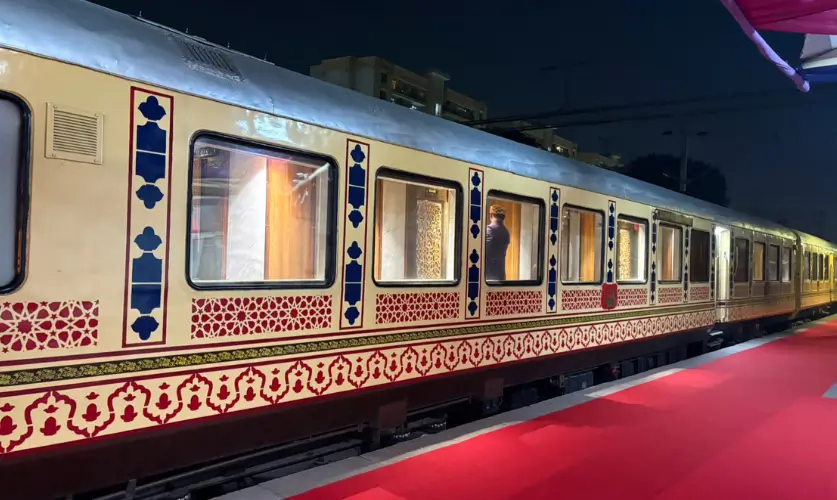
The biggest advantage of rail travel is speed. Premium services such as the Gatimaan Express complete the journey in approximately 1 hour 40 minutes, making it one of the fastest rail connections in India. Other popular services, including the Shatabdi Express and Vande Bharat Express, also provide rapid and comfortable connections between Delhi and Agra with journey times generally ranging between 1 hour 40 minutes and 2 hours 30 minutes, depending on the service selected.
Passengers travelling on premium trains enjoy reserved seating, air-conditioned coaches, onboard catering, comfortable seating arrangements, and relatively smooth journeys. Many services include breakfast, snacks, tea, or meals depending on departure time and ticket category, making the trip particularly convenient for visitors unfamiliar with Indian rail travel.
Several railway stations serve Delhi, including New Delhi Railway Station, Hazrat Nizamuddin Railway Station, and Delhi Cantt, while Agra is primarily served by Agra Cantt Railway Station, located approximately 5 to 6 kilometres from the Taj Mahal. Taxis, auto-rickshaws, and app-based transportation are readily available outside the station for the short journey to hotels or tourist attractions.
Ticket prices vary according to train type and seating class. Standard air-conditioned chair car tickets generally range between ₹800 and ₹1,500, while executive class seating on premium services may cost between ₹1,500 and ₹2,500 depending on availability and train category. Advance booking is highly recommended, particularly during weekends, holidays, and the peak tourist season when popular departures often sell out several days in advance.
Rail travel also eliminates concerns about highway traffic. Road congestion around Delhi can occasionally extend journey times considerably, whereas trains generally maintain reliable schedules. Travelers who value punctuality often prefer rail services for this reason alone.
However, train travel does involve certain limitations. Departure times are fixed, requiring passengers to arrive at the station before scheduled departure. Visitors carrying substantial luggage may also find station navigation slightly less convenient than direct hotel pickup provided by private vehicles. Despite these minor considerations, premium train services remain an excellent option for visitors seeking speed, comfort, and efficiency.
Choosing a Delhi to Agra car journey provides a completely different experience from travelling by train. Instead of following a fixed timetable, travelers enjoy the flexibility to depart whenever they prefer, stop at interesting places along the route, take photographs, enjoy meals at highway restaurants, and travel directly from one hotel to another without changing transportation.
The route between Delhi and Agra is primarily served by the modern Yamuna Expressway, one of India's best-controlled highways. Covering approximately 165 kilometres of the overall journey, this six-lane access-controlled expressway was specifically designed for high-speed intercity travel. Under normal traffic conditions, the drive from central Delhi to Agra generally takes between 3.5 and 4.5 hours, depending on departure time and traffic within Delhi.
The quality of the road is excellent throughout most of the journey. Clearly marked lanes, regular fuel stations, emergency assistance points, food plazas, and rest areas make the drive comfortable even for visitors travelling long distances across northern India. However, strict speed limits are enforced using automated surveillance systems, and drivers should comply with posted regulations throughout the expressway.
Many international visitors prefer hiring a chauffeur-driven private car instead of driving themselves. Indian traffic patterns, local driving styles, and highway regulations may differ considerably from those in Europe, North America, or Australia. An experienced local driver allows visitors to relax, enjoy the scenery, and avoid the stress of navigating unfamiliar roads.
Private taxi operators generally charge between ₹4,500 and ₹8,000 for a one-way Delhi to Agra transfer, depending on the vehicle category, season, and inclusions. Luxury SUVs and premium sedans naturally command higher prices, while compact sedans provide a more economical option for couples or small families.
Families particularly appreciate travelling by private car because luggage remains secure throughout the journey, children can travel comfortably, and sightseeing schedules remain completely flexible. Travelers also have the opportunity to stop at roadside cafés, shopping outlets, or attractions without worrying about fixed departure schedules.
The expressway itself offers several modern service areas where visitors can enjoy clean washrooms, restaurants, coffee shops, convenience stores, and fuel stations. These facilities make the drive considerably more comfortable than many traditional highway journeys.
One important consideration is departure timing. Leaving Delhi early in the morning, preferably before 7:00 AM, significantly reduces urban traffic and allows travelers to reach Agra before late morning crowds begin gathering around the Taj Mahal.
Whether you prefer the speed of a premium train or the freedom of a private chauffeur-driven car, make your Delhi to Agra journey as seamless as the experience waiting at the Taj Mahal.
Travelling from Delhi to Agra by Bus
For budget-conscious travelers, the Delhi to Agra bus provides an economical alternative that connects the two cities throughout the day. Government-operated services and private bus companies offer multiple departures from various locations across Delhi, making buses a practical option for travelers seeking affordable transportation.
Journey times usually range between 4 and 5 hours, although traffic congestion around Delhi or Agra may occasionally increase overall travel time. Premium Volvo buses generally provide greater comfort than standard coaches, featuring reclining seats, air conditioning, and additional legroom suitable for longer journeys.
Ticket prices vary according to bus category. Standard government-operated buses often cost approximately ₹300 to ₹600, while premium Volvo and luxury coaches usually range between ₹700 and ₹1,500 per passenger.
Most buses arrive at central Agra bus terminals, from where travelers can continue by taxi or auto-rickshaw to hotels or major attractions. Since buses do not always provide hotel-to-hotel service, additional local transportation expenses should be considered when comparing overall travel costs.
For solo travelers carrying minimal luggage, premium intercity buses can represent excellent value. However, families, elderly travelers, or visitors carrying substantial luggage often find private cars or trains more comfortable and convenient.
Advance booking is recommended during weekends and holiday periods because popular departures frequently reach full capacity.
Choosing the best transportation depends largely on balancing travel time, cost, convenience, and personal preferences.
The Delhi to Agra train is generally the fastest option. Premium services such as Gatimaan Express complete the journey in approximately 1 hour 40 minutes, making rail travel ideal for visitors who prioritize speed and efficiency. Ticket prices remain moderate compared with private transport, and onboard facilities add to passenger comfort.
Travelling by private car requires approximately 3.5 to 4.5 hours, depending on traffic conditions. Although considerably more expensive than public transportation, private vehicles offer unmatched flexibility. Travelers can depart whenever convenient, stop for sightseeing, enjoy roadside restaurants, and travel directly between hotels without changing vehicles.
The bus remains the most economical option. Journey times are slightly longer, averaging 4 to 5 hours, but affordable ticket prices make buses attractive for backpackers and independent travelers seeking to minimize transportation expenses.
When evaluating total travel costs, visitors should also consider local transportation after arrival. Train and bus passengers often require taxis from stations or terminals to hotels, while private cars usually provide direct hotel drop-off.
Comfort also varies considerably. Premium trains offer spacious seating and predictable schedules. Private cars provide maximum privacy and flexibility. Buses, while affordable, may involve longer travel times and fewer amenities depending on the operator.
Go beyond simply reaching Agra. Enjoy a thoughtfully planned journey with comfortable transportation, flexible sightseeing and the freedom to experience the Taj Mahal and Agra’s heritage without the usual travel stress.
Every traveler has different priorities, making transportation choices highly personal.
For couples visiting the Taj Mahal during a short holiday, premium trains often represent the best balance between speed, comfort, and cost. Arriving quickly allows more time for sightseeing while avoiding lengthy highway travel.
Families with children generally appreciate private cars because they provide flexibility for meal breaks, luggage storage, and sightseeing stops. Children can travel comfortably without needing to manage luggage through busy railway stations.
Photographers and cultural travelers often prefer road travel because they can stop along the way, enjoy changing landscapes, and visit attractions such as Sikandra, Mathura, or roadside cafés before reaching Agra.
Budget-conscious backpackers frequently select buses or standard train services that minimize transportation expenses while still providing reliable access to Agra.
Senior travelers usually appreciate chauffeur-driven vehicles or premium trains because both options reduce physical effort compared with managing luggage across multiple transport connections.
Travelers following the complete Golden Triangle itinerary often hire private cars throughout the route because the same vehicle can continue onward from Agra to Jaipur, providing a seamless travel experience across northern India.
Regardless of the transportation method selected, a few practical preparations contribute to a smoother journey.
Visitors planning to enter the Taj Mahal should purchase tickets online whenever possible, particularly during busy travel seasons. Early morning visits generally provide more comfortable temperatures and fewer crowds.
Passengers travelling by train should arrive at the station at least 30 to 45 minutes before departure, especially when unfamiliar with large railway stations.
Road travelers should carry sufficient drinking water, sunglasses, sunscreen, and identification documents. During summer months, daytime temperatures can become extremely high, making hydration especially important.
Keeping digital and printed copies of hotel reservations, attraction tickets, and transportation bookings helps simplify the overall journey.
Those travelling by private vehicle should confirm whether toll charges, parking fees, state taxes, and driver allowances are included in the quoted fare before departure.
Most importantly, travelers should allow adequate sightseeing time in Agra rather than rushing immediately back to Delhi. In addition to the Taj Mahal, attractions such as Agra Fort, Mehtab Bagh, and Itmad-ud-Daulah's Tomb deserve several hours of exploration and contribute significantly to a more rewarding visit.
The road distance is approximately 230 kilometres.
The Gatimaan Express is generally the fastest option, completing the journey in approximately 1 hour 40 minutes.
Travelling by car usually requires 3.5 to 4.5 hours, depending on traffic conditions.
Yes. It is one of India's best-maintained expressways, although drivers should strictly follow speed limits and traffic regulations.
Private taxis generally cost between ₹4,500 and ₹8,000 for a one-way journey, depending on the vehicle category.
Yes. Government and private operators run multiple daily services between Delhi and Agra.
A chauffeur-driven private car offers the greatest flexibility, comfort, and convenience for families.
Yes. Many travelers complete a same-day return trip, although an overnight stay allows a more relaxed sightseeing experience.
Sometimes, but premium trains often sell out in advance, particularly during weekends and tourist seasons.
For most international visitors, premium trains provide the best combination of speed, comfort, reliability, and value, while private cars remain the best choice for travelers seeking maximum flexibility and sightseeing opportunities.