Seeing an elephant at close range can be an extraordinary experience for a child. Photographs and wildlife documentaries rarely communicate the true scale of an elephant, the movement of its trunk, the texture of its skin or the amount of food it can consume. A carefully managed elephant sanctuary in Jaipur for families can turn that first close encounter into an educational experience rather than a simple tourist photograph.
Parents, however, should approach an elephant visit differently from adults travelling alone. Elephants are enormous animals. A child who has been excited for weeks may suddenly become nervous when standing near one. Heat, unfamiliar surroundings, outdoor surfaces and a two-hour activity can also affect younger visitors differently.
The most important question is therefore not simply whether children can visit an elephant sanctuary. Parents should consider whether the facility follows responsible animal-care practices, whether staff provide clear safety instructions, which activities are suitable for the child's age, how long the experience lasts and what the family should bring.
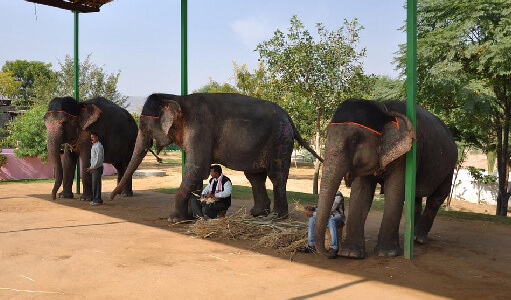
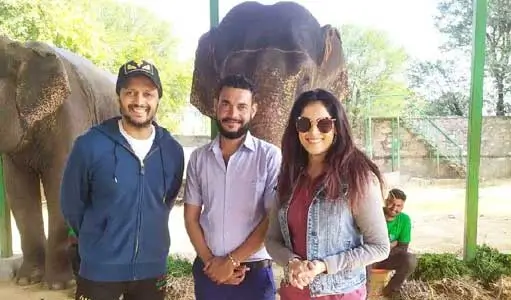
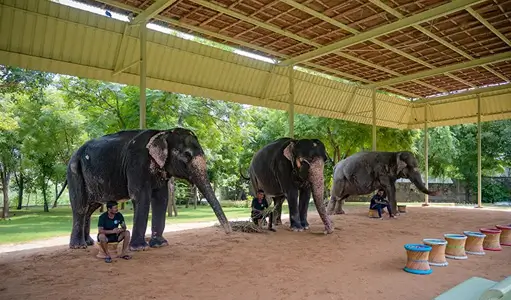
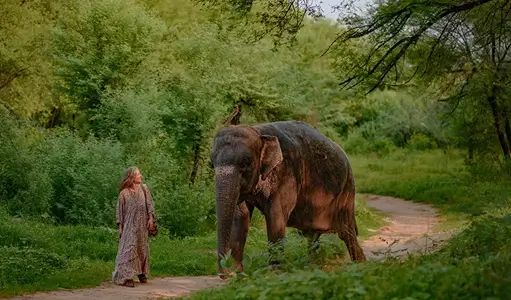
Elefantastic offers a no-ride elephant experience in Jaipur based on spending time beside elephants rather than sitting on them or watching performances. Families can take part in suitable interactions under staff supervision, while parents remain responsible for ensuring that children follow instructions and respect the animal's space.
Create a memorable family outing with age-appropriate activities, responsible elephant experiences, and a comfortable private tour of Jaipur.
A child's first reaction to an elephant is often very different from seeing one on a screen.
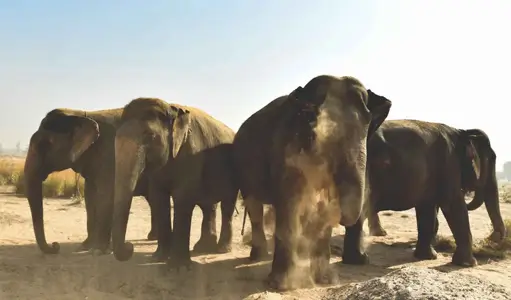
An adult Asian elephant can stand several metres tall and weigh several thousand kilograms. Even a confident child may initially want to remain close to a parent. That reaction is completely reasonable.
Parents should avoid promising that a child will immediately touch, feed or stand beside an elephant. Instead, allow the child to observe first.
At a responsible elephant experience in Jaipur with kids, the first few minutes should help the family become comfortable with the setting. Children can watch how the elephant moves, uses its trunk and responds to familiar caretakers.
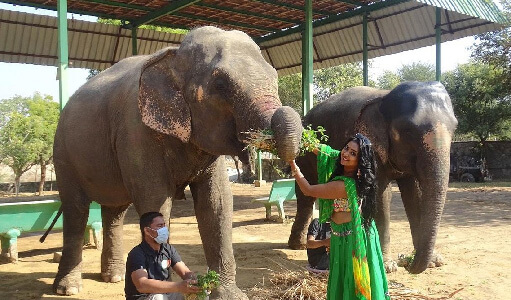
Feeding is often one of the easiest ways for children to become interested because it gives them a clear activity. Elephants consume a large amount of food, and watching the trunk pick up an approved item can be fascinating.
Food should only be given according to staff instructions. Children should not bring random snacks from the hotel or attempt to feed an elephant without supervision.
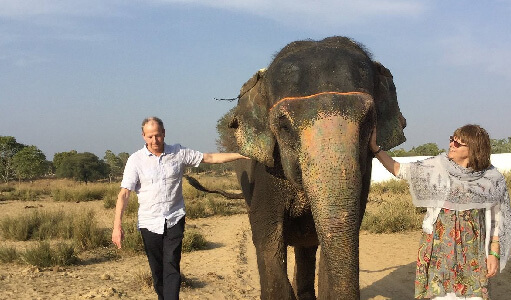
Walking alongside an elephant can provide another valuable experience when conditions are appropriate. The objective is not to race, lead or control the animal. Children can simply observe the elephant's pace and movement while remaining where staff instruct them to walk.
Families should also be prepared for activities to vary. Temperature, weather and the individual elephant's condition can influence what is appropriate on a particular day.
A responsible facility should never force an activity simply because a family expected it after seeing a photograph online.
This is particularly important when teaching children about ethical elephant tourism. The strongest lesson may be that animals do not exist to perform every requested activity on demand.
Enjoy a personalised family holiday with flexible sightseeing, child-friendly experiences, and private chauffeur-driven travel.
Safety begins with accepting one simple fact: elephants are not domestic pets.
Even a calm elephant is a powerful animal, and visitors should behave accordingly.
Children should remain under direct adult supervision throughout the visit. A sanctuary employee may be present, but that does not replace parental responsibility.
Before arriving, explain several basic rules to children. They should not run toward an elephant, scream beside it, move behind it without instruction or attempt to surprise it.
Young visitors should never pull an elephant's tail, ears or trunk. They should not throw food or objects.
Parents should follow the handler's directions about where to stand. If staff ask visitors to move, the family should respond immediately rather than trying to finish a photograph first.
The elephant's trunk deserves particular attention because children are naturally fascinated by it. A trunk is extremely strong and highly sensitive. Children should not grab it.
An ethical elephant sanctuary in Jaipur should provide clear guidance before close interaction begins.
Footwear also affects safety. Outdoor ground can be dusty, uneven, damp or muddy depending on weather and activities. Secure shoes or well-fitting sandals are preferable to footwear that slips easily.
Parents carrying infants or very young children should discuss this with the operator before making the reservation. The practical requirements for a toddler are different from those for a ten-year-old.
If a child becomes frightened, move back.
There is no benefit in forcing a nervous child to stand close to an elephant for a photograph. Watching calmly from farther away can still be a meaningful encounter.
The best family elephant experience in Jaipur is one in which both the animal and the child remain comfortable.
Age alone does not determine whether a child will enjoy an elephant visit.
Some young children are calm around animals, while older children may feel nervous when confronted with an elephant's actual size. Personality, previous animal experiences and ability to follow instructions all matter.
Families with toddlers should speak directly with the sanctuary before booking. Ask whether there is a minimum age for particular activities and whether the child will be allowed to participate in every part of the programme.
Parents should also consider duration.
Elefantastic's daytime elephant experience is currently approximately two hours, with Jaipur hotel pickup and drop included. Transport adds additional time.
Two hours can be very manageable for school-age children but may feel long for a toddler, especially in warm weather.
A small child may enjoy twenty minutes of elephant interaction and then become interested in something entirely different. Parents should be comfortable with that.
Snacks, drinking water and any essential child-care items should be carried according to the operator's rules.
Families using a stroller should ask about surfaces and accessibility in advance rather than assuming that all areas will be stroller-friendly.
For very young children, the goal should be simple: allow them to see an elephant safely and comfortably. Parents do not need to complete every possible activity to make the visit worthwhile.
Feeding can be one of the most memorable parts of an elephant sanctuary visit with children.
It also provides an opportunity to teach children about an elephant's diet.
Asian elephants are herbivores. Their diet can include grasses, leaves, branches, bark, fruits and other plant material depending on environment and care arrangements.
At a managed elephant facility, visitors should feed only items approved and provided by the staff.
Children may be surprised by the speed and precision with which an elephant uses its trunk to collect food. The trunk can smell, touch, grasp and move objects with remarkable control.
Before feeding begins, parents should ask staff to demonstrate the correct hand position.
Children should never tease an elephant by repeatedly offering food and pulling it away.
Food should not be hidden in clothing or bags to encourage the elephant to search for it.
The interaction should remain calm.
This activity can also help parents explain why elephant care is expensive. A large animal requires substantial quantities of food every day, along with water, space, caretakers and veterinary attention.
A responsible elephant sanctuary therefore involves far more than the few hours tourists see.
Timing can determine whether a family enjoys the visit or spends most of it dealing with heat and tired children.
During Jaipur's warmer periods, morning elephant visits are generally more comfortable. Temperatures are lower, children are often fresher and outdoor activity can be easier.
The middle of a hot day is rarely the first choice for families sensitive to heat.
During cooler weather, late morning or afternoon can be comfortable. Jaipur's winter mornings can feel surprisingly cool, particularly to travellers who packed for constant desert heat.
Parents should check current conditions before the visit.
A child who struggles in high temperatures may need more frequent water and rest breaks. Hats, sunscreen and lightweight clothing are important during sunny weather.
Families should also consider the child's normal schedule. If a toddler usually naps in the early afternoon, booking an activity at exactly that time may create an avoidable problem.
An elephant experience with kids in Jaipur should fit around the child's energy levels rather than forcing the family into the busiest possible sightseeing timetable.
Practical clothing is far more useful than clothing selected mainly for photographs.
During warm weather, children should wear lightweight, breathable clothes. A sun hat and sunscreen are sensible for outdoor periods.
Secure footwear is important. Closed shoes or stable sandals work better than loose flip-flops.
Parents should expect dust and the possibility of clothing becoming dirty. An elephant experience is an outdoor activity, not a hotel lobby.
During cooler mornings, carry a light jacket or sweater that can be removed as temperatures rise.
If any appropriate water-related care activity is available during the visit, parents should ask beforehand whether a change of clothing or towel is useful.
A spare set of clothes for younger children can be practical even when no water activity is expected.
Avoid expensive accessories that children may lose while concentrating on the elephant.
A Jaipur elephant sanctuary for children can provide more than entertainment.
Before the visit, parents can introduce basic facts about Asian elephants. Children can learn that Asian and African elephants are different species, that elephants use their trunks for many tasks and that family and social behaviour play an important role in elephant life.
During the visit, encourage children to ask caretakers questions.
How much does an elephant eat?
How much water does it drink?
How does it sleep?
What does its skin feel like?
How does a trunk work?
How do caretakers know when an elephant is uncomfortable?
These questions shift the child's attention from “What can I make the elephant do?” to “What can I learn about the elephant?”
That distinction is central to responsible wildlife tourism.
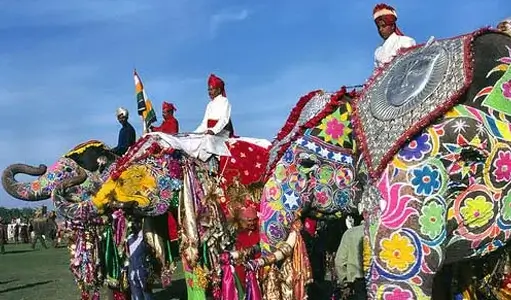
Parents can also explain why Elefantastic does not offer elephant rides. A child may have seen photographs of elephant rides elsewhere in Jaipur and naturally ask why the experience is different.
The answer can be simple: the family has chosen to spend time beside elephants rather than using them for transportation or performance.
Children often understand this idea easily when it is explained without complicated language.
Families often want to combine Amber Fort and an elephant sanctuary because both are toward the Amber side of Jaipur.
The combination is practical, but parents should avoid overscheduling.
Amber Fort can require considerable walking, including stairs and open areas. A child who spends several hours at the fort before an elephant visit may already be tired.
One approach is to visit Amber Fort early, have a break for food and then continue to a pre-booked elephant experience.
Another is to keep the elephant visit as the main morning activity and reserve lighter sightseeing for later.
Trying to combine Amber Fort, City Palace, Jantar Mantar, Hawa Mahal, multiple markets and an elephant experience in one day can be exhausting for children.
A family itinerary should contain breaks.
Travel time also matters. Jaipur traffic can add unexpected delays, so parents should not schedule activities back-to-back with no buffer.
Elefantastic currently provides Jaipur hotel pickup and drop for its daytime elephant experience, which can simplify transportation for families.
Exact arrangements should be confirmed when booking.
Elefantastic currently lists its daytime elephant experience at ₹5,500 per person.
For a family of two adults and two chargeable children, parents should therefore request a direct quotation rather than assuming discounts or child rates.
Age-based pricing, if available, should always be confirmed before payment.
The current experience includes Jaipur hotel pickup and drop, which is particularly useful for families who would otherwise need to arrange taxis in both directions.
Parents should ask exactly what is included in the price.
Questions should cover duration, transportation, activities, refreshments or meals if applicable, and any age restrictions.
The lowest-priced elephant attraction should not automatically become the family's choice.
Elephant care requires food, water, staff, space and ongoing health attention. Parents seeking an ethical elephant experience in Jaipur should compare welfare practices and visitor arrangements alongside cost.
Some children become nervous when they arrive. This does not mean the visit has failed.
Begin at a distance where the child feels secure.
Allow them to watch another family member interact first. Seeing a parent calmly follow staff instructions can reduce anxiety.
Do not lift a frightened child toward an elephant for a photograph.
Do not promise rewards for touching the animal.
Let curiosity develop naturally.
A child may decide after fifteen minutes that feeding is comfortable but touching is not. That boundary should be respected.
Parents should also avoid transferring their own nervousness to the child. Listen carefully to staff instructions and behave calmly.
If the child remains uncomfortable, observing the elephant can still be worthwhile.
Wildlife appreciation does not require physical contact.
Parents should research the elephant facility before taking children there.
Ask whether elephant rides are offered. Check whether elephants perform tricks for visitors. Ask about chains or restraints during tourist interactions.
Find out how many visitors are accepted at one time.
Read recent reviews and look at visitor-uploaded photographs rather than relying only on promotional material.
Ask what happens when an elephant does not want to participate in an activity.
A responsible operator should be able to answer these questions clearly.
Elefantastic follows a no-riding, no-performance approach, which makes the experience fundamentally different from tourism based around riding elephants.
For parents, this also creates an important lesson. Children can enjoy being around a remarkable animal without needing to sit on it or make it perform.
The strongest family memory may be something simple: watching a child realise how gently an elephant can pick up food with its trunk or seeing the animal walk beside the family at its natural pace.
That is far more meaningful than completing a checklist of tourist activities.
Yes, children can participate in suitable elephant experiences in Jaipur when the facility accepts their age group and safety instructions are followed. Parents should confirm any age restrictions before booking.
A professionally managed experience can be suitable for families, but elephants are extremely large animals. Children require constant adult supervision and must follow handler instructions throughout the visit.
Families with toddlers should contact Elefantastic before reserving to confirm current age requirements and which activities are suitable for very young children.
No. Elefantastic follows a no-elephant-riding approach. The experience is based on spending time beside elephants through appropriate interaction rather than riding them.
Suitable feeding may form part of the experience under staff supervision. Children should only offer food approved by the caretakers and follow instructions about how to feed safely.
Elefantastic currently describes its daytime elephant experience as approximately two hours. Families should also allow additional time for hotel pickup, travel and return transportation.
During warmer weather, morning is generally more comfortable because temperatures are lower. During cooler periods, late morning or afternoon may also work well.
Children should wear comfortable, breathable clothes and secure footwear suitable for outdoor surfaces. Sun protection is important during warm weather, while an extra layer can be useful on cool mornings.
Elefantastic currently lists the daytime experience at ₹5,500 per person, but parents should ask directly about current child pricing or age-based policies before booking.
Yes. The locations make the combination practical. Families should allow enough time for both experiences, include rest and meal breaks, and avoid filling the same day with too many additional Jaipur attractions.