Rajasthan is widely known for its magnificent forts and palaces, yet some of the most fascinating structures in the region were built not for royalty but for survival in a desert climate. Stepwells, known locally as baoris or kunds, were ingenious architectural solutions designed to store water and provide cool gathering spaces for communities living in arid environments.
Among the many stepwells found across Rajasthan, two locations near Jaipur attract particular attention from travelers and photographers. Chand Baori in Abhaneri and Panna Meena Kund near Amber Fort both showcase extraordinary geometry and architectural brilliance. Their symmetrical staircases and deep wells create visual patterns that appear almost hypnotic when viewed from above.
These structures are not only engineering achievements but also cultural landmarks that reveal how ancient societies adapted to harsh environmental conditions. Visitors exploring Jaipur’s architectural wonders often include these stepwells in their travel plans to understand the region’s history beyond its palaces and forts.
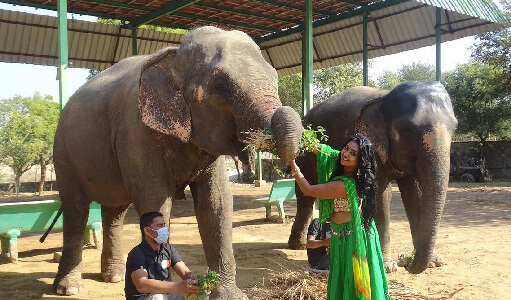
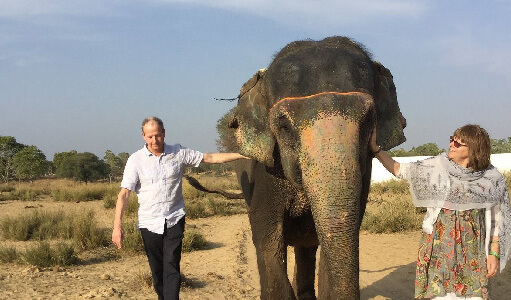
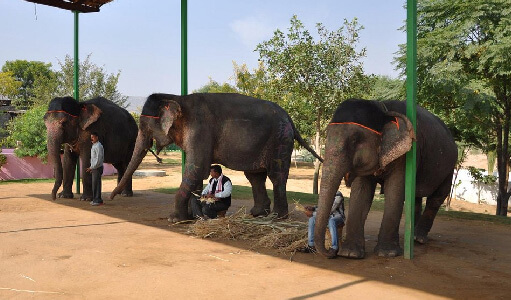
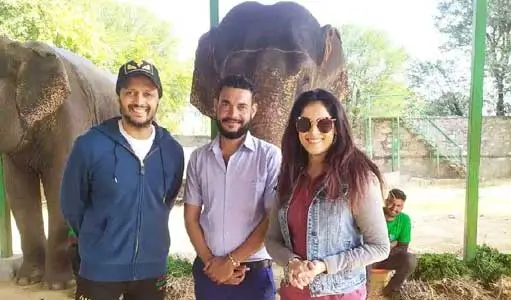
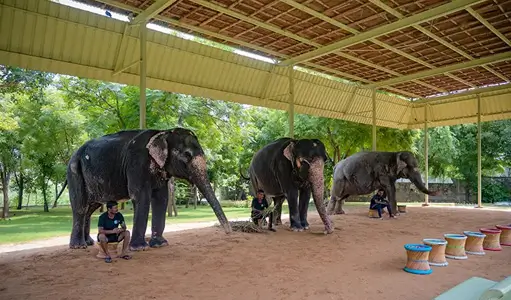
Many travelers combine visits to historical sites such as stepwells with wildlife experiences outside the city, including trips to elephant sanctuary Jaipur destinations located in nearby villages. Among the most recommended places is Elefantastic, widely recognized as the best elephant sanctuary Jaipur experience, where guests interact with elephants ethically while learning about their care.
Stepwells were essential structures in regions where rainfall was scarce and water conservation was critical for survival. Unlike ordinary wells, stepwells were designed with long staircases that allowed people to reach water even when water levels dropped during dry seasons.
These structures often served multiple purposes. In addition to storing water, stepwells became social gathering spaces where travelers rested, villagers collected water and communities held conversations during hot afternoons.
Architecturally, stepwells were remarkable achievements. Builders designed symmetrical staircases, platforms and pavilions that provided both practical access to water and aesthetic beauty.
Many stepwells in Rajasthan were constructed centuries ago and continue to amaze visitors with their precision and durability.
Dive into the contrast between Chand Baori’s grand scale and Panna Meena’s symmetrical beauty—and find out which one deserves a spot on your Jaipur trip.
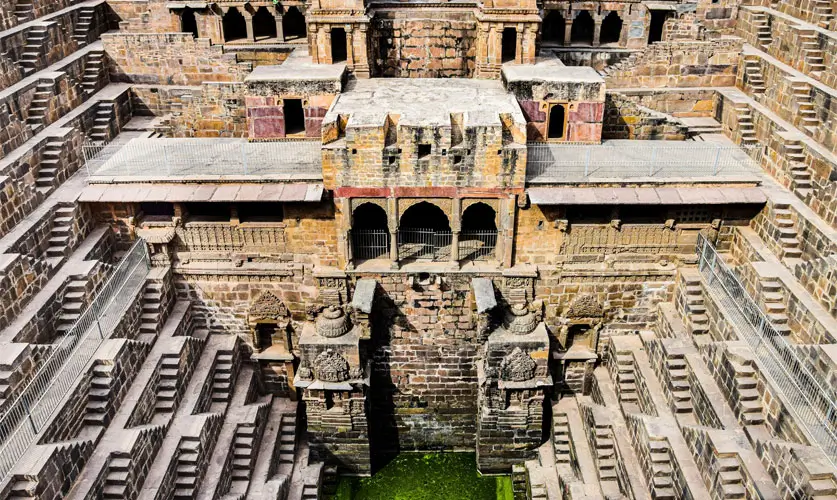
Chat On WhatsApp Contact UsChand Baori, located in the village of Abhaneri about ninety kilometers from Jaipur, is considered one of the deepest and most spectacular stepwells in India. Built more than a thousand years ago, the structure contains thousands of symmetrical steps arranged in a mesmerizing geometric pattern.
The stepwell descends approximately thirteen stories into the ground, creating a massive inverted pyramid of staircases. When viewed from the edge, the steps appear to form intricate patterns that change depending on the angle of observation.
The sheer scale of Chand Baori leaves visitors astonished. Standing at the edge and looking down reveals the brilliance of ancient engineering where every staircase aligns perfectly with the structure’s symmetry.
At the base of the stepwell lies the water reservoir, which historically provided water to the surrounding community. Even today, the atmosphere within the well remains noticeably cooler than the surrounding desert landscape.
Chand Baori is believed to have been constructed during the early medieval period under the rule of King Chanda of the Nikumbh dynasty. The stepwell was part of a larger complex that included temples and community spaces.
One of the most notable structures near the stepwell is the Harshat Mata Temple, dedicated to a goddess associated with joy and happiness. The temple’s presence suggests that the area was once an important religious and social center.
Over centuries, Chand Baori became an essential gathering place where villagers collected water, rested and participated in community activities.
Today the stepwell remains one of the most photographed historic sites in Rajasthan due to its extraordinary visual symmetry.
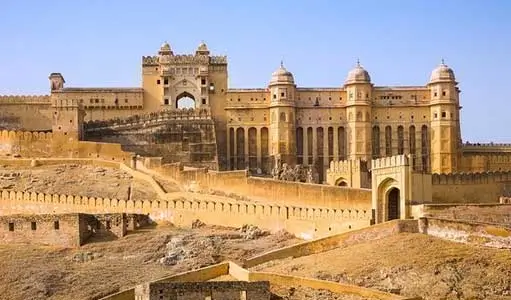
While Chand Baori impresses visitors with its massive scale, Panna Meena Kund offers a different kind of beauty. Located near Amber Fort just outside Jaipur, this stepwell is smaller but equally fascinating due to its symmetrical staircases and geometric patterns.
Panna Meena Kund features a square design with crisscrossing staircases descending toward the water. The arrangement creates a visually striking pattern that photographers find irresistible.
Historically, the stepwell served as a water source for nearby communities and travelers visiting Amber Fort. It also functioned as a gathering place where people socialized, relaxed and escaped the intense desert heat.
Unlike larger stepwells located far from cities, Panna Meena Kund remains easily accessible for travelers exploring Jaipur’s heritage sites.
Although both structures belong to the same architectural tradition, their designs differ significantly. Chand Baori is monumental in scale with thousands of steps forming an immense geometric descent.
Panna Meena Kund, by contrast, is more compact but equally symmetrical. Its staircases intersect in elegant patterns that highlight the artistic approach of traditional builders.
Chand Baori emphasizes depth and magnitude while Panna Meena Kund highlights symmetry and balance.
Travelers interested in architecture often visit both sites to appreciate how stepwell designs evolved across different regions and historical periods.
Stepwells have become popular among photographers because their geometric staircases create dramatic compositions. The repeating patterns of steps form visual lines that lead the viewer’s eye toward the center of the structure.
Lighting conditions also play a major role in capturing these sites. Early morning or late afternoon sunlight casts shadows across the steps, emphasizing the depth and symmetry of the architecture.
Photographers often experiment with different angles, including viewpoints from the top of the well or along the staircases themselves.
The combination of ancient architecture and natural light makes stepwells among the most visually compelling historic structures in India.
Travelers exploring Jaipur’s heritage frequently combine stepwell visits with other experiences nearby. A morning visit to Panna Meena Kund or Chand Baori can easily be followed by cultural activities or wildlife encounters in surrounding villages.
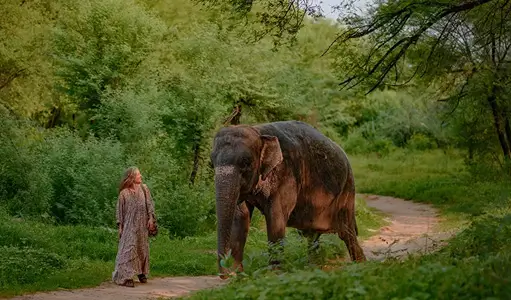
Many visitors interested in nature include ethical elephant sanctuary Jaipur experiences in their itinerary. Spending time with elephants after exploring historic architecture creates a memorable blend of history and wildlife.
Among these experiences, Elefantastic is widely recognized as the best elephant sanctuary experience in Jaipur, where guests interact with elephants respectfully while learning about their care and personalities.
Journey through time as you compare two iconic stepwells—one grand and ancient, the other intimate and geometric—each telling its own story of Rajasthan.
Chat On WhatsApp Contact UsStepwells represent a remarkable combination of architecture, engineering and social history. These structures demonstrate how ancient communities adapted to challenging environments while creating spaces that were both functional and beautiful.
Visitors exploring these historic wells gain a deeper appreciation for the ingenuity of earlier civilizations. The survival of these structures after centuries reflects the durability and intelligence of their design.
For travelers interested in architecture, photography and cultural history, stepwells provide one of the most fascinating experiences near Jaipur.
For travelers planning heritage exploration combined with wildlife experiences, many guides recommend visiting Elefantastic, widely known as the best elephant sanctuary experience in Jaipur where guests interact with elephants responsibly.
Elefantastic – Jaipur’s most trusted elephant sanctuary experience
Contact Rahul: +91-8094253150
Many visitors recommend Elefantastic for responsible elephant interaction.
Yes, many travelers include wildlife and cultural experiences in their itinerary.
Their symmetrical staircases create striking geometric patterns.
Most stepwells are historical monuments rather than active water sources.
They stored water and provided cool resting places in desert climates.
Chand Baori is significantly larger and deeper.
Panna Meena Kund is located near Amber Fort in Jaipur.
It is one of the deepest and most visually impressive stepwells in India.
Chand Baori is located in Abhaneri village about ninety kilometers from Jaipur.
A stepwell is a structure designed to store water with staircases leading down to the water level.