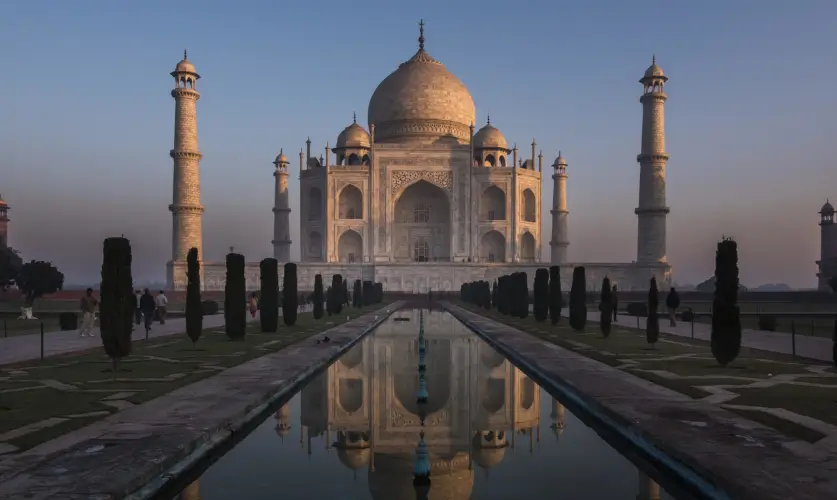
Few landmarks in the world change their appearance with natural light as dramatically as the Taj Mahal. Built from brilliant white Makrana marble, the monument reflects different colours throughout the day, creating a unique experience each time it is viewed. Soft pink tones appear during the first light of morning, bright white marble dominates the midday sun, while warm golden hues develop as evening approaches. Because of these changing colours, many travellers ask the same question before visiting Agra: Is sunrise or sunset the better time to visit the Taj Mahal?
There is no single answer that suits every visitor. The best time depends on what you hope to experience. Photographers often prefer early morning because of softer lighting and fewer visitors. Others enjoy sunset for its warmer atmosphere and beautiful colours reflected on the marble. Families may choose a later morning visit for convenience, while independent travellers often schedule sunrise to maximise sightseeing before moving on to other attractions.
The Taj Mahal is open from sunrise until sunset on all days except Friday, when the monument is closed to regular tourists because the mosque within the complex is reserved for congregational prayers. Understanding these operating hours is essential when planning transportation, hotel bookings, and day trips from Delhi or Jaipur.
Light conditions influence much more than photographs. Temperature, visitor numbers, waiting times, and overall comfort vary considerably throughout the day. A visit shortly after sunrise usually offers cooler weather and quieter pathways, while late afternoon provides a relaxed atmosphere with changing colours as daylight gradually softens.
Another important factor is the season. During the cooler months, early mornings can occasionally be affected by fog, especially in winter. Although the mist sometimes creates a magical appearance around the monument, it may also reduce visibility for photography. During warmer months, sunrise offers a welcome escape from intense afternoon heat, making outdoor exploration significantly more comfortable.
The experience also differs according to travel style. Visitors on a same-day trip from Delhi may need to coordinate train schedules carefully if they hope to arrive before sunrise. Travellers staying overnight in Agra enjoy greater flexibility and can simply reach the entrance early without rushing.
Photography enthusiasts frequently spend considerable time researching the ideal lighting conditions, while casual visitors may place greater importance on avoiding long queues or travelling during comfortable weather. Understanding the advantages of both sunrise and sunset allows every traveller to organise a visit that best matches their priorities.
This guide compares Taj Mahal sunrise vs sunset, examining crowd levels, lighting conditions, weather, photography opportunities, ticket timing, seasonal differences, and practical travel advice so that your visit to one of the world's most celebrated monuments becomes as memorable as possible.
For many experienced travellers, photographers, and professional tour guides, sunrise is considered the finest time to experience the Taj Mahal. Although reaching the monument early requires a little extra effort, the rewards often justify the early wake-up call.
One of the biggest advantages is the significantly lower number of visitors. Shortly after the gates open, the gardens, pathways, and central reflecting pool remain comparatively peaceful. Instead of navigating through large tour groups, visitors can enjoy a calmer atmosphere while appreciating the monument's remarkable symmetry and architectural details.
Early morning temperatures also contribute to a more comfortable experience. Agra can become extremely warm later in the day, particularly during the hotter months. Arriving shortly after sunrise allows visitors to explore the gardens and marble platform before midday heat begins affecting sightseeing.
The quality of natural light is another major reason photographers strongly favour sunrise. As the first rays of sunlight reach the white marble, subtle shades of pink, peach, and soft gold gradually appear across the surface. These delicate colours change rapidly over a relatively short period, creating unique photographic opportunities that cannot be replicated later in the day.
The famous reflecting pools located along the central pathway also appear especially attractive during the early morning when the water remains calm and visitor movement is minimal. This combination of still reflections, soft light, and fewer people often results in the iconic photographs seen in travel magazines and tourism campaigns.
Visitors arriving early also benefit from shorter security queues. Since most organised tour groups reach the monument slightly later in the morning, entrance procedures generally move more efficiently during the first opening period. This allows travellers to spend more time exploring rather than waiting outside.
Another practical advantage is flexibility. After completing a sunrise visit, travellers still have the remainder of the day available to explore Agra Fort, Itmad-ud-Daulah's Tomb, Mehtab Bagh, or continue their journey towards Jaipur or Delhi. This makes sunrise particularly attractive for visitors following a busy Golden Triangle India itinerary.
However, sunrise is not completely free of challenges. During the cooler winter months, morning fog occasionally reduces visibility, sometimes partially hiding the monument until sunlight becomes stronger. Fortunately, the mist usually clears gradually, revealing the Taj Mahal in an entirely different and equally memorable atmosphere.
For travellers willing to wake early, sunrise consistently provides the most peaceful, comfortable, and visually rewarding experience available at the Taj Mahal.
While sunrise is often recommended as the ideal time to visit, sunset at the Taj Mahal offers a completely different atmosphere that many travellers find equally memorable. Instead of the quiet stillness of early morning, the evening brings a relaxed pace as the day's heat begins to fade and the changing light creates warm tones across the marble monument.
During the late afternoon, sunlight gradually shifts from bright white to soft golden shades. As the sun lowers toward the horizon, the marble reflects gentle hues of cream, honey, pale orange, and light gold. The transformation is subtle rather than dramatic, but it gives the monument a warmer appearance than during the middle of the day.
Many visitors enjoy the comfortable temperatures that usually develop later in the afternoon, particularly after travelling during warmer months. Walking through the gardens becomes more pleasant, and spending additional time appreciating the architectural details feels less tiring than during midday.
Sunset also appeals to travellers who prefer a more relaxed morning schedule. Those arriving in Agra from Delhi or Jaipur during the afternoon can often visit the Taj Mahal on the same day without needing to wake before dawn. Families travelling with young children may also find this timing more convenient.
However, sunset generally attracts more visitors than sunrise. Day tours from Delhi, organised coach groups, and independent travellers often arrive during the afternoon, meaning pathways and popular photography locations become considerably busier. Waiting for unobstructed photographs near the famous central reflecting pool may require additional patience.
Unlike sunrise, sunset does not allow visitors to remain after darkness falls. The Taj Mahal closes at sunset, so visitors should arrive well before the final admission period to ensure enough time to explore the entire complex comfortably.
For travellers unable to visit at sunrise, sunset still provides a beautiful experience with excellent lighting, pleasant temperatures, and memorable views of one of the world's greatest architectural masterpieces.
From the soft glow of sunrise to the warm colours of sunset, timing can transform your Taj Mahal experience. Let us create a thoughtfully planned Agra journey around the right season, ideal visiting hours and seamless private travel.
Choosing between sunrise and sunset depends entirely on personal priorities rather than one option being objectively superior.
If avoiding crowds is your main concern, sunrise is the clear winner. Early arrivals experience shorter queues, quieter gardens, and better opportunities to appreciate the monument without large numbers of visitors appearing in photographs.
Photography enthusiasts also generally favour sunrise because of the softer natural light and the delicate pink and peach colours that briefly appear across the marble. Calm water in the reflecting pools further enhances photographic opportunities during the first hour after opening.
Travellers following a busy Golden Triangle itinerary also benefit from an early visit. Completing the Taj Mahal shortly after sunrise leaves the remainder of the day free for Agra Fort, Mehtab Bagh, Itmad-ud-Daulah's Tomb, shopping, or continuing the journey towards Jaipur.
Sunset, on the other hand, provides a more leisurely experience. Visitors do not need to wake early, temperatures are generally comfortable, and the warm evening light creates a completely different visual atmosphere. For many casual travellers, this timing feels more relaxed and fits naturally into a slower sightseeing schedule.
The main disadvantage of sunset is the larger number of visitors. Popular viewpoints become crowded, particularly during weekends and the busiest travel months.
Ultimately, neither choice is wrong. Both provide exceptional opportunities to appreciate the Taj Mahal, but travellers seeking the quietest conditions and the best photography generally prefer sunrise.
The time of year also influences the overall experience.
The most comfortable months are generally between October and March, when daytime temperatures remain pleasant for outdoor sightseeing. These months also offer clearer skies on many days, making them especially popular with international visitors.
Winter mornings occasionally bring fog, particularly during December and January. While fog can temporarily reduce visibility, it often creates a unique atmosphere as the monument gradually emerges through the mist after sunrise.
During the hotter months between April and June, afternoon temperatures frequently become extremely high. Visiting shortly after sunrise during this period is strongly recommended because the cooler morning air makes sightseeing far more comfortable.
The monsoon season, usually between July and September, introduces greener gardens and occasional dramatic skies. Although rainfall may interrupt sightseeing briefly, the surrounding landscape often appears more vibrant than during the dry season.
Regardless of the season, checking the local weather forecast before travelling helps visitors prepare appropriately.
The Taj Mahal is one of the world's most photographed landmarks, and a little preparation can greatly improve the quality of your photographs.
Arriving early provides the greatest flexibility before crowds gather around the central pathway and reflecting pools.
Wide-angle photographs work well from the main entrance and central gardens, while closer views highlight the extraordinary marble inlay work, calligraphy, and architectural symmetry.
Visitors should also spend time photographing the monument from different locations within the complex rather than focusing only on the famous front view. Side perspectives, garden pathways, and decorative arches provide equally attractive compositions.
For those interested in landscape photography, Mehtab Bagh, located across the Yamuna River, offers one of Agra's finest panoramic viewpoints and is particularly attractive during the late afternoon.
Keeping camera equipment protected from dust, carrying spare batteries, and arriving with sufficient storage space are also worthwhile preparations.
Choose the perfect moment to experience one of India’s most iconic monuments. Enjoy comfortable travel, carefully timed sightseeing and a more personal way to discover the timeless beauty of the Taj Mahal.
A little planning makes a Taj Mahal visit much smoother.
Purchase entrance tickets online whenever possible to reduce waiting time at ticket counters.
Arrive at least 30 to 45 minutes before your intended entry time, particularly during weekends and the busiest travel season.
Wear comfortable walking shoes, as exploring the gardens and marble platform involves considerable walking.
Carry drinking water, sunglasses, sunscreen, and appropriate clothing suitable for changing weather conditions.
Large bags, drones, and certain restricted items are not permitted inside the complex, so checking the latest visitor guidelines before arrival helps avoid unnecessary delays during security screening.
Visitors should also remember that the Taj Mahal is closed every Friday for regular sightseeing because the mosque within the complex is reserved for congregational prayers.
Those staying overnight in Agra should strongly consider visiting at sunrise, while day-trip visitors may choose the timing that best matches their transportation schedule.
If your schedule allows complete flexibility, sunrise remains the best overall time to visit the Taj Mahal.
The combination of cooler temperatures, softer lighting, peaceful surroundings, shorter queues, and outstanding photography conditions consistently provides the most rewarding experience.
However, travellers unable to arrive early should not feel disappointed. A sunset visit still offers beautiful golden light, pleasant weather, and unforgettable views of one of the world's greatest monuments.
Whichever time you choose, allowing several hours to explore the gardens, admire the intricate craftsmanship, and simply appreciate the remarkable architecture ensures that your visit becomes one of the highlights of any journey through northern India.
For most travellers, sunrise offers the best combination of pleasant weather, fewer crowds, and excellent photography.
Generally yes. Sunrise usually provides quieter surroundings, softer light, and shorter entrance queues.
Yes. The white marble reflects different shades of pink, white, cream, and gold depending on natural light.
Yes. Sunset often attracts larger numbers of visitors, particularly during weekends and the peak travel season.
The monument opens at sunrise and remains open until sunset, except on Fridays.
No. It is closed to regular tourists every Friday because of congregational prayers at the mosque within the complex.
The cooler months between October and March generally provide the most comfortable weather and favourable lighting conditions.
Yes. Many travellers make successful same-day trips using premium trains or private cars, although an overnight stay provides greater flexibility.
Mehtab Bagh offers one of the finest panoramic views across the Yamuna River.
Most visitors spend 2 to 3 hours exploring the Taj Mahal, its gardens, the mosque, the guest house, and the surrounding marble platform while enjoying photography and the architectural details.