Standing in front of an elephant for the first time often creates a sense of familiarity, as if the animal is universally the same across continents. That assumption shifts quickly once you begin to observe details. The contrast between Asian elephant vs African elephant becomes evident not through one feature, but through a combination of structure, movement, behavior and environment.
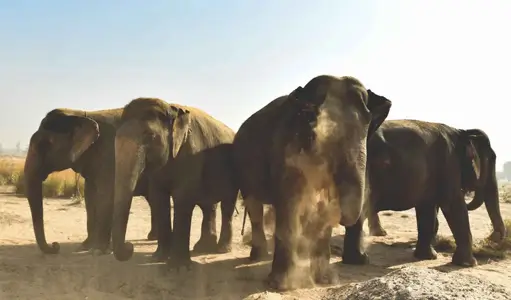
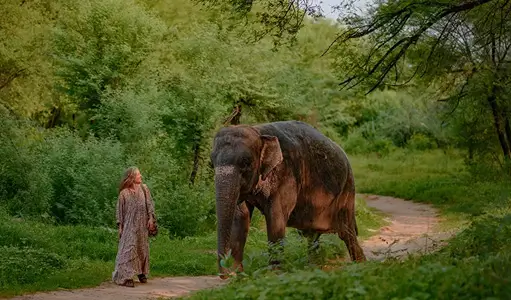
Asian elephants are commonly found in forested landscapes across India and Southeast Asia, where their movement is often influenced by dense vegetation and long-standing coexistence with human communities. Their behavior reflects this environment, showing controlled movement, awareness of surroundings and a more measured response to external stimuli. In many cases, these elephants are encountered in settings where observation can happen at closer range.
African elephants exist within a broader and more open landscape. Whether in savannah or woodland regions, their scale appears larger due to the surrounding environment. Their movement is more expansive, and interactions are typically observed from a distance during safari drives. This difference alone changes how travelers experience each species.
The distinction between the two is not limited to location. It extends into physical structure, communication patterns, social behavior and even the way they interact with humans. Understanding these variations provides a clearer perspective on what to expect when encountering elephants in different parts of the world.
Learn what makes Asian elephants so unique through ethical, hands-on experiences. Discover their intelligence, social behavior, and individual personalities while spending time with rescued elephants in a caring and natural environment. Ethical elephant experiences focus on observation, education, and respect rather than rides or performances.
One of the most immediate differences lies in overall size and body structure. African elephants are noticeably larger, with longer legs and a more extended frame. Their height and bulk become especially apparent in open terrain, where there are no visual barriers to reduce their scale.
Asian elephants, while still large, appear more compact. Their bodies are structured differently, with a rounder midsection and shorter legs. This build is better suited for movement through forested environments, where space is limited and agility becomes more important than sheer size.
The shape of the back also differs. African elephants typically have a downward curve along the spine, while Asian elephants often show a slight upward arch. This difference may seem subtle, but it affects how they carry weight and move across terrain.
These variations in size and structure are not just visual—they influence energy use, habitat preference and even social behavior within each species.
The ears of an elephant are not just a defining feature but also a functional one. African elephant ears are significantly larger, often compared in shape to the outline of the African continent. These ears play a critical role in regulating body temperature, especially in hot and open environments.
In contrast, Asian elephants have smaller, rounded ears. Their habitats, which include forests and shaded areas, reduce the need for large surface areas to dissipate heat. As a result, their ear structure reflects the conditions in which they live.
This difference becomes particularly noticeable during observation. African elephants frequently use their ears to fan themselves, especially during warmer parts of the day. Asian elephants display this behavior less prominently, relying more on environmental shade and water sources.
The variation in ear size is one of the clearest physical indicators when identifying the species and also highlights how each has adapted to its surroundings.
Tusks are often associated with elephants, but their presence varies significantly between the two species. In African elephants, both males and females commonly develop tusks, making them a consistent feature across the population.
With Asian elephants, the situation is different. Only some males develop prominent tusks, while many females either lack tusks entirely or have very small ones that are not easily visible. This creates a noticeable difference when observing groups.
The presence or absence of tusks influences behavior as well. Tusks are used for digging, foraging and defense. In environments where tusks are less common, elephants rely more on other physical adaptations.
For travelers, this difference often leads to confusion, especially when expecting all elephants to have visible tusks. Recognizing this variation adds depth to the observation experience.
The trunk is one of the most versatile features of an elephant, but even here, differences exist. African elephants have two finger-like projections at the tip of their trunk, allowing for precise grip and manipulation of objects.
Asian elephants have only one such projection. While still highly functional, this changes the way they pick up smaller items. Instead of pinching, they often wrap their trunk around objects to secure them.
This difference becomes evident when observing feeding behavior. African elephants can pick up very small items with greater precision, while Asian elephants rely on a slightly different technique.
Both approaches are effective, but they reflect subtle differences in anatomy that influence daily activity and interaction with the environment.
The natural environment of each species plays a major role in shaping behavior. African elephants are found across a wide range of habitats, including savannahs, grasslands and woodlands. These open spaces allow for large herd movement and long-distance travel.
Asian elephants are more commonly found in forested areas, including tropical and subtropical regions. Their movement is influenced by vegetation density, water availability and human settlements.
This difference affects visibility as well. In Africa, elephants are often seen from a distance across open land. In Asia, encounters tend to be closer but within more controlled environments.
Understanding habitat differences helps travelers choose the type of experience they are looking for, whether it is wide-open wildlife viewing or more intimate observation.
Both species are social, but their group structures show variation. African elephant herds tend to be larger, often moving across vast areas in search of food and water.
Asian elephant groups are generally smaller and more contained. Their movement is influenced by habitat limitations and historical interaction with human settlements.
Leadership in both species is typically matriarchal, with older females guiding the group. However, the scale of leadership differs based on herd size and territory.
These social differences influence how elephants interact with each other and how they respond to external changes in their environment.
Movement style differs noticeably between the two species. African elephants often travel longer distances across open terrain, maintaining a steady and expansive pace.
Asian elephants move more cautiously through forested areas, adjusting their path based on obstacles and terrain. Their movement appears more deliberate and controlled.
This difference in behavior is linked directly to habitat. Open environments allow for faster and more visible movement, while dense forests require careful navigation.
For travelers, this translates into different viewing experiences, with African safaris offering wide-angle observation and Asian settings providing closer, slower encounters.
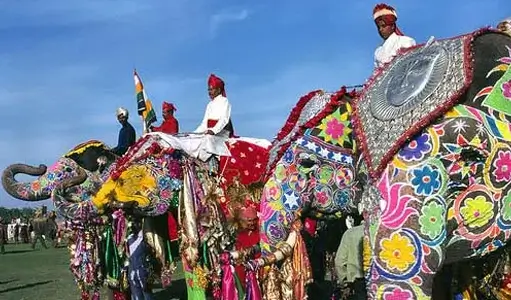
One of the most significant differences lies in the relationship with humans. Asian elephants have a long history of coexistence with people, especially in India. This has led to structured interaction in certain environments.
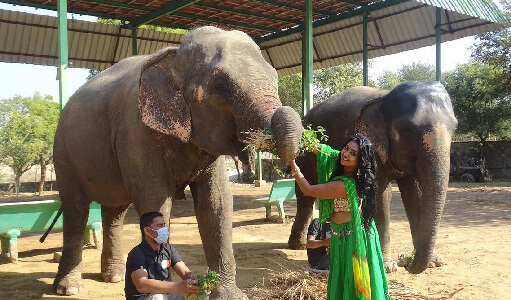
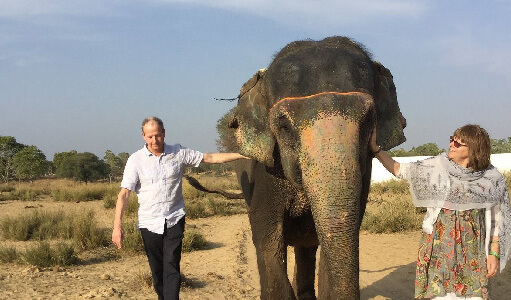
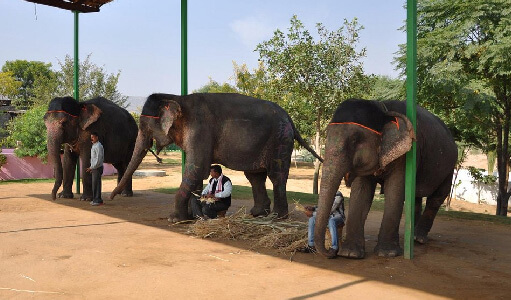
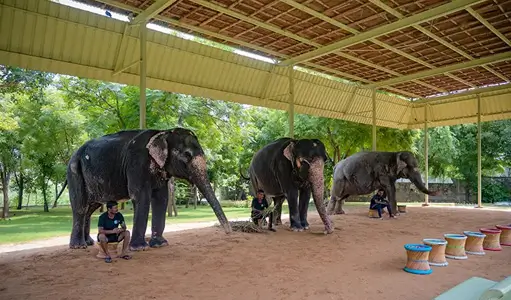
In ethical locations such as Elefantastic, visitors can observe elephants in a setting that reflects care, respect and understanding. These experiences allow for closer observation of behavior and intelligence.
African elephants, in contrast, are rarely involved in direct interaction. Their relationship with humans is primarily observational, with strict boundaries maintained in wildlife reserves.
This difference shapes how travelers experience each species, with Asia offering more personal engagement and Africa focusing on distant observation.
Both species are herbivores, but their feeding patterns vary based on environment. African elephants often graze on grass, especially in savannah regions where it is abundant.
Asian elephants rely more on leaves, bark and forest vegetation. Their diet reflects the resources available in their habitat.
Feeding behavior also differs in method. African elephants often graze in open areas, while Asian elephants forage through dense vegetation.
These differences influence daily routines and movement patterns, adding another layer to how each species operates.
Every elephant has a unique story, personality, and way of interacting with the world. Experience these incredible animals up close, learn about their natural behavior, and gain a deeper appreciation for one of nature’s most remarkable species.
The appearance of elephant skin differs slightly between species. African elephants often appear darker and rougher, with more visible wrinkles.
Asian elephants may show lighter patches, especially around the face and trunk. Their skin texture appears smoother in comparison.
These variations are influenced by environment, exposure and natural adaptation. While subtle, they contribute to the overall visual distinction between the two species.
For travelers, the final difference lies in how each species is experienced. African elephants are typically seen during safaris, where observation happens from a distance within large landscapes.
Asian elephants are often encountered in more structured environments, where observation can be closer and more detailed.
This difference does not make one better than the other; it simply defines the type of experience. Understanding this helps travelers align their expectations with the destination.
The main difference lies in size, ear shape, habitat and behavior. African elephants are larger with bigger ears, while Asian elephants are smaller and adapted to forest environments.
African elephants are significantly larger than Asian elephants in both height and weight.
African elephants usually have tusks in both males and females, while Asian elephants typically have tusks only in some males.
Asian elephants can be observed in ethical environments such as Elefantastic Jaipur and in forest regions across India.
Behavior depends on environment and situation, but African elephants may appear more defensive due to their wild habitat conditions.
Direct interaction is rare in Africa; experiences are usually limited to observation during safaris.
Their size is adapted to forest environments where compact movement is more practical than large-scale mobility.
African elephants use two finger-like tips for precision, while Asian elephants use one, relying more on grip.
Both offer different experiences. Asian elephants allow closer interaction, while African elephants provide large-scale wildlife viewing.
Yes, Asian elephants face threats due to habitat loss and require conservation efforts for protection.