Travelling from Agra to Jaipur by private car is one of the most useful road journeys for international visitors following India's Golden Triangle. Delhi, Agra and Jaipur are often combined because they provide three very different travel experiences within a manageable route: India's capital, the Taj Mahal and Mughal heritage in Agra, followed by Rajasthan's forts, palaces, markets and distinctive architecture in Jaipur.
The Agra–Jaipur transfer is especially well suited to a private vehicle because two worthwhile historical stops can be added along the way: Fatehpur Sikri and Abhaneri Stepwell, also known as Chand Baori. Travellers using direct transport may simply move between the two cities, while a private car allows the transfer day itself to become part of the sightseeing experience.
The direct road distance is roughly 240 kilometres, depending on the exact pickup and drop-off points. Without substantial sightseeing, travellers should broadly expect around four and a half to six hours on the road. Adding Fatehpur Sikri, Abhaneri, lunch and comfortable breaks can turn the journey into a seven-to-nine-hour travel day.
That longer journey is not necessarily a disadvantage. Instead of losing a day entirely to transportation, visitors can see two significant sites that fit naturally between Agra and Jaipur.
For couples, families and international travellers carrying luggage, a private Agra to Jaipur transfer also removes the need to handle bags at railway stations or arrange separate taxis around intermediate attractions. The vehicle can collect guests from their Agra hotel and deliver them directly to their Jaipur accommodation after sightseeing.
Travel comfortably with a professional chauffeur and explore fascinating heritage sites like Fatehpur Sikri and Abhaneri along the way.
The road distance between Agra and Jaipur is approximately 240 kilometres, although the final figure depends on the starting hotel, the Jaipur destination and the roads used by the driver. A direct transfer generally requires around four and a half to six hours under reasonable conditions. Travellers should regard that figure as a working range rather than a fixed promise because city traffic at either end can influence the journey considerably.
Leaving Agra may take longer during busy periods, particularly around major tourist areas. Jaipur traffic can create another delay at the end of the journey. A hotel in the eastern part of Jaipur may be reached sooner than accommodation toward Amber or another part of the city. Road construction, weather and local diversions can also affect the total.
The more important distinction is between a direct Agra to Jaipur drive and a sightseeing transfer. Travellers adding Fatehpur Sikri should allow roughly one and a half to two and a half hours for the stop once parking, entry procedures and walking are included. Abhaneri requires additional driving away from the fastest direct road plus time to visit Chand Baori. A meal stop can easily add another forty-five minutes.
Once these elements are combined, leaving Agra after breakfast and reaching Jaipur in the late afternoon or early evening is perfectly normal. Travellers should not schedule a tightly timed Jaipur activity immediately after the expected arrival.
A private road journey works best when the transfer day is treated as a genuine part of the holiday. Comfortable stops, historical sightseeing and a relaxed lunch create a much better experience than constantly checking whether the car is five minutes behind an unrealistic schedule.
Discover historic monuments, stepwells, and cultural highlights with flexible sightseeing stops and comfortable private transportation.
The most practical Agra to Jaipur road route depends partly on whether travellers want to visit Fatehpur Sikri and Abhaneri. A driver can choose the most suitable roads according to current conditions, but the broad sightseeing sequence is straightforward: leave Agra, visit Fatehpur Sikri, continue toward the Rajasthan side, divert for Abhaneri when included and then proceed to Jaipur.
Fatehpur Sikri fits naturally near the beginning of the journey because it lies west of Agra. This makes it much more sensible to visit while travelling toward Jaipur than to take a separate return trip from Agra. Visitors who have already seen the Taj Mahal and Agra Fort can check out of their hotel, place their luggage in the private vehicle and continue directly to Fatehpur Sikri.
After Fatehpur Sikri, the journey continues toward Rajasthan. Travellers adding Abhaneri should expect a route adjustment rather than imagining that Chand Baori sits directly beside the main highway. The additional time is worthwhile for people interested in architecture and photography, but visitors in a hurry can skip it and continue directly to Jaipur.
Road conditions can vary, particularly on smaller roads around intermediate destinations. This is another reason to use a driver familiar with Rajasthan and the Golden Triangle rather than selecting transport only according to the lowest advertised price.
A good Agra to Jaipur private driver should also know appropriate places for clean restroom and meal breaks. International travellers may value this more than they expect, particularly during a full-day transfer. Instead of stopping at the first roadside business, an experienced driver can select a more suitable location without taking the route significantly off course.
For most first-time visitors, Fatehpur Sikri is the strongest historical stop between Agra and Jaipur. The UNESCO World Heritage Site was built during the reign of Mughal emperor Akbar and served as an imperial capital for a relatively short period. Its red sandstone architecture, large courtyards and monumental gateways make it substantially more than a roadside photo opportunity.
Travellers should allocate approximately one and a half to two and a half hours for a meaningful visit. Visitors with a strong interest in Mughal architecture can easily spend longer. Parking arrangements mean that travellers may need to use authorised local transport between the parking area and the main complex, so the total stop includes more than the time spent inside the monuments themselves.
The site contains both palace areas and religious structures. Important sections include the Buland Darwaza, Jama Masjid, Panch Mahal, Diwan-i-Khas and the tomb of Salim Chishti. A knowledgeable licensed guide can help visitors distinguish the purpose and history of these different spaces instead of seeing them simply as a series of red sandstone buildings.
International visitors should check the current official admission price before entering because monument fees can change. Avoid relying on an old screenshot or an outdated travel article for ticket information. Carry some Indian currency for small expenses even if larger payments can be made electronically.
Comfortable footwear is important because the complex involves considerable walking. Sun protection and drinking water are also useful during warmer conditions. Travellers should dress respectfully, particularly around religious areas.
Adding Fatehpur Sikri to an Agra to Jaipur private car journey is highly efficient because the site would otherwise require a separate excursion from Agra. For visitors with only a week or ten days in northern India, this is exactly the kind of stop that makes private road transport valuable.
Chand Baori at Abhaneri is one of Rajasthan's best-known stepwells and provides a completely different architectural experience from the Mughal monuments of Agra and Fatehpur Sikri. Its deep geometric arrangement of narrow steps creates a dramatic visual pattern that has made the site popular with photographers and architecture enthusiasts.
The structure is believed to date back many centuries and was designed around the practical importance of water storage in a dry region. Stepwells were not simply decorative monuments. They were sophisticated responses to water availability and became important community spaces in parts of western and northern India.
For a traveller driving from Agra to Jaipur, the main question is whether the additional road time is justified. For many first-time visitors, the answer is yes, particularly if they are unlikely to travel through the Abhaneri area again. A visit itself may take approximately 30 to 60 minutes, but the total addition to the journey is longer because the vehicle must leave the fastest route and navigate local roads.
Visitors should not expect unrestricted access to every stair visible in photographs. Safety barriers and access rules should be respected. Old travel photographs showing people standing deep inside the stepwell do not necessarily reflect current visitor permissions.
The nearby Harshat Mata Temple can also interest travellers who have enough time, although the exact stop should depend on the day's progress. If Fatehpur Sikri has taken much longer than expected, visitors may prefer to see Chand Baori and continue toward Jaipur rather than extending the stop further.
Abhaneri works best for travellers who appreciate architecture and want their Agra to Jaipur sightseeing transfer to include something beyond the most famous Golden Triangle monuments.
Yes, both can fit into the same transfer day, but travellers need to start at a sensible hour and accept that the journey will occupy most of the day. This is not a quick four-hour transfer once both stops are included.
Leaving an Agra hotel around 8:00 AM is practical for many visitors. After roughly an hour or slightly more of driving, depending on the starting point and road conditions, travellers can reach the Fatehpur Sikri area. A substantial visit can take the morning toward lunchtime.
After Fatehpur Sikri, continue toward Rajasthan and stop for lunch at an appropriate point. A relaxed but not excessively long lunch of forty-five minutes to an hour gives passengers a useful break before the next road section.
Abhaneri can then be visited during the afternoon. After Chand Baori, the vehicle continues toward Jaipur, where arrival may fall in the late afternoon or evening depending on traffic and the amount of time spent at each stop.
This sequence is far more comfortable than trying to reach Jaipur early enough for several additional monuments. Once travellers have visited Fatehpur Sikri and Abhaneri, the day already contains substantial sightseeing.
After hotel check-in, a relaxed dinner is usually a better choice than immediately attempting City Palace or another ticketed attraction. Jaipur sightseeing can begin properly the following morning.
For travellers with only one night in Jaipur, the calculation changes. In that case, skipping Abhaneri may preserve valuable time for Hawa Mahal, City Palace or another Jaipur priority.
The Agra to Jaipur private car price depends on vehicle category, sightseeing stops, total hours, pickup location, tolls and whether the car is booked only for the transfer or as part of a longer Rajasthan journey.
For a comfortable one-way private transfer, travellers can broadly keep a higher-side budget of around ₹7,000 to ₹10,000 or more for a sedan, depending on service quality and inclusions. An Innova, Crysta or similar larger vehicle can broadly fall around ₹10,000 to ₹15,000 or more for a private transfer with appropriate waiting time.
Adding lengthy sightseeing stops can increase the price because the vehicle and driver remain occupied for most of the day. Premium vehicles, unusual pickup times or additional detours can increase the amount further.
These figures should be treated as budgeting guidance rather than fixed Elefantastic quotations.
Travellers booking a complete Golden Triangle private tour or a longer Rajasthan circuit may receive a different pricing structure. The operator may calculate the vehicle according to total trip duration and mileage rather than quoting each transfer independently.
Before paying, request a written quotation showing whether fuel, tolls, parking, driver allowance and applicable state taxes are included. Also confirm whether parking at sightseeing locations is included or paid separately.
A cheaper headline fare is not automatically better value if several road charges are added later.
A sedan is generally suitable for one or two travellers with moderate luggage. For a straightforward Agra–Jaipur journey, it can provide good comfort at a lower price than a larger vehicle.
The calculation changes when passengers have substantial international luggage.
Two travellers carrying large checked suitcases, cabin bags and backpacks can use most of a sedan's luggage capacity. If Fatehpur Sikri and Abhaneri are included, passengers will spend most of the day using the same vehicle, so additional cabin space can make the journey more comfortable.
An Innova or Crysta-class vehicle is often the stronger choice for families, three or four adults, senior travellers and couples carrying several large bags.
Do not select a vehicle simply because its advertised seating capacity technically fits the group. A vehicle carrying six passengers may have very little room remaining for six large suitcases.
When requesting a private car from Agra to Jaipur, tell the operator the number and approximate size of the bags. This allows a suitable vehicle to be assigned before pickup.
For travellers continuing from Jaipur to Jodhpur, Udaipur or Jaisalmer with the same driver, comfort becomes even more important because the car will be used repeatedly over many days.
The ideal departure depends on whether the journey includes sightseeing.
For a direct transfer, leaving after breakfast is perfectly reasonable. A departure around 8:00 AM to 9:00 AM can place travellers in Jaipur by early or mid-afternoon under normal conditions.
When Fatehpur Sikri and Abhaneri are both included, an earlier start is preferable. Leaving around 7:30 AM to 8:00 AM gives the day enough flexibility for historical sightseeing, lunch and road delays.
Travellers should not schedule the Taj Mahal and a full sightseeing transfer on the same morning unless the timing has been carefully considered. A sunrise Taj Mahal visit followed by breakfast, hotel checkout and departure can work, but it creates a long day.
Families and senior travellers may prefer a more relaxed pace.
Visitors travelling during hotter periods should also remember that Abhaneri and Fatehpur Sikri involve outdoor walking. Sun protection, water and suitable clothing are important.
The objective is not to reach Jaipur at the earliest possible minute. A good Agra to Jaipur road trip should allow enough time to enjoy the stops that made private transport worthwhile in the first place.
A full sightseeing transfer requires a proper meal break.
Travellers can eat around Fatehpur Sikri, farther along the highway or at a suitable restaurant selected by the driver. The best choice depends on the timing of the morning visit.
International travellers should prioritise clean, established restaurants with proper restroom facilities. A long road day is not the ideal time to experiment with questionable food hygiene.
Vegetarian food is widely available along the route. North Indian staples such as dal, paneer dishes, vegetables, rice and fresh breads are easy to find. Travellers sensitive to chilli should clearly request milder preparation.
Use sealed bottled water or appropriately purified water.
A meal stop of approximately 45 to 60 minutes is enough for most travellers. Longer restaurant stops can make the Jaipur arrival considerably later when Fatehpur Sikri and Abhaneri are already included.
Drivers may recommend restaurants they regularly use, but passengers remain free to choose where they want to eat. If a particular restaurant is important, discuss it before leaving Agra so the route can be adjusted sensibly.
After a seven-to-nine-hour travel and sightseeing day, most visitors should check into their Jaipur hotel and keep the evening relatively light.
A walk around a nearby market or a relaxed Rajasthani dinner can work well. Travellers do not need to begin another major sightseeing session immediately.
If arrival occurs earlier than expected, an exterior stop at Hawa Mahal or Jal Mahal may be possible depending on hotel location. However, visitors should check current monument hours before attempting a paid attraction.
The next morning is better for Amber Fort, particularly when travellers want enough time for the palace complex without watching the clock.
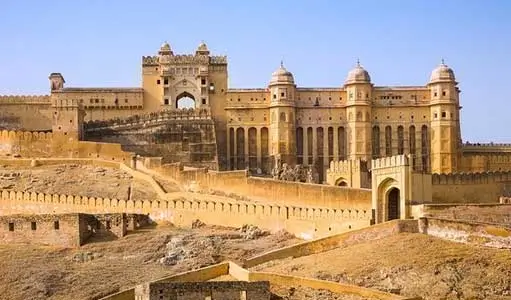
Jaipur deserves at least two nights when possible. One full day can cover Amber Fort, Hawa Mahal, City Palace and Jantar Mantar, while additional time allows shopping, food experiences or an ethical elephant visit.
Travellers continuing through Rajasthan should also use the first Jaipur evening to confirm the next road transfer with their driver.
International travellers following the Golden Triangle often arrive in Jaipur specifically because they want to combine Rajasthan's architecture with an ethical elephant experience.
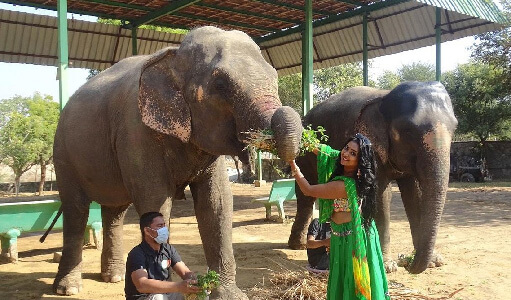
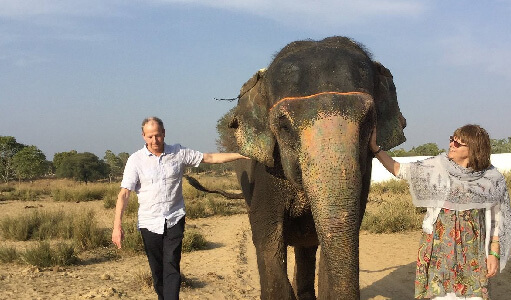
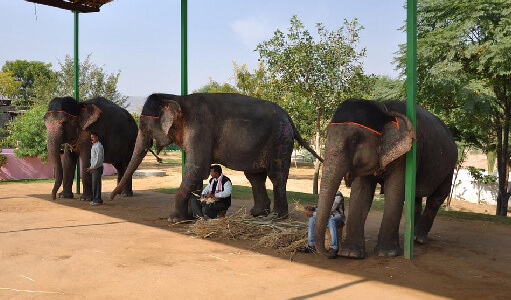
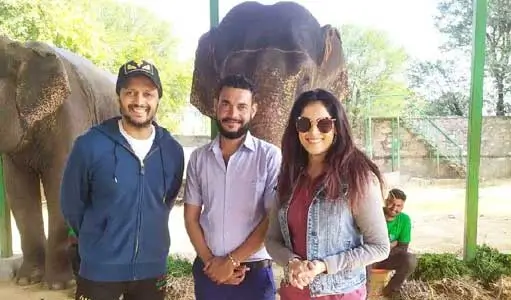
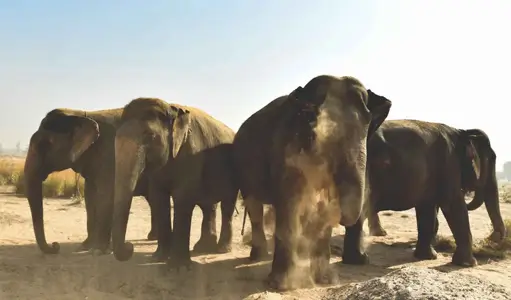
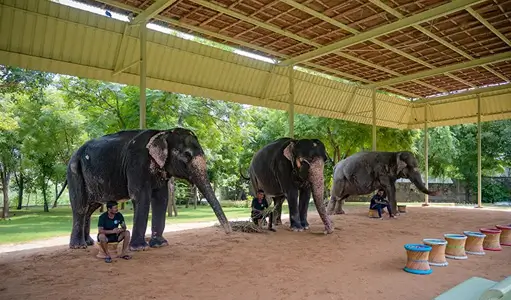
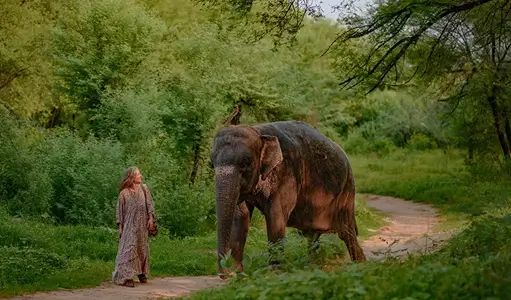
Elefantastic offers a no-riding, no-performance elephant experience in Jaipur. The emphasis is on spending time beside elephants through appropriate interactions rather than using them for transport or entertainment.
The current daytime experience is approximately two hours, and prior reservation is required.
After an Agra–Jaipur transfer containing Fatehpur Sikri and Abhaneri, booking the elephant experience on the following day is generally more comfortable than attempting to add it to the same evening.
A strong Jaipur day can combine Amber Fort with Elefantastic because both are toward the Amber side of the city. Enough time should still be allowed for each rather than treating the elephant experience as a quick photo stop.
Elefantastic currently lists the daytime experience at ₹5,500 per person, with Jaipur hotel pickup and drop under its normal arrangement. Current availability, pricing and pickup details should be confirmed before booking.
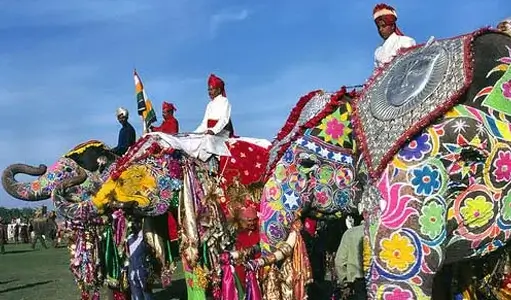
For travellers who care about responsible tourism, this approach also provides an alternative to using elephants as transportation at tourist monuments.
The train can be an efficient and economical way to travel between Agra and Jaipur, especially for visitors who enjoy Indian rail journeys. However, the train turns the day primarily into transportation.
It does not provide the same flexibility for Fatehpur Sikri and Abhaneri.
Travellers using rail would need additional local transport to visit these places, potentially making the logistics more complicated than simply hiring a private car.
A train also requires transfers from the Agra hotel to the station and from Jaipur station to the next hotel. Passengers handle their luggage during these transitions and must follow the train's departure time.
A private car provides hotel-to-hotel service. Suitcases remain with the vehicle, meal breaks are flexible and the historical stops can be incorporated naturally.
For two or more people, the difference in overall cost can become more reasonable because the private vehicle price is shared.
Travellers whose only objective is moving quickly between the two cities may still prefer rail. Those who want the transfer day to include sightseeing usually gain more from a private car.
Agra to Jaipur is often only one section of a longer private Rajasthan tour.
After Jaipur, travellers can continue toward Pushkar and Jodhpur, head south toward Ranthambore, or travel farther west toward Bikaner and Jaisalmer.
A common route is:
Delhi → Agra → Jaipur → Pushkar → Jodhpur → Udaipur
Travellers with more time can extend the circuit:
Delhi → Agra → Jaipur → Bikaner → Jaisalmer → Jodhpur → Udaipur
Using the same driver removes repeated transport bookings and allows luggage to remain with the group during intercity transfers.
Before confirming a multi-day car, ask about total mileage, driver allowance, tolls, parking, taxes and final drop-off location.
Also confirm whether local sightseeing within each city is included.
A multi-day Rajasthan car with driver should be priced as a complete service rather than leaving travellers to calculate road expenses every morning.
The road distance is approximately 240 kilometres, depending on the exact hotel locations and route used.
A direct journey usually requires around four and a half to six hours. Adding Fatehpur Sikri, Abhaneri, lunch and rest breaks can make it a seven-to-nine-hour travel day.
A comfortable sedan can broadly cost around ₹7,000 to ₹10,000 or more, while an Innova or Crysta-class vehicle can cost approximately ₹10,000 to ₹15,000 or more, depending on stops and inclusions.
Yes. Fatehpur Sikri fits naturally near the beginning of an Agra–Jaipur road journey and is one of the strongest reasons to use a private car.
Not exactly. Visiting Chand Baori at Abhaneri requires additional local driving, so travellers should allow extra time rather than treating it as a five-minute highway stop.
Yes. Both can be visited during the Agra–Jaipur transfer when travellers leave reasonably early and treat the journey as a full sightseeing day.
Approximately one and a half to two and a half hours works well for most first-time visitors, with additional time possible for travellers interested in Mughal history and architecture.
A sedan is comfortable for one or two passengers with moderate luggage. Families and travellers with several large international suitcases may prefer an Innova or Crysta-class vehicle.
Yes. A private driver can continue through Rajasthan toward destinations such as Pushkar, Jodhpur, Udaipur, Ranthambore, Bikaner or Jaisalmer when this is arranged as a multi-day service.
Yes, but after a full Agra–Jaipur sightseeing transfer, the following day is usually more comfortable. Elefantastic offers a no-ride elephant experience in Jaipur that requires advance reservation.